Category
page 1Arthoniomycetes genera
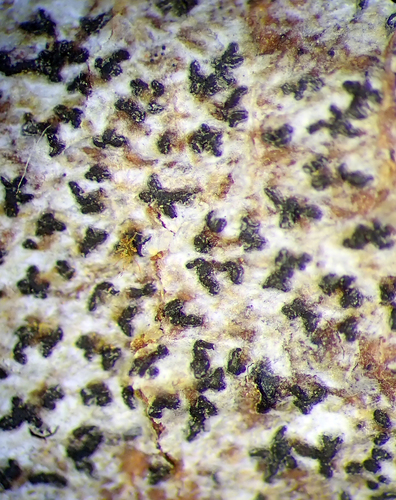
Arthonia
Arthonia is a genus of crustose lichens in the family Arthoniaceae. They are commonly called comma lichens.

Opegrapha
Opegrapha is a genus of mostly lichen-forming fungi in the family Opegraphaceae. These lichens form crusty patches on bark, rock, or other lichens, and are easily recognised by their distinctive black, slit-like or rounded fruiting bodies that look like tiny scribbles or dashes on the surface. The genus includes about 150 accepted species found worldwide, with most partnering with orange-pigmented green algae, though some live as parasites on other lichens. Opegrapha species are distinguished from similar genera by their combination of branched internal filaments, ascospores with multiple sept

Arthothelium
Arthothelium is a genus of lichen-forming fungi in the family Arthoniaceae. Species in the genus typically form crusts on smooth bark in humid, undisturbed habitats. They are distinguished from the related genus Arthonia by their spores, which are divided by both transverse and longitudinal walls into a brick-like pattern. The genus has a cosmopolitan distribution, with most species occurring in tropical regions.

Chrysothrix
Chrysothrix is a genus of lichen-forming fungi in the family Chrysotrichaceae. They are commonly called gold dust lichens or sulfur dust lichens, because they are bright yellow to greenish-yellow, sometimes flecked with orange, and composed entirely of powdery soredia. Apothecia are never present in North American specimens.

Roccella
genus of fungi

Cryptothecia
Cryptothecia is a genus of white to greenish crustose lichens that grow on bark, wood, or leaves, in tropical or subtropical areas worldwide. It has a conspicuous prothallus that develops around its periphery which can be bright red in some species, hence the common name wreath lichen. The main vegetative body (thallus) lacks a cortex (ecorticate and is often immersed in the substrate or byssoid (whispy, like teased wool). The medulla is white, well defined, and often peppered with calcium oxalate crystals. Ascomata are not well defined, being cushions of soft white mycelium immersed in the me

Lecanactis
Lecanactis is a genus of crustose lichens, commonly called old wood lichens. The mycobiont (fungus partner) is in the family Roccellaceae. The photobiont is an algae in the genus Trentepohlia. These lichens typically grow as thin crusts on tree bark or rocks, producing small black fruiting bodies that may appear as round discs or elongated slits. The genus contains about 20 species found worldwide, with some species considered rare and threatened by habitat loss.

Bactrospora
Bactrospora is a genus of lichen-forming fungi of uncertain familial placement in the order Arthoniales. These lichens grow as thin crusts on tree bark in shaded, humid environments and are distinguished by their unusually long, needle-like spores that often break apart into smaller pieces. Species in the genus are found worldwide, particularly in tropical and temperate forests where they help form part of the diverse bark-dwelling lichen community.

Enterographa
Enterographa is a genus of lichens in the family Roccellaceae. These lichens grow as thin, paint-like crusts on tree bark that range in colour from off-white and pale grey to dark olive-green or brown, sometimes breaking into networks of tiny, flat blocks. They reproduce through tiny slits or dots embedded in the crust that contain spindle-shaped spores divided into multiple cells, distinguishing them from other similar-looking bark lichens.

Cresponea
Cresponea is a genus of lichens in the family Opegraphaceae. The genus, circumscribed in 1993, contains species that were formerly classified in Lecanactis. Cresponea is widely distributed, but most species are found in tropical and subtropical regions. The genus is named in honor of the Spanish lichenologist Ana Crespo.

Schismatomma
Schismatomma is a genus of mostly lichen-forming fungi in the family Roccellaceae. These lichens form thin crusts on bark or rock surfaces and reproduce through disc-shaped fruiting bodies that release spores, as well as through powdery patches that help them spread. At least one species is critically endangered due to habitat loss from deforestation in Colombia.

Chiodecton
Chiodecton is a genus of lichens in the family Roccellaceae. The genus was circumscribed by the lichenologist Erik Acharius in 1814, with Chiodecton sphaerale assigned as the type species.

Dendrographa
Dendrographa is a genus of lichen-forming fungi in the family Roccellaceae. It has seven species. These lichens form small, shrubby tufts that cling to bark or coastal rocks along the Pacific seaboard, with brown-grey main branches and paler, pencil-thin tips that lack a protective outer skin. The genus was originally established in 1895 for a single Pacific coast species, but molecular studies in the 2010s expanded it by transferring four additional species from other genera and led to the discovery of a seventh species in Brazil.

Dirina
Dirina is a genus of lichen-forming fungi in the family Roccellaceae. All Dirina species are crustose lichens with a whitish to greyish brown thallus, and live either on rock or on bark–some species can live on both. The partner is a member of the green algal genus Trentepohlia. Most species occur in the Northern Hemisphere, and are generally restricted to coastal habitats, where they may be locally quite common. Erythrin and lecanoric acid are lichen products that usually occur in Dirina species, along with several other unidentified substances.

Sagenidiopsis
Sagenidiopsis is a genus of lichen-forming fungi in the family Arthoniaceae. It was circumscribed in 1987 by lichenologists Roderick Rogers and Josef Hafellner to contain the type species S. merrotsii, found in Australia. The characteristic features of the genus include the byssoid (cottony) thallus and bitunicate asci (enclosed in a double wall) that lack amyloid structures that are apparent in the thallus.

Sclerophyton
Sclerophyton is a genus of lichen-forming fungi in the family Opegraphaceae. It has about 15 species. The genus was circumscribed by German lichenologist Franz Gerhard Eschweiler in 1824, with Sclerophyton elegans assigned as the type species.

Syncesia
Syncesia is a genus of lichen-forming fungi in the family Roccellaceae. These lichens typically grow as thin crusts on tree bark in humid environments, forming small raised patches that contain multiple tiny disc-shaped fruiting bodies. The genus includes about nine species found primarily in tropical and subtropical regions around the world, from the Caribbean and South America to Africa and Asia. Many species produce powdery patches on their surface that help them spread to new locations without sexual reproduction.

Coniarthonia
Coniarthonia is a genus of lichen-forming fungi in the family Arthoniaceae. The genus comprises about fourteen species of crustose lichens that grow on tree bark, mainly in tropical and subtropical regions. They are distinguished by their powdery, crimson to scarlet fruiting bodies, which contain abundant crystallized red pigments, a feature that sets them apart from other lichens in the order Arthoniales. The genus was established in 2001 by the Austrian lichenologist Martin Grube, who separated these species from the large, variable genus Arthonia.
Amazonomyces
Amazonomyces is a lichenized genus of fungi in the family Arthoniaceae.
The genus contains 3 species:
Amazonomyces farkasiae (Lücking) Lücking, Sérus. & G. Thor, 1998
Amazonomyces palmae Bat. & Cavalc., 1963
Amazonomyces sprucei (R. Sant.) Lücking, Sérus. & G. Thor, 1998

Tylophoron
Tylophoron is a genus of lichen-forming fungi in the family Arthoniaceae. It comprises seven species of crustose lichens, most of which occur in tropical regions.
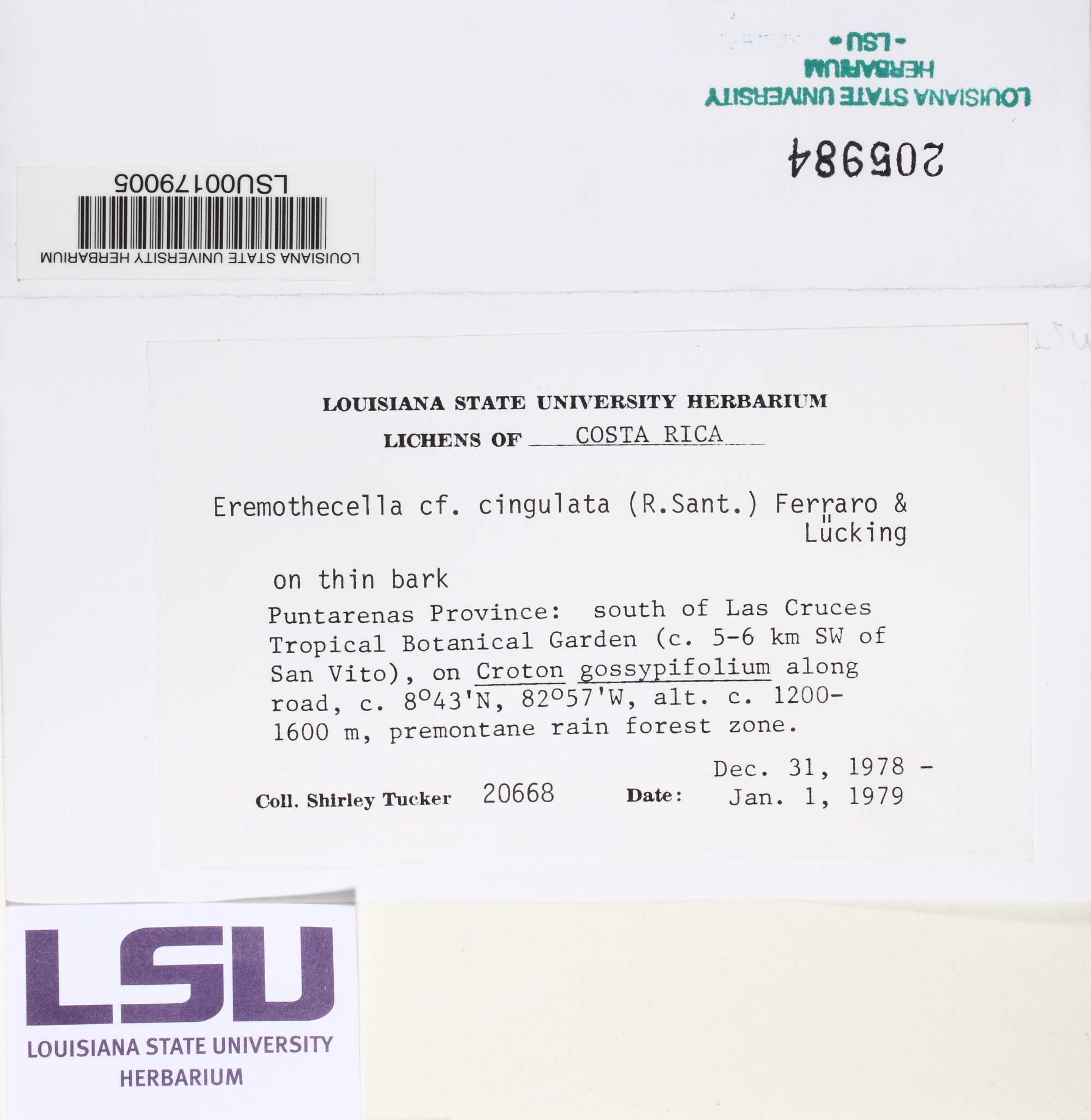
Eremothecella
Eremothecella is a genus of lichenized fungi in the family Arthoniaceae. The genus is widespread in tropical areas.

Roccellina
Roccellina is a genus of lichen-forming fungi in the family Roccellaceae.

Lecanographa
Lecanographa is a genus of about 20 species of lichens in the family Lecanographaceae. These lichens typically form thin, extensive crusts that can be chalk-white, grey, or pale green, with dark brown to black reproductive structures that are often covered in a dense frosting () of white, bluish, or greyish crystals. Established as a genus in 1994 by José M. Egea and Pilar Torrente, the lichens are characterized by their partnership with orange-tinged filamentous algae and their production of slender, spindle-shaped spores with multiple cross-walls that are wrapped in a gelatinous outer layer.

Plectocarpon
Plectocarpon is a genus of lichenicolous (lichen-dwelling) fungi in the family Lecanographaceae. The genus, which was established in 1825 by the French botanist Antoine Laurent Apollinaire Fée, contains about 30 species that live as parasites on other lichens rather than forming their own independent body (thallus). These fungi are recognized by the small, wart-like swellings they create on their host lichens and by their distinctive dark fruiting bodies that often contain a green pigment that dissolves when treated with potassium hydroxide solution.

Angiactis
Angiactis is a genus of crustose lichens of uncertain familial placement in the order Arthoniales. It has four species.

Sigridea
Sigridea is a genus of lichenized fungi in the family Roccellaceae.
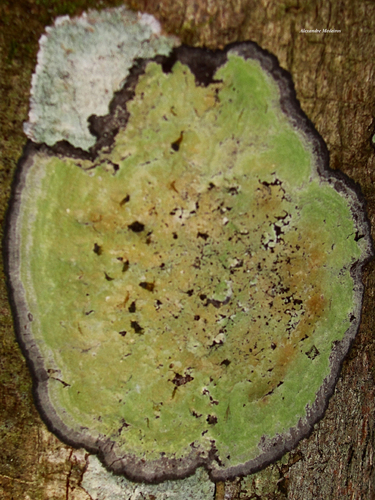
Dichosporidium
Dichosporidium is a genus of lichen-forming fungi in the family Roccellaceae.
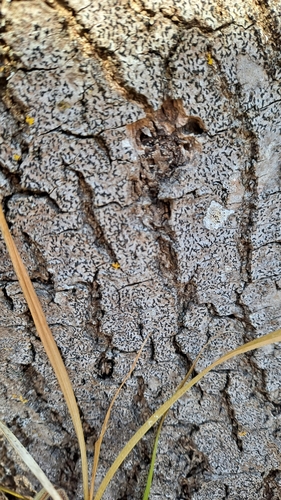
Alyxoria
Alyxoria is a genus of lichen-forming fungi in the family Lecanographaceae. The genus has a cosmopolitan distribution. These lichens are often so inconspicuous that they appear as little more than faint cracks or weathered patches on tree bark and rock surfaces, making them easily overlooked in the field. The genus includes about 20 species that reproduce through distinctive elongated slits containing spores, and can also spread asexually through tiny flask-shaped structures that release microscopic propagules.
Combea
Combea is a genus of lichens in the family Opegraphaceae. It has two species. The genus was circumscribed by Italian botanist Giuseppe De Notaris in 1846.
Ingaderia
Ingaderia is a genus of lichen-forming fungi in the family Opegraphaceae. Species in this genus form pale, crusty patches that often crack when thick, and produce elongated fruiting bodies that appear as narrow slits on the surface. The genus was originally established with a single species from South America, but molecular studies published in 2023 expanded its scope to include several species previously classified in other genera such as Llimonaea and Paraingaderia. Species are distinguished by their thick, dark fruiting body walls, elongated ascospores divided by cross-walls, and the presen

Llimonaea
Llimonaea is a genus of lichen-forming fungi in the order Arthoniales. The genus has been placed into the family Opegraphaceae. These lichens form thin, firmly attached crusts that vary from chalky white and grey to olive-green or dark brown, often edged by a neat black line and characterized by rounded or scribble-like reproductive structures that sit flush with the surface. Established as a genus in 1991, Llimonaea species are distinguished by their partnership with orange-tinged green algae, their spindle-shaped spores with multiple cross-walls that gradually turn brown with age, and their
Austrographa
Austrographa is a genus of lichen-forming fungi in the family Roccellaceae. It has three species. The genus was circumscribed in 2013 by lichenologists Laurens Sparrius, John Elix, and Alan Archer, with Austrographa kurriminensis assigned as the type species. The genus had been published invalidly on two separate occasions. All three species in the genus were found in a mangrove stand in Queensland, Australia. The genus was discovered in Australia, and the name Austrographa reflects this.

Mazosia
Mazosia is a genus of lichen-forming fungi in the family Roccellaceae.

Herpothallon
Herpothallon is a genus of crustose lichens in the family Arthoniaceae. It has about 50 species.

Graphidastra
Graphidastra is a genus of lichen-forming fungi in the family Roccellaceae.

Haplodina
Haplodina is a lichenized genus of fungi in the family Roccellaceae.
Ancistrosporella
Ancistrosporella is a genus of lichen-forming fungi in the family Roccellaceae. The genus was circumscribed in 1995 by Swedish lichenologist Göran Thor, with Ancistrosporella australiensis assigned as the type species. The International Union for Conservation of Nature has classified A. leucophila as a Critically Endangered species due to its limited known distribution in South America and the threats to its habitat from deforestation and land-use changes.
Pentagenella
Pentagenella is a genus of lichen-forming fungi in the family Opegraphaceae. It contains five species.
Phacographa
Phacographa is a genus of lichenicolous (lichen-dwelling) fungi in the family Roccellaceae. It has three species.
Sipmania
Sipmania is a genus of lichenized fungi within the order Arthoniales. The genus has been placed into the family Roccellaceae. This is a monotypic genus, containing the single species Sipmania peltata.

Zwackhia
Zwackhia is a genus of crustose lichens in the family Lecanographaceae. It has six species. These lichens form thin, film-like crusts on bark and rock surfaces, often with a subtle orange tint from their algal partner. They produce distinctive elongated, slit-like fruiting bodies that remain narrow rather than opening into disc shapes.
Enterodictyon
Enterodictyon is a genus of lichen-forming fungi in the family Roccellaceae.
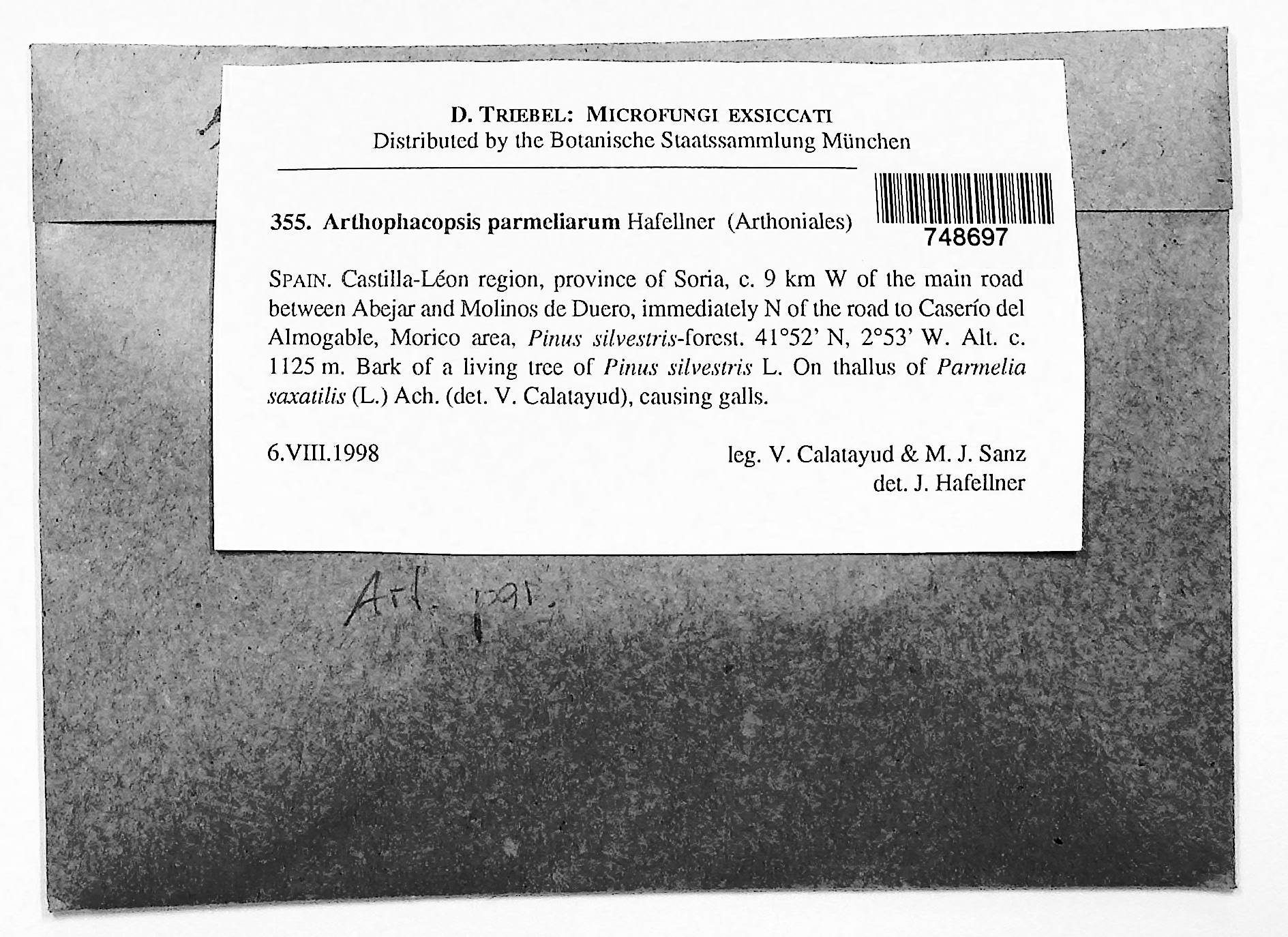
Arthophacopsis parmeliarum
Arthophacopsis is a fungal genus in the order Arthoniales. The genus has not been placed into a family. This is a monotypic genus, containing the single species Arthophacopsis parmeliarum.
Simonyella
Simonyella is a genus of lichenized fungi in the family Roccellaceae. A monotypic genus, it contains the single species Simonyella variegata .
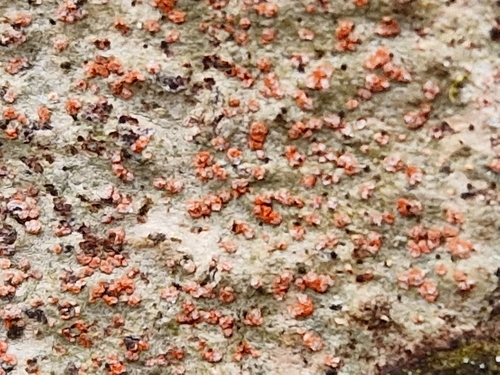
Coniocarpon
Coniocarpon is a genus of lichen-forming fungi in the family Arthoniaceae. It has eight species of corticolous (bark-dwelling) lichens. This genus is distinct for its crystalline orange, red, and purple quinoid pigments in the ascomata that turn purple in potassium hydroxide solution, its colourless, transversely septate ascospores with large apical cells, and its rounded to ascomata (fruiting bodies).
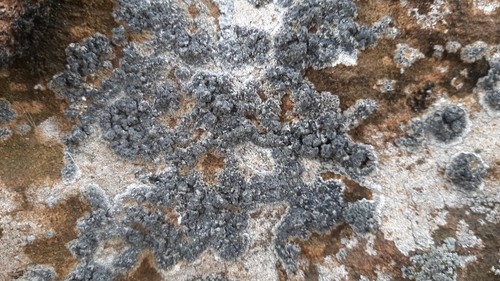
Paralecanographa
Paralecanographa is a single-species fungal genus in the family Roccellaceae. The genus was established in 2011 when genetic studies revealed that its single species does not belong where it had been previously classified and needed its own separate genus. This unusual lichen begins life as a parasite on other coastal lichens before eventually taking over and replacing its host, producing small black fruiting bodies that can appear as either tiny slits or rounded discs.
Streimannia
Streimannia is a genus of lichenized fungi in the family Roccellaceae. A monotypic genus, it contains the single species Streimannia varieseptata. The genus was circumscribed by Göran Thor in Opera Bot. vol.103 on page 84 in 1990.

Stirtonia
genus of fungi
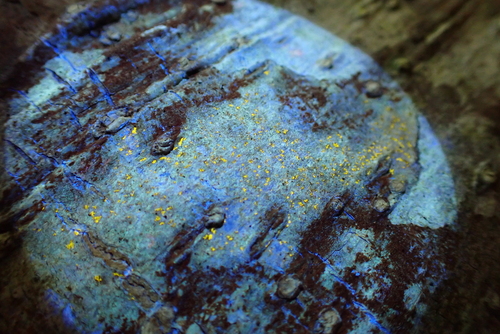
Synarthonia
Synarthonia is a genus of lichen-forming fungi in the order Arthoniales. The genus has not been placed into a family. These crustose lichens typically form thin, crust-like growths on tree bark in tropical and temperate regions worldwide, though many species have restricted geographical ranges and are known only from single locations. The genus is distinguished by its reproductive structures, which appear as small grouped patches on the lichen surface, and by its spores that change from colourless to brownish as they mature and have distinctive enlarged tip cells. While most species form tradi