Category
page 1Arthropod subclasses

Pterygota
Pterygota ( ) is a subclass of insects that includes all winged insects and groups which lost them secondarily.
Apterygota
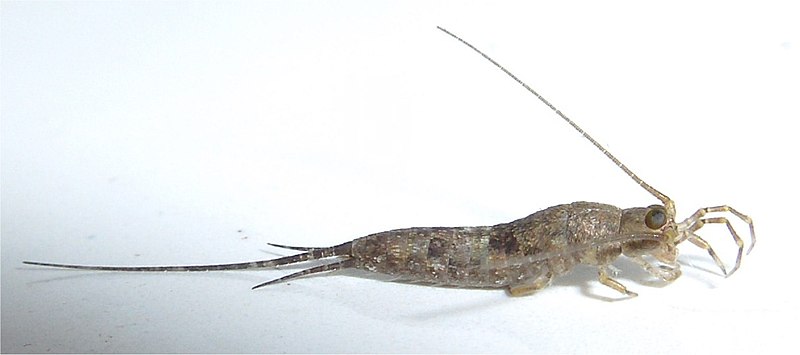
The name Apterygota is sometimes applied to a former subclass of small, agile insects, distinguished from other insects by their lack of wings in the present and in their evolutionary history; notable examples are the silverfish, the firebrat, and the jumping bristletails. Their first known occurrence in the fossil record is during the Devonian period, 417–354 million years ago. The group Apterygota is not a clade; it is paraphyletic, and not recognized in modern classification schemes. As defined, the group contains two separate clades of wingless insects: Archaeognatha comprises jumping bris

Pentastomida
The Pentastomida are an enigmatic group of parasitic arthropods commonly known as tongue worms due to the resemblance of the species of the genus Linguatula to a vertebrate tongue; molecular studies point to them being highly derived crustaceans.
Branchiura
REDIRECT Argulidae
Eumalacostraca
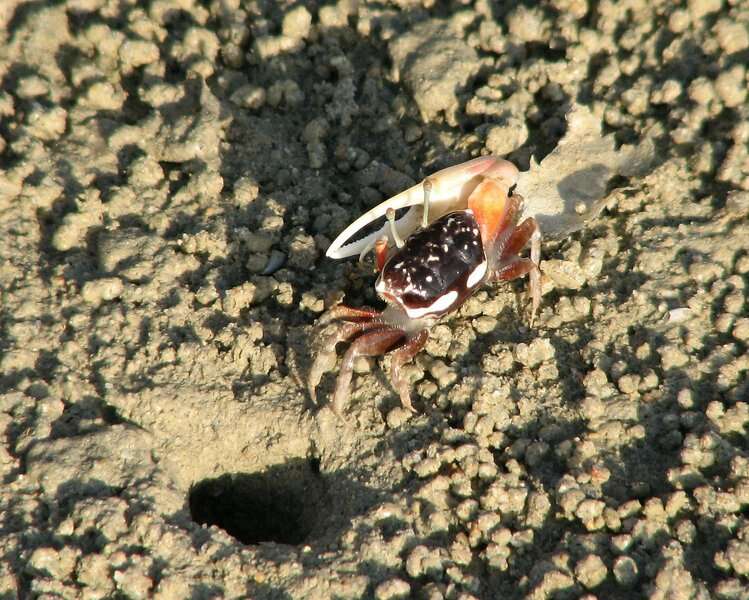
Eumalacostraca is a subclass of crustaceans, containing almost all living malacostracans, or about 40,000 described species. The remaining subclasses of crustaceans that are not in Eumalacostraca are the Phyllocarida and possibly the Hoplocarida. Eumalacostracans have 19 segments (5 cephalic, 8 thoracic and 6 abdominal). This arrangement is known as the "caridoid facies", a term coined by William Thomas Calman in 1909. The thoracic limbs are jointed and used for swimming or walking. The common ancestor is thought to have had a carapace, and most living species possess one, but it has been lost
Hoplocarida
Hoplocarida is a subclass of crustaceans. The only extant members are the mantis shrimp (Stomatopoda), but two other orders existed in the Palaeozoic: Aeschronectida and Palaeostomatopoda.

Phyllocarida
Phyllocarida is a subclass of crustaceans, comprising the extant order Leptostraca and the extinct orders Hymenostraca and Archaeostraca. This clade of marine crustaceans diversified extensively during the Ordovician.
left|thumb|Undescribed fossil of a very large phyllocarid from the Yukon ([[Devonian)]]
Tantulocarida
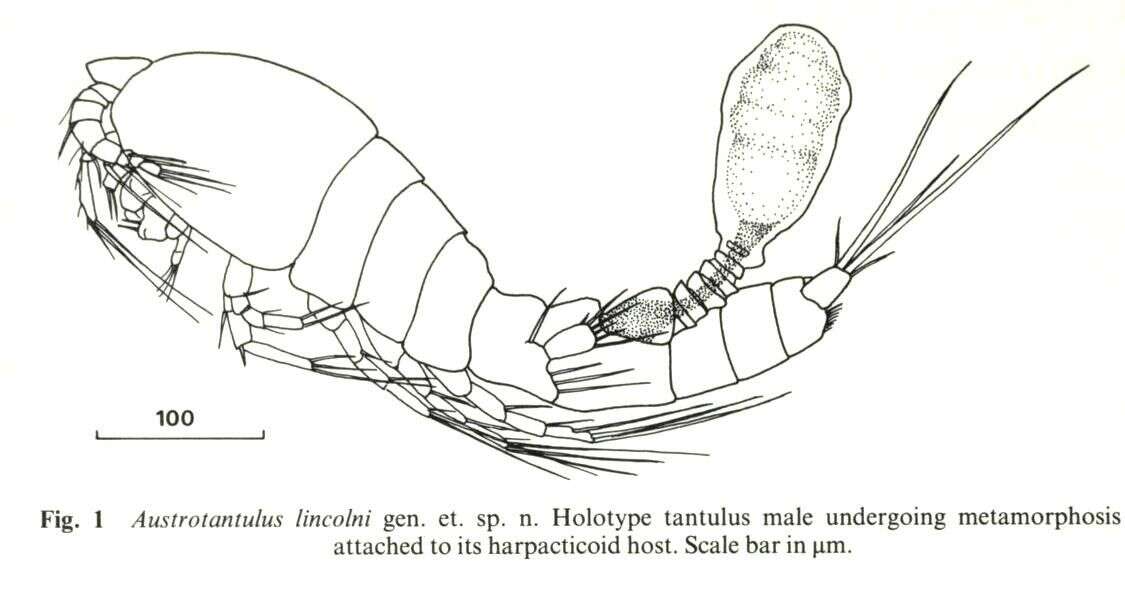
Tantulocarida is a highly specialised group of parasitic crustaceans that consists of about 33 species, treated as a class in superclass Multicrustacea. They are typically ectoparasites that infest copepods, isopods, tanaids, amphipods and ostracods.
Podocopa
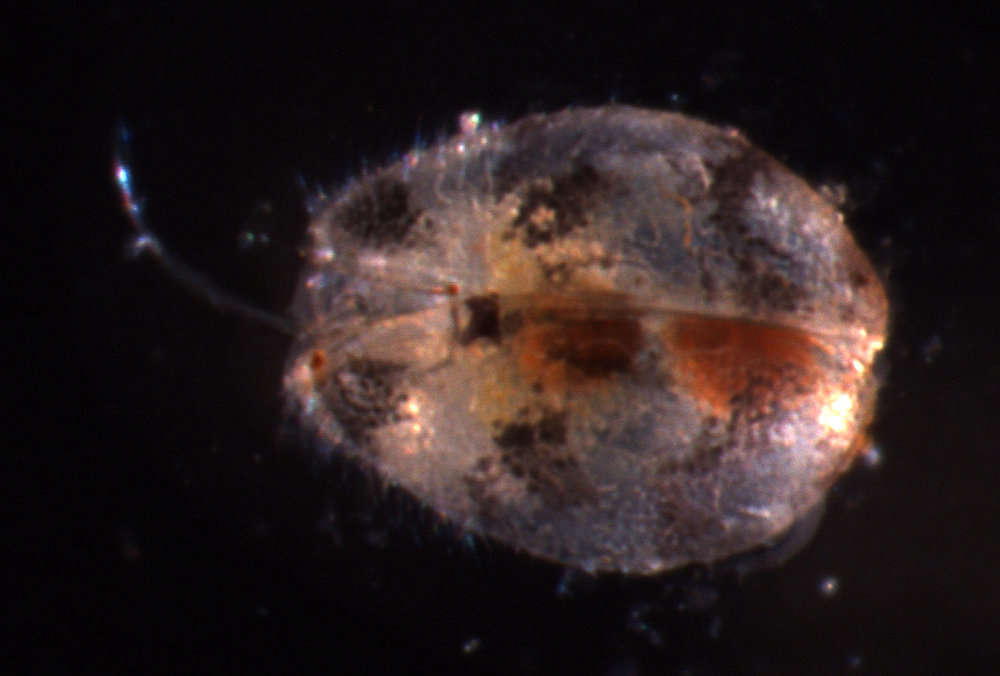
The Podocopa are a subclass of ostracods. Members of the subclass Podocopa can be differentiated from the other subclass of ostracods (Myodocopa) by the morphology of the second antenna: the Podocopa have a relatively long endopod, whereas the Myodocopa have a relatively long exopod. The seventh limb of the Podocopa has a variety of forms or is absent, but is never an annulated worm-like limb (as seen in some Myodocopa).

Myodocopa
Traditionally, the Myodocopa and Podocopa have been classified as subclasses within the class Ostracoda, although there is some question about how closely related the two groups actually are. The Myodocopa are defined by possession of a poorly calcified carapace, and 8–9 articles in the exopod of the second antenna. The ventral margin of the carapace is not concave, and the valves do not overlap to a great extent.
Derocheilocarididae
Derocheilocarididae is a family of marine crustaceans that form part of the meiobenthos. It is the only family in the monotypic order Mystacocaridida, and the monotypic subclass Mystacocarida. These mystacocarids are less than long, and live interstitially in the intertidal zones of sandy beaches.
Chilognatha
Chilognatha is a subclass of the class Diplopoda, which includes the vast majority of extant millipedes, about 12,000 species.
Arthropleuridea
Arthropleuridea, from Ancient Greek ἄρθρον (árthron), meaning "joint", and πλευρά (pleurá), meaning "rib", is an extinct subclass of myriapod arthropods that flourished during the Carboniferous period, having first arisen during the Silurian, and perishing in the Early Permian. Members are characterized by possessing diplosegement (fused "double segments", as in modern-day millipedes) paranotal tergal lobes separated from the body axis by a suture, and by sclerotized plates buttressing the leg insertions. Despite their unique features, recent phylogenetic research suggests Arthropleuridea be i
Argulidae
The family Argulidae, whose members are commonly known as carp lice or fish lice, (not to be confused with Caligidae, also commonly referred to as sea lice) are parasitic crustaceans in the class Ichthyostraca. It is the only family in the monotypic subclass Branchiura and the order Arguloida, although a second family, Dipteropeltidae, has been proposed.
Dromopoda
Dromopoda is a proposed subclass of the arachnids, including the Opiliones (harvestmen), Scorpions, Pseudoscorpions and Solifugae ("camel spiders"). The latter three are sometimes grouped as Novogenuata. This taxon was first proposed by Jeffrey Shultz in 1990 based on morphological analysis. A combined morphological and molecular analysis in 1998 supported the monophyly of Dromopoda. However, subsequent molecular and combined analyses have not supported the monophyly of Dromopoda.