Category
page 1Asexual reproduction

cloning
thumb|upright=1.35|Many organisms, including aspen trees, reproduce by cloning, often creating large groups of organisms with the same [[DNA. One example depicted here is quaking aspen.]]
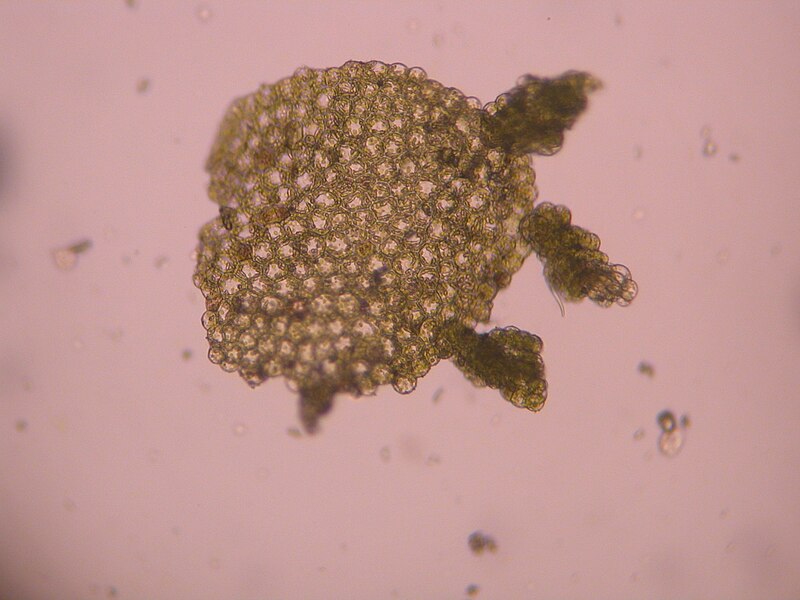
asexual reproduction
biological process in which new individuals are produced by either a single cell or a group of cells, in the absence of any sexual process

grafting
thumb|right|upright|Cherry tree, consolidated "V" graft
thumb|right|upright|Tape has been used to bind the rootstock and scion at the graft, and tar to protect the scion from desiccation.
thumb|right|upright|A grafted tree showing two differently coloured blossoms

vegetative reproduction
asexual method of reproduction in plants

budding
thumb|Saccharomyces cerevisiae reproducing by budding
cutting
piece of a plant that is used in horticulture for vegetative (asexual) propagation

apomixis
thumb|right|Vegetative apomixis in Poa bulbosa; [[bulbils form instead of flowers]]
In botany, apomixis is asexual development of seed or embryo without fertilization.
layering
Plant propagation technique
fission
biological process
fragmentation
form of asexual reproduction

androgenesis
thumb|upright=1.3|Corbicula leana is one of the species of its genus known to be capable of reproducing androgenetically without females.
Androgenesis is a system of asexual reproduction that requires the presence of eggs and occurs when a zygote is produced with only paternal nuclear genes. During standard sexual reproduction, one female parent and one male parent each produce haploid gametes (such as a sperm or egg cell, each containing only a single set of chromosomes), which recombine to create offspring with genetic material from both parents. However, in androgenesis, there is no recombi

keiki
thumb|right|Apical keikis on Phalaenopsis mother plant
thumb|right|Apical keiki in flower on Phalaenopsis mother plant
In horticulture, a keiki ( ) is a plant produced asexually by an orchid plant, especially Dendrobium, Epidendrum (sensu lato), and Phalaenopsis orchids. The baby plant is an exact clone of the mother plant, sometimes flowering while still attached to the mother. The word is Hawaiian for 'baby' or 'child', literally meaning 'the little one'.

automixis
thumb|280px|right|The effects of central fusion and terminal fusion on heterozygosity
Acervulus
thumb|Acervulus morphology. cu: Plant cuticle|cuticle, co: [[conidium, cf: conidiophore, ps: pseudo-parenchymatic stroma, hi: hypha.]]
An acervulus (pl. acervuli) is a small asexual fruiting body that erupts through the epidermis of host plants parasitised by mitosporic fungi of the form order Melanconiales (Deuteromycota, Coelomycetes). It has the form of a small cushion at the bottom of which short crowded conidiophores are formed. The spores escape through an opening at the top.
Vivipary
thumb|Watsonia meriana, near the end of flowering, has [[cormlets that eventually drop and root.]]
thumb|Red mangrove seeds germinate while still on the parent tree.
thumb|Vivipary in overripe tomato
arrhenotoky
thumb|upright=2.0|Honey bees produce [[haploid males from unfertilized eggs]]
Arrhenotoky (from Greek ἄρρην árrhēn "male" and τόκος tókos "birth"), also known as arrhenotokous parthenogenesis, is a form of parthenogenesis in which unfertilized eggs develop into males. In most cases, parthenogenesis produces exclusively female offspring, hence the distinction.
epitoky
thumb|right|200px|Syllid [[polychaete budding epitokes for the purpose of sexual reproduction.]]
thumb|right|200px|Alitta succinea, the common clam worm ([[Nereididae) in epitoky stage]]
nucellar embryony
form of seed reproduction
thelytoky
thumb|upright=1.5|Aphid giving birth by [[parthenogenesis, the live young growing from unfertilized eggs]]
division
horticulture