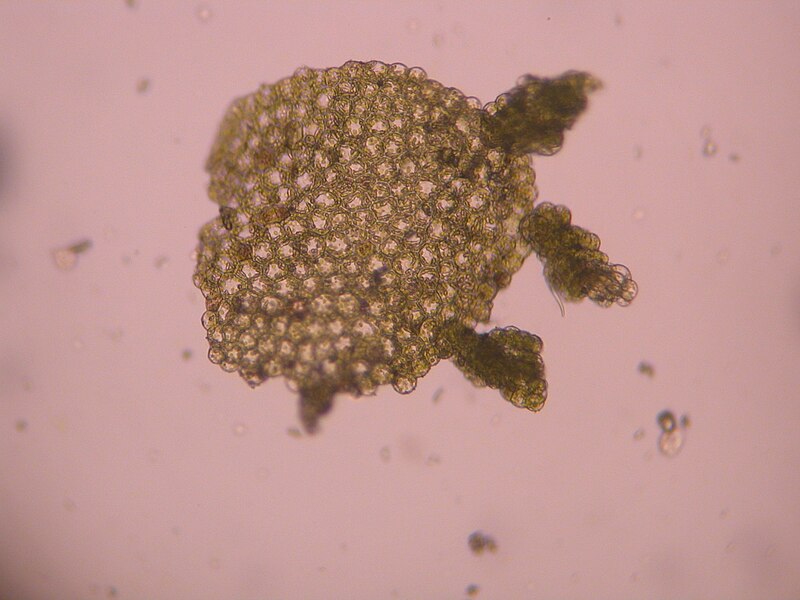
File:Caduco.jpg · Wikimedia Commons · See Wikimedia Commons
asexual reproduction
Sign in to saveAlso known as GO:0019954, asexual cell division, agamogenesis
biological process in which new individuals are produced by either a single cell or a group of cells, in the absence of any sexual process
Asexual reproduction is a biological process where new organisms develop from a single cell or group of cells without involving sex or the mixing of genetic material from two parents. This method of reproduction is important because many plants, fungi, and microorganisms rely on it to create offspring quickly and efficiently.
AI-generated from the Wikipedia summary — may contain errors.
Research
7,857 papers- Asexual reproduction through seeds: the complex case of diplosporous apomixis.ReviewJournal of experimental botany · 2023Cornaro L, Banfi C, Cucinotta M et al.DOI: 10.1093/jxb/erad054
- Asexual Reproduction in Sponges: A Review.ReviewMolecular reproduction and development · 2026Ereskovsky AV, Lavrov AIDOI: 10.1002/mrd.70083
- Asexual reproduction for improved livestock breeding.Trends in biotechnology · 2024Fan Z, Gu T, Hackett PB et al.DOI: 10.1016/j.tibtech.2023.10.002
- Grazing reduces plant sexual reproduction but increases asexual reproduction: A global meta-analysis.The Science of the total environment · 2023Wentao M, Shiming T, Le Q et al.DOI: 10.1016/j.scitotenv.2023.162850
- [Research progress in asexual reproduction technology of Callicarpa].ReviewZhongguo Zhong yao za zhi = Zhongguo zhongyao zazhi = China journal of Chinese materia medica · 2025Zhang YT, Xu JF, Fang L et al.DOI: 10.19540/j.cnki.cjcmm.20241215.104
- Sexual and asexual reproduction in the colonial ascidian Botryllus schlosseri.ReviewGenesis (New York, N.Y. : 2000) · 2015Gasparini F, Manni L, Cima F et al.DOI: 10.1002/dvg.22802
- Asexual reproduction: genetics and evolutionary aspects.ReviewCellular and molecular life sciences : CMLS · 2007de Meeûs T, Prugnolle F, Agnew PDOI: 10.1007/s00018-007-6515-2
- Sexual conflict as a constraint on asexual reproduction: an empirical review.ReviewBiological reviews of the Cambridge Philosophical Society · 2025Wilner D, Bonduriansky R, Burke NWDOI: 10.1111/brv.70064
via PubMed
Wikidata facts
- Instance of
- biological process
- Subclass of
- reproduction
- Image
- Binary Fission.png
Show 7 more facts
- Commons category
- Asexual reproduction
- Stack Exchange tag
- biology.stackexchange.com/tags/asexual-reproduction
- topic's main category
- Category:Asexual reproduction
- exact match
- purl.obolibrary.org/obo/GO_0019954
- opposite of
- sexual reproduction
- on focus list of Wikimedia project
- Wikipedia:Vital articles/Level/4
- different from
- asexuality
via Wikidata · CC0
~22 min read
Encyclopedic overview
Asexual reproduction in liverworts: a caducous phylloid germinating Asexual reproduction is a type of reproduction that does not involve the fusion of gametes or change in the number of chromosomes. The offspring that arise by asexual reproduction from either unicellular or multicellular organisms inherit the full set of genes of their single parent and thus the newly created individual is genetically and physically similar to the parent or an exact clone of the parent. Asexual reproduction is the primary form of reproduction for single-celled organisms such as archaea and bacteria. Many eukaryotic organisms including plants, animals, and fungi can also reproduce asexually. In vertebrates, the most common form of asexual reproduction is parthenogenesis, which is typically used as an alternative to sexual reproduction in times when reproductive opportunities are limited. Some monitor lizards, including Komodo dragons, can reproduce asexually.
While all prokaryotes reproduce without the formation and fusion of gametes, mechanisms for lateral gene transfer such as conjugation, transformation and transduction can be likened to sexual reproduction in the sense of genetic recombination in meiosis.
Excerpted from Wikipedia’s “asexual reproduction” article, available under the CC BY-SA 4.0 licence.
Gallery (8)
Available in 75 languages
- Español
- Français
- Deutsch
- 中文
- 日本語
- Русский
- Português
- Italiano
- العربية
- हिन्दी
- Albanian
- Armenian
- Asturian
- Bahasa Indonesia
- Bangla
- Bashkir
- Basque
- Belarusian
Show 56 more
- Bosnian
- Bulgarian
- Catalan
- Chuvash
- Croatian
- Czech
- Danish
- Esperanto
- Estonian
- Fiji Hindi
- Filipino
- Finnish
- fiu_vro
- Galician
- Georgian
- Greek
- Haitian Creole
- Hebrew
- Hungarian
- Icelandic
- Interlingua
- Irish
- Kabyle
- Kannada
- Kazakh
- Kurdish
- Latvian
- Lithuanian
- Macedonian
- Malay
- Nederlands
- Norwegian
- Oromo
- Pashto
- Polski
- Romanian
- Serbian
- Serbian (Latin)
- simple
- Sinhala
- Slovak
- Slovenian
- Svenska
- Tamil
- Tiếng Việt
- Türkçe
- Ukrainian
- Urdu
- Uzbek
- Western Frisian
- Wu Chinese
- Xhosa
- zh_yue
- فارسی
- ไทย
- 한국어
via Wikidata sitelinks · CC0