Category
page 1Asparagales genera
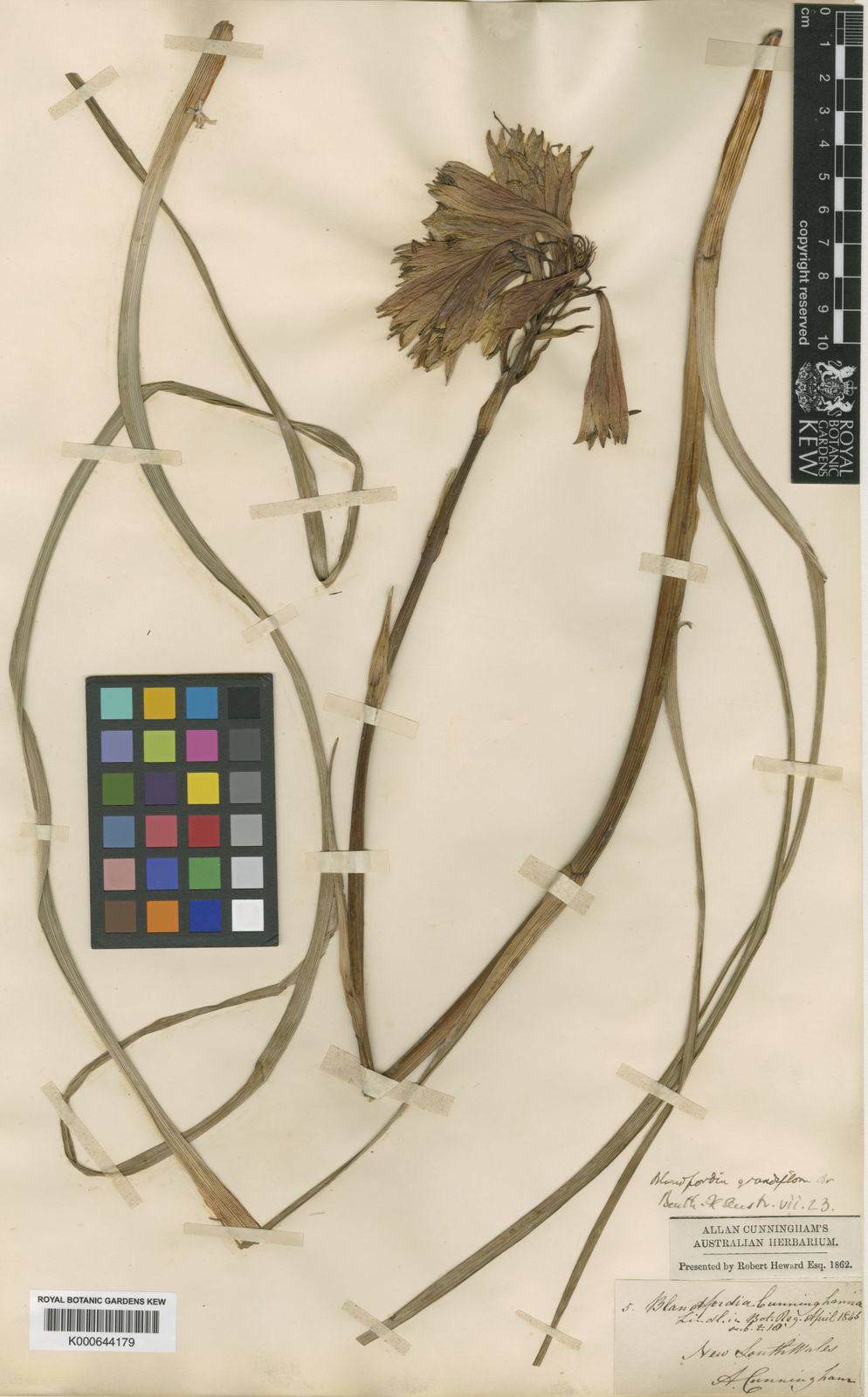
Blandfordia
Blandfordia, commonly known as Christmas bells, is a genus of four species of flowering plants native to eastern Australia. Christmas bells are tufted, perennial herbs with narrow, linear leaves and up to twenty large, drooping, cylindrical or bell-shaped flowers.

Ixiolirion
alt=Ixiolirion Tataricum, Behbahan|thumb|Ixiolirion Tataricum, Behbahan
Ixiolirion is a genus of flowering plants native to central and southwest Asia, first described as a genus in 1821. Recent classifications place the group in the monogeneric family Ixioliriaceae in the order Asparagales of the monocots. In earlier systems of classification, it was usually placed in the family Amaryllidaceae.
alt=Ixiolirion Tataricum in Behbahan |thumb|Ixiolirion Tataricum in Behbahan, Iran
alt=Ixiolirion Tataricum in Deserts of Central Iran|thumb|Ixiolirion Tataricum in Deserts of Central Iran
The genus n

Doryanthes
Doryanthes is the sole genus in the flowering plant family Doryanthaceae. The genus consists of two species, D. excelsa (gymea lily) and D. palmeri (giant spear lily), both endemic natives of the coast of Eastern Australia. Doryanthaceae is part of the order Asparagales (the asparagoid lilies).
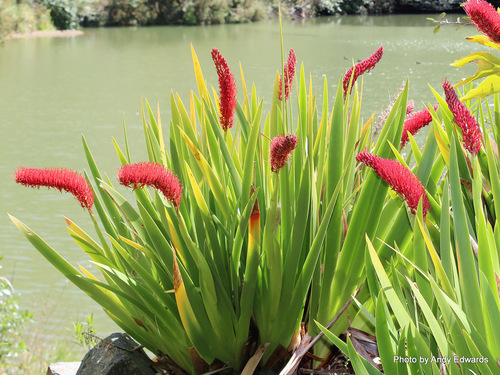
Xeronema
Xeronema is a genus of flowering plants containing two species, Xeronema moorei from New Caledonia, and Xeronema callistemon (the Poor Knights lily) from the Poor Knights Islands and Taranga Island in New Zealand. The plants are herbaceous monocots, spreading by rhizomes, and have large flowers set on terminal spikes, with stamens towering above the flowers.
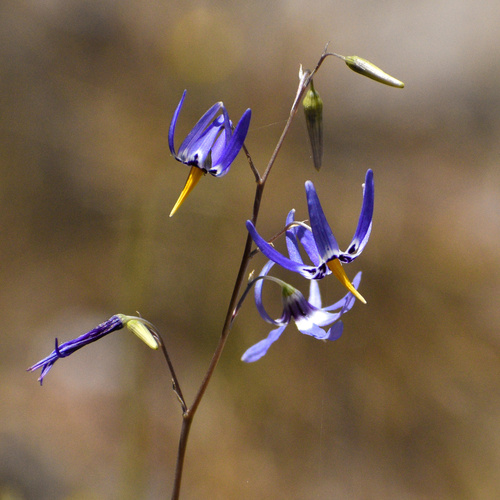
Conanthera
Conanthera is a genus of small bulbous plants with small panicles of blue, purple or white and purple flowers. Propagation is by offsets or seed. All species are native to Chile, but there is an old 18th-Century report of C. bifolia occurring in colonial Peru as well. This could possibly be attributed to changes in boundaries between the two countries, as modern sources list the species as endemic to Chile.
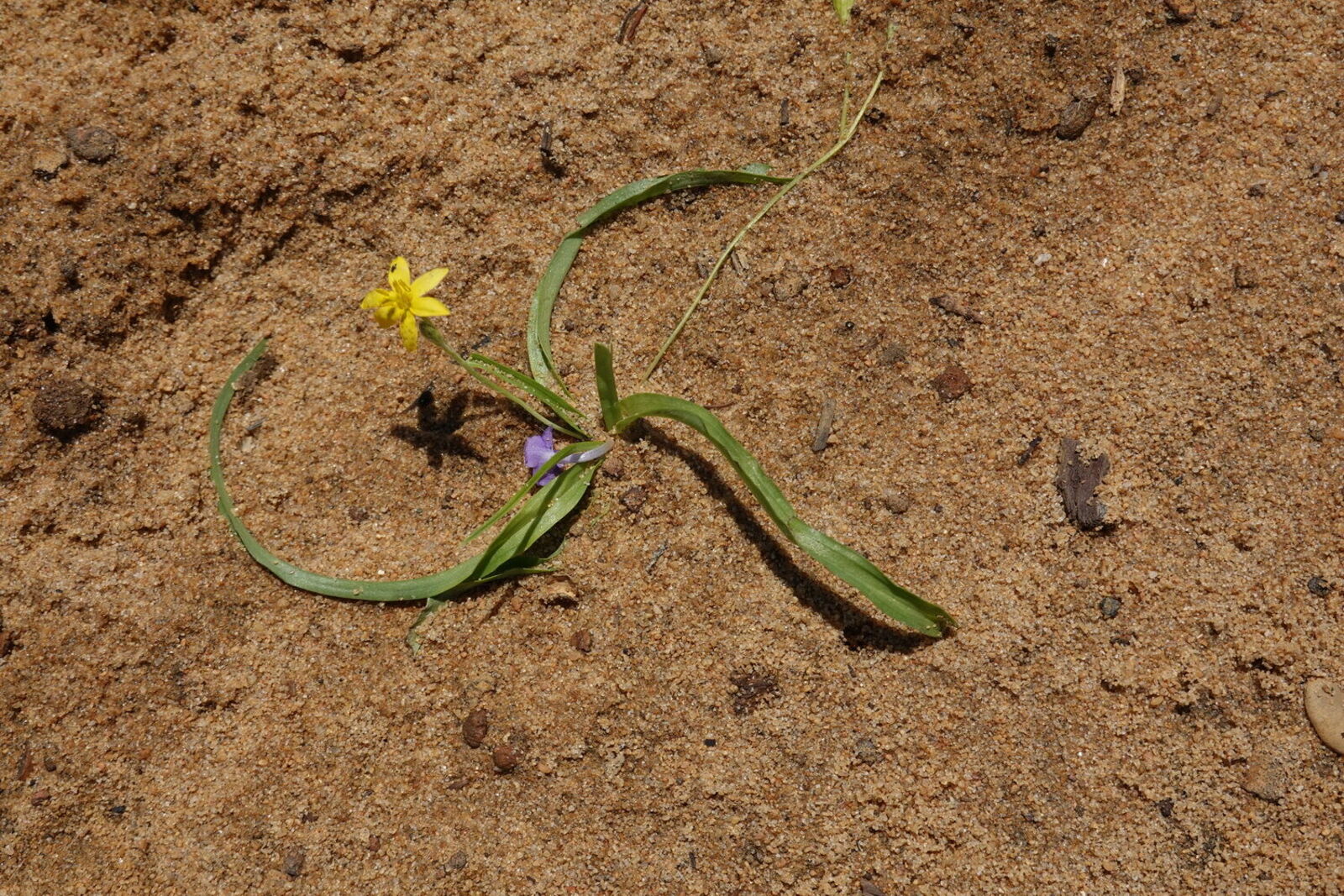
Hypoxis
Hypoxis is a genus of flowering plants of the family Hypoxidaceae. The genus has an "almost cosmopolitan" distribution, occurring in Africa, the Americas, Asia, and Australia. Europe lacks native species. Most species are in the Southern Hemisphere, especially in southern Africa. Common names for the genus include star-grass, star lily, yellow stars, African potato, and stars. The genus is the largest of the Hypoxidaceae and has its centre of variation in South Africa, where it occurs in open undisturbed grasslands. The name Hypoxis was taken over by Linnaeus in 1759 from a name coined by Paul

Curculigo
Curculigo is a flowering plant genus in the family Hypoxidaceae, first described in 1788. It is widespread across tropical regions of Asia, Africa, Australia, and the Americas.
%20flowers.jpg)
Tecophilaea
Tecophilaea is a genus of cormous plants in the family Tecophilaeaceae. There are two known species, both native to southern South America.

Astelia
Astelia is a genus of flowering plants in the recently named family Asteliaceae. They are rhizomatous tufted perennials native to various islands in the Pacific, Indian, and South Atlantic Oceans, as well as to Australia and to the southernmost tip of South America. A significant number of the known species are endemic to New Zealand. The species generally grow in forests, swamps and amongst low alpine vegetation; occasionally they are epiphytic.

Walleria
Walleria is a genus of plants in the Tecophilaeaceae, first described as a genus in 1864. It is native to central and southern Africa.
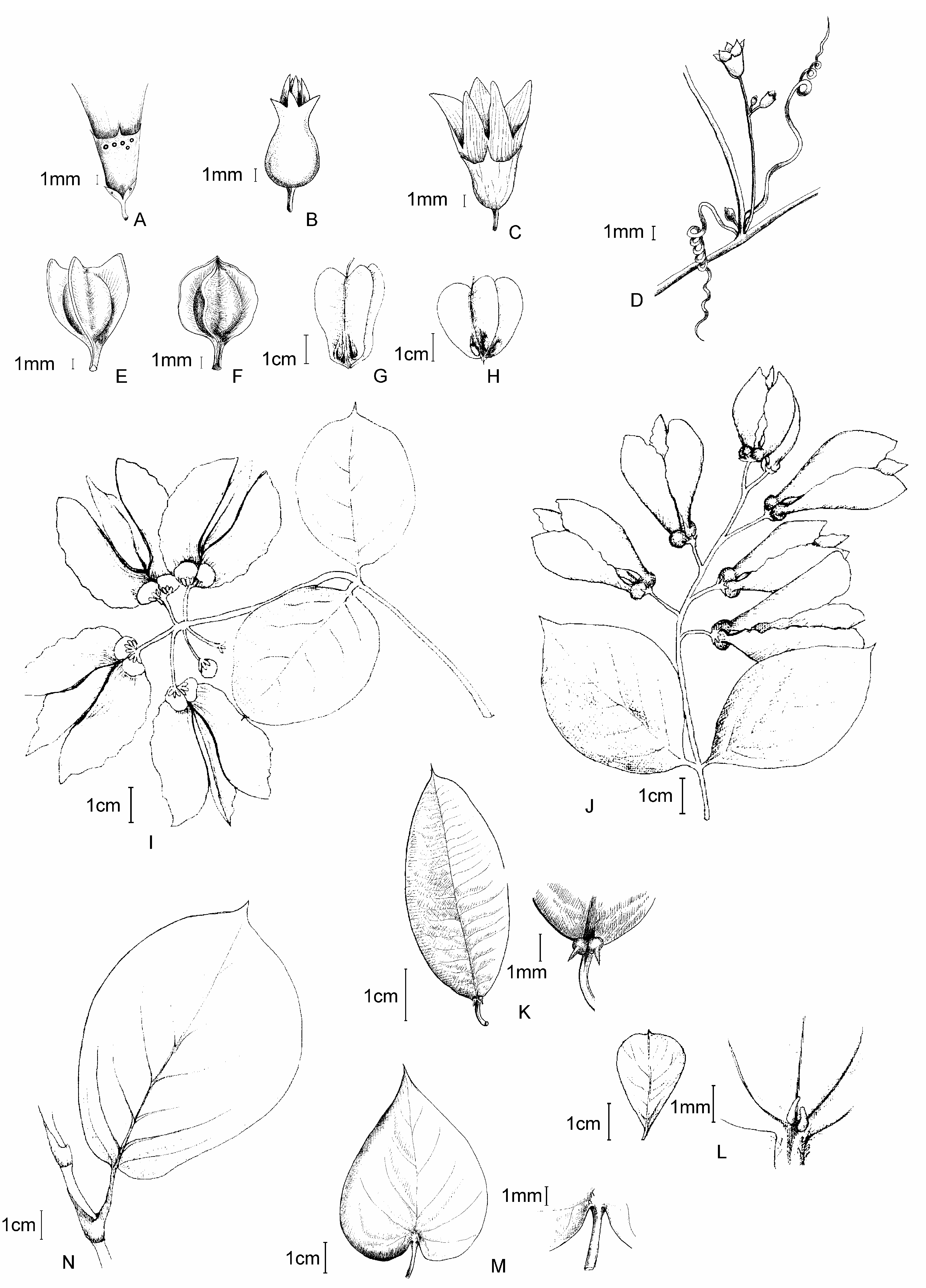
Cyanastrum
Cyanastrum is a genus of plants in the family Tecophilaeaceae, native to tropical Africa. It contains three currently recognized species.

Zephyra
Zephyra is a genus of cormous plants in the Tecophilaeaceae, first described as a genus in 1832. It is endemic to Northern Chile in South America.
.jpg)
Cyanella
Cyanella is a genus of cormous perennial herbs native to South Africa and Namibia, first described for modern science in 1754.
Borya
Borya is a genus of flowering plants in the family Boryaceae, endemic to Australia.

Empodium
Empodium is a genus of flowering plants in the family Hypoxidaceae, first described in 1866. It grows from a small corm which produces lance-shaped or pleated and sometimes hairy, star-shaped flowers and leaves with long in Autumn season. The genus is native to winter-rainfall areas in South Africa, Eswatini, Lesotho, and Namibia.
Pauridia
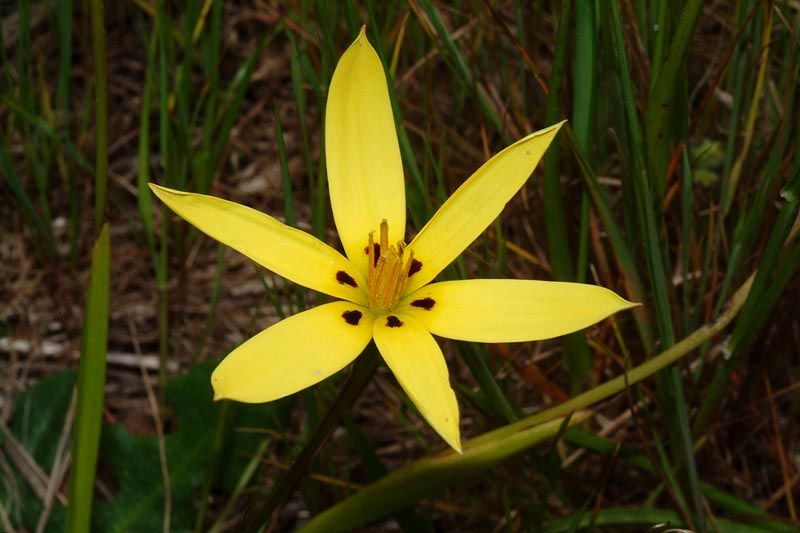
Pauridia is a flowering plant genus in the family Hypoxidaceae. It is native to southern Africa (the Cape Provinces, KwaZulu-Natal, Lesotho and Namibia), and southern Australia (New South Wales, South Australia, Tasmania, Victoria, Western Australia). It has been introduced into New Zealand. The southern African species have been transferred from the genus Spiloxene.

Milligania
Milligania is a genus of native perennial plants containing five species which are all found in Tasmania:

Odontostomum hartwegii
Odontostomum is a monotypic genus of flowering plants containing the single species Odontostomum hartwegii, which is known by the common name '''Hartweg's doll's-lily'''. In the APG III classification system, it is placed in the family Tecophilaeaceae. It was formerly placed in the Liliaceae. It This wildflower is endemic to northern California, where it can be found in the inner coastal mountain ranges and the Sierra Nevada foothills. It grows in rocky clay and often serpentine soils in grassland and woodland habitat, sometimes near vernal pools. This is a perennial herb growing from an oval-
Kabuyea
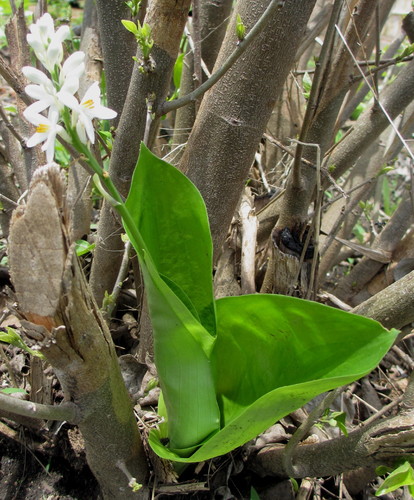
Kabuyea is a plant genus in the family Tecophilaeaceae, first described as a genus in 1998. It has one known species, Kabuyea hostifolia, native to Tanzania and Mozambique.