Category
page 1Assistive technology

Braille script
thumb|Accessibility Braille [[dashboard in elevator]]

remote control
physical device used to control another device remotely (often wirelessly)
.jpg)
subtitle
thumb|300px|A scene from the 1963 film Charade (1963 film)|Charade, showing dialogue spoken by [[Audrey Hepburn and Dominique Minot subtitled in English. Quotation dashes are used to differentiate between speakers.]]

closed-circuit television
use of video cameras to transmit a signal to a specific place on a limited set of monitors

speech synthesis
artificial production of human speech

crutch
alt=|thumb|Underarm (axillary) crutches used to keep weight off the injured leg.
alt=Man using forearm crutches|thumb|A man using forearm crutches
A crutch is a mobility aid that transfers weight from the legs to the upper body. It is often used by people who cannot use their legs to support their weight, for reasons ranging from short-term injuries to lifelong disabilities.

telemedicine
thumb|Telehealth
Telehealth is the use of electronic information and telecommunication technologies to support long-distance clinical health care, patient and professional health-related education, health administration, and public health.This includes data sharing by way of patient portals and electronic medical records. Telehealth encompasses a broad range of technologies and services used to provide patient care, health education, public health services, and health administration remotely using telecommunications technologies.

videotelephony
thumb|250px|A telepresence system in 2007

FaceTime
FaceTime is a proprietary videotelephony product developed by Apple. FaceTime is available on supported iOS mobile devices running iOS 4 and later and Mac computers that run and later. FaceTime supports any iOS device with a forward-facing camera and any Mac computer equipped with a FaceTime Camera. FaceTime Audio, an audio-only version, is available on any iOS device that supports iOS 7 or newer, and any Mac with a forward-facing camera running OS X 10.9.2 and later.
assistive technology
techniques (physical and virtual) for people with disabilities
screen reader
assistive technology that converts text or images to speech or Braille
stairlift
mechanical device for people with needs
virtual keyboard
software component that allows a user to enter characters
tactile paving
system of textured ground surface indicators to assist pedestrians who are blind or visually impaired
closed captioning
used to provide the text of a show's audio portion to those who may have trouble hearing it
audio description
the translation of audiovisual media into narration for blind, partially sighted and visually impaired viewers
bone conduction
conduction of sound to the inner ear through bones other than the ossicles of the middle ear

autocomplete
thumb|Example of the partially typed search term baby st being autocompleted to various options
Autocomplete, or word completion, is a feature in which an application predicts the rest of a word a user is typing. In Android and iOS smartphones, this is called predictive text. In graphical user interfaces, users can typically press the tab key to accept a suggestion or the down arrow key to accept one of several.
voice user interface
makes spoken human interaction with computers possible, using speech recognition to understand spoken commands and answer questions

monocular
thumb|200px|right|Galilean type Soviet-made miniature 2.5 × 17.5 monocular
thumb|200px|right| Diagram of a monocular using a Schmidt-Pechan prism:
1 – Objective lens 2 – Schmidt-Pechan prism 3 – Eyepiece
HAL
powered exoskeleton suit
induction loop
type of detection system

paratransit
thumb|Two Maui Bus buses engaged in paratransit services. One is picking up a person who uses a [[wheelchair, while another is discharging another person using a mobility scooter.]]
Perkins Brailler
braille embossing typewriter
audio induction loop
assistive listening technology

English Braille
Braille alphabet of the English language
universal remote
remote control that can be programmed to operate various brands of one or more types of consumer electronics devices
ATutor
ATutor is an open source web-based learning management system (LMS).

Cybathlon
alt=Logo of CYBATHLON|thumb|CYBATHLON - For a world without barriers.
CYBATHLON, a project of ETH Zurich, acts as a platform that challenges teams from all over the world to develop assistive technologies suitable for everyday use with and for people with disabilities. The driving force behind CYBATHLON is international competitions and events, in which teams consisting of technology developers from universities, companies or NGOs and a person with disabilities (pilot) tackle unsolved everyday tasks with their latest assistive technologies. Besides the actual competition, the CYBATHLON offers
telephone interpreting
service connecting human interpreters to users via telephone
cloud robotics
intersection of cloud computing and robotics
curb cut effect
phenomenon of disability-friendly features also being appreciated by people in general
ILIAS
ILIAS ( [German for "Integrated Learning, Information and Work Cooperation System"]) is an open-source web-based learning management system (LMS). It supports learning content management (including SCORM 2004 compliance) and tools for collaboration, communication, evaluation and assessment. The software is published under the GNU General Public License and can be run on any server that supports PHP and MySQL.
ReWalk
ReWalk is a commercial bionic walking assistance system that uses powered leg attachments to enable paraplegics to stand upright, walk and climb stairs. The system is powered by a backpack battery, and is controlled by a simple wrist-mounted remote which detects and enhances the user's movements. Designed in Yokneam, Israel, by Amit Goffer, the ReWalk is marketed by Lifeward Ltd., and is priced at approximately US$85,000 per unit.
telecommunications device for the deaf
electronic text communication device

assistive cane
walking stick used as a mobility aid
screen magnifier
software category
telecommunications relay service
operator service that allows people who are deaf, hard of hearing, deafblind, or have a speech disorder to place calls to standard telephone users via a keyboard or assistive device
Picture Exchange Communication System
a communication teaching method for people with limited speech
surtitles
thumb|upright=1.4|Blank surtitle screen visible above the stage at the Royal Opera House, Covent Garden
PDF/UA
PDF/UA (PDF/Universal Accessibility), formally ISO 14289, is an International Organization for Standardization (ISO) standard for accessible PDF technology. A technical specification intended for developers implementing PDF writing and processing software, PDF/UA provides definitive terms and requirements for accessibility in PDF documents and applications. For those equipped with appropriate software, conformance with PDF/UA ensures accessibility for people with disabilities who use assistive technology such as screen readers, screen magnifiers, joysticks and other technologies to navigate an
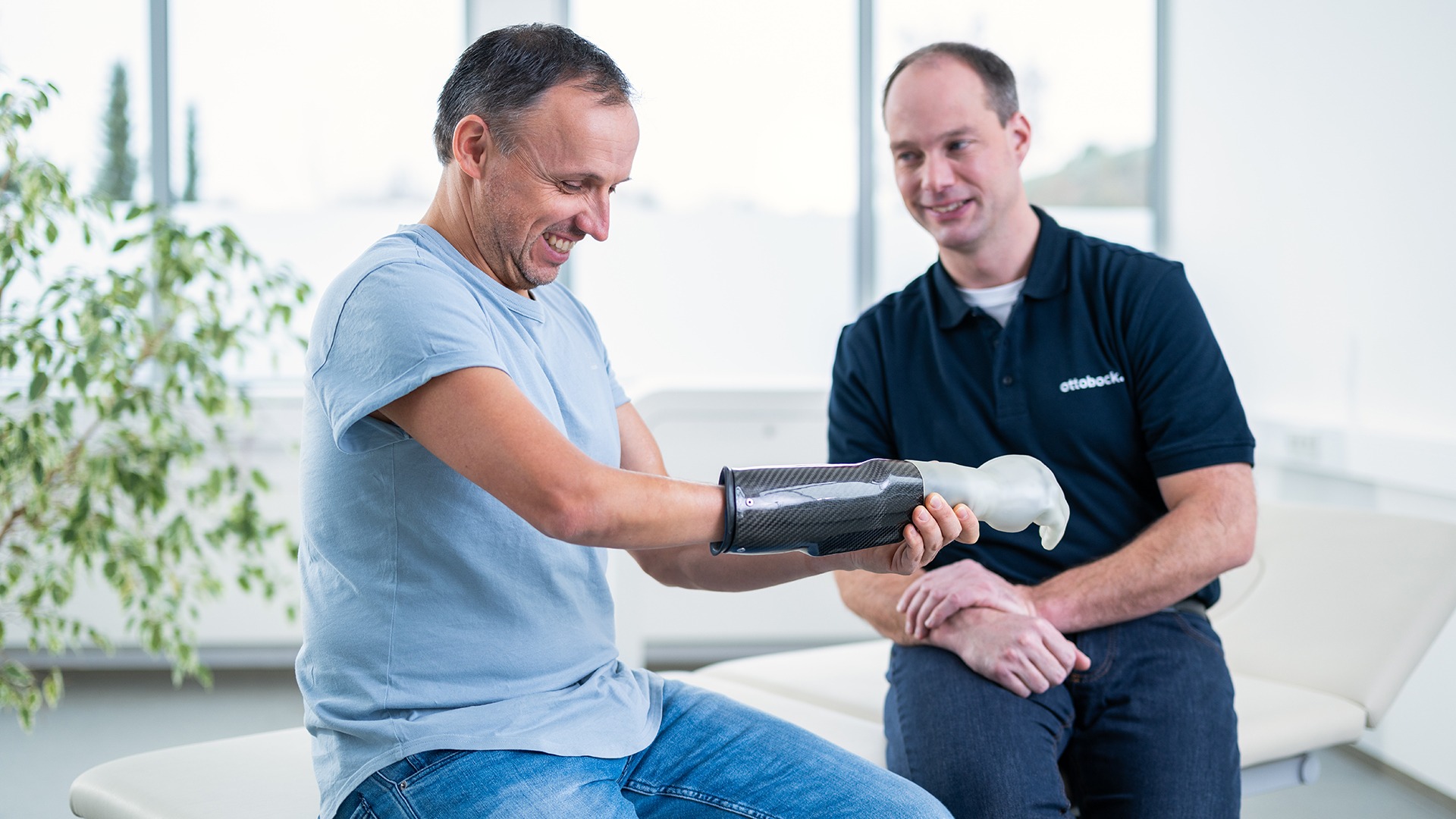
Ottobock
Ottobock SE & Co. KGaA, formerly Otto Bock, is an international company based in Duderstadt Germany, that operates in the field of orthopedic technology. It is considered the world market leader in the field of prosthetics and one of the leading suppliers in orthotics, wheelchairs and exoskeletons.
Bicycle training wheels
additional wheel mounted parallel to the rear wheel of a bicycle to assist learners until they have developed balance on a bicycle
Spanish flower
coin shape
iBOT
The iBOT is a powered wheelchair that uses gyroscopic technology to provide multiple operating modes for varied indoor and outdoor terrain.
asthma spacer
medical equipment used with metered dose inhalers
ColorADD
thumb|Example ColorADD symbols for seven colors
ColorADD is a sign code for aiding color blind people to recognize colors, developed by Portuguese graphic designer and professor at the University of Minho, Miguel Neiva. It consists of geometric shapes representing colors and color combinations. The app won the accessibility category of the 2013 Vodafone Foundation Mobile For Good Europe Awards.
Video magnifier
electronic device used for optical magnification
standing frame
wheelchair alternative for standing
electropalatography
Electropalatography (EPG) is a technique used to monitor contacts between the tongue and hard palate, particularly during articulation and speech.
rehabilitation robotics
area of research
Lekotek
Lekotek is an international program to lend Assistive Technology, toys and expertise to disabled children. The first lekotek opened in 1963 in Stockholm, Sweden. From there the concept spread to other Scandinavian countries, Europe and the rest of the world. For example, there are over 50 lekoteks in the United States. The first American lekotek opened in Evanston, Illinois in 1980. The first US lekoteks were founded by Sally DeVencentis and Sharon Draznin.
Kassel kerb
kerb optimised for buses approaching at bus stops
Stenomask
thumb|right|Court reporter tests his stenomask.
A stenomask is a hand-held microphone built into a padded, soundproof enclosure that fits over the speaker's mouth or nose and mouth. Some lightweight versions may be fitted with an elastic neck strap to hold them in place while freeing the user's hands for other tasks. The purpose of a stenomask is to allow a person to speak without being heard by other people, and to keep background noise away from the microphone.
data sonification
presentation of data as sound
toilet seat riser
assistive technology device to improve accessibility of toilets
video relay service
video telecommunication service
switch access scanning
indirect selection technique (or access method)
reading machine
area of research
Logitech Harmony
line of remote controls and home automation products produced by Logitech