Category
page 1Asteraceae genera

Chrysanthemum
Chrysanthemums ( ), sometimes abbreviated to mums or chrysanths, are perennial herbaceous flowering plants in the family Asteraceae that bloom in the autumn. They are native to East Asia and northeastern Europe. Most species originate from East Asia, and the center of diversity is in China. Many thousands of horticultural varieties and cultivars exist.

Dahlia
Dahlia ( , ) is a genus of bushy, tuberous, herbaceous perennial plants native to Mexico and Central America. Dahlias are members of the Asteraceae (synonym name: Compositae) family of dicotyledonous plants, its relatives include the sunflower, daisy, chrysanthemum, and zinnia. There are 49 species of dahlia, with flowers in almost every hue (except blue), with hybrids commonly grown as garden plants.

Taraxacum
thumb|Dandelion bilobed stigma bearing pollen

Artemisia
genus of plants in the family Asteraceae

Helianthus
Helianthus () is a genus comprising around 70 species of annual and perennial flowering plants in the daisy family Asteraceae commonly known as sunflowers. Except for three South American species, the species of Helianthus are native to North America and Central America. The best-known species is the common sunflower (Helianthus annuus). This and other species, notably Jerusalem artichoke (H. tuberosus), are cultivated in temperate regions and some tropical regions, as food crops for humans, cattle, and poultry, and as ornamental plants. The species H. annuus typically grows during the summer

Tagetes
Tagetes () is a genus of 50 species of annual or perennial, mostly herbaceous plants in the family Asteraceae. They are among several groups of plants known in English as marigolds. The genus Tagetes was described by Carl Linnaeus in 1753.

Aster
genus of plants

Centaurea
Centaurea () is a genus of over 700 species of herbaceous thistle-like flowering plants in the family Asteraceae. Members of the genus are found only north of the equator, mostly in the Eastern Hemisphere; the Middle East and surrounding regions are particularly species-rich.

Arctium
Arctium is a genus of biennial plants commonly known as burdock, family Asteraceae. Native to Europe and Asia, several species have been widely introduced worldwide. Burdock's clinging properties, in addition to providing an excellent mechanism for seed dispersal, led to the invention of the hook-and-loop fastener.

Calendula
Calendula () is a genus of about 15–20 species of annual and perennial herbaceous plants in the daisy family, Asteraceae that are often known as marigolds. They are native to Europe, North Africa, Macaronesia, West Asia and Western Himalayas and have their center of diversity in the Mediterranean Region. Other plants known as marigolds include corn marigold, desert marigold, marsh marigold, and plants of the genus Tagetes.

Matricaria
thumb|right|upright|Matricaria discoidea
thumb|right|upright|Matricaria chamomilla

Achillea
Achillea is a genus of flowering plants in the family Asteraceae. The plants typically have frilly leaves and are known colloquially as yarrows, although this common name usually refers to A. millefolium. The genus was named after the Greek mythological character Achilles, whose soldiers were said to have used yarrow to treat their wounds; this is reflected by common names such as allheal and bloodwort. The genus is native primarily to Eurasia and North America.

Gerbera
Gerbera ( or ) L. is a genus of plants in the Asteraceae (Compositae) family. The first scientific description of a Gerbera was made by J. D. Hooker in Curtis's Botanical Magazine in 1889 when he described Gerbera jamesonii, a South African species also known as Transvaal daisy or Barberton daisy. Gerbera is also commonly known as the African daisy.
There are also different colors of gerberas.

Carduus
Carduus is a genus of flowering plants in the family Asteraceae, and the tribe Cardueae, one of two genera considered to be true thistles, the other being Cirsium. Plants of the genus are known commonly as plumeless thistles. They are native to temperate Eurasia and North Africa, and several are known elsewhere as introduced species. This genus is noted for its disproportionately high number of noxious weeds compared to other flowering plant genera.

Cirsium
Cirsium is a genus of perennial and biennial flowering plants in the Asteraceae, one of several genera known commonly as thistles. They are more precisely known as plume thistles. These differ from other thistle genera (Carduus, Silybum and Onopordum) in having a seed with a pappus of feathered hairs on their achenes. The other genera have a pappus of simple unbranched hairs.

Cichorium
Cichorium is a genus of plants in the tribe Cichorieae within the family Asteraceae. The genus includes two cultivated species commonly known as chicory or endive, plus several wild species.

Solidago
Solidago, commonly called goldenrod, is a genus of about 100 to 120 species of flowering plants in the family Asteraceae. Most are herbaceous perennial species found in open areas such as meadows, prairies, and savannas. They are mostly native to North America, including Mexico; a few species are native to South America and Eurasia. Some American species have also been introduced into Europe and other parts of the world.
.jpg)
Senecio
Senecio is a genus of flowering plants in the daisy family (Asteraceae) that includes groundsels and some ragworts. Variously circumscribed taxonomically, the genus Senecio is one of the largest genera of flowering plants. Plants of the World Online currently accepts 1482 species.
%2C%20La%20Gomera%2C%20Espa%C3%B1a%2C%202012-12-14%2C%20DD%2001.jpg)
Sonchus
Sonchus is a genus of flowering plants in the tribe Cichorieae within the family Asteraceae and are commonly known as sow thistles (less commonly hare thistles or hare lettuces). Sowthistles are annual, biennial or perennial herbs, with or without rhizomes and a few are even woody (subgenus Dendrosonchus, restricted to the Canary Islands and Madeira).
.jpg)
Zinnia
Zinnia is a genus of plants of the tribe Heliantheae within the family Asteraceae. Members of the genus are notable for their solitary long-stemmed 12 petal flowers that come in a variety of bright colors. The name honors 18th-century German scientist Johann Gottfried Zinn.

Hieracium
Hieracium (),
known by the common name hawkweed and classically as '''''' (from ancient Greek ἱέραξ, 'hawk'),
is a genus of flowering plant in the family Asteraceae, and closely related to dandelion (Taraxacum), chicory (Cichorium), prickly lettuce (Lactuca) and sow thistle (Sonchus),
which are part of the tribe Cichorieae. Hawkweeds, with their 10,000+ recorded species and subspecies, do their part to make Asteraceae the second largest family of flowering plants.
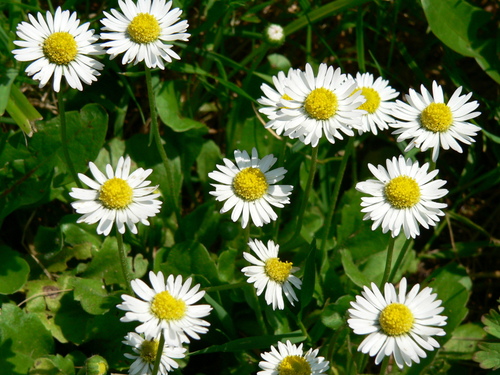
Bellis
Bellis () is a genus of flowering plants in the family Asteraceae.

Lactuca
Lactuca, commonly known as lettuce, is a genus of flowering plants in the family Asteraceae. The genus includes at 117 recognized species, distributed worldwide, but mainly in temperate Eurasia.

Helichrysum
The genus Helichrysum consists of an estimated 600 species of flowering plants in the sunflower family (Asteraceae). The type species is Helichrysum orientale. They often go by the names everlasting, immortelle, and strawflower. The name is derived from the Ancient Greek words (helios, sun) and (, gold).

Echinops
Echinops is a genus of about 130 species of flowering plants in the family Asteraceae, commonly known as globe thistles. They have spiny foliage and produce blue or white spherical flower heads. They are distributed from central Asia, Mongolia and north-eastern China to the Mediterranean basin, temperate regions of Eurasia, reaching to Indian subcontinent and tropical Africa. Globe thistles are a common host plant for weevils of the genus Larinus.

Stevia
genus of plants

Anthemis
Anthemis is a genus of aromatic flowering plants in the family Asteraceae, closely related to Chamaemelum, and like that genus, known by the common name chamomile; some species are also called dog-fennel or mayweed. Anthemis are native to the Mediterranean region and southwest Asia east to Iran. A number of species have also become naturalized in the United Kingdom and other parts of the world.

Echinacea
Echinacea is a genus of herbaceous flowering plants in the daisy family. It has ten species, which are commonly called coneflowers. They are native only in eastern and central North America, where they grow in wet to dry prairies and open wooded areas. They have large, showy heads of composite flowers, blooming in summer. The generic name is derived from the Greek word (''), meaning "hedgehog", due to the spiny central disk. These flowering plants and their parts have different uses. Some species are cultivated in gardens for their showy flowers. Two of the species, E. tennesseensis and E

Bidens
Bidens is a genus of flowering plants in the aster family, Asteraceae. The genus include roughly 230 species which are distributed worldwide. Despite their global distribution, the systematics and taxonomy of the genus has been described as complicated and unorganized. The common names beggarticks, black jack, burr marigolds, '''cobbler's pegs, Spanish needles, stickseeds, tickseeds and tickseed sunflowers' refer to the fruits of the plants, most of which are bristly and barbed. The generic name refers to the same character; Bidens comes from the Latin bi ("two") and dens'' ("tooth").

Cosmos
genus of plants

Tragopogon
Tragopogon, also known as goatsbeard or salsify, is a genus of flowering plants in the family Asteraceae. It includes the vegetable known as salsify, as well as a number of common wild flowers.

Tanacetum
thumb|right|Tanacetum corymbosum

Inula
thumb|right|Inula helenium
thumb|right|Inula oculus-christi
thumb|right|Ploughman's-spikenard (Inula conyzae)

Rudbeckia
thumb|Rudbeckia sp.
Rudbeckia () is a plant genus in the Asteraceae or composite family. Rudbeckia flowers feature a prominent, raised central disc in black, brown shades of green, and in-between tones, giving rise to their familiar common names of coneflowers and black-eyed-susans. All are native to North America, and many species are cultivated in gardens for their showy yellow or gold flower heads that bloom in mid to late summer.

Erigeron
Erigeron () is a large genus of plants in the composite family (Asteraceae). It is placed in the tribe Astereae and is closely related to the Old World asters (Aster) and the true daisies (Bellis). The genus has a cosmopolitan distribution, and the highest diversity occurs in North America.

Xanthium
Xanthium (cocklebur) is a genus of flowering plants in the tribe Heliantheae within the family Asteraceae, native to the Americas and eastern Asia and some parts of south Asia.

Leontopodium
thumb|220px|L. shinanense
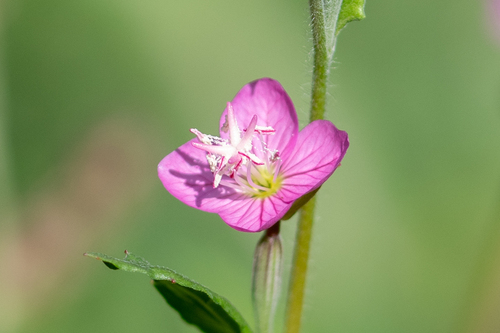
Arnica
Arnica is a genus of perennial, herbaceous plants in the sunflower family (Asteraceae). The genus name Arnica may be derived from the Greek arni, "lamb", in reference to the plants' soft, hairy leaves. Arnica is also known by the names mountain tobacco and, confusingly, '''''leopard's bane and wolfsbane'''—two names that it shares with the entirely unrelated genus Aconitum''.

Ageratum
thumb|right|220px|Bluemink (Ageratum houstonianum)
Ageratum () (whiteweed in the US) is a genus of 40 to 60 tropical and warm temperate flowering annuals and perennials from the family Asteraceae, tribe Eupatorieae. Most species are native to Central America and Mexico but four are native to the United States.

Petasites
thumb|right|Petasites japonicus

Leucanthemum
Leucanthemum is a genus of flowering plants in the aster family, Asteraceae. Species range naturally from Europe through the Caucasus, Turkey, Iran, Central Asia, and Siberia to the Russian Far East. Some species are known on other continents as introduced species, and some are cultivated as ornamental plants. The name Leucanthemum derives from the Greek words λευκός – leukos ("white") and ἄνθεμον – anthemon ("flower"). Common names for Leucanthemum species usually include the name daisy (e.g. ox-eye daisy, Shasta daisy), but "daisy" can also refer to numerous other genera in the Asteraceae fa

Scorzonera
thumb|right|Scorzonera humilis

Gnaphalium
Gnaphalium is a genus of flowering plants in the family Asteraceae, commonly called cudweeds or (formerly) chafeweeds. They are widespread and common in temperate regions, although some are found on tropical mountains or in the subtropical regions of the world.

Cynara
Cynara is a genus of thistle-like perennial plants in the family Asteraceae. They are native to the Mediterranean region, the Middle East, northwestern Africa, and the Canary Islands. The genus name comes from the Greek kynara, which means "artichoke".
.jpg)
Crepis
Crepis, commonly known in some parts of the world as hawksbeard or '''hawk's-beard' (but not to be confused with the related genus Hieracium with a similar common name), is a genus of annual and perennial flowering plants of the family Asteraceae superficially resembling the dandelion, the most conspicuous difference being that Crepis usually has branching scapes with multiple heads (though solitary heads can occur). The genus name Crepis derives from the Greek krepis'', meaning "slipper" or "sandal", possibly in reference to the shape of the fruit.
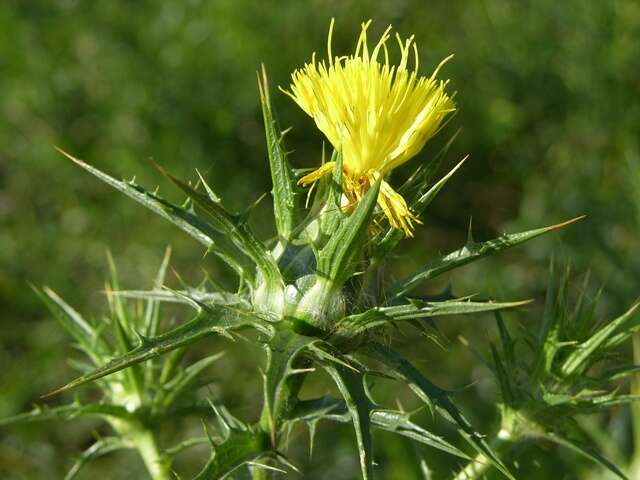
Carthamus
The genus Carthamus, the distaff thistles, includes plants in the family Asteraceae. The group is native to Europe, North Africa, and parts of Asia. The flower has been used since ancient times in the Philippines, which it has been called kasubha by the Tagalog people.

Gaillardia
Gaillardia (common name blanket flower) is a genus of flowering plants in the family Asteraceae, native to North and South America. It was named after Maître Gaillard de Charentonneau, an 18th-century French magistrate who was an enthusiastic botanist. The common name may refer to the resemblance of the inflorescence to the brightly patterned blankets made by Native Americans, or to the ability of wild taxa to blanket the ground with colonies. Many cultivars have been bred for ornamental use.

Onopordum
thumb|Cotton thistle (Onopordum acanthium) from Thomé Flora von Deutschland, Österreich und der Schweiz 1885
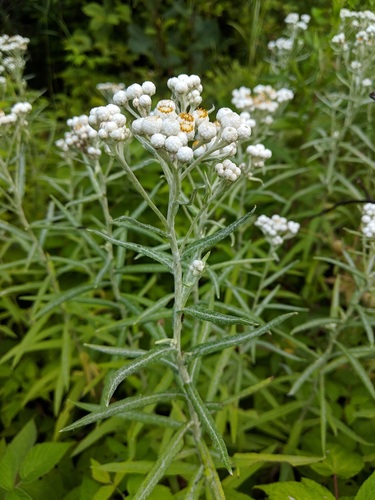
Antennaria
Antennaria is a genus of dioecious perennial herbs in the family Asteraceae, native to temperate regions of the Northern Hemisphere, with a few species (A. chilensis, A. linearifolia, A. sleumeri) in temperate southern South America; the highest species diversity is in North America. Common names include catsfoot or '''cat's-foot, pussytoes and everlasting'''.

Eupatorium
Eupatorium is a genus of flowering plants in the family Asteraceae, containing from 36 to 60 species depending on the classification system. Most are herbaceous perennials growing to tall. A few are shrubs. The genus is native to temperate regions of the Northern Hemisphere. The type species of the genus Eupatorium cannabinum, which is also the sole European species, is known as hemp-agrimony. Most in North America are commonly called boneset, thoroughwort or snakeroot. The genus is named after Mithridates VI Eupator, king of Pontus.
Hypochaeris
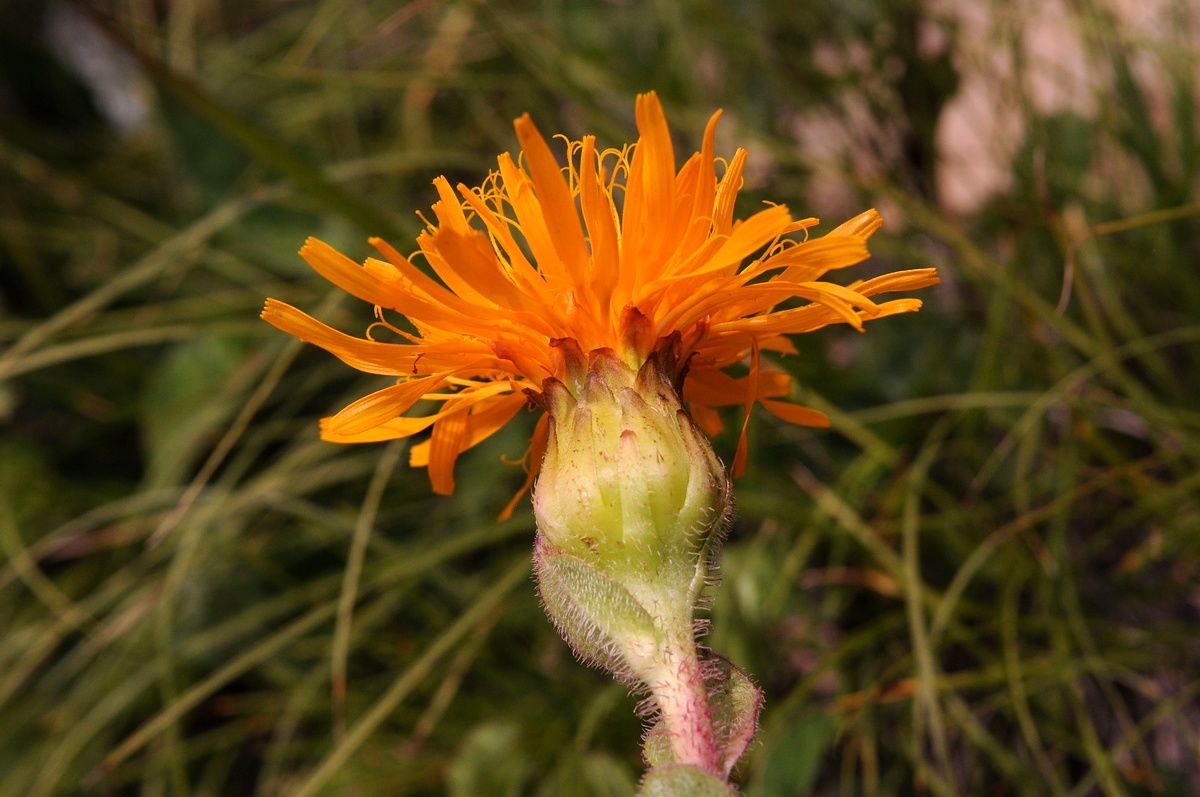
Hypochaeris is a genus of plants in the family Asteraceae. Many species are known as '''cat's ear'''. These are annual and perennial herbs generally bearing flower heads with yellow ray florets. These plants may resemble or be confused with dandelions and so some are called false dandelions.

Leontodon
Leontodon is a genus of plants in the tribe Cichorieae within the family Asteraceae, commonly known as hawkbits.

Doronicum
Doronicum is a genus of flowering plants in the sunflower family, known as '''leopard's bane'. They are all herbaceous perennials native to Europe, southwest Asia and Siberia. They produce yellow, daisy-like flowerheads in spring and summer. The plants typically thrive in cool, mountainous regions and prefer well-drained soil with partial to full sunlight exposure. Due to their bright and vibrant flowers, Doronicum'' species are often cultivated as ornamental plants in gardens, particularly for early-season color.

Carlina
Carlina is a genus of flowering plants in the family Asteraceae. It is distributed from Madeira and the Canary Islands across Europe and northern Africa to Siberia and northwestern China.
%20in%20Hyderabad%2C%20AP%20W%20IMG%200010.jpg)
Pulicaria
thumb|right|200px|Pulicaria wightiana in [[Hyderabad, India.]]

Vernonia
Vernonia is a genus of about 350 species of forbs and shrubs in the family Asteraceae. Some species of this genus are known as ironweeds. Some species are edible and of economic value. They are known for having intense purple flowers. There have been numerous distinct subgenera and subsections named in this genus, and some botanists have divided the genus into several distinct genera. For instance, the Flora of North America recognizes only about twenty species in Vernonia sensu stricto, seventeen of which are in North America north of Mexico, with the others being found in South America.

Coreopsis
Coreopsis () is a genus of flowering plants in the family Asteraceae. Common names include calliopsis and tickseed, a name shared with various other plants.

Serratula
Serratula is a genus of plants in the tribe Cardueae within the family Asteraceae native to Eurasia. Plumeless saw-wort is a common name for plants in this genus. Serratula as traditionally defined contains at least two groups: one of which is basal within the subtribe Centaureinae and one of which is derived; the former group can be moved to the genus Klasea.

Gazania
Gazania is a genus of flowering plants in the family Asteraceae, native to Southern Africa. They produce large, daisy-like composite flowerheads in brilliant shades of yellow and orange, over a long period in summer. They are often planted as drought-tolerant groundcover, but regarded as an environmental weed in parts of Australia, the Mediterranean, New Zealand, and California, where they have become naturalised.

Saussurea
Saussurea is a genus of about 300 species of flowering plants in the tribe Cardueae within the family Asteraceae, native to cool temperate and arctic regions of East Asia, Europe, and North America, with the highest diversity in alpine habitats in the Himalayas and East Asia. Common names include saw-wort and snow lotus, the latter used for a number of high altitude species in East Asia.