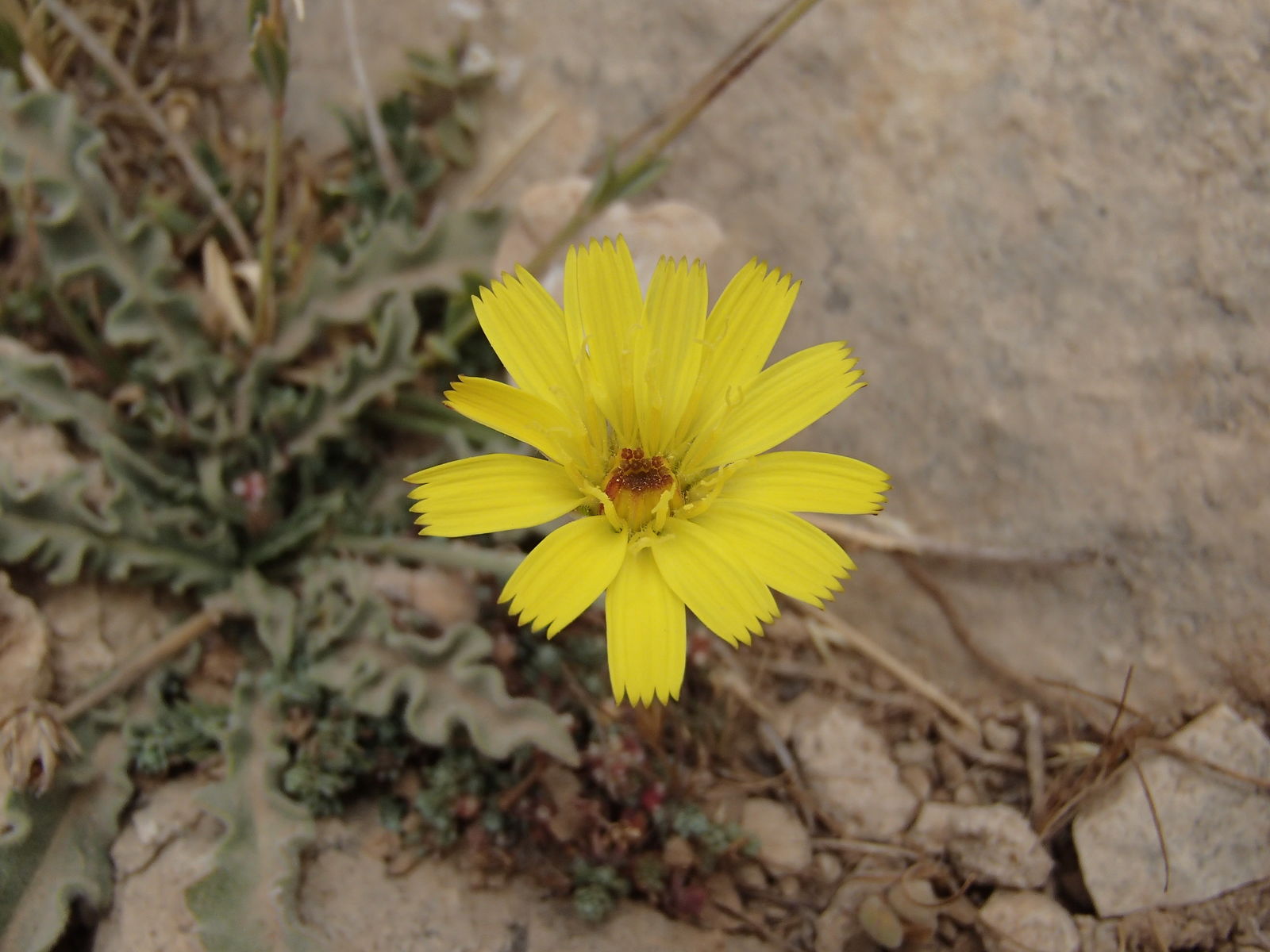
Leontodon · Kew POWO · Kew Plants of the World Online
Leontodon
Sign in to saveAlso known as Hawkbit
Leontodon is a genus of plants in the tribe Cichorieae within the family Asteraceae, commonly known as hawkbits.
OverviewAI-generated
Leontodon is a genus of plants within the family Asteraceae. It belongs to the order Asterales, class Magnoliopsida, and phylum Tracheophyta. The genus name is derived from the Greek words for lion and tooth. Common names for the group include hawkbit, Leeuwentand, and jajčar. The taxon was described by Adans. and is classified under the subfamily Cichorioideae.
Records for Leontodon have been documented in Mexico, the United States, Algeria, France, and Tunisia. These records are held by institutions such as the University of New Hampshire, GH, IDS, DAV, and MADUG-UG. The genus has an occurrence count of 442,830 and a record count of 795, with 600 associated media items. Its current status is listed as unassessed.
Synthesized by Vinony from 35 facts across 7 sources: Wikidata, GBIF, Gbif Occ, Plants of the World, iDigBio, WoRMS, Vinony graph. Generated from structured data (not the Wikipedia text) and checked against those facts — may still contain errors.
Species
GENUS
- KingdomPlantae
- PhylumTracheophyta
- ClassMagnoliopsida
- OrderAsterales
- FamilyAsteraceae
General: Leontodon (derived from Gr. λεων, leon, lion and οδούς
via GBIF · Kew POWO
Museum specimens
- Specimen records
- 795
- With media
- 600
- Family
- Asteraceae
- Collections
- MADUG-UG, IDS, GH, UNIVERSITY OF NEW HAMPSHIRE, DAV, CENTRAL CONNECTICUT STATE UNIVERSITY
- Recorded in
- Mexico, United States, Algeria, France, Tunisia, Syria, Italy, Portugal
Wikidata facts
- Instance of
- taxon
- Parent taxon
- Cichorioideae
- Image
- Nordschitz-Leontodon hispidus.tif
Show 8 more facts
- taxon rank
- genus
- taxon name
- Leontodon
- Commons category
- Leontodon
- topic's main category
- Category:Leontodon
- Commons gallery
- Leontodon
- taxon common name
- otavčič
- described by source
- Brockhaus and Efron Encyclopedic Dictionary
Sources (2)
via Wikidata · CC0
~3 min read
Encyclopedic overview
6 sectionsContents
- Ecology
- Uses
- Secondary metabolites
- Species
- Further reading
- References
Leontodon is a genus of plants in the tribe Cichorieae within the family Asteraceae, commonly known as hawkbits.
Their English name derives from the mediaeval belief that hawks ate the plant to improve their eyesight. Although originally only native to Eurasia and North Africa, some species have since become established in other countries, including the United States and New Zealand.
Excerpted from Wikipedia’s “Leontodon” article, available under the CC BY-SA 4.0 licence.