Category
page 1Astrodynamics

orbit
right|thumb|Variation of orbital eccentricity
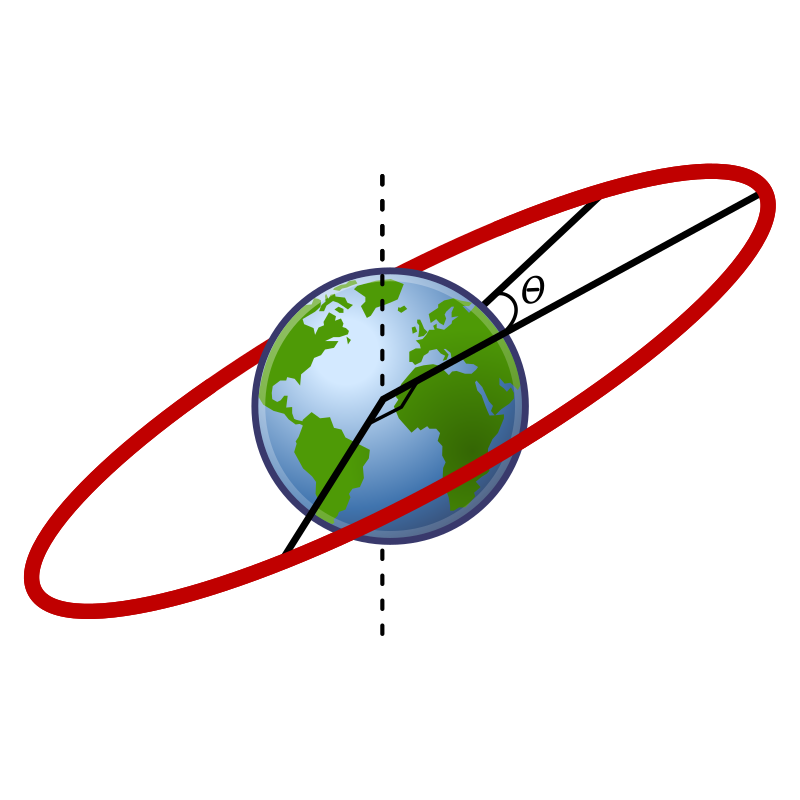
escape velocity
minimum speed needed for an object to escape the gravitational influence of a primary body
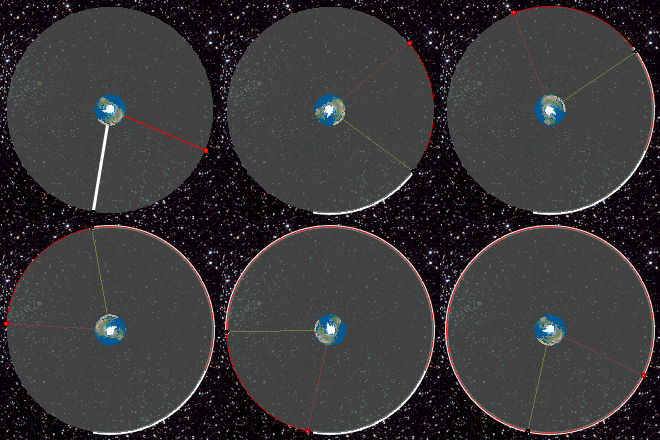
geostationary orbit
geosynchronous orbit with zero eccentricity at a fixed longitude and a nominally fixed latitude; common orbit for communications satellites

gravity assist
space-navigation technique

orbital mechanics
field of classical mechanics concerned with the motion of spacecraft

heliocentric orbit
orbit around the barycenter of the Sun
polar orbit
satellite orbit with high inclination
Hohmann transfer orbit
elliptical orbit used to transfer between two circular orbits of different altitudes, in the same plane
Tsiolkovsky rocket equation
mathematical equation describing the motion of a rocket
geostationary transfer orbit
Hohmann transfer orbit used to reach geosynchronous or geostationary orbit
space rendezvous
orbital maneuver
synchronous orbit
orbit of an astronomical body equal to that body's average rotational period
graveyard orbit
supersynchronous orbit where spacecraft are intentionally placed at the end of their operational life
Pioneer anomaly
observed deviation from predicted accelerations of the Pioneer 10 and Pioneer 11 spacecraft
osculating orbit
orbital perturbations

delta-v
'Delta-v''''' (also known as "change in velocity"), symbolized as {\Delta v} and pronounced , as used in spacecraft flight dynamics, is a measure of the impulse per unit of spacecraft mass that is needed to perform a maneuver such as launching from or landing on a planet or moon, or an in-space orbital maneuver. It is a scalar that has the units of speed. As used in this context, it is not the same as the physical change in velocity of said spacecraft.
apparent retrograde motion
the illusion of reversing trajectories in relation to specific vantage points
Oberth effect
maneuver in which a spacecraft falls into a gravitational well, and then accelerates when its fall reaches maximum speed
trans-lunar injection
propulsive maneuver used to arrive at the Moon
electrically powered spacecraft propulsion
spacecraft propulsion system which uses electricity
minimum orbit intersection distance
measure in astronomy
parking orbit
temporary orbit used during the launch of a satellite or other space probe
orbital maneuver
use of propulsive system to change the orbit of a spacecraft
star tracker
device that senses the direction to one or multiple stars
ground track
path on the surface of the Earth or another body directly below an aircraft or satellite
bi-elliptic transfer
maneuver that moves a spacecraft from one orbit to another
Specific orbital energy
parameter in the gravitational two-body problem
Low energy transfer
fuel-efficient orbital maneuver
areostationary orbit
orbit of Mars where the orbiting object remains over the same location on Mars' surface
orbital station-keeping
maneuvers made to maintain a particular orbit
Specific relative angular momentum
vector quantity in celestial mechanics
nodal precession
rotation of a satellite as it orbits
near-equatorial orbit
type of orbit around an astronomical body that lies close to its equatorial plane
sphere of influence
oblate-spheroid-shaped region around a celestial body where the primary gravitational influence on an orbiting object is that body
orbital inclination change
changing the inclination of an orbiting body's orbit
sun sensor
spacecraft instrument that senses the direction to the Sun
statite
A statite (a portmanteau of the words static and satellite) is a hypothetical type of artificial satellite that employs a solar sail to continuously modify its orbit in ways that gravity alone would not allow. Typically, a statite would use the solar sail to "hover" in a location that would not otherwise be available as a stable geosynchronous orbit. Statites have been proposed that would remain in fixed locations high over Earth's poles, using reflected sunlight to counteract the gravity pulling them down. Statites might also employ their sails to change the shape or velocity of more conventi
orbit phasing
adjustment of the time-position of spacecraft along its orbit
interplanetary transport network
collection of gravitationally determined pathways through the Solar System that require very little energy for an object to follow
characteristic energy
measure of the excess specific energy over that required to just barely escape from a massive body
orbit determination
estimation of orbits of objects
International Berthing and Docking Mechanism
spacecraft docking mechanism
frozen orbit
orbit for an artificial satellite in which natural drifting due to the central body's shape has been minimized by careful selection of the orbital parameters
distant retrograde orbit
Periodic, three-dimensional circuit near the L1 and L2 points in the three-body problem
flight dynamics
the science of space vehicle performance, stability, and control.
supersynchronous orbit
type of orbit that is farther away from the parent body than a synchronous orbit
Patched Conic Approximation
method to calculate trajectory calculations for spacecraft
mass ratio
measure of the efficiency of a rocket based on its propellant's mass
Ballistic capture
type of low-energy spacecraft transfer
Lambert's problem
Determine an orbit from two position vectors and the time of flight
Radial trajectory