Category
page 1Atari 8-bit computer games
.png)
Pac-Man
Pac-Man, originally titled in Japan, is a 1980 maze video game developed and published by Namco for arcades. It was released in Japan on May 22, 1980 and by Midway Manufacturing in North America in August 1980. The player controls Pac-Man, who must eat all the dots inside an enclosed maze while avoiding four colored ghosts. Eating large flashing dots called "Power Pellets" causes the ghosts to temporarily turn blue and vulnerable, allowing Pac-Man to eat the ghosts for bonus points.
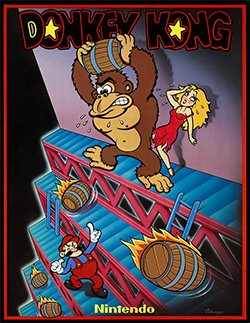
Donkey Kong
1981 arcade game
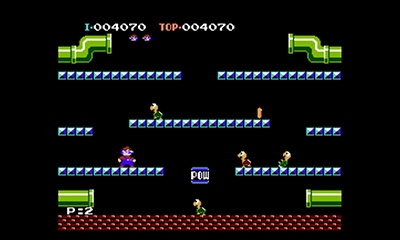
Mario Bros.
1983 arcade game
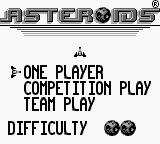
Asteroids
1979 video game

Frogger
is a 1981 action video game developed by Konami and published by Sega for arcades. It was released in North America by Sega/Gremlin. The object of the game is to direct five frogs to their homes by dodging traffic on a busy road, then crossing a river by jumping on floating logs, turtles, and alligators.

Arkanoid
is a 1986 block breaker video game developed and published by Taito for Japanese arcades; in North America, it was published by Romstar. Controlling a paddle-like craft known as the Vaus, the player is tasked with clearing a formation of colorful blocks by deflecting a ball towards it without letting the ball leave the bottom edge of the playfield. Some blocks contain power-ups that have various effects, such as increasing the length of the Vaus, creating several additional balls, or equipping the Vaus with cannons. Other blocks may be indestructible or require multiple hits to break.
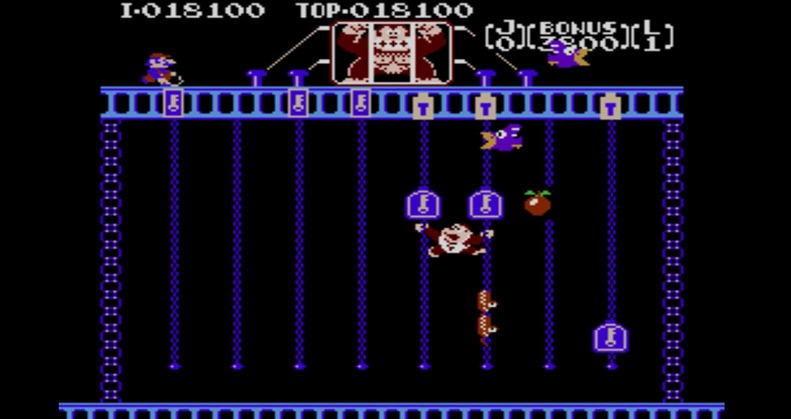
Donkey Kong Jr.
1982 arcade game

Galaxian
is a 1979 fixed shooter video game developed and published by Namco for arcades. The player assumes control of the Galaxip starfighter in its mission to protect Earth from waves of aliens. Gameplay involves destroying each formation of aliens, who dive down towards the player in an attempt to hit them.

Zork
Zork is a text adventure game first released in 1977 by developers Tim Anderson, Marc Blank, Bruce Daniels, and Dave Lebling for the PDP-10 mainframe computer. The original developers and others, as the company Infocom, expanded and split the game into three titlesZorkI: The Great Underground Empire, ZorkII: The Wizard of Frobozz, and ZorkIII: The Dungeon Masterwhich were released commercially for a range of personal computers beginning in 1980. In Zork, the player explores the abandoned Great Underground Empire in search of treasure. The player moves between the game's hundreds of locations a
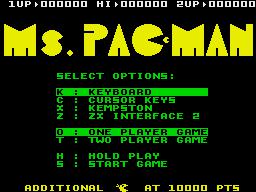
Ms. Pac-Man
1982 video game
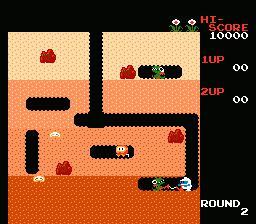
Dig Dug
1982 arcade game created by Namco
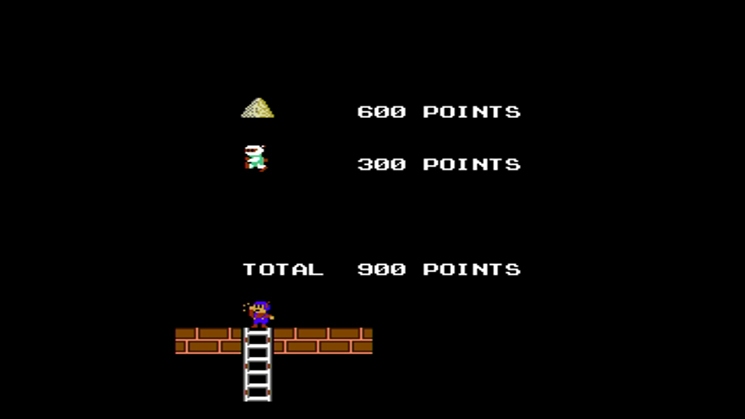
Lode Runner
1983 video game
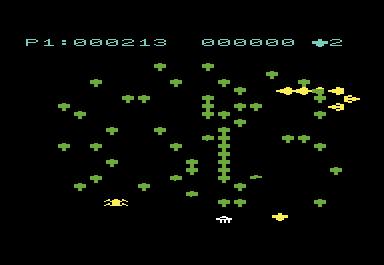
Centipede
1981 video game

Q*bert
Q*bert () is a 1982 action video game developed and published by Gottlieb for arcades. It is a 2D action game with puzzle elements that uses isometric graphics to create a pseudo-3D effect. The objective of each level in the game is to change every cube in a pyramid to a target color by letting Q*bert, the on-screen character, hop on top of the cube while avoiding obstacles and enemies. Players also use a joystick to control the character.
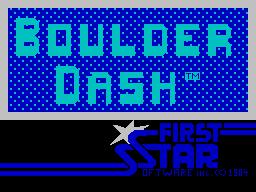
Boulder Dash
1984 video game
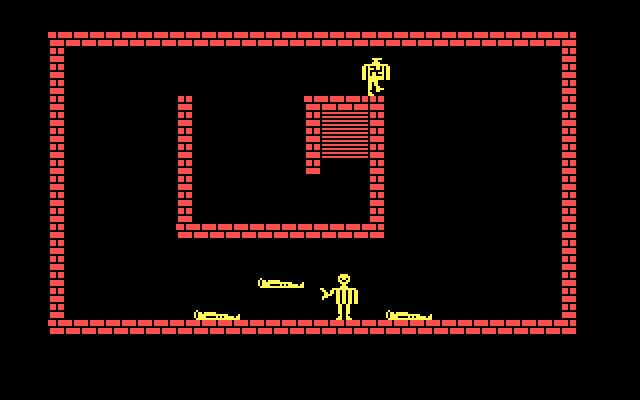
Castle Wolfenstein
1981 video game developed by Muse Software
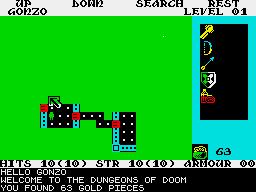
Rogue
1980 video game

Pitfall!
Pitfall! is a 1982 platform video game developed by David Crane and published by Activision for the Atari 2600. The player controls Pitfall Harry, who has a time limit of 20 minutes to seek treasure in a jungle. The game world is populated by enemies and hazards that variously cause the player to lose lives or points. Pitfall! was ported to the Atari 5200, Atari 8-bit computers, ColecoVision, Commodore 64, and MSX.
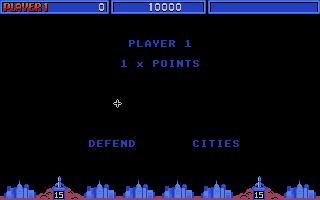
Missile Command
1980 video game
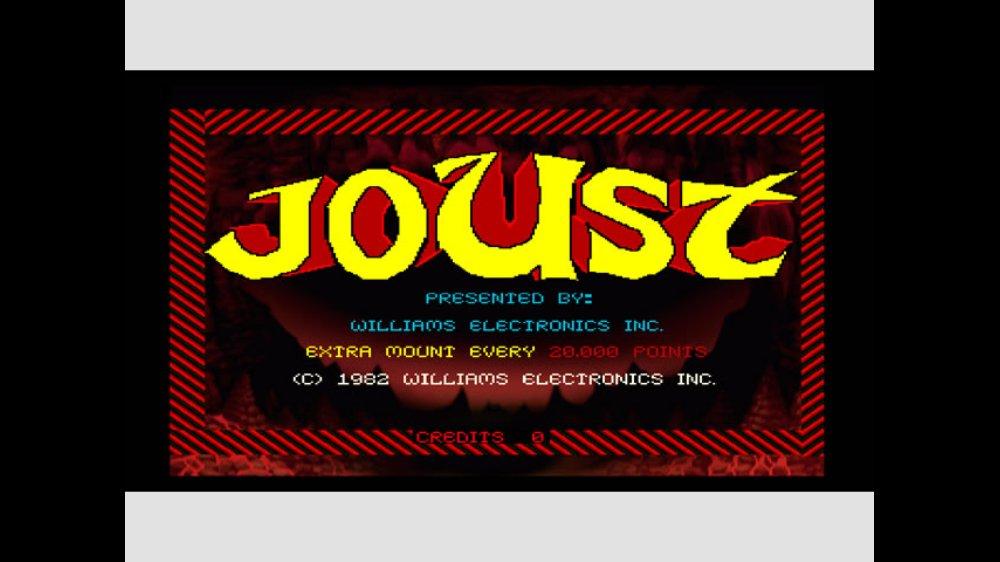
Joust
1982 video game
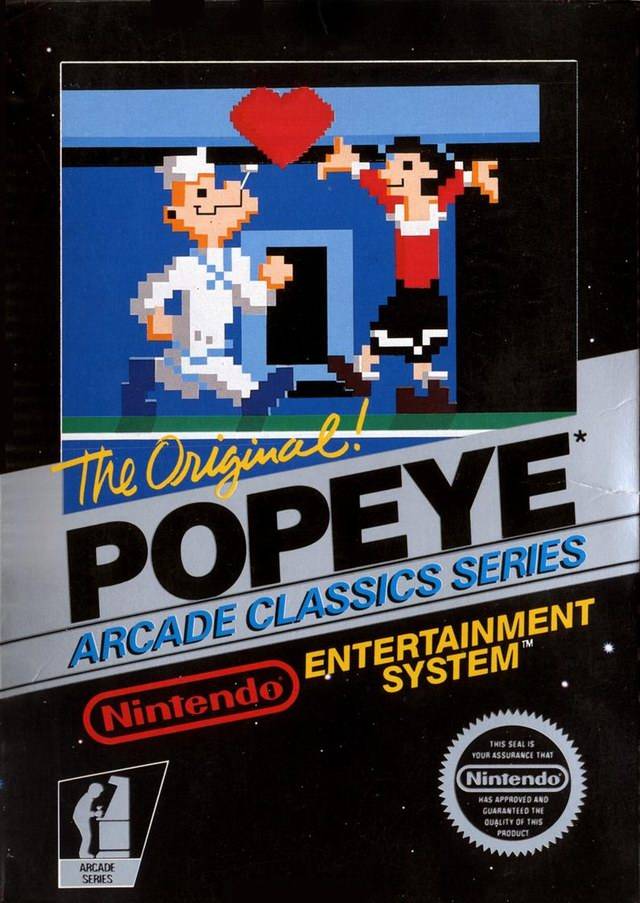
Popeye
1982 arcade video game
Rush'n Attack
1985 arcade game
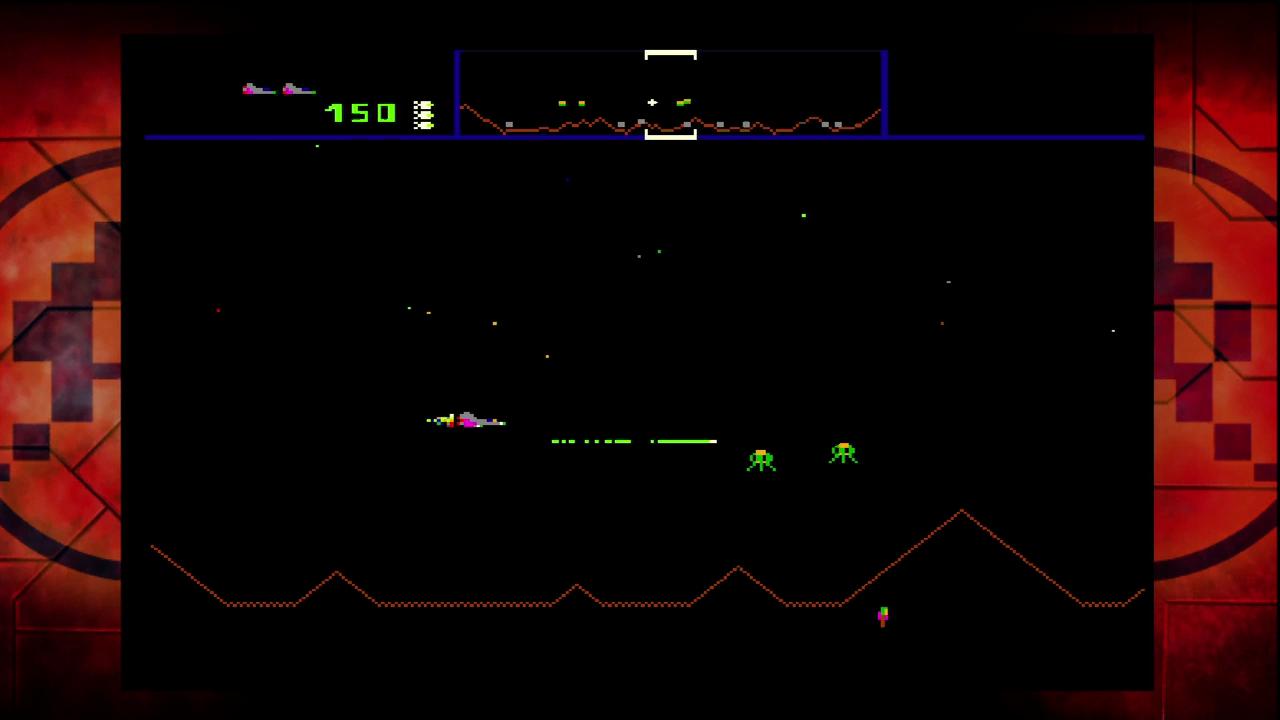
Defender
1981 video game

Qix
( ) is a 1981 puzzle video game developed and published by Taito for arcades. Designed by husband and wife team Randy and Sandy Pfeiffer, Qix is one of a handful of games made by Taito's American division (another is Zoo Keeper). At the start of each level, the playing field is a large, empty rectangle, containing the Qix, an abstract stick-like entity that performs graceful but unpredictable motions within the confines of the rectangle. The objective is to draw lines that close off parts of the rectangle to fill in a set amount of the playfield.

Pooyan
is a 1982 fixed shooter video game developed and published by Konami for arcades. It was released in North America by Stern Electronics. The player controls "Mama", a pig whose babies have been kidnapped by a group of wolves. It was later ported to home consoles and personal computers.
Pole Position
1982 Formula 1 racing video game
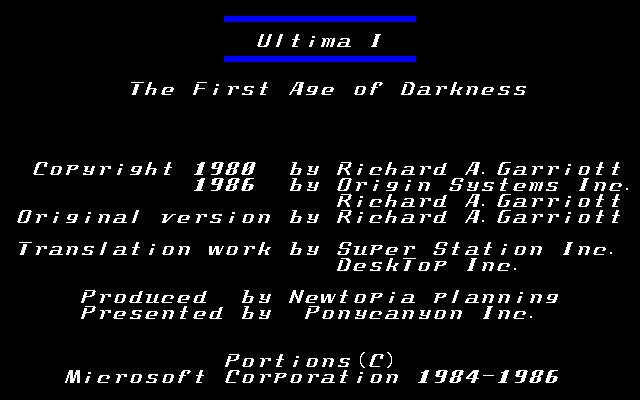
Ultima I: The First Age of Darkness
1981 computer game

M.U.L.E.
M.U.L.E. is a 1983 strategy video game written for Atari 8-bit computers by Ozark Softscape. Designer Danielle Bunten Berry (credited as Dan Bunten) takes advantage of the four joystick ports of the Atari 400 and 800 to allow four-player simultaneous play. Published in 1983, M.U.L.E. was one of the first five games from Electronic Arts, alongside Axis Assassin, Archon: The Light and the Dark, Worms?, and Hard Hat Mack. M.U.L.E. is primarily a turn-based strategy game, but also incorporates real-time elements where players compete directly, as well as aspects that simulate economics.
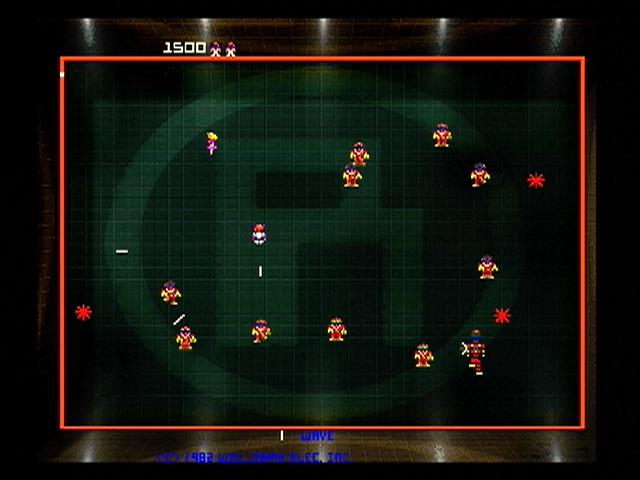
Robotron: 2084
1982 video game
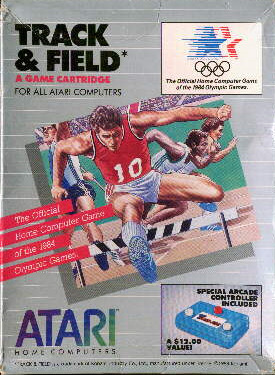
Track & Field
1983 arcade video game
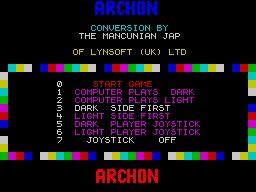
Archon: The Light and the Dark
1983 video game
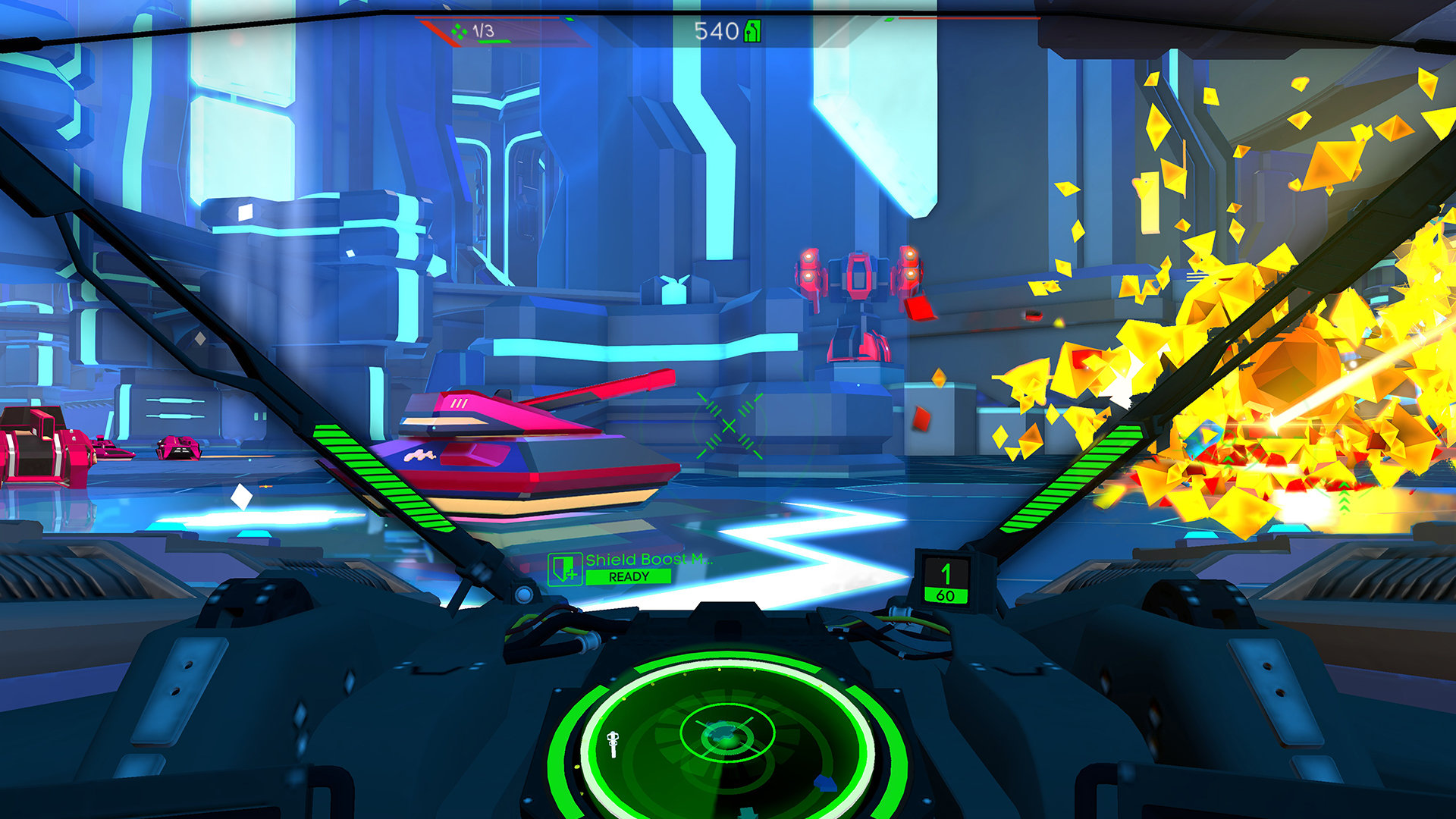
Battlezone
1980 video game
Moon Patrol
1982 video game
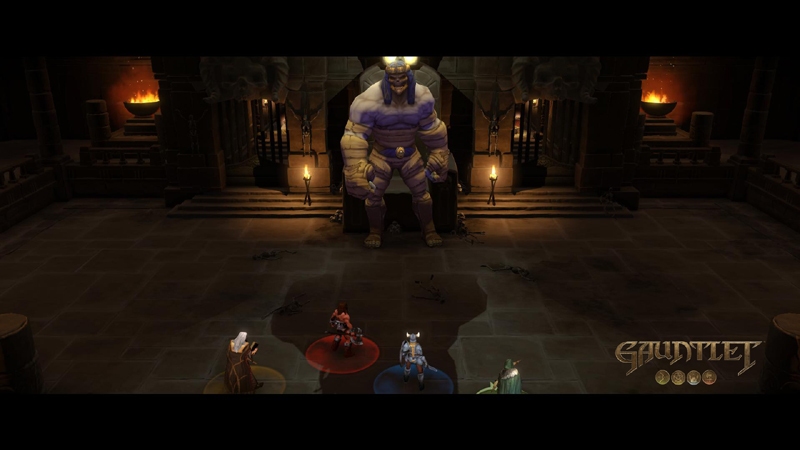
Gauntlet
fantasy-themed hack and slash 1985 arcade game by Atari Games
Karateka
1984 video game
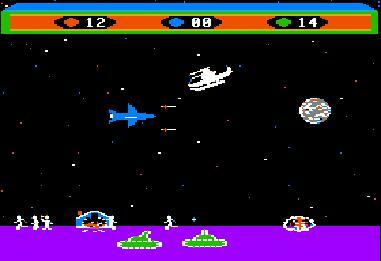
Choplifter
Choplifter (stylized as Choplifter!) is a 1982 horizontally scrolling shooter video game developed by Dan Gorlin and published by Broderbund for the Apple II. It was ported to the Atari 8-bit computers the same year, and later to the VIC-20, Commodore 64, Atari 5200, ColecoVision, MSX, and Thomson computers. In 1985, Sega released a remake for arcades, with subsequent ports published for the Master System and Famicom in 1986. Graphically enhanced versions for the Atari 8-bit computers and the Atari 7800 were also released in 1988 by Atari Corporation.
Ultima II: The Revenge of the Enchantress
1982 video game

River Raid
1982 scrolling shooter video game
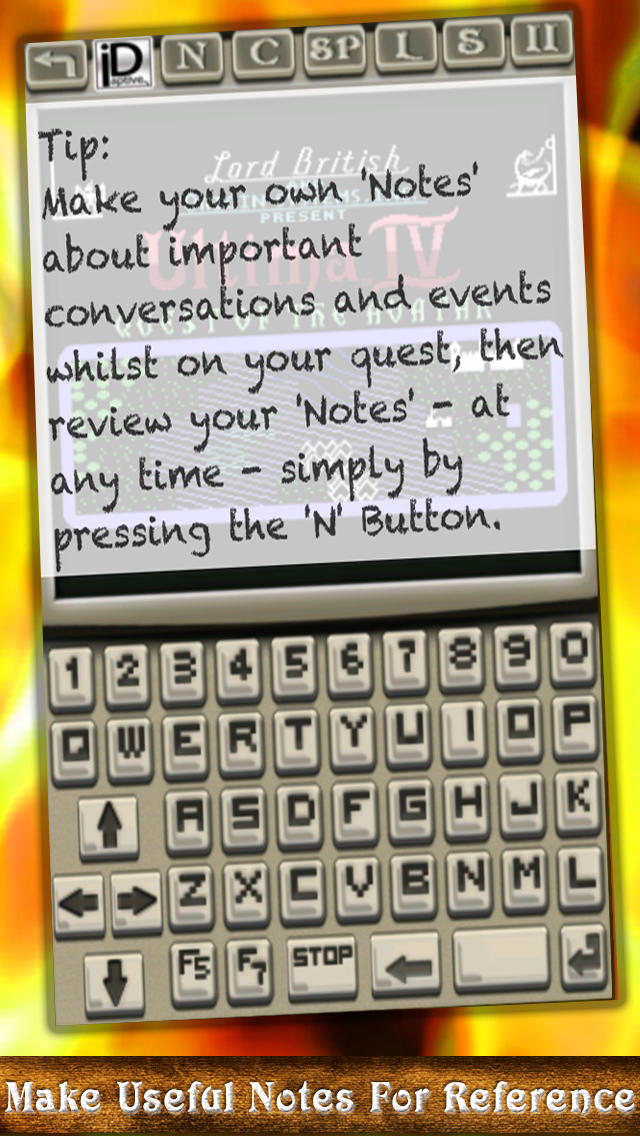
Ultima IV: Quest of the Avatar
1985 video game
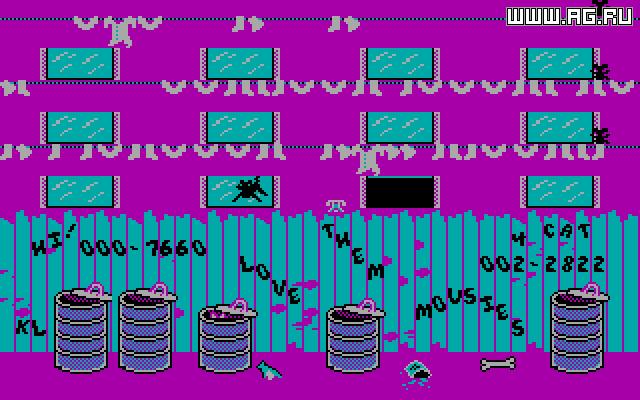
Alley Cat
1983 video game
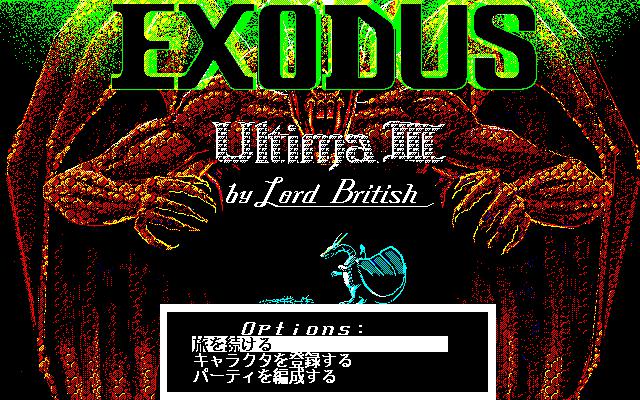
Ultima III: Exodus
1983 video game

Zaxxon
is a 1981 scrolling shooter video game developed by Sega with assistance from Ikegami Tsushinki and published by Sega for Japanese and European arcades; it was distributed by Sega/Gremlin in North America. The player pilots a ship through two heavily defended space fortresses, and the outer space areas between them, to confront the Zaxxon robot at the end of the second fortress.

Star Wars
1983 video game

Gyruss
is a 1983 tube shooter video game developed and published by Konami for Japanese arcades. It was initially licensed to Centuri in North America for dedicated machines before Konami released their own self-distributed conversion kits for the game. Parker Brothers released ports for the Atari 2600, Atari 5200, Atari 8-bit computers, ColecoVision and Commodore 64 in 1984. An enhanced version for the Famicom Disk System was released in 1988, followed by the Nintendo Entertainment System in 1989.
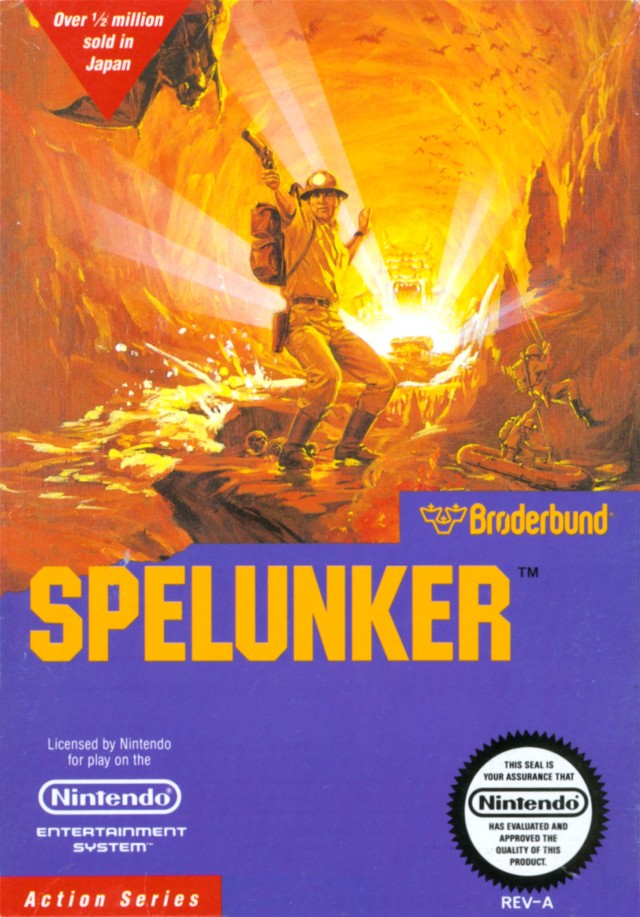
Spelunker
video game published in 1983
Mr. Do!
1982 arcade video game
Rampage
1986 video game
Pengo
1982 video game
Jet Set Willy
1984 video game
Spy vs. Spy
1984 video game
Gun Fight
1975 arcade game

Jungle Hunt
1982 side-scroller video game

Ghostbusters
1984 video game

Ballblazer
Ballblazer is a futuristic sports game created by Lucasfilm Games and published in 1985 by Epyx. Along with Rescue on Fractalus!, it was one of the initial pair of releases from Lucasfilm Games, Ballblazer was developed and first published for the Atari 8-bit computers. The principal creator and programmer was David Levine. The game was called Ballblaster during development; some pirated versions bear this name.
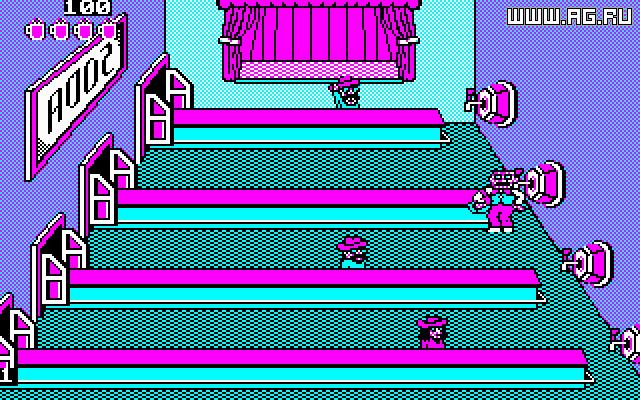
Tapper
1983 video game

Beyond Castle Wolfenstein
1984 video game
.png)
Gorf
Gorf is a 1981 fixed shooter video game developed by Dave Nutting Associates and published by Midway Manufacturing for arcades. It features five distinct levels, the first of which is based on Space Invaders and another on Galaxian. The game makes use of synthesized speech for the Gorfian robot which taunts the player, powered by a speech chip. Gorf allows the player to buy two additional lives per quarter before starting the game, for a maximum of seven lives.
Kaboom!
1981 video game

Spy Hunter
1983 arcade video game
International Karate
1985 video game