Category
page 1Automatic identification and data capture

QR code
A QR code, short for quick-response code, is a type of two-dimensional matrix barcode invented in 1994 by Masahiro Hara of the Japanese company Denso Wave for labelling automobile parts. It features white and black squares within a square grid featuring fiducial markers on the corners, readable by imaging devices like cameras, and processed using Reed–Solomon error correction until the image can be appropriately interpreted. The required data is then extracted from patterns that are present in both the horizontal and the vertical components of the QR image.

barcode
thumb|A Universal Product Code|UPC-A barcode
A barcode or bar code is a method of representing data in a visual, machine-readable symbolic form. Initially, barcodes represented data by varying the widths, spacings and sizes of parallel lines. These barcodes, commonly referred to as linear or one-dimensional (1D), can be scanned by optical scanners known as barcode readers.
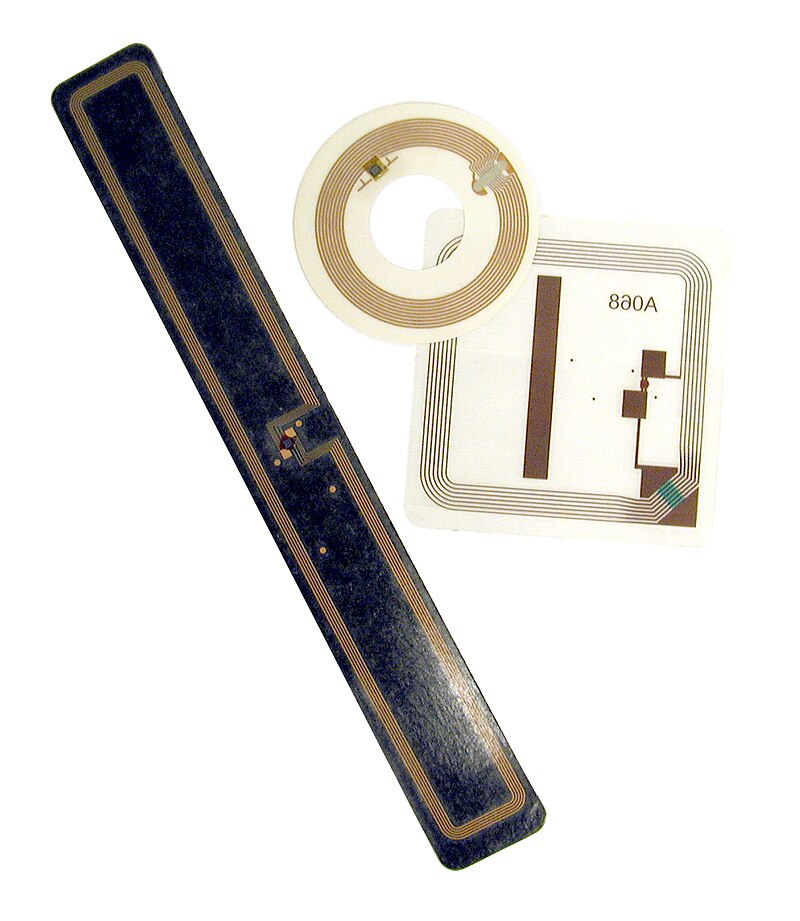
radio-frequency identification
technology using electromagnetic fields to automatically identify and track tags attached to objects

optical character recognition
computer recognition of visual text
speech recognition
automatic conversion of spoken language into text

facial recognition system
computer application capable of identifying or verifying an individual person from a digital image
barcode reader
electronic device that can read and output printed barcodes to a computer
boarding pass
document provided by an airline during check-in, giving a passenger permission to board the airplane
warehouse management system
WMS System
radio direction finding
measurement of the direction from which a received signal was transmitted
automatic number plate recognition
technology that uses optical character recognition on images to read vehicle registration plates
MICR
character-recognition technology
speaker recognition
identification of a person from characteristics of voices
tire-pressure monitoring system
electronic system in vehicles
mobile computing
use of portable computing devices
.jpg)
iBeacon
thumb|Smartphone detecting an iBeacon transmitter
iBeacon is a protocol developed by Apple and introduced at the Apple Worldwide Developers Conference in 2013.
Various vendors have since made iBeacon-compatible hardware transmitters – typically called beacons – a class of Bluetooth Low Energy (BLE) devices that broadcast their identifier to nearby portable electronic devices. The technology enables smartphones, tablets and other devices to perform actions when in proximity to an iBeacon.
automatic identification and data capture
methods of automatically identifying objects by computer system
inventory control
subconcept of Inventory
produce traceability

indoor positioning system
network of devices used to wirelessly locate objects inside a building
label printer
device for printing labels
electronic article surveillance
technological method for preventing theft
intelligent character recognition
computer recognition of written text
barcode printer
computer peripheral to print barcode labels or tags
ground truth
information provided by direct observation
JAB Code
2D matrix symbology
smart label
type of radio-frequency identification (RFID) transponder
Roper Technologies
company in Sarasota, United States
track and trace
product locating systems in logistics