Category
page 1Barbarian kingdoms

Denmark

Huns
The Huns were a nomadic people who lived in Central Asia, the Caucasus, and Eastern Europe between the 4th and 6th centuries CE. According to European tradition, they were first reported living east of the Volga River, in an area that was part of Scythia at the time. By 370 CE, the Huns had arrived on the Volga, causing the westwards movement of Goths and Alans. By 430, they had established a vast, but short-lived, empire on the Danubian frontier of the Roman empire in Europe. Either under Hunnic hegemony, or fleeing from it, several central and eastern European peoples established kingdoms in

Francia
The Kingdom of the Franks (), also known as the Frankish Kingdom or Francia, was the largest post-Roman kingdom in Western Europe. It was established by the Franks, one of the Germanic peoples. Its founder was King Clovis I who united Frankish tribes and expanded the Frankish realm into the Roman Gaul. During the Early Middle Ages, the kingdom was ruled by the Merovingian and Carolingian dynasties. In 800, it evolved into the Carolingian Empire, thus becoming the longest lasting Germanic kingdom from the era of Great Migrations.

Alans
The Alans () were an ancient and medieval Iranic nomadic pastoral people who migrated to what is today the North Caucasus; some continued on to Europe and later North Africa. They are generally regarded as part of the Sarmatians, and possibly related to the Massagetae. Modern historians have connected the Alans with the Central Asian Yancai of Chinese sources and with the Aorsi of Roman sources. Having migrated westwards and becoming dominant among the Sarmatians on the Pontic–Caspian steppe, the Alans are mentioned by Roman sources in the . At that time they had settled in the region north of

Pannonian Avars
alliance of various Eurasian nomads – 6th to 9th centuries

Visigothic Kingdom
Period of Germanic rule on the Iberian Peninsula (418–720) as a successor state to the Western Roman Empire.

Picts

Gepids
thumb|300px|Coin of the Gepids . Sirmium mint. In the name of Byzantine Emperor Anastasius I
thumb|300px|Coin of the Gepids. Sirmium mint. Struck in the name of [[Justin I, CE. Obv: D N IVSTINVS P LV (first N retrograde), pearl-diademed and cuirassed bust right. Rev: VINVICTL ROMLNI, large "Theodericus" monogram across fields, cross above]]
The Gepids (; ) were an East Germanic tribe who lived in the area of modern Romania, Hungary, and Serbia, roughly between the Tisza, Sava, and Carpathian Mountains. They were said to share the religion and language of the Goths and Vandals.

Heptarchy
488x488px|thumb|The penultimate set of Anglo-Saxon kingdoms was fivefold. The map annotates the names of the peoples of Kingdom of Essex|Essex and Sussex taken into the [[Kingdom of Wessex, which later took in the Kingdom of Kent and became the senior dynasty, and the outlier kingdoms. From Bartholomew's A literary & historical atlas of Europe (1914)]]

Ghassanids
The Ghassanids, also known as the Jafnids, were an Arab Christian tribal confederation that migrated from South Arabia to the Levant in the 3rd century AD. There, they became clients of the Roman Empire, serving as foederati responsible for defending the eastern frontier of the empire against Bedouin raids and rival powers.

Heruli
thumb|upright 1.2|Map of the Roman Empire and contemporary indigenous [[Europe in AD 125, showing a proposed location of Heruli on the Danish islands.]]
The Heruli (also Eruli, Herules, Herulians) were one of the smaller Germanic peoples of Late Antiquity, known from records in the third to sixth centuries AD.
The best recorded group of Heruli established a kingdom north of the Middle Danube, probably including the area north of present day Vienna. This kingdom was a neighbour to several other small and short-lived kingdoms in the late 5th century and early 6th century, including those of the

Old Great Bulgaria
632–668 nomadic empire in Eastern Europe

Vandal Kingdom
Germanic Kingdom (435-534)
Ostrogothic Kingdom
kingdom established by the Ostrogoths in Italy and neighbouring areas (493-553 CE)
Duchy of Bavaria
(907-1805) duchy of Holy Roman Empire
Lakhmids
ancient Arab monarchy

Carantania
Carantania, also known as Carentania (, , in Old Slavic ''''), was a Slavic principality that emerged in the second half of the 7th century, in the territory of present-day southern Austria and north-eastern Slovenia. Since the middle of the 8th century, it was allied with Bavaria against the Avars, and consequently became a vassal state of the Frankish Empire. In the same time, Christianisation of Carantanian Slavs was initiated, mainly through missionary activities of the Archdiocese of Salzburg. By 828, internal autonomy of the principality was abolished, and the entire Carantanian territor
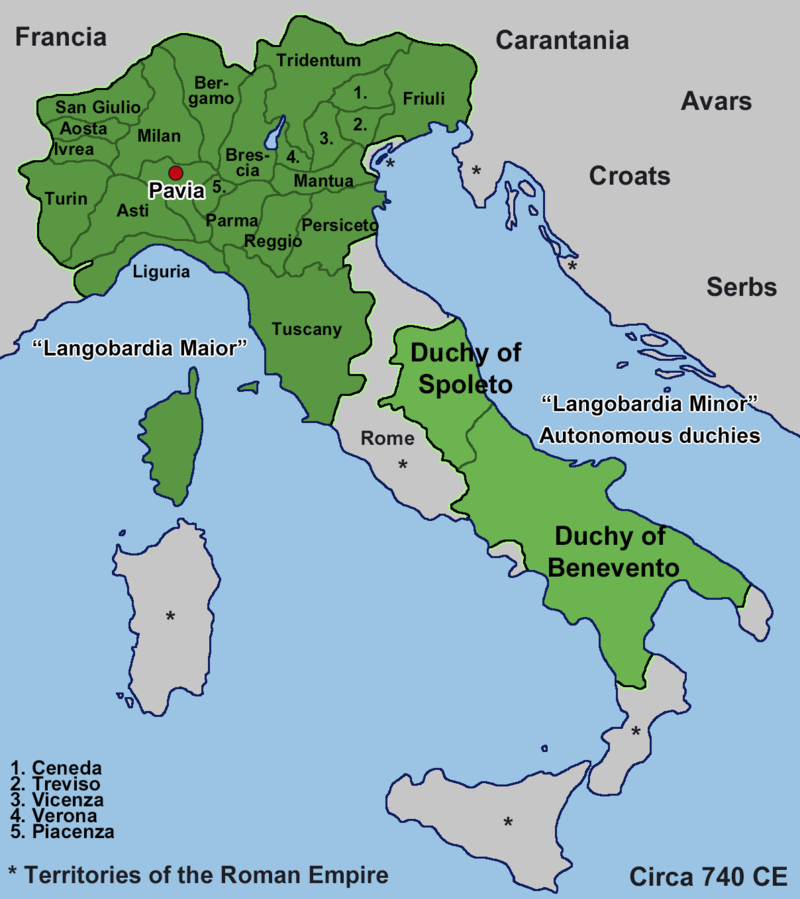
Kingdom of the Lombards
Germanic successor state to the Western Roman Empire established by the Lombards, a Germanic people, on the Italian Peninsula (568–774)
Kingdom of the Suebi
Germanic kingdom in what is today Galicia, Spain, that was established by the Suebi about 410, and existed until 585
Antes people
Early Slavs people inhabiting parts of Eastern Europe in the Early Middle Ages

Thuringi
thumb|Fibula (brooch)|Fibula found in [[Mühlhausen, 4th/5th century AD]]
thumb|Ancient Germanic bone comb, Thuringia
The Thuringi, or Thuringians were a Germanic people who lived in their own kingdom in what is now Central Germany. They are first mentioned in written records starting in the fifth century, during a period when the Huns were the most influential force in Central Europe and the Western Roman Empire lost control of this region. The kingdom was not mentioned during the reign of Attila (reigned 434–453), or during the conflicts between the small kingdoms which formed immediately aft

Alamannia
Alamannia, or Alemania, was the kingdom established and inhabited by the Alemanni, a Germanic tribal confederation that had broken through the Roman limes in 213.

Sciri
thumb|upright=1|Effigy of Odoacer, who is thought to be of Scirian descent
The Sciri, or Scirians, were a Germanic people, who were first mentioned in the late 3rd century BC as participants in a raid on the city of Olbia near modern-day Odesa. Along with the Bastarnae, who are much more frequently mentioned, they are among the earliest, and most easterly, of the Germanic peoples mentioned by Greek or Roman authors.
Frisian Kingdom
early medieval chiefdom in Holland

Kingdom of Dumnonia
Dumnonia (, in the adjective form), a Latinised name, was a Brythonic kingdom that existed in Sub-Roman Britain between the 6th century CE and the 7th century CE in the more westerly parts of present-day South West England.
Kingdom of the Burgundians
kingdom established by the Germanic Burgundians in the Rhineland and then in Savoy in the 5th century
Hen Ogledd
area of northern Britain ruled by the Brythonic people in the 5-7th century

sub-Roman Britain
period of Late Antiquity in Great Britain, covering the end of Roman rule in the late 4th and early 5th centuries, and its aftermath into the 6th century
barbarian kingdom
series of medieval kingdoms founded and dominated by northern European tribes (primarily Germanic) after the collapse of the Western Roman Empire in 476
Cornouaille
Cornouaille (; , ) is a historical region on the west coast of Brittany in West France. The name is cognate with Cornwall in neighbouring Great Britain. This can be explained by the settlement of Cornouaille by migrant princes from Cornwall who created an independent principality founded by Rivelen Mor Marthou, and the founding of the Bishopric of Cornouaille by ancient saints from Cornwall. Celtic Britons and the settlers in Brittany spoke a common language, which later evolved into Breton, Welsh and Cornish.

Sclaveni
The ''''' (in Latin) or ''''' (various forms in Greek) were early Slavic tribes that raided, invaded and settled in the Balkans in the Early Middle Ages and eventually became one of the progenitors of modern South Slavs. They were mentioned by early Byzantine chroniclers as barbarians having appeared at the Byzantine borders along with the Antes (East Slavs), another Slavic group. The Sclaveni were differentiated from the Antes and Wends (West Slavs); however, they were described as kin. Eventually, most South Slavic tribes accepted Byzantine or Frankish suzerainty, and came under their cultur
Old Saxony
larger region of which Lower Saxony is a part
list of petty kingdoms of Norway
Wikimedia list article
Kingdom of Italy
kingdom in Southern Europe between 476 and 493

Mauro-Roman kingdoms
early medieval Christian Romano-Berber states
Rugiland
The Kingdom of the Rugii or Rugiland was established by the Germanic Rugii in present-day Austria in the 5th century.
Kingdom of Altava
Kingdom in present-day Algeria
Domnonée
Domnonée is the modern French form of Domnonia or Dumnonia (Latin for "Devon"; ), a historic kingdom in northern Armorica (modern Brittany). It was founded by British immigrants from Dumnonia in Sub-Roman Britain who fled the Saxon invasions of Britain in the early Middle Ages. Headed by the same ruling dynasty, Domnonée was at times separate from, and at other times united with, its British motherland, and the Latin name Domnonia was applied to both regions interchangeably. On the continent, Domnonée encompassed the areas of Trégor, Dol-de-Bretagne, Goélo, and Penthièvre.
Kingdom of the Aurès
government in North Africa
Consolidation of Sweden
Unification of Sweden under a monarchy
Salīhids
The Salīḥids (), also known simply as Salīḥ or by their royal house, the Zokomids (Arabic: Ḍajaʿima) were the dominant Arab foederati of the Byzantine Empire in the 5th century. They succeeded the Tanukhids, who were dominant in the 4th century, and were in turn defeated and replaced by the Ghassanids in the early 6th century.
Broërec
Historic realm and county of Brittany, France
Kingdom of Capsus
Romano-Berber kingdom in North Africa
history of Ireland (400–795)
history of Ireland from the end of the Iron Age to the first Viking raid