Category
page 1Basal ganglia

basal ganglia
subcortical nuclei, of varied origin, in the brains of vertebrates
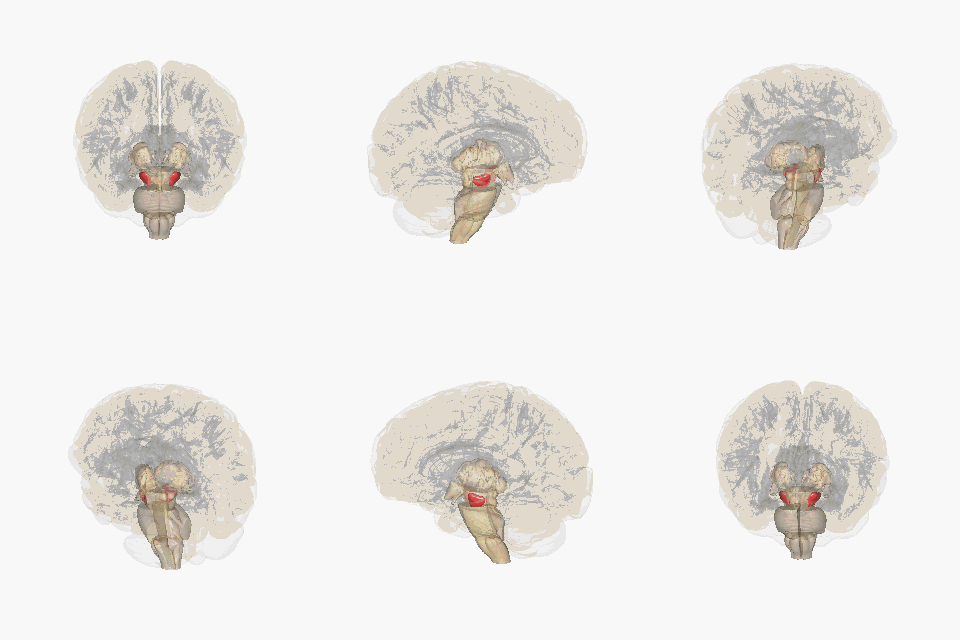
substantia nigra
neuroanatomical structure

striatum
The striatum (: striata) or corpus striatum is a cluster of interconnected nuclei that make up the largest structure of the subcortical basal ganglia. The striatum is a critical component of the motor and reward systems; receives glutamatergic and dopaminergic inputs from different sources; and serves as the primary input to the rest of the basal ganglia.
nucleus accumbens
region in the human basal forebrain rostral to the preoptic area of the hypothalamus
caudate nucleus
one of the structures that make up the corpus striatum, which is a component of the basal ganglia

putamen
The putamen (; from Latin, meaning "nutshell") is a subcortical nucleus with a rounded structure, in the basal ganglia nuclear group. It is located at the base of the forebrain and above the midbrain.
globus pallidus
sub-cortical structure of the brain
subthalamus
The subthalamus or ventral thalamus is a part of the diencephalon. Its most prominent structure is the subthalamic nucleus. The subthalamus connects to the globus pallidus, a subcortical nucleus of the basal ganglia.
lentiform nucleus
Structure in the basal ganglia of the brain
subthalamic nucleus
small lens-shaped nucleus in the brain
pars compacta
dopamine-releasing portion of the substantia nigra
neurodegeneration with brain iron accumulation
neurodegenerative disease characterized by progressive iron accumulation in the basal ganglia and other regions of the brain, resulting in extrapyramidal movements, such as parkinsonism and dystonia
biotin-responsive basal ganglia disease
Human disease