Category
page 1Basidiolichens
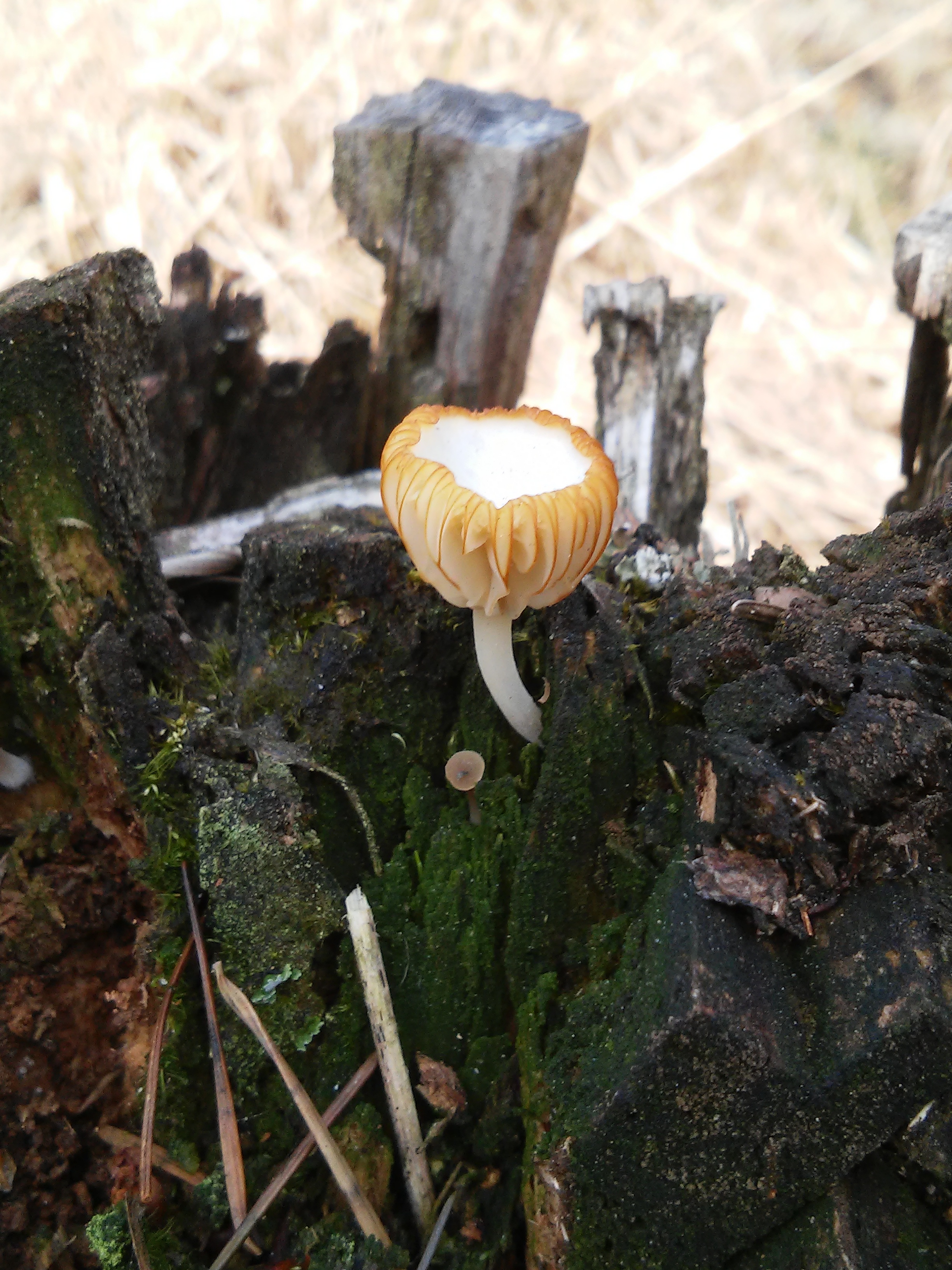
Lichenomphalia umbellifera
species of fungus
%20Redhead%2C%20Lutzoni%2C%20Moncalvo%20%26%20Vilgalys%20152659.jpg)
Lichenomphalia
Lichenomphalia is both a basidiolichen and an agaric genus. Most of the species have inconspicuous lichenized thalli that consist of scattered, small, loose, nearly microscopic green balls or foliose small flakes containing single-celled green algae in the genus Coccomyxa, all interconnected by a loose network of hyphae. The agaric fruit bodies themselves are nonlichenized and resemble other types of omphalinoid mushrooms. These agarics lack clamp connections and do not form hymenial cystidia. The basidiospores are hyaline, smooth, thin-walled, and nonamyloid. Most of the species were original
Multiclavula
Multiclavula is a genus of basidiolichens in the family Hydnaceae. The widespread genus contains 14 species. The genus was circumscribed by the American mycologist Ron Petersen in 1967, with Multiclavula corynoides assigned as the type species.

Multiclavula mucida
species of fungus

Lichenomphalia hudsoniana
species of fungus

Multiclavula vernalis
species of fungus
Dictyonema
Dictyonema is a genus of mainly tropical basidiolichens in the family Hygrophoraceae. Unlike most lichens, which contain fungi related to yeasts and molds, Dictyonema species contain fungi more closely related to mushrooms. The genus includes about 40 recognized species found mainly in tropical regions, ranging from lowland forests to high mountain elevations up to 4,300 meters in the Andes. These lichens come in various forms, from crusty patches to leaf-like structures to thread-like mats, and most grow on soil, rocks, moss, or rotting logs. One species from the Amazon rainforest has traditi
Lichenomphalia chromacea
species of fungus
Lichenomphalia velutina
species of fungus
Basidiolichen
thumb|Cora glabrata
thumb|Lichenomphalia umbellifera
thumb|Multiclavula mucida
Basidiolichens are lichenized members of the division Basidiomycota within the subkingdom Dikarya of the kingdom Fungi. They form a diverse yet much smaller group of lichens than the far more common ascolichens of the division Ascomycota. Owing to how few described species there are, basidiolichens are generally considered to be poorly researched, and few studies that characterize their natural products exist. Biogeographically, basidiolichen species may be distributed in a cosmopolitan manner or more regionally, ra
Cyphellostereum
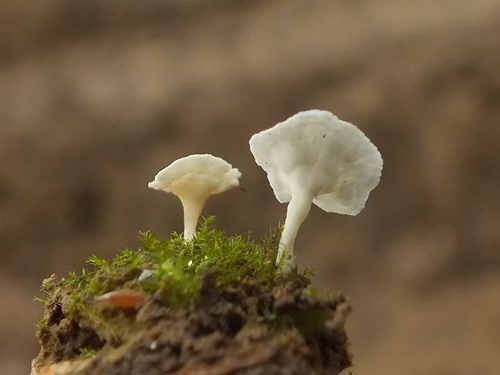
Cyphellostereum is a genus of basidiolichens. Species produce white, somewhat cup-shaped fruit bodies on a thin film of green on soil which is the thallus. All Cyphellostereum species have nonamyloid spores and tissues, lack clamp connections, and also lack hymenial cystidia.
Acantholichen
Acantholichen is a genus of basidiolichen-forming fungus species in the family Hygrophoraceae. The genus was established in 1998 by the Per Magnus Jørgensen based on a single species from Costa Rica, but has since grown to include seven recognized species found across Central and South America. These lichens form crusts made of tiny, scale-like flaps that give them a finely granular appearance, quite different from the thread-like growth of their close relatives. Acantholichen species partner with blue-green bacteria to create their living structures, using specialized fungal pegs to exchange

Lichenomphalia aurantiaca
species of fungus
Acantholichen pannarioides
species of fungus

Cora
a genus of lichenized fungi
Lepidostroma
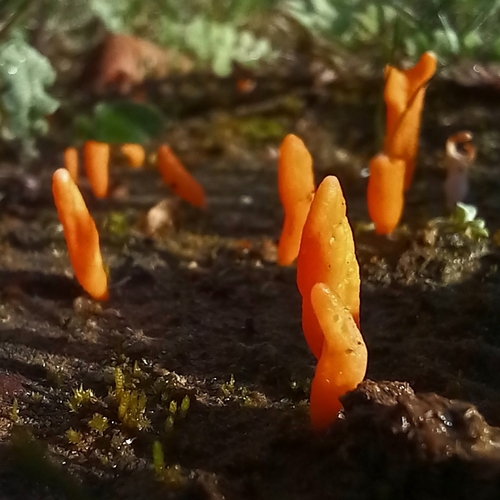
Lepidostroma is a genus in the family Lepidostromataceae (the only family within the fungal order Lepidostromatales). The genus is distinguished from all other lichenized clavarioid fungi (Multiclavula (Cantharellales), Ertzia (Lepidostromatales), and Sulzbacheromyces (Lepidostromatales)) by having a distinctly thallus (similar to a 'Coriscium-type' thallus) with scattered to dense rounded to squamules. Four species are known from the tropics of Africa and the Americas.