Category
page 1Bee products

beeswax
thumb|right|Bee hive wax complex
thumb|right|Beeswax cake
thumb|Commercial honeycomb foundation, made by pressing beeswax between patterned metal rollers

honeycomb
A honeycomb is a mass of hexagonal prismatic cells built from beeswax by honey bees in their nests to contain their brood (eggs, larvae, and pupae) and stores of honey and pollen.

propolis
thumb|Propolis, produced by the western honey bee (Apis mellifera)
thumb|200px|Two bars from a top bar hive that the bees have glued together using propolis. Separating the bars will take some effort as the propolis has hardened.
thumb|200px|Propolis on the upper bar
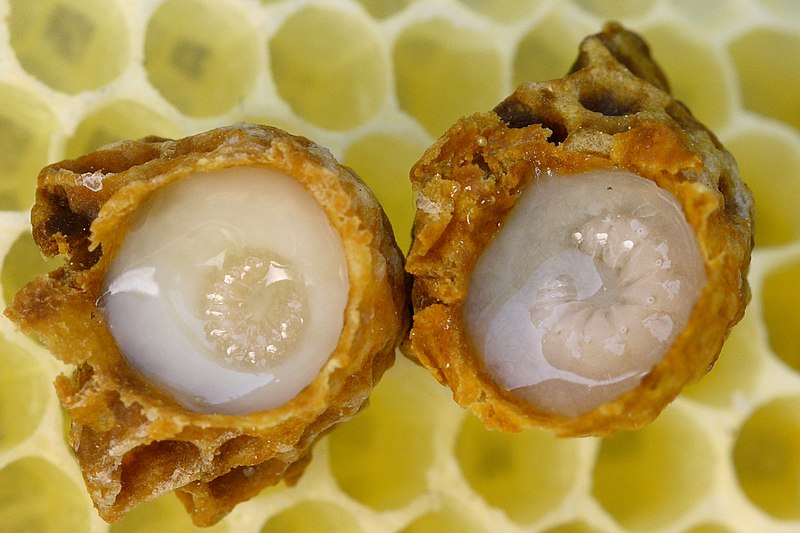
royal jelly
secretion from the glands in the hypopharynx of nurse bees

bee pollen
fermented pollen
apitoxin
Apitoxin or bee venom is the venom produced by the honey bee. It is a cytotoxic and hemotoxic bitter colorless liquid containing proteins, which may produce local inflammation. It may have similarities to sea nettle toxin.

apitherapy
thumb|Bee sting being applied during an apitherapy session.
beeswax wrap
textile fabric impregnated with beeswax, impermeable to water
Burt's Bees
American personal care products subsidiary of Clorox
10-hydroxydecenoic acid
chemical compound
3-hydroxydecanoic acid
Myrmicacin (3-hydroxydecanoic acid) is a chemical compound of the β-hydroxycarboxylic acid class. It is named after the South American leaf-cutter ants (Myrmicinae) in which it was first discovered, but is also found in royal jelly. Myrmicacin is believed to act as a herbicide which prevents seeds collected by the ants from germinating within the nest.
3,11-Dihydroxydodecanoic acid
chemical compound
3,10-dihydroxydecanoic acid
chemical compound