Category
page 1Beetle families

Coccinellidae
Coccinellidae () is a widespread family of small beetles. They are commonly known as ladybugs in North America and ladybirds in the United Kingdom; "lady" refers to mother Mary. Entomologists use the names ladybird beetles or lady beetles to avoid confusion with true bugs. The more than 6,000 described species have a global distribution and are found in a variety of habitats. They are oval beetles with a domed back and flat underside. Many of the species have conspicuous aposematic (warning) colours and patterns, such as red with black spots, that warn potential predators that they taste bad.

Cerambycidae
family of wood-boring beetles with long antennae

Scarabaeidae
thumb|On this high quality closeup, head anatomic details are well visible.

Curculionidae
thumb|right|Cionus hortulanus
The Curculionidae are a family of weevils, commonly called snout beetles or true weevils. They are one of the largest animal families with 6,800 genera and 83,000 species described worldwide. They are the sister group to the family Brentidae.

Dytiscidae
The Dytiscidae, from the Ancient Greek word δυτικός (dutikós), meaning "able to dive", are the predaceous diving beetles, a family of water beetles. They occur in virtually any freshwater habitat around the world, but a few species live in terrestrial habitats such as among leaf litter. The "diving" in their common name comes from their cycling between underwater and the surface to replenish oxygen like a diver. The adults of most are between long, though much variation is seen between species. The European Dytiscus latissimus and Brazilian Bifurcitus ducalis are the largest, reaching up to re
.jpg)
Silphidae
Silphidae is a subfamily of Staphlinidae beetles that are also known commonly as large carrion beetles, carrion beetles or burying beetles. There are two tribes: Silphini and Nicrophorini. Members of Nicrophorini are sometimes known as burying beetles or sexton beetles. The number of species is relatively small, at around two hundred. They are more diverse in the temperate region although a few tropical endemics are known. Both tribes feed on decaying organic matter such as dead animals. The tribes differ in which uses parental care and which types of carcasses they prefer. Silphini are consid

Tenebrionidae
family of beetles

Dermestidae
Dermestidae are a family of Coleoptera that are commonly referred to as skin beetles or carpet beetles. Other common names include larder beetles, hide or leather beetles, and khapra beetles. There are over 1,800 species described.

Hydrophilidae
Hydrophilidae, also known colloquially as water scavenger beetles, is a family of beetles. Aquatic hydrophilids are notable for their long maxillary palps, which are longer than their antennae. Several of the former subfamilies of Hydrophilidae have recently been removed and elevated to family rank; Epimetopidae, Georissidae (= Georyssidae), Helophoridae, Hydrochidae, and Spercheidae. While the majority of hydrophilids are aquatic, around a third of described species are terrestrial, mostly belonging to the subfamily Sphaeridiinae.
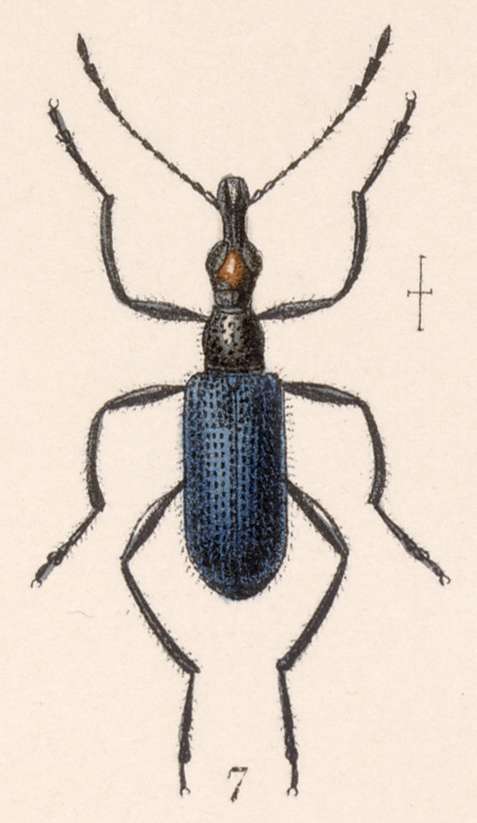
Attelabidae
The Attelabidae is a widespread family of weevils. They are among the primitive weevils, because of their straight antennae, which are inserted near the base of the rostrum. The prothorax is much narrower than the base of the elytra on the abdomen. Attelabidae and the related family Rhynchitidae are known commonly as the leaf-rolling weevils. Rhynchitidae may be treated as subfamily Rhynchitinae of the Attelabidae.

Nitidulidae
family of beetles
Histeridae
Histeridae is a family of beetles commonly known as clown beetles or hister beetles. There are more than 410 genera and 4,800 described species in Histeridae worldwide, with more than 500 species in North America. They can be identified by their shortened elytra, which leave two tergites exposed, and also by their elbowed antennae with clubbed ends. These predatory feeders are most active at night and will fake death if threatened. Hister beetles occupy almost any kind of niche throughout the world. They have also been useful for estimation of time of death during forensic investigations. Also
.png)
Bostrichidae
The Bostrichidae are a family of beetles with more than 700 described species. They are commonly called auger beetles, false powderpost beetles, or horned powderpost beetles.

Anthribidae
Anthribidae is a family of beetles also known as fungus weevils. The antennae are not elbowed, may occasionally be longer than the body and thread-like, and can be the longest of any members of Curculionoidea. As in the Nemonychidae, the labrum appears as a separate segment to the clypeus, and the maxillary palps are long and projecting.
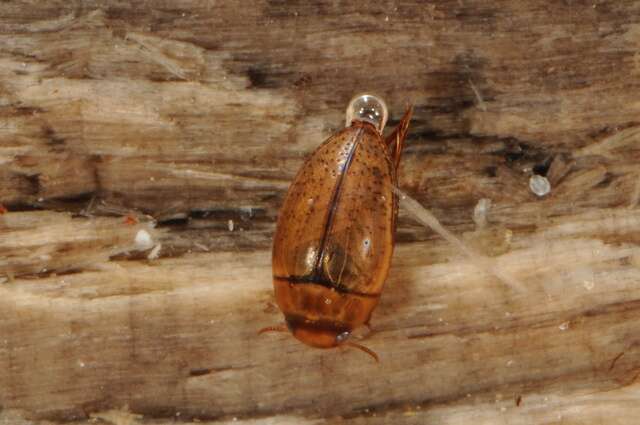
Noteridae
Noteridae is a family of adephagan water beetles closely related to the Dytiscidae, and formerly classified with them. They are mainly distinguished by the presence of a distinctive "noterid platform" underneath, in the form of a plate between the second and third pair of legs. The family is found worldwide, more commonly in the tropics. They are sometimes referred to as burrowing water beetles.

Anthicidae
The Anthicidae are a family of beetles that resemble ants. They are sometimes called ant-like flower beetles or ant-like beetles. The family comprises over 3,500 species in about 100 genera.

Haliplidae
The Haliplidae are a family of water beetles that swim using an alternating motion of the legs. They are therefore clumsy in water (compared e.g. with the Dytiscidae or Hydrophilidae), and prefer to get around by crawling. The family consists of about 200 species in five genera, distributed wherever there is freshwater habitat; it is the only extant member of superfamily Haliploidea. They are also known as crawling water beetles or haliplids.
%2C%20%E2%99%80%20-%20Buchenwerftk%C3%A4fer%20(10052316356).jpg)
Lymexylidae
thumb|An adult Lymexylon navale
The Lymexylidae (historically often spelled Lymexylonidae), also known as ship-timber beetles, are a family of wood-boring beetles. Lymexylidae belong to the suborder Polyphaga and are the sole member of the superfamily Lymexyloidea.
Leiodidae
thumb|thumbtime=0:20|Catops picipes on beech leaf

Ptiliidae
Ptiliidae (Ptenidium pusillum) is a family of very tiny beetles (including the smallest of all beetles) with a cosmopolitan distribution. They are colloquially called featherwing beetles, because the hindwings are narrow and feathery.
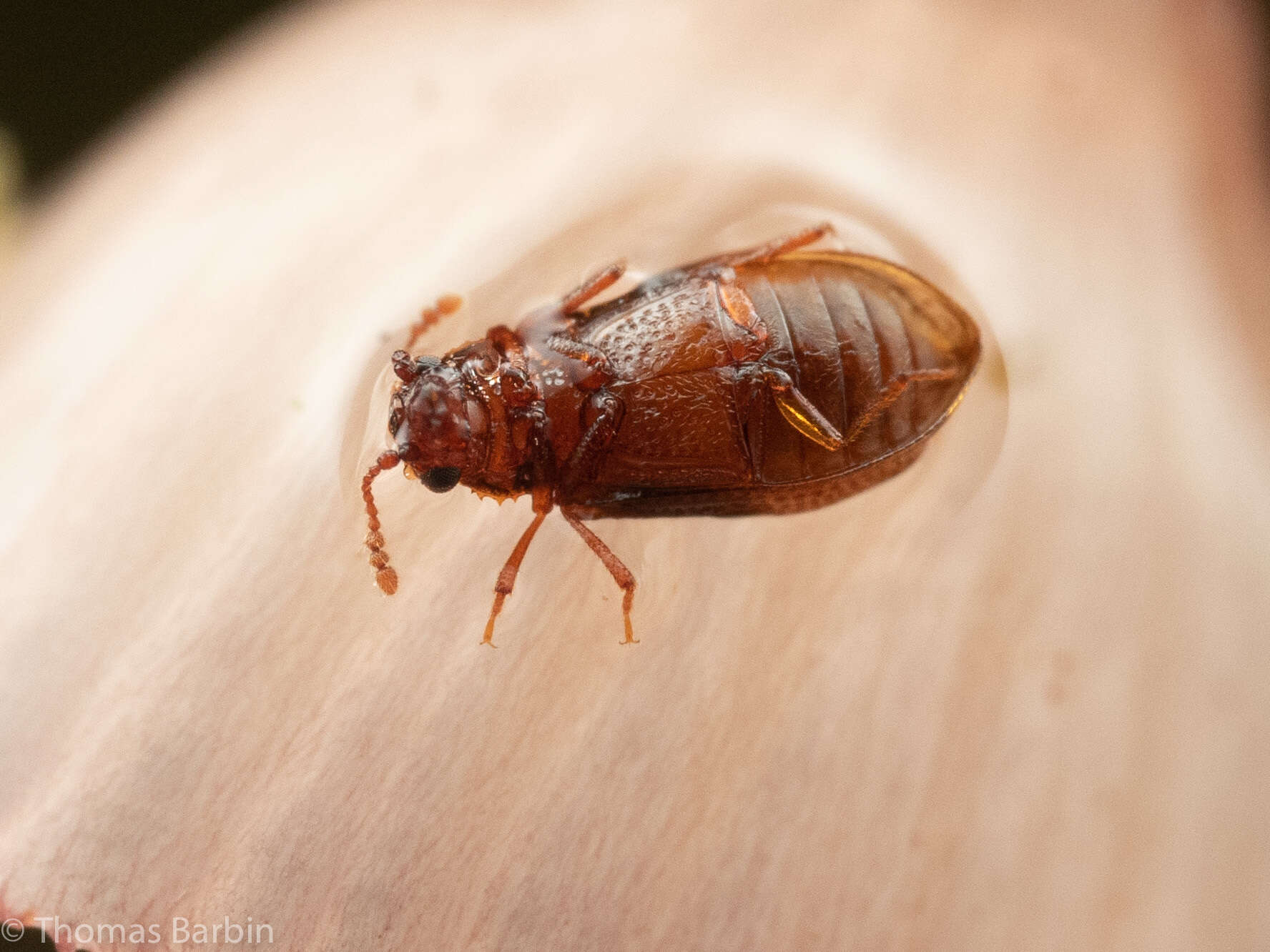
Derodontidae
Derodontidae is a family of beetles, in its own superfamily, Derodontoidea, sometimes known as the tooth-necked fungus beetles. Beetles of this family are small, between 2 and 6 mm in length, typically with spiny margins on their pronotum (part of the thorax) that give them their name, though the genus Laricobius lacks these spines. Unusual among beetles, they have two ocelli on the top of their heads.

Brentidae
thumb|Brentid species illustrated by Des Helmore|alt=

Mycetophagidae
thumb|Mycetophagus serrulatus
.png)
Melandryidae
thumb|Zilora

Cupedidae
The Cupedidae are a small family of beetles, notable for the square pattern of "windows" on their elytra (hard forewings), which give the family their common name of reticulated beetles.
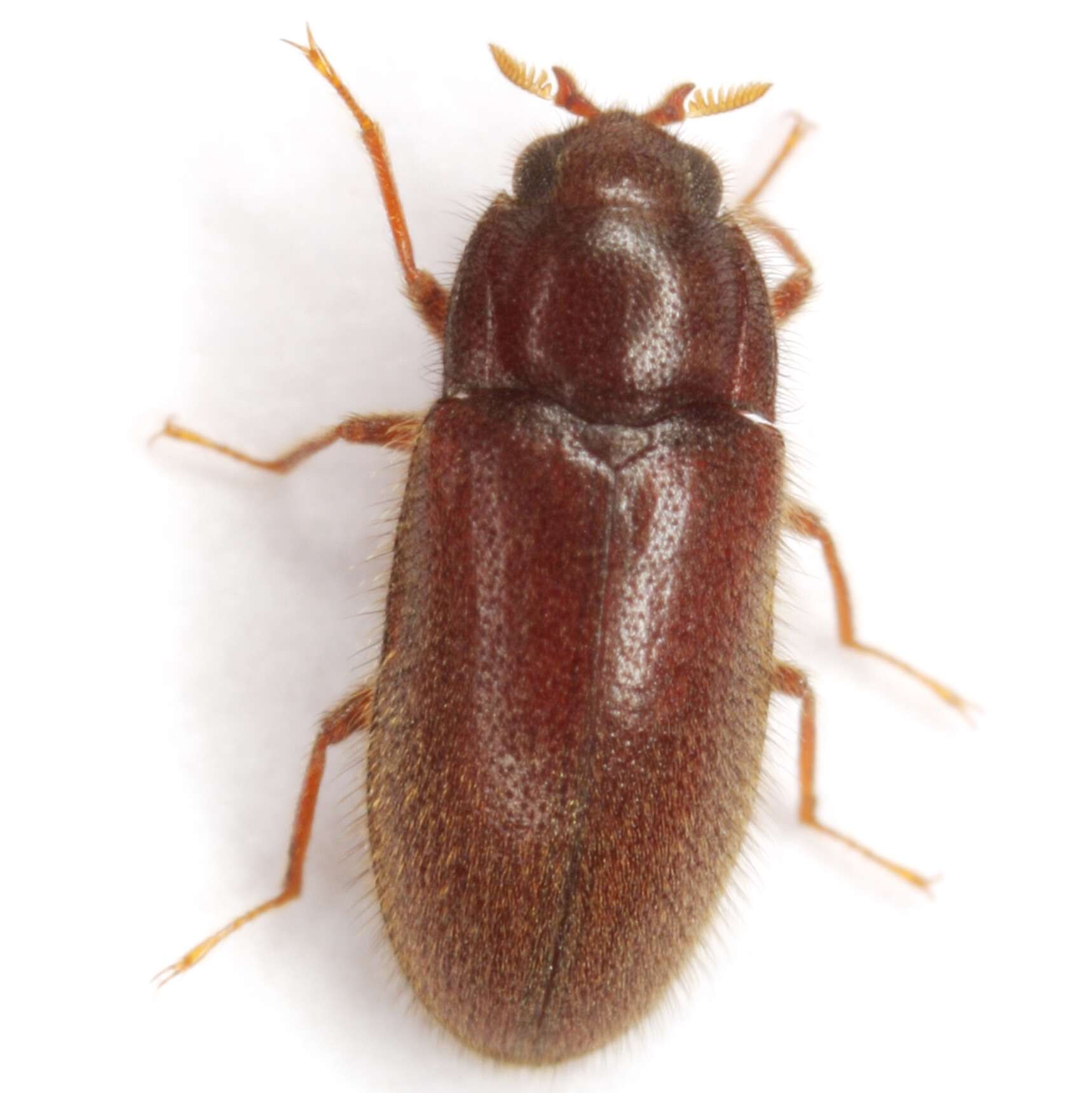
Dryopidae
Dryopidae is a family of beetles, commonly named long-toed water beetles, in the superfamily Byrrhoidea. It was described by Gustaf Johan Billberg in 1820.

Passalidae
Passalidae is a family of beetles known variously as "bessbugs", "bess beetles", "betsy beetles", "betsy bugs", or "horned passalus beetles". Nearly all of the approximately 500 species are tropical; species found in North America are notable for their size, ranging from 20 to 43 mm, for having a single "horn" on the head, and for a form of social behavior unusual among beetles.

Ochodaeidae
Ochodaeidae, also known as the sand-loving scarab beetles, is a small family of scarabaeiform beetles occurring in many parts of the world.
%20(3025083196)%20(2).jpg)
Hydraenidae
Hydraenidae is a family of very small aquatic beetles, sometimes called "Minute moss beetles", with a worldwide distribution. They are around 0.8 to 3.3 mm in length. The adults store air on the underside of the body as well as beneath the elytra which allows them to crawl underwater, often on the underside of the water surface tension, though they cannot swim. Some species have gills that effectively allow them to stay underwater indefinitely. Larvae vary from being fully terrestrial, to being aquatic at least in their earliest instars. The diet of hydraenid larvae and adults is thought
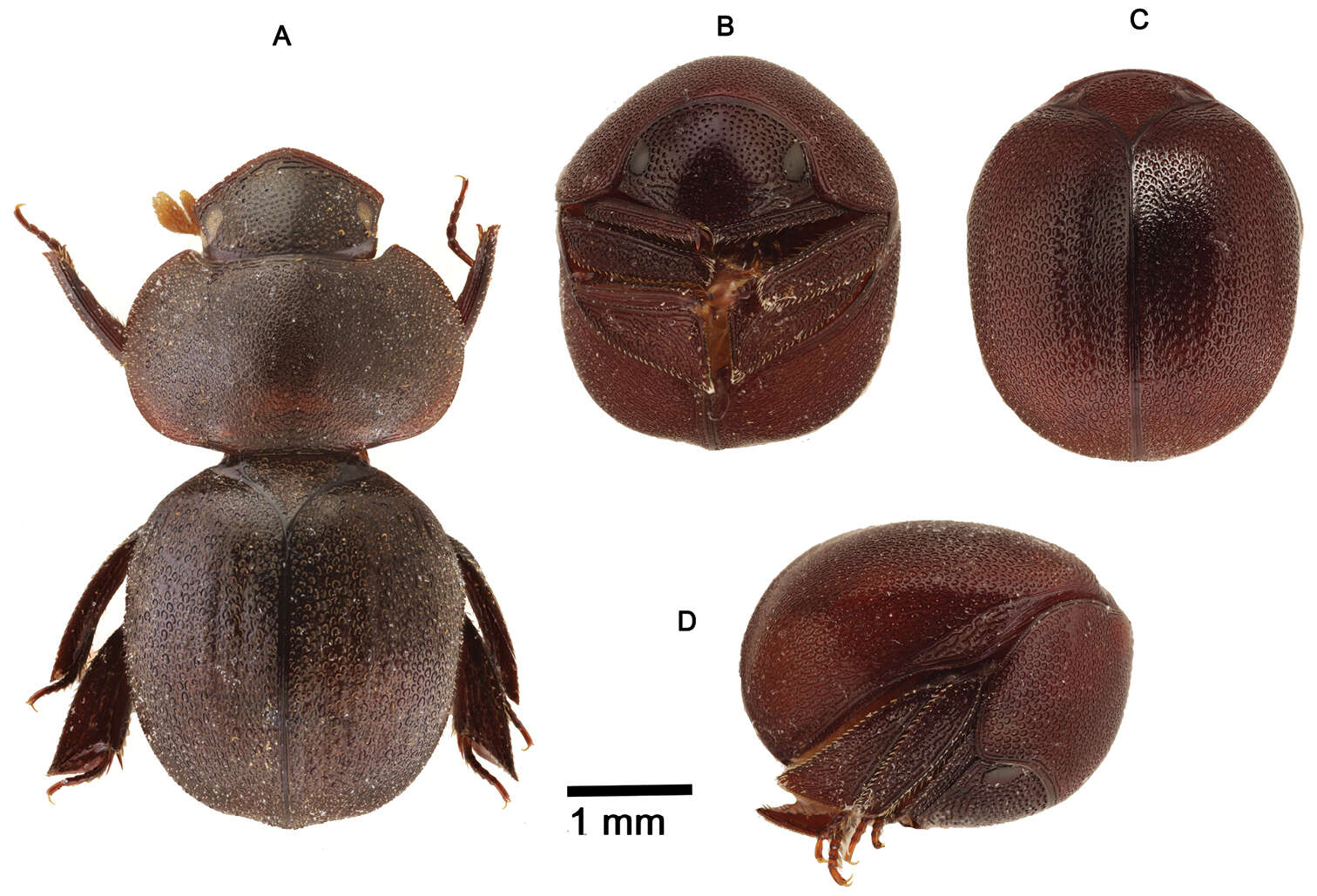
Hybosoridae
Hybosoridae, sometimes known as the scavenger scarab beetles, is a family of scarabaeiform beetles. The >600 species in 78 extant genera occur widely in the tropics, but little is known of their biology.
%20(14425954610).png)
Zopheridae
thumb|Aulonium ruficorne ([[Colydiinae)]]
.jpg)
Phengodidae
The beetle family Phengodidae is known also as glowworm beetles, whose larvae are known as glowworms. The females and larvae have bioluminescent organs. They occur throughout the New World from extreme southern Canada to Chile, numbering over 250 species in total. The recently recognized members of the Phengodidae, the Cydistinae, are found in Western Asia. The family Rhagophthalmidae, an Old World group, used to be included in the Phengodidae.

Ciidae
The minute tree-fungus beetles, family Ciidae, are a sizeable group of beetles which inhabit Polyporales bracket fungi or coarse woody debris. Most numerous in warmer regions, they are nonetheless widespread and a considerable number of species occur as far polewards as Scandinavia for example.
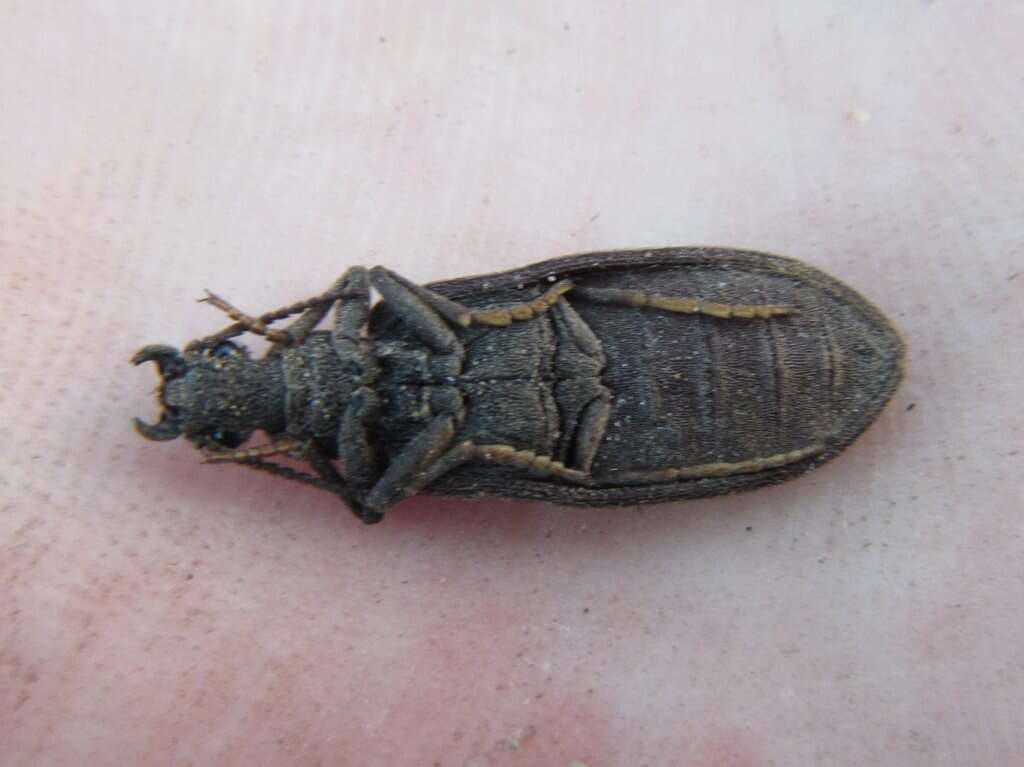
Ommatidae
The Ommatidae are a family of beetles in the suborder Archostemata. The Ommatidae are considered the extant beetle family that has most ancestral characteristics. There are only seven extant species, confined to Australia and South America. However, the geographical distribution was much wider during the Mesozoic spanning across Eurasia and Australia, suggesting that they were widespread on Pangea. So far, over 26 extinct genera containing over 170 species of these beetles have been described. Three extant genera have been assigned to this family: Omma, Tetraphalerus and Beutelius. The family
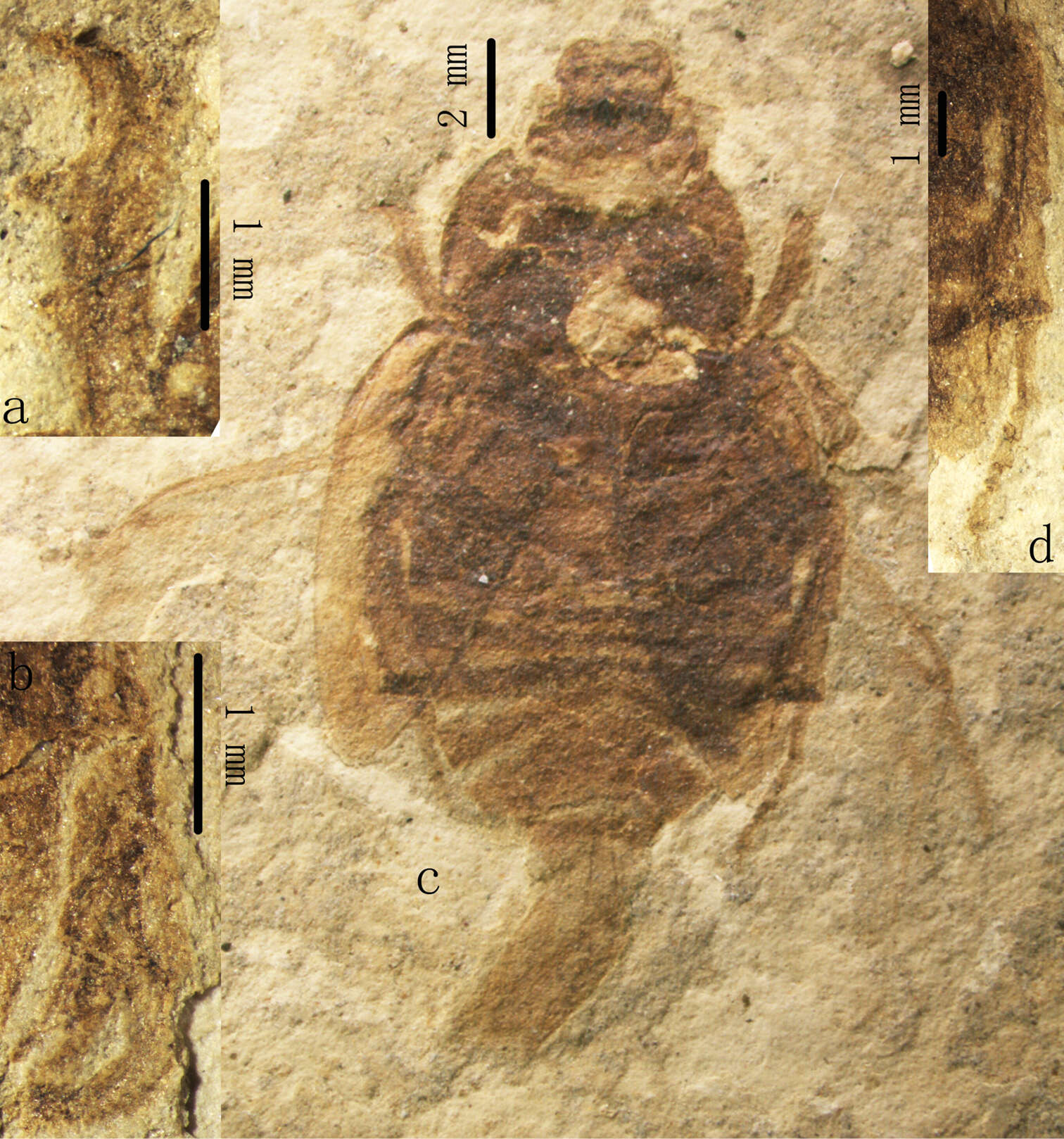
Glaphyridae
Glaphyridae is a family of beetles, commonly known as bumble bee scarab beetles. There are eight extant genera with about 80 species distributed worldwide and two extinct genera described from the Aptian aged Yixian Formation of China. There are cases of flower-beetle interactions, in the southeast Mediterranean region between red bowl-shaped flowers and Glaphyridae beetles.
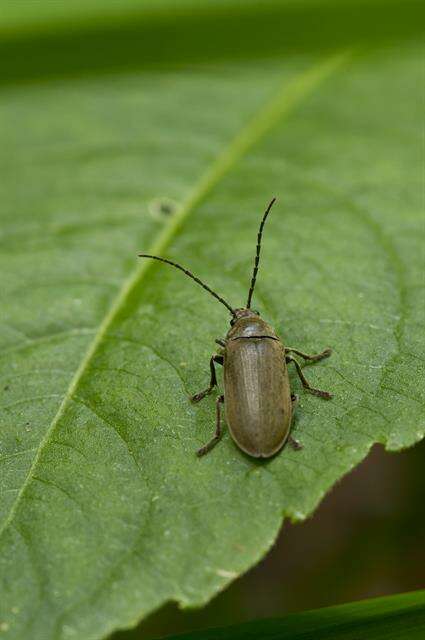
Dascillidae
Dascillidae is a family of beetles within the clade Elateriformia. There are about 100 extant species in 11 genera, which are found worldwide. Dascillidae together with Rhipiceridae form the super family Dascilloidea.

Salpingidae
Salpingidae or narrow-waisted bark beetles is a family of beetles in the superfamily Tenebrionoidea. The species are small, about 1.5 – 7 mm in length. The family is globally distributed and consists of about 45 genera and 300 species, which are generally found in the temperate regions of both hemispheres. The family is mainly associated with plants (both living and dead) as well as with ascomycete and hyphomycete fungi. Some members of the family are associated with unusual habitats, like Aegialites and Antarcticodomus, which are found in coastal areas including the intertidal zone, with
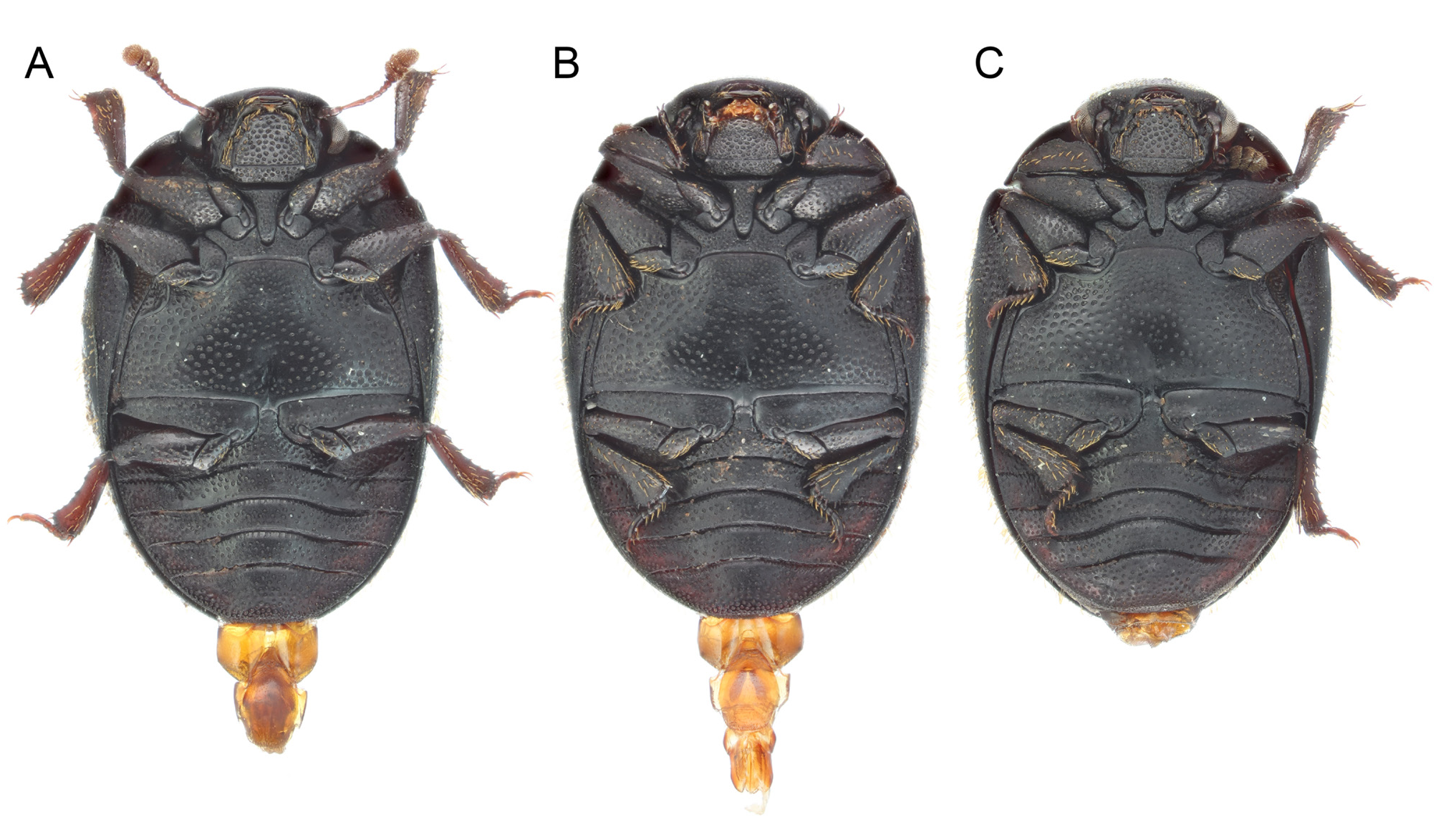
Nosodendridae
Nosodendridae is a family of beetles, with less than a hundred species in three extant genera, which are found worldwide. Nosodendron, the largest genus, is found in forests and attracted to yeast generated slime on the wounds of trees, and likely consumes fermented substances as well as fungi and microorganisms. Several additional genera and species are known from the fossil record. Nosodendridae is considered to be an isolated lineage within Polyphaga, being the sister group to the clade containing Staphyliniformia, Bostrichoidea and Cucujiformia.

Belidae
Belidae is a family of weevils, called belids or primitive weevils because they have straight antennae, unlike the "true weevils" or Curculionidae which have geniculate (elbowed) antennae. They are sometimes known as "cycad weevils", but this properly refers to a few species from the genera Parallocorynus and Rhopalotria.
thumb|Agathinus tridens

Eucinetidae
thumb|Eucinetus terminalis
thumb|Eucinetus morio
Trachypachidae
The Trachypachidae (sometimes known as false ground beetles) are a family of beetles that generally resemble small ground beetles, but that are distinguished by the large coxae of their rearmost legs. There are only six known extant species in the family, with four species of Trachypachus found in northern Eurasia and northern North America, and two species of Systolosoma in Chile and Argentina. They were much more diverse in the past, with dozens of described species from the Mesozoic.

Ptinidae
thumb|Xestobium plumbeum
thumb|Hedobia imperialis, Fan-bearing wood borer

Artematopodidae
Artematopodidae is a family of soft-bodied plant beetles in the superfamily Elateroidea. They are mostly found in understory forest foliage. The life history of the group is obscure, larvae of the genera Eurypogon and Macropogon likely feed on moss, while the larvae of Artematopus have been fed insect remains. The oldest fossils of the family date to the Middle Jurassic.
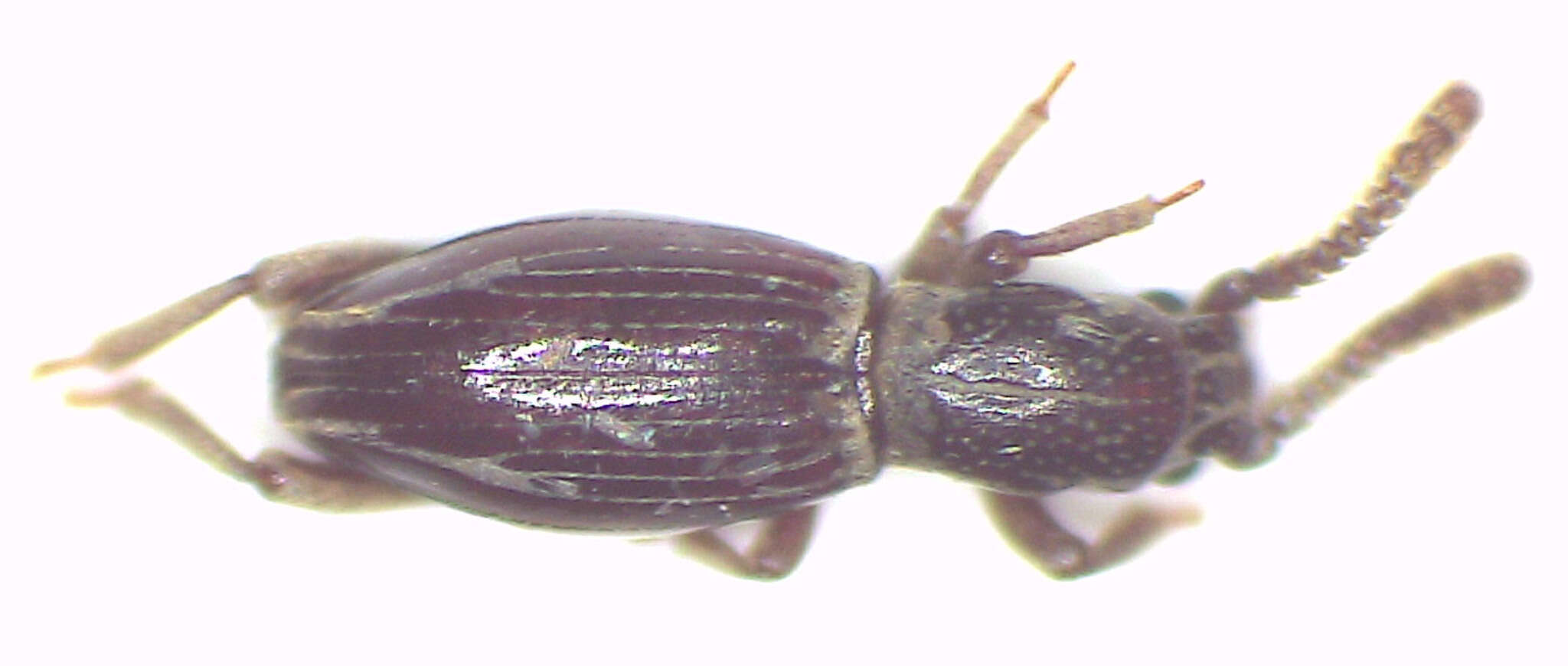
Jacobsoniidae
Jacobsoniidae are a family of tiny beetles belonging to Staphylinoidea. The larvae and adults live under bark, in plant litter, fungi, bat guano and rotten wood. There are around 28 described species in three genera:
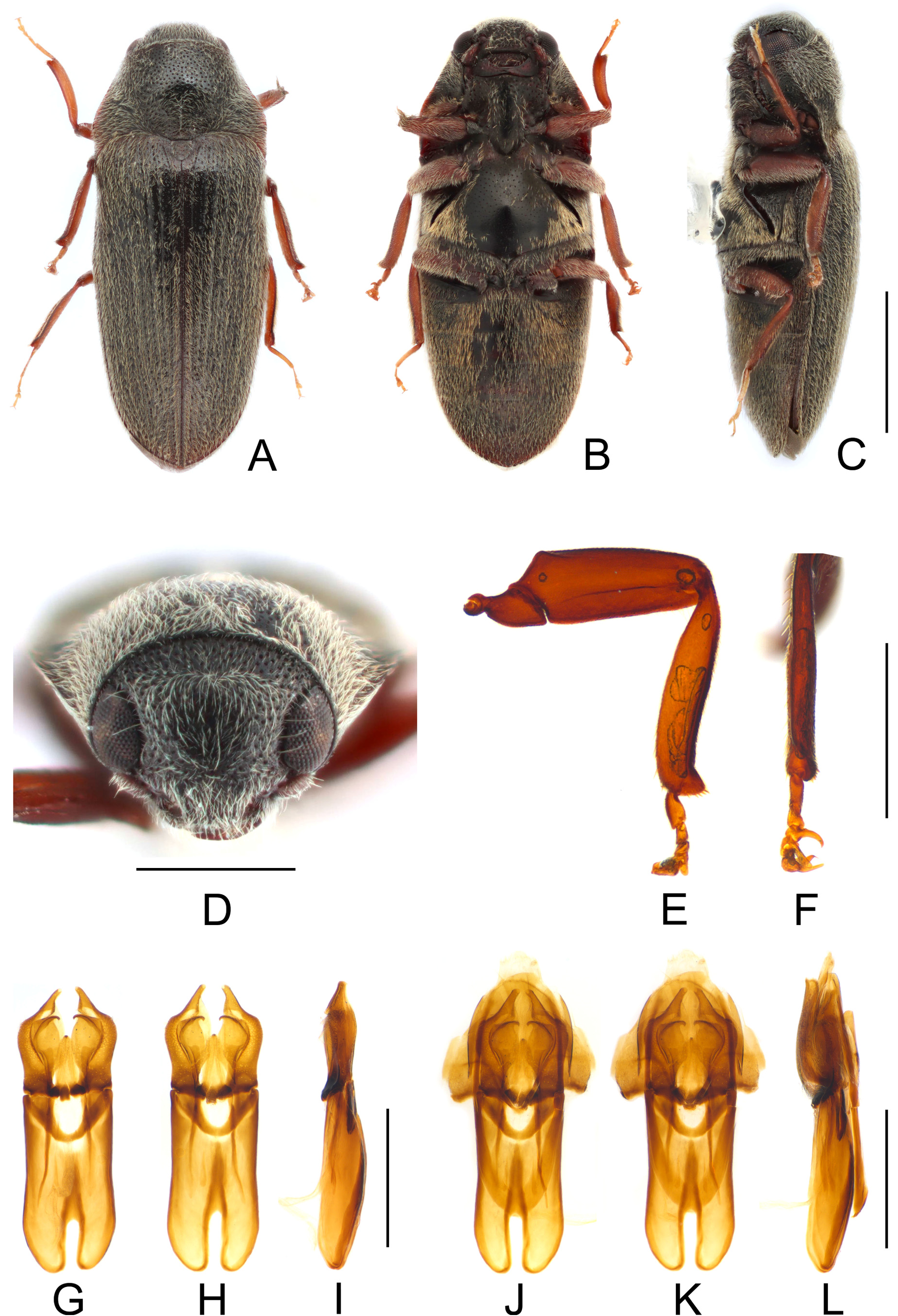
Throscidae
Throscidae is a family of elateroid beetles found worldwide (except New Zealand) with around 150 species in 5 extant genera. The larvae are soil-dwelling, siphoning fluid from mycorrhizae attached to trees. The adults are short-lived, with the adult males being noted for a complex mating dance. Like some other elateroids, they are capable of clicking.
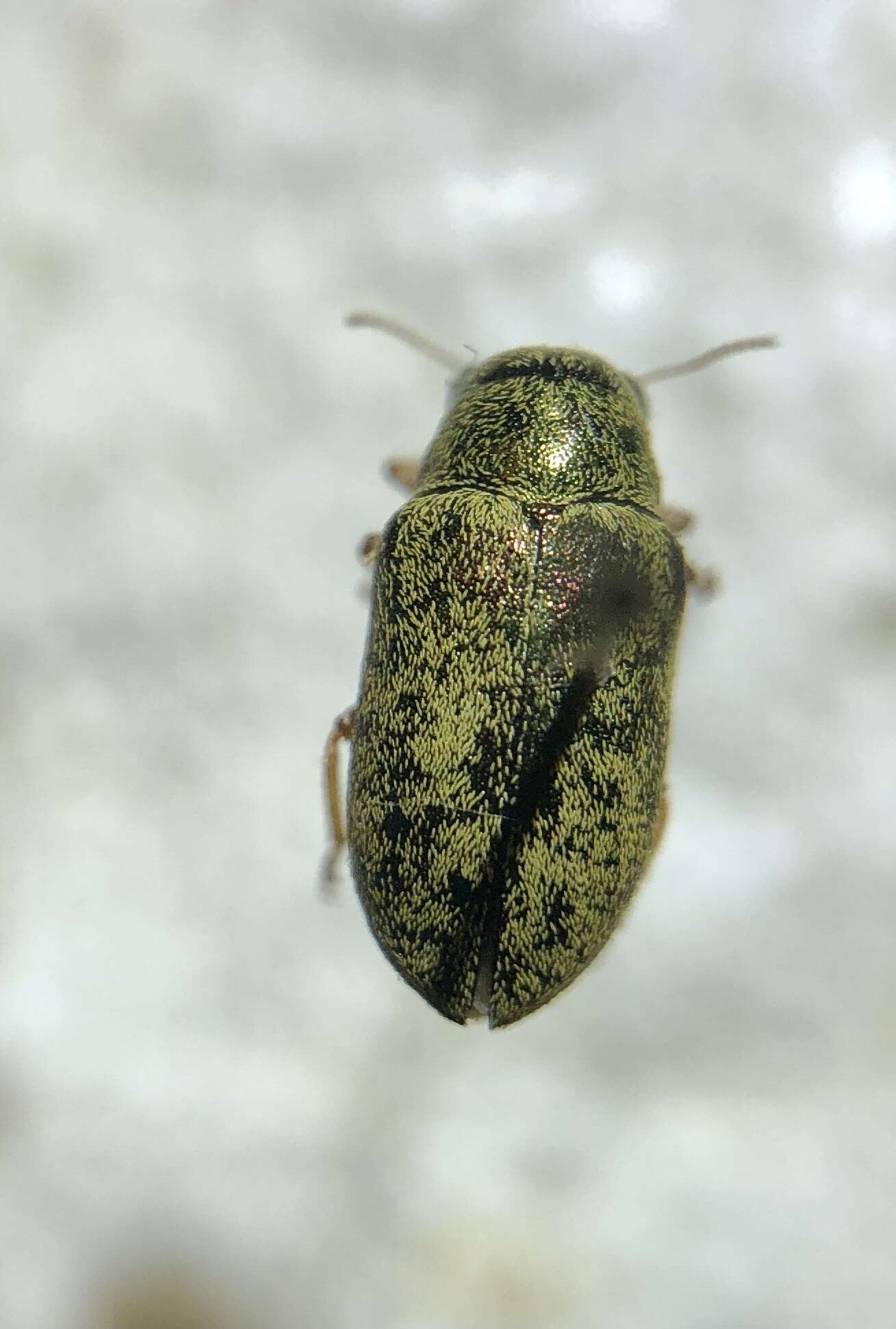
Schizopodidae
Schizopodidae is a family of beetles, in the large suborder Polyphaga. It was a subfamily until 1991, when it was elevated to family status.

Agyrtidae
Agyrtidae, or primitive carrion beetles, are a small family of beetles belonging to Staphylinoidea. They are found in mostly temperate areas of the Northern Hemisphere and in New Zealand.
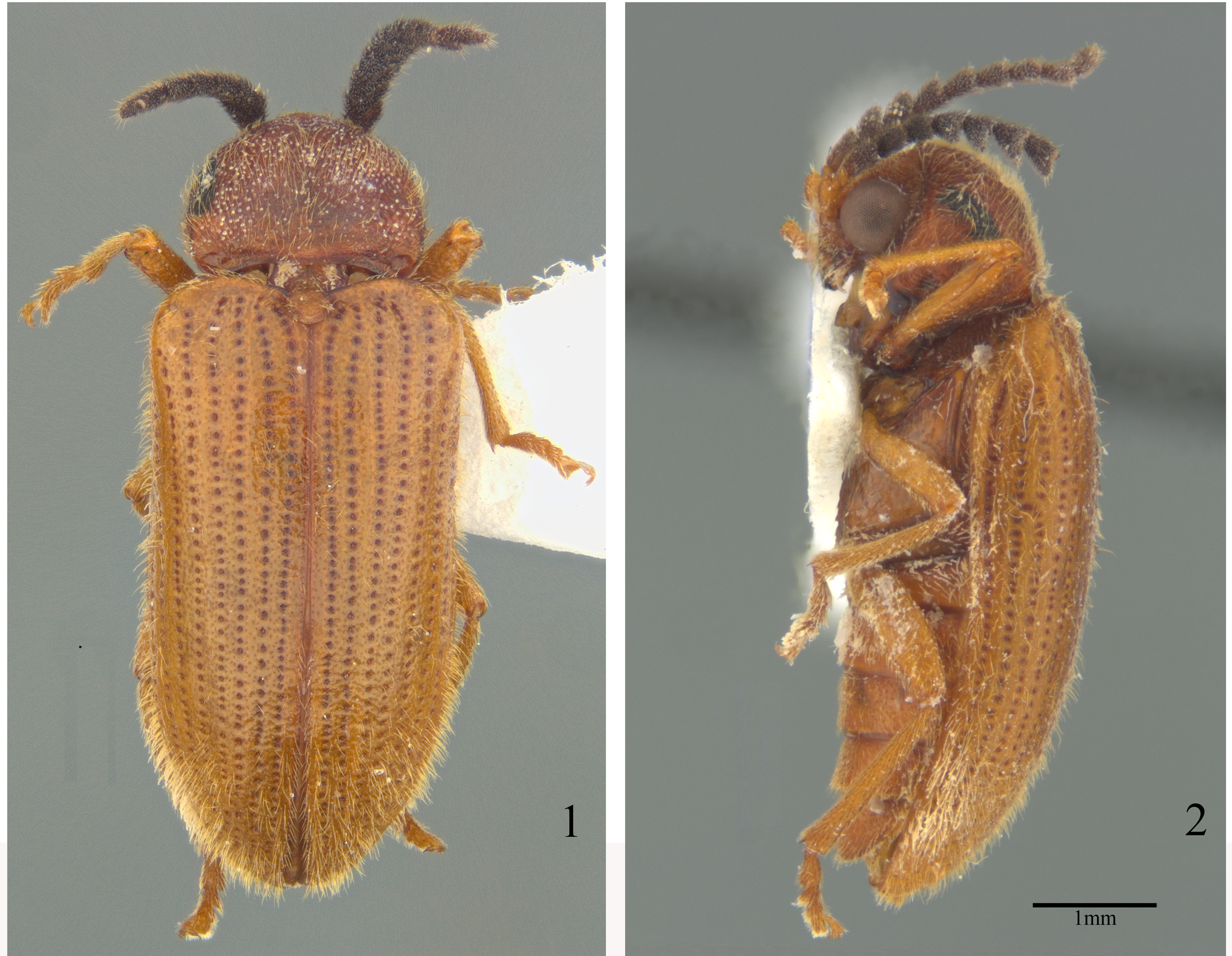
Cerophytidae
The Cerophytidae are a family of beetles belonging to Elateroidea. Larvae are associated with rotting wood, on which they are presumed to feed. The family contains over 20 species in five genera, primarily distributed in the New World, but also in Eurasia and Africa. 17 fossil species in 7 genera are known extending to the Early Jurassic. Like some other elateroids, the adults are capable of clicking.

Pythidae
The family Pythidae is a small group of tenebrionoid beetles with no vernacular common name, though recent authors have coined the name dead log bark beetles. There are seven genera, which are largely native to the mid-high latitude regions of the Northern Hemisphere and Australia, with one genus also present in the tropical Americas. The larvae are generally found with decaying vegetation and wood on which they feed, while adults are not associated with the larvae and are generally caught using malaise traps and light traps.
thumb|Pytho kolwensis
Clambidae
Clambidae is a family of beetles. They are known commonly as the minute beetles or the fringe-winged beetles. They are found worldwide on every continent except Antarctica.
.png)
Tetratomidae
thumb|Tetratoma
Tetratomidae is a small family of beetles sometimes called polypore fungus beetles. The family consists of several genera, most of which used to be in the family Melandryidae. Tetratomidae can be found worldwide.
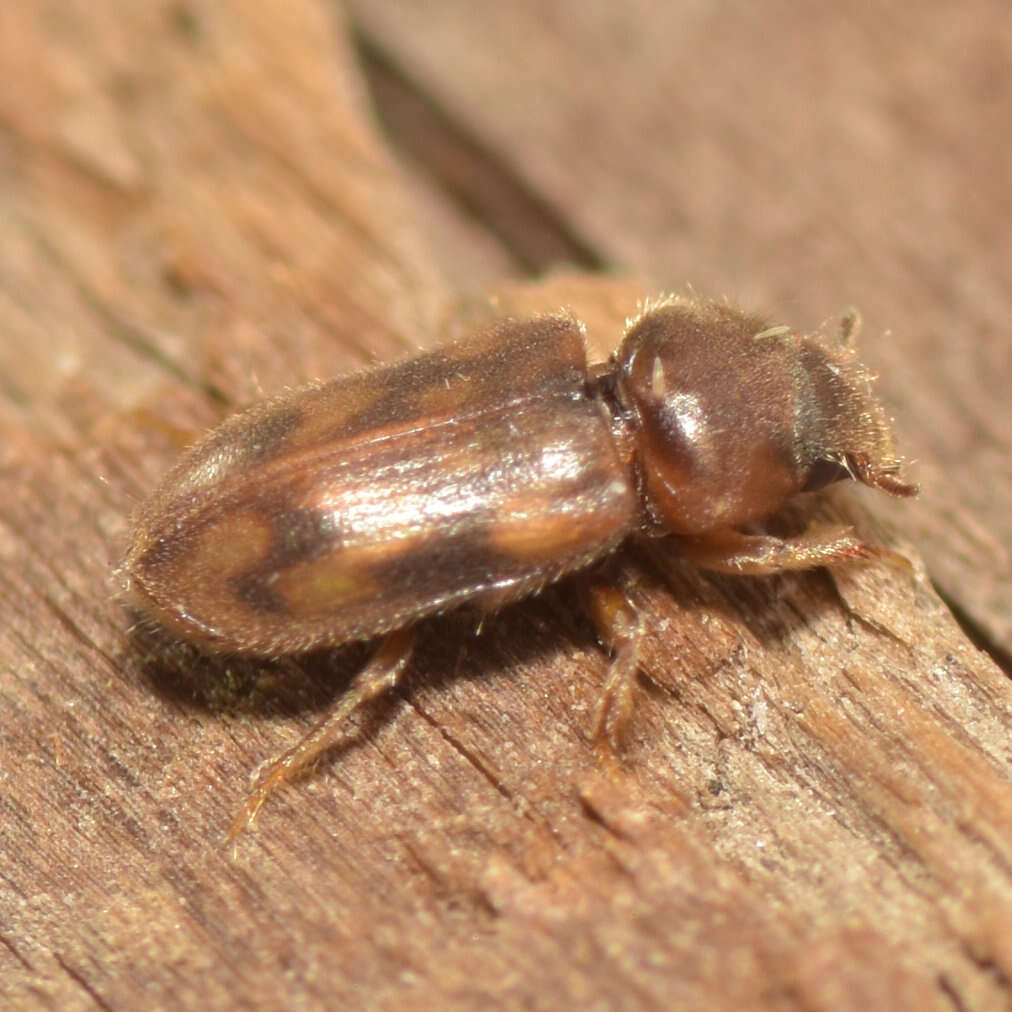
Heteroceridae
Heteroceridae, the variegated mud-loving beetles, are a widespread and relatively common family of beetles found on every continent except for Antarctica.
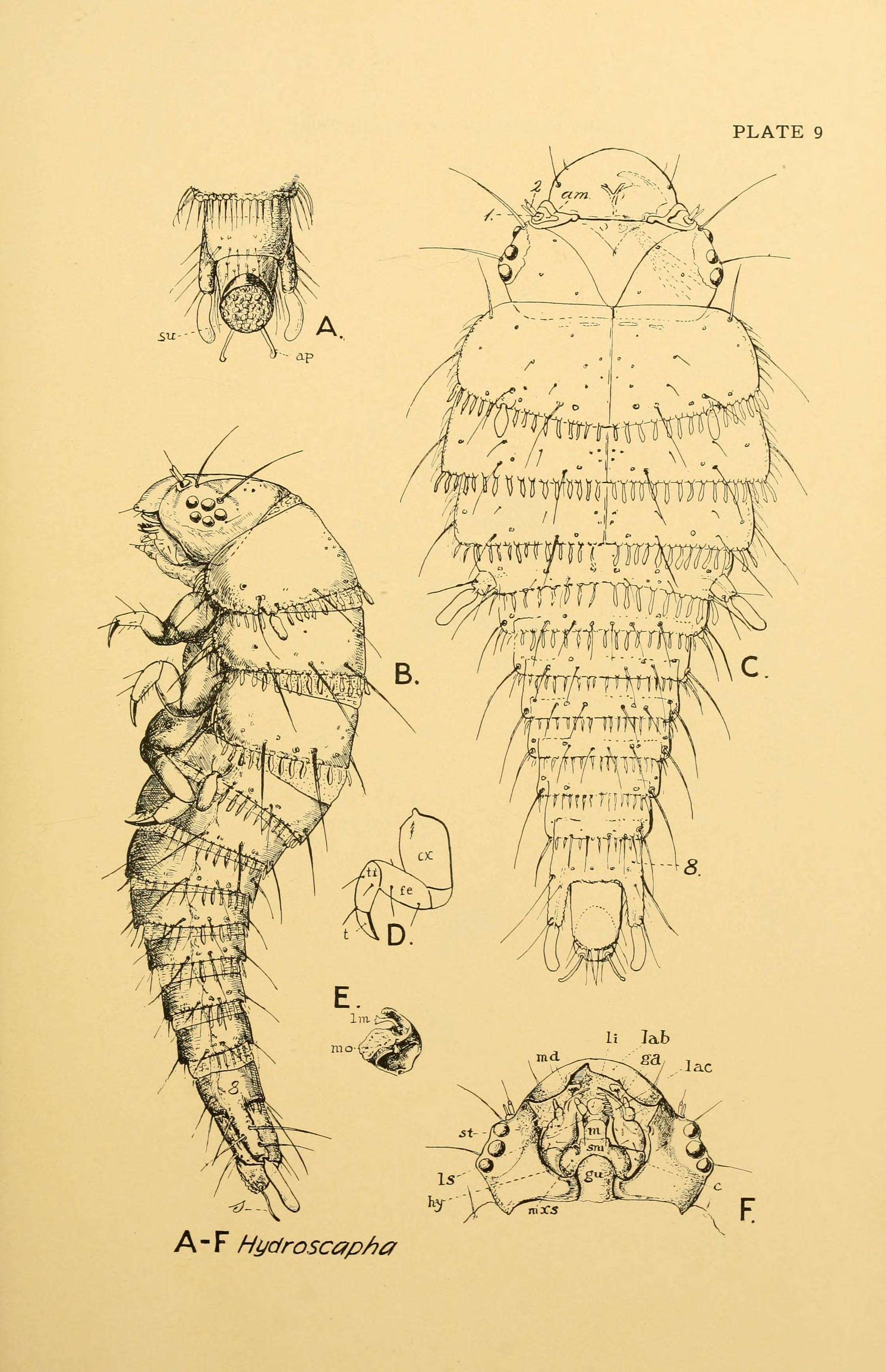
Hydroscaphidae
The Hydroscaphidae are a small family of water beetles known commonly as skiff beetles. As of 2010, there are 23 species in the family. Several are recently described.
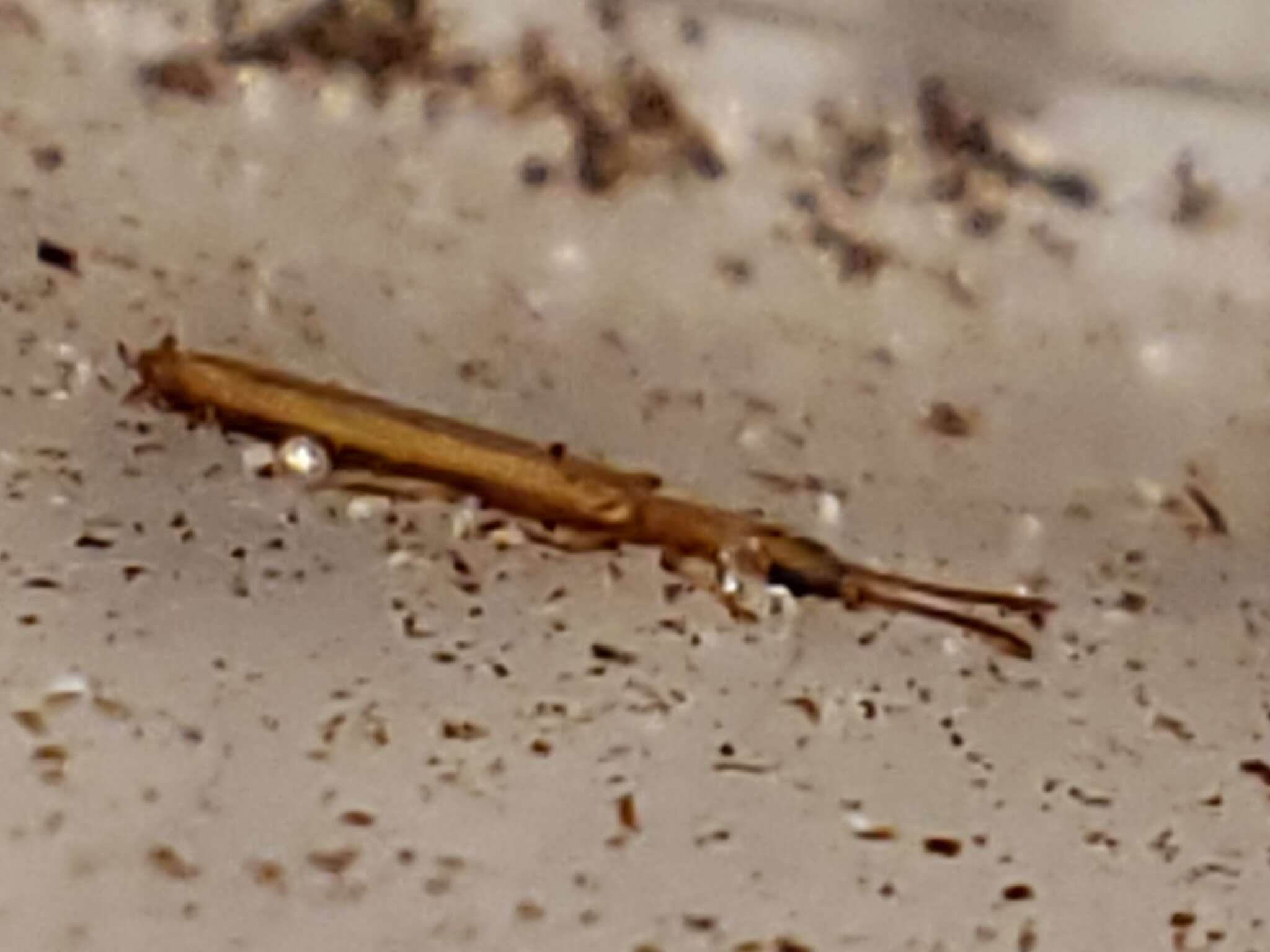
Mycteridae
The family Mycteridae is a small group of tenebrionoid beetles with no vernacular common name, though recent authors have coined the name palm and flower beetles. The family Mycteridae is distributed worldwide. There are about 30 genera and 160 species in three subfamilies Mycterinae, Hemipeplinae and Eurypinae (= Lacconotinae). These 3 subfamilies are extremely diverse in appearance and it is difficult to diagnose the adults at the family level. About 20 species are found in Australia, and species of three genera are found in North America (Mycterus, Hemipeplus and Lacconotus). The larvae are

Scraptiidae
The family Scraptiidae is a small group of tenebrionoid beetles sometimes called false flower beetles. There are about 400 species in 30 genera with a world-wide distribution. The adults are found on flowers, sometimes in large numbers, but are also found on foliage. The larvae are typically found under the bark of dead trees. The oldest fossils of the group date to the Eocene.
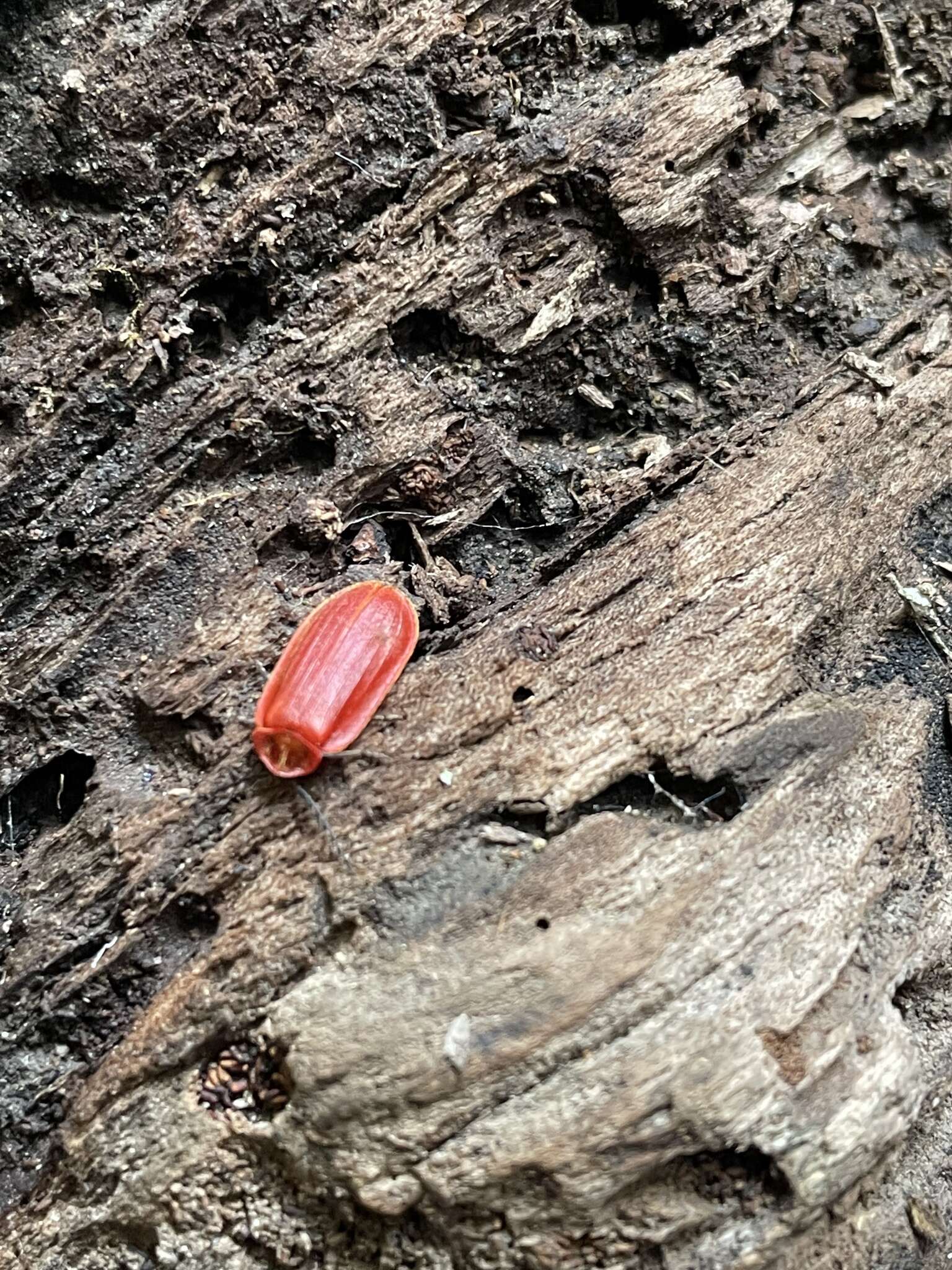
Omethidae
Omethidae is a family of Elateroidea sometimes known as the false soldier beetles. They are native to South, Southeast and Eastern Asia and the Americas. Their biology is obscure and their larvae are unknown. They appear to inhabit vegetation in or surrounding forests, and are probably active during the day.

Stenotrachelidae
Stenotrachelidae, commonly called false longhorn beetles is a family of beetles in the superfamily Tenebrionoidea. They are native to the Northern Hemisphere. The larvae feed on heavily decomposed wood, while the adults are likely short lived and probably feed on pollen.
Crowsoniellidae
REDIRECT Crowsoniella
.png)
Ptilodactylidae
thumb|A picture of Ptilodactylidae|250px|right

Torridincolidae
The Torridincolidae are a small family of beetles in the suborder Myxophaga. It contains these genera: