Category
page 1Behavior

sleep
Sleep is a state of reduced mental and physical activity in which consciousness is altered and certain sensory activity is inhibited. During sleep, there is a marked decrease in muscle activity and interactions with the surrounding environment. While sleep differs from wakefulness in terms of the ability to react to stimuli, it still involves active brain patterns, making it more reactive than a coma or disorders of consciousness.

writing
thumb|upright=1.3|The Rosetta Stone (196 BC) bears writing in three different scripts. [[Hieroglyphs (top) and Demotic (middle) record the same text in the Egyptian language, while an equivalent passage in Greek uses the Greek alphabet (bottom). These correspondences were key to the decipherment of Egyptian hieroglyphs in the early 19th century.]]

behavior
Behavior (American English) or behaviour (British English) is the range of actions of organisms, individuals, systems or artificial entities in some environment. These systems can include other systems or organisms as well as the inanimate physical environment. It is the computed response of the system or organism to various stimuli or inputs, whether internal or external, conscious or subconscious, overt or covert, and voluntary or involuntary. While some behavior is produced in response to an organism's environment (extrinsic motivation), behavior can also be the product of intrinsic motivat

motivation
Motivation is an internal state that propels individuals to engage in goal-directed behavior. It is often understood as a force that explains why people or other animals initiate, continue, or terminate a certain behavior at a particular time. It is a complex phenomenon and its precise definition is disputed. It contrasts with amotivation, which is a state of apathy or listlessness. Motivation is studied in fields such as psychology, motivation science, neuroscience, and philosophy.
.jpeg)
aggression
upright|thumb|Depiction of French President Armand Fallieres's assault by a waiter named Jean Mattis
thumb|upright|Many mammals, such as the tiger, bare their teeth as a sign of aggression—a form of [[aposematism. ]]

solitude
300px|thumb|Howard Pyle's 19th century illustration of a marooned [[pirate]]
Solitude, also known as social withdrawal, is a state of seclusion or isolation, meaning lack of socialisation. Effects can be either positive or negative, depending on the situation. Short-term solitude is often valued as a time when one may work, think, or rest without disturbance. It may be desired for the sake of privacy. Long-term solitude may stem from soured relationships, loss of loved ones, deliberate choice, infectious disease, mental disorders, neurological disorders such as circadian rhythm sleep disorder,
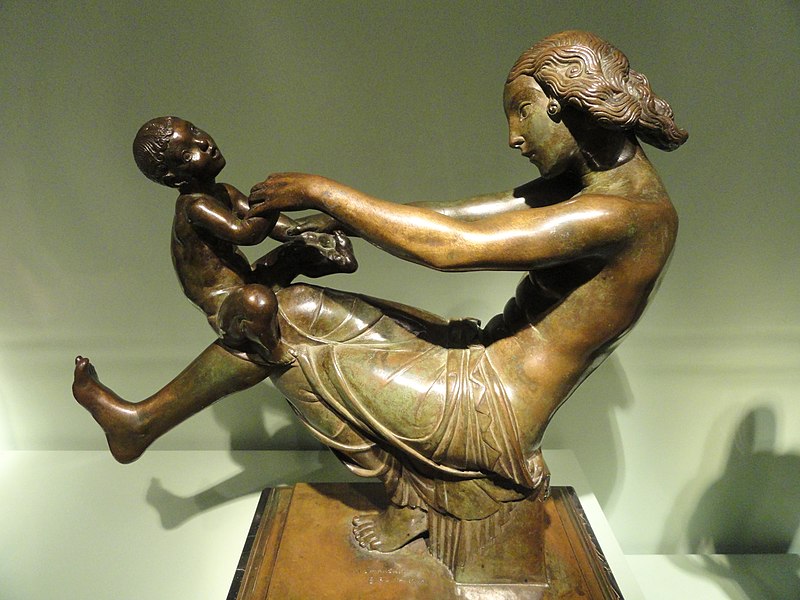
playing
range of voluntary, intrinsically motivated activities done for recreational pleasure and enjoyment

deception
Deception is the act of convincing of one or many recipients of untrue information. The person creating the deception knows it to be false while the receiver of the information does not. It is often done for personal gain or advantage.
modus vivendi
an agreement between those whose opinions differ, such that they agree to disagree

lament
thumb|right|Jan Kochanowski with dead daughter in painting inspired by the poet's Laments
applied behavior analysis
science in which techniques derived from behaviorism are systematically applied to improve socially significant behaviors
blame
Blame is the act of censuring, holding responsible, or making negative statements about an individual or group that their actions or inaction are socially or morally irresponsible, the opposite of praise. When someone is morally responsible for doing something wrong, their action is blameworthy. By contrast, when someone is morally responsible for doing something right, it may be said that their action is praiseworthy. There are other senses of praise and blame that are not ethically relevant. One may praise someone's good dress sense, and blame their own sense of style for their own dress sen
social behavior
behavior among two or more organisms, typically from the same species
sleep
sleep in non-human beings
habit
Characteristic growth or behavior

behavior modification
treatment approach using behavioral conditioning
homing behavior
instinctual activity such as the ability of certain animals to return to a given place
somatic marker hypothesis
hypothesis
harem
animal group consisting of one or two males, a number of females and their offspring