File:Pyle_pirate_marooned.jpg · Wikimedia Commons · See Wikimedia Commons
solitude
Sign in to saveAlso known as isolation, lone, alone, solitary, social withdrawal
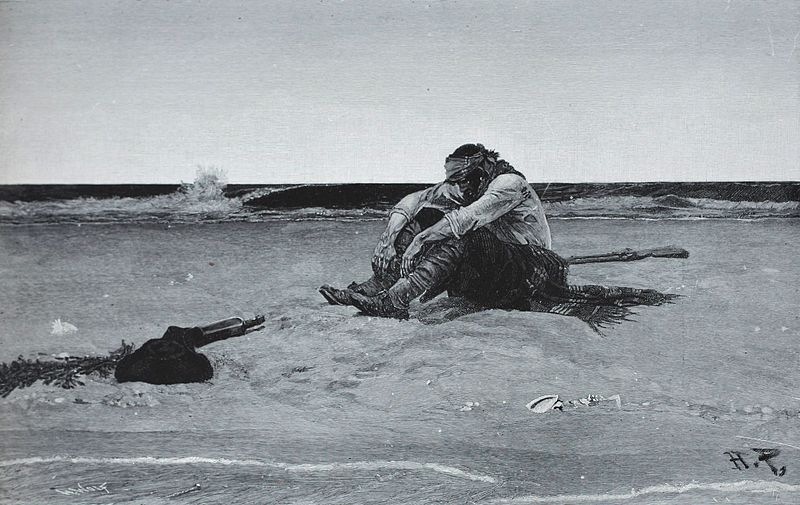
300px|thumb|Howard Pyle's 19th century illustration of a marooned [[pirate]] Solitude, also known as social withdrawal, is a state of seclusion or isolation, meaning lack of socialisation. Effects can be either positive or negative, depending on the situation. Short-term solitude is often valued as a time when one may work, think, or rest without disturbance. It may be desired for the sake of privacy. Long-term solitude may stem from soured relationships, loss of loved ones, deliberate choice, infectious disease, mental disorders, neurological disorders such as circadian rhythm sleep disorder,
Solitude is a state of being alone or withdrawn from social interaction, which can have both positive and negative effects depending on the circumstances. While short-term solitude is often valued for providing uninterrupted time to work, think, rest, or maintain privacy, long-term solitude can result from various causes including relationship problems, loss, personal choice, or health conditions.
AI-generated from the Wikipedia summary — may contain errors.
Wikidata facts
- Instance of
- social issue
- Subclass of
- isolation
- Image
- L'Esule by Antonio Ciseri (1821-1891).jpg
Show 3 more facts
- Commons category
- Solitude
- ICPC 2 ID
- P03
- has effect
- loneliness
Sources (2)
via Wikidata · CC0
~9 min read
Encyclopedic overview
10 sectionsContents
- Health effects
- Psychological effects
- Positive effects
- Negative effects
- Other uses
- As pleasure
- As punishment
- See also
- References
- External links
300px|thumb|Howard Pyle's 19th century illustration of a marooned [[pirate]] Solitude, also known as social withdrawal, is a state of seclusion or isolation, meaning lack of socialisation. Effects can be either positive or negative, depending on the situation. Short-term solitude is often valued as a time when one may work, think, or rest without disturbance. It may be desired for the sake of privacy. Long-term solitude may stem from soured relationships, loss of loved ones, deliberate choice, infectious disease, mental disorders, neurological disorders such as circadian rhythm sleep disorder, or circumstances of employment or situation.
A distinction has been made between solitude and loneliness. In this sense, these two words refer, respectively, to the joy and the pain of being alone.
Excerpted from Wikipedia’s “solitude” article, available under the CC BY-SA 4.0 licence.