Category
page 1Biblical murderers

Moses
In Abrahamic religions, Moses was the Hebrew prophet who led the Israelites out of slavery in the Exodus from Egypt. He is considered the most important prophet in Judaism and Samaritanism, and one of the most important prophets in Christianity, Islam, the Baháʼí Faith, and other Abrahamic religions. According to the Abrahamic scriptures, God dictated the Mosaic Law to Moses, which he wrote down and which formed part of the Torah.

David
David (; , "beloved one") was, originally, leader of the Tribe of Judah who became the first king of the united Kingdom of Israel according to the Hebrew Bible and Old Testament.
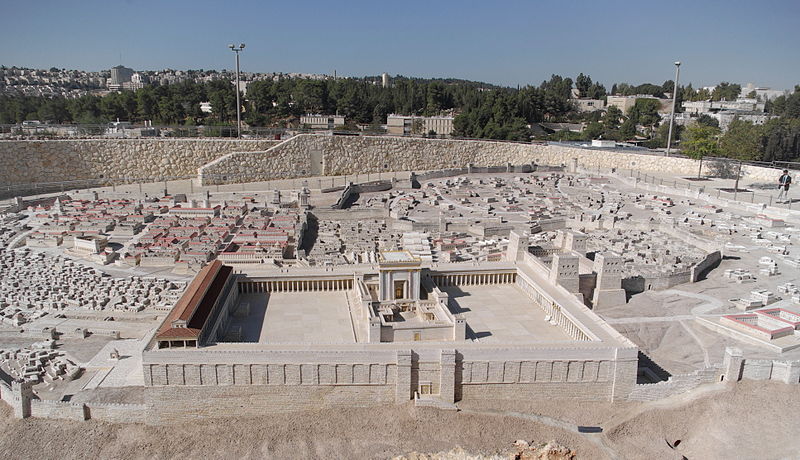
Herod the Great
king of Judea from 37/6 BCE to 4/1 BCE

Saul
thumb|The Kingdom of Saul, according to the biblical account
thumb|300px|David and Saul, by Julius Kronberg, 1885
thumb|upright=1.13|David Plays the Harp for Saul, by Rembrandt|Rembrandt van Rijn, c. 1650
thumb|upright=1.3|Saul threatening David, by José Leonardo, c. 1640s
Saul (; , ; ; , ) was a monarch of ancient Israel and Judah and, according to the Hebrew Bible and Old Testament, the first king of the United Monarchy, a polity of uncertain historicity. His reign, traditionally placed in the late eleventh century BC, marked the transition of the Israelites from a scattered tribal society r

Cain
Cain is a biblical figure in the Book of Genesis within Abrahamic religions. He is the elder brother of Abel, and the firstborn son of Adam and Eve, the first couple within the Bible. He was a farmer who gave an offering of his crops to God. However, God was not pleased and favored Abel's offering over Cain's. Out of jealousy, Cain killed his brother, for which he was punished by God with the curse and mark of Cain. He had several descendants, starting with his son Enoch and including Lamech.

Absalom
Absalom (), according to the Hebrew Bible, was an Israelite prince. Born to David and Maacah, who was from Geshur, he was the only full sibling of Tamar. He is described in the Hebrew Bible as being exceptionally beautiful, as is his sister. In the narrative of 2 Samuel 13, his sister Tamar takes refuge at his house after she is raped by their paternal half-brother Amnon (born to David and Ahinoam, who was from Jezreel); David is angered by the incident, but does nothing, as Amnon is his heir apparent. Infuriated by the rape and David's inaction, Absalom assassinates Amnon and subsequently fle

Cain and Abel
persons of the Bible, the first two sons of Adam and Eve
.jpg)
Levi
Levi ( ; ) was, according to the Book of Genesis, the third of the six sons of Jacob and Leah, and the founder of the Israelite Tribe of Levi (the Levites, including the Kohanim) and the great-grandfather of Aaron, Moses and Miriam. Certain religious and political functions were reserved for the Levites.

Ahab
Ahab (, ; ; ; ; ) was a king of Israel, the son and successor of King Omri, and the husband of Jezebel of Sidon, according to the Hebrew Bible. He is depicted in the Bible as a Baal worshipper and is criticized for causing moral decline in Israel, though modern scholars question this.

Athaliah
Athaliah ( Gotholía; ) was the daughter of King Ahab and Queen Jezebel of Israel; she was queen consort of Judah as the wife of King Jehoram, a descendant of King David, and was later queen regnant c. 841–835 BC.

Jezebel
Jezebel () was the daughter of Ithobaal I of Tyre and the wife of Ahab, King of Israel, according to the Book of Kings of the Hebrew Bible (1 Kings 16).

Manasseh
King of Judah (Second Book of Chronicles)

Barabbas
According to the New Testament, Barabbas () was a Jewish bandit who was imprisoned by the Roman occupation in Jerusalem, only to be chosen over Jesus by a crowd to be pardoned by Roman governor Pontius Pilate at the Passover feast.

Simeon
Biblical character; second son of Jacob and Leah

Hoshea
Hoshea (; ''A'úsiʾ [a-ú-si-ʾ'']; ) was the nineteenth and last king of the northern Kingdom of Israel (or a puppet king) and son of Elah (not the Israelite king Elah). William F. Albright dated his reign to , while Edwin R. Thiele offered the dates 732–723 BCE.

Pekah
Pekah (, Peqaḥ; Paqaḫa [pa-qa-ḫa]; ) was the eighteenth and penultimate king of Israel. He was a captain in the army of king Pekahiah of Israel, whom he killed to become king. Pekah was the son of Remaliah.
Abimelech
male human biblical figure in Judges 8:31, king of Shechem
Menahem
Menahem or Menachem (, "consoler" or "comforter"; Meniḫîmme [me-ni-ḫi-im-me]; Greek: Μεναέμ Manaem in the Septuagint, Μεναέν Manaen in Aquila; ; full name: , Menahem son of Gadi) was the sixteenth king of the northern Israelite Kingdom of Israel. He was the son of Gadi, and the founder of the dynasty known as the House of Gadi or House of Menahem.
Shallum
King of Israel, biblical figure

Haman
thumb|Esther Denouncing Haman (1888) by Ernest Normand
Haman ( ; also known as Haman the Agagite) is the main antagonist in the Book of Esther, who according to the Hebrew Bible was an official in the court of the Persian empire under King Ahasuerus, commonly identified as Xerxes I (died 465 BCE) but traditionally equated with Artaxerxes I or Artaxerxes II. His epithet, Agagite, indicates that Haman was a descendant of Agag, the king of the Amalekites. Some commentators interpret this descent to be symbolic, due to his similar personality.

Yael
Jael () or Yael (' ) is a heroine of the Bible who aids the Israelites in their war with King Jabin of the city of Hazor in Canaan by killing Sisera, the commander of Jabin's army. This episode is depicted in chapters 4 and 5 of the Book of Judges. According to that account, after Sisera's defeat by the Israelite leader Barak in the Battle of Mount Tabor, he seeks refuge in the tent of Jael, who kills him by driving a tent peg through his skull () near the great tree in Zaanaim near Kedesh.
Lamech
Biblical figure, descendant of Cain (Genesis 4)

Hazael
Hazael (; ; Old Aramaic 𐤇𐤆𐤀𐤋 Ḥzʔl) was a king of Aram-Damascus mentioned in the Bible. Under his reign, Aram-Damascus became an empire that ruled over large parts of contemporary Syria and Israel-Samaria. While he was likely born in the greater Damascus region of today, his place of birth is unknown, with both Bashan and the Beqaa Valley being favoured by different historians.

Joab
thumb|right|Death of Absalom, 1860 woodcut by Julius Schnorr von Carolsfeld. Joab is depicted directly to the left of Absalom.
Joab (; ), the son of Zeruiah, was the nephew of King David and the commander of his army according to the Hebrew Bible.

Phinehas
thumb|Phinehas slaying Zimri and Cozbi the Midianite by Jeremias van Winghe
According to the Hebrew Bible, Phinehas (also spelled Phineas, ; , Phinees, ) was a priest during the Exodus. The grandson of Aaron and son of Eleazar, the High Priests (), he distinguished himself as a youth at Shittim with his zeal against the heresy of Peor.

Benaiah
Benaiah (, "Yahweh builds up") is a common name in the Hebrew Bible.

Arda-Mulissu
thumb|Stele with a depiction of an Assyrian crown prince, dated to Sennacherib's reign. Arda-Mulissu was Sennacherib's longest-serving crown prince but the stele could also depict the earlier [[Ashur-nadin-shumi or later Esarhaddon.]]
Arda-Mulissu or Arda-Mulissi (, ), also known as Urdu-Mullissi, Urad-Mullissu and Arad-Ninlil and known in Hebrew writings as Adrammelech ( ʾAḏrammeleḵ), was an ancient Assyrian prince of the Sargonid dynasty, the son of Sennacherib, king of the Neo-Assyrian Empire, and the older brother of Sennacherib's successor Esarhaddon. Arda-Mulissu served as Sennacherib's
Ishmael son of Nethaniah
biblical character (Jeremiah)