Category
page 1Biogeography

biodiversity
thumb|An example of the biodiversity of fungi in a forest in North Saskatchewan (in this photo, there are also leaf [[lichens and mosses).]]

Gondwana
Gondwana ( ; ) was a large landmass, sometimes referred to as a supercontinent. The remnants of Gondwana make up around two-thirds of today's continental area, including South America, Africa, Antarctica, Australia, Zealandia, Arabia, and the Indian subcontinent.

biogeography
thumb|350px|Book frontispiece|Frontispiece to [[Alfred Russel Wallace's book The Geographical Distribution of Animals]]
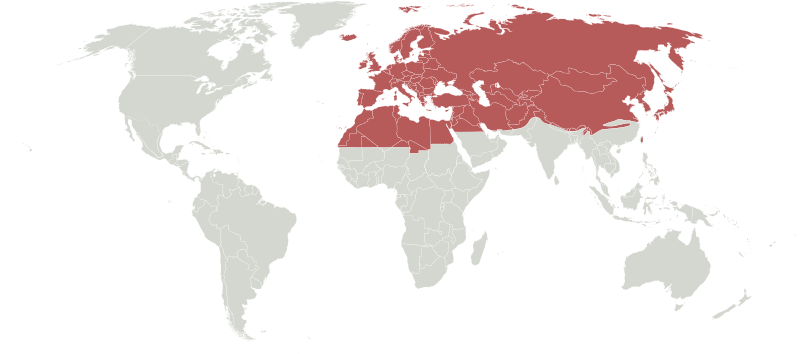
Palearctic realm
largest of the Earth's eight biogeographic realms

ecological niche
fit of a species living under specific environmental conditions.

nitrogen cycle
biogeochemical cycle by which nitrogen is converted into various chemical forms

Wallace Line
faunal boundary line separating the ecozones of Asia and Wallacea, a transitional zone between Asia and Australia

Neotropical realm
one of the Earth's eight biogeographic realms & six floristic kingdoms

Indomalayan realm
one of the Earth's eight biogeographic realms

biocoenosis
thumb|

biogeochemical cycle
pathway by which a chemical element or molecule moves through both biotic and abiotic compartments of Earth

Holarctic realm
biogeographic realm
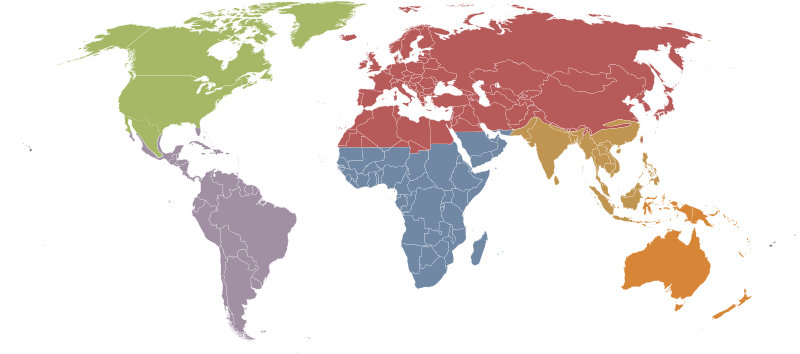
biogeographic realm
broadest biogeographic division of the Earth's land surface

cosmopolitan distribution
distribution of an organism across all or most of the world
range
geographical area in which a taxon can be found

phytogeography
Phytogeography ( meaning also distribution) or botanical geography is the branch of biogeography that is concerned with the geographic distribution of plant species and their influence on the earth's surface. Phytogeography is concerned with all aspects of plant distribution, from the controls on the distribution of individual species ranges (at both large and small scales, see species distribution) to the factors that govern the composition of entire communities and floras. Geobotany, by contrast, focuses on the geographic space's influence on plants.

ecoregion
thumb|A map of the Amazon rainforest, which is composed of multiple ecoregions. The yellow line encloses the ecoregions within the Amazon per the [[World Wide Fund for Nature.]]
World Register of Marine Species
web-based database of marine species

Afrotropical realm
one of Earth's eight biogeographic realms
zoogeography
thumb|right|300px|Zoogeographic regions of Alfred Russel Wallace|Wallace, 1876
Zoogeography is the branch of the science of biogeography that is concerned with geographic distribution (present and past) of animal species.

native species
term in biogeography for a species relationship to a geography; opposite of introduced species

landscape ecology
science of relationships between ecological processes in the environmental landscape and particular ecosystems
climate change mitigation
actions to limit climate change in order to reduce the risks of global warming
biodiversity loss
extinction of species worldwide, and also the local reduction or loss of species in a certain habitat
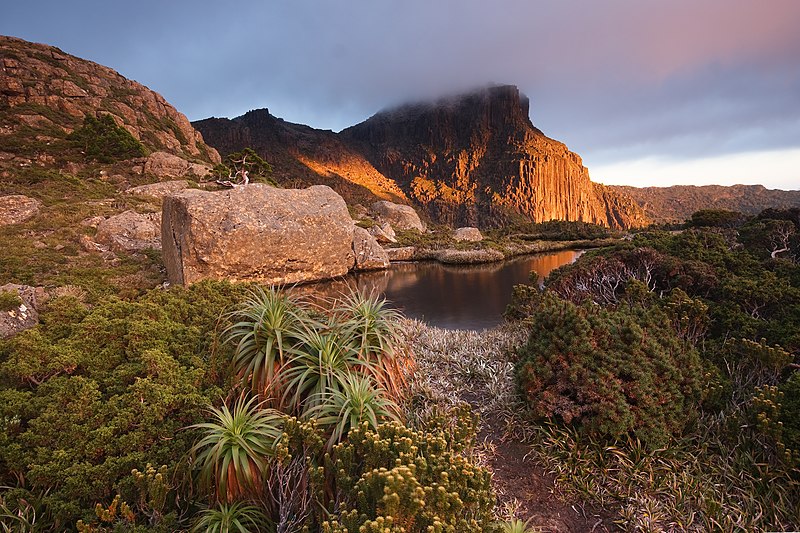
plant community
collection or association of plant species within a designated geographical unit

ecotone
thumb|Reed beds are a common form of lakeside ecotone. The beds tend to accumulate organic matter which is then colonised by trees, forcing the reeds further into the lake.
An ecotone is a transitional area between two plant communities, where these meet and integrate. Examples include areas between grassland and forest, estuary and lagoon, and freshwater and sea water. An ecotone may be narrow or wide, and it may be local (the zone between a field and forest) or regional (the transition between forest and grassland ecosystems). An ecotone may appear on the ground as a gradual blending of the
relict
population or taxon of organisms that was more widespread or more diverse in the past
allopatric speciation
type of speciation caused by geographic isolation between populations

Wallacea
thumb|upright=1.6|Wallacea is the group of islands within the red area. The Max Carl Wilhelm Weber|Weber Line in blue has been used to separate Wallacea into a western part pertaining to [[Asia and an eastern part pertaining to Oceania.]]
upright=1.6|thumb|The Sunda Shelf|Sunda and Sahul shelves. Wallacea is the area in between.
land bridge
land form

Sundaland
thumb|400px|Sundaland during the [[Last Glacial Maximum]]
phytosociology
Phytosociology, also known as phytocoenology or simply plant sociology, is the study of groups of species of plant that are usually found together. Phytosociology aims to empirically describe the vegetative environment of a given territory. A specific community of plants is considered a social unit, the product of definite conditions, present and past, and can exist only when such conditions are met. In phyto-sociology, such a unit is known as a phytocoenosis (or phytocoenose). A phytocoenosis is more commonly known as a plant community, and consists of the sum of all plants in a given area. I
Antarctic realm
one of the Earth's eight biogeographic realms
Great American Interchange
paleozoographic event resulting from the formation of the Isthmus of Panama
ecological community
populations of two or more species in a given area
stream capture
geomorphological phenomenon
megadiverse country
Nation with extremely high biological diversity or many endemic species
Refugium
ecological concept
insular biogeography
field within biogeography that examines the factors that affect the species richness and diversification of isolated natural communities

chorology
thumb|300px|Distribution map of European beech (Fagus sylvatica) : historical range, current range, and occasional observations.
Chorology (from Greek , , "place, space"; and , -logia) can mean
the study of the causal relations between geographical phenomena occurring within a particular region
the study of the spatial distribution of organisms (biogeography).
parapatric speciation
speciation within a population where subpopulations are reproductively isolated
sky island
isolated mountains surrounded by radically different lowland environments
Normalized Difference Vegetation Index
Graphical indicator of remotely sensed live green vegetation

phylogeography
Phylogeography is the study of the historical processes that may be responsible for the past to present geographic distributions of genealogical lineages. This is accomplished by considering the geographic distribution of individuals in light of genetics, particularly population genetics.
disjunct distribution
ecology
peripatric speciation
speciation in which a new species is formed from an isolated smaller peripheral population
tussock
perennial, strong, dense, clump-forming plant
Central Highlands
mountainous biogeographical region in central Madagascar
.jpg)
anthropization
320x320px|thumb|right|An example of advanced anthropization: the cultivation of rice in terraces in [[Vietnam]]
extinction debt
future extinction of species due to events in the past

bioregion
thumb|Primary drainage basins in Canada
A bioregion is a geographical area defined not by administrative boundaries, but by distinct characteristics such as plant and animal species, ecological systems, soils and landforms, human settlements, and topographic features such as drainage basins (also referred to as "watersheds"). A bioregion can be on land or at sea. The idea of bioregions was adopted and popularized in the mid-1970s by a school of philosophy called bioregionalism, which includes the concept that human culture can influence bioregional definitions due to its effect on non-cultural

Papuasia
thumb|Papuasia as defined by the WGSRPD
Census of Marine Life
biological census

land cover
nature of the physical material at the surface of the earth

Hemiboreal
thumb|Hemiboreal deciduous forest in Latvia. Latvia, like other hemiboreal areas, also has extensive lush coniferous forests.
Hemiboreal means halfway between the temperate and subarctic (or boreal) zones. The term is most frequently used in the context of climates and ecosystems.
pantropical
A pantropical ("all tropics") distribution is one which covers tropical regions of both the Eastern and Western Hemispheres. Examples include caecilians, modern sirenians and the plant genera Acacia and Bacopa.
oceanic dispersal
type of biological dispersal
World Geographical Scheme for Recording Plant Distributions
a scientific work about a geographical scheme
relict
A relict is a surviving remnant of a natural phenomenon.
biological rule
generalized principle to describe patterns observed in living organisms