Category
page 1Bioindicators

lichen
thumb|A tree covered with leafy foliose lichens and shrubby fruticose lichens

copepod
Copepods (; meaning 'oar-feet') are a group of small crustaceans found in nearly every freshwater and saltwater habitat. Some species are planktonic (living in the water column), some are benthic (living on the sediments), several species have parasitic phases, and some continental species may live in limnoterrestrial habitats and other wet terrestrial places, such as swamps, under leaf fall in wet forests, bogs, springs, ephemeral ponds, puddles, damp moss, or water-filled recesses of plants (phytotelmata) such as bromeliads and pitcher plants. Many live underground in marine and freshwater c

carotenoid
thumb|class=skin-invert-image|Chemical structure of β-carotene, a common natural pigment|420px

bioindicator
thumb|Caddisfly (order Trichoptera), a [[macroinvertebrate used as an indicator of water quality.]]
A bioindicator is any species (an indicator species) or group of species whose function, population, or status can reveal the qualitative status of the environment. The most common indicator species are animals. For example, copepods and other small water crustaceans that are present in many water bodies can be monitored for changes (biochemical, physiological, or behavioural) that may indicate a problem within their ecosystem. Bioindicators can tell us about the cumulative effects of different

Meadow Vole
species of mammal
trace fossil
geological records of biological activity
marine snow
shower of mostly organic detritus falling from the upper layers of the water column

biosignature
A biosignature is a phenomenon that can be explained by biological processes where all possible abiotic causes of this phenomenon have been eliminated. This term is mainly used in the field of astrobiology in the search for past or present extraterrestrial life, from planets and moons in the Solar System to exoplanets. Candidate biosignatures strongly indicate some of the earliest known life forms, aid studies of the origin of life on Earth as well as the possibility of life on Mars, Venus and elsewhere in the universe.
anoxic event
intervals in the Earth's past

periphyton
thumb|right|300px|Periphyton in the Everglades
thumb|300px|The shell of Eustrombus gigas in its natural habitat is covered by periphyton.
Periphyton is a complex mixture of algae, cyanobacteria, heterotrophic microbes, and detritus that is attached to submerged surfaces in most aquatic ecosystems. The related term aufwuchs (German 'surface growth' or 'overgrowth', ) refers to the collection of small animals and plants that adhere to open surfaces in aquatic environments, such as parts of rooted plants.

anthocyanidin
thumb|right|200px|Molecule in 3D of the anthocyanidin cyanidin
isotopic signature
characteristic set of ratios of stable or unstable isotopes

anthoxanthin
thumb|White cauliflower has anthoxanthin pigments
Anthoxanthins () are a type of flavonoid pigments in plants. Anthoxanthins are water-soluble pigments which range in color from a white or colorless to a creamy to a yellow, often on petals of flowers. These pigments are generally whiter in an acid medium and yellowed in an alkaline medium. They are very susceptible to color changes with minerals and metal ions, similar to anthocyanins. Some examples of anthoxanthins include: apigeniun, luteolin, kaempferol, quercetin.
δ13C
In geochemistry, paleoclimatology, archaeology, and paleoceanography '''δC''' (pronounced "delta carbon thirteen") is a normalized ratio of the two stable isotopes of carbon—C and C—reported in parts per thousand (per mille, ‰).

δ18O
In geochemistry, paleoclimatology and paleoceanography '''δ18O or delta-O-18''' is a measure of the deviation in ratio of stable isotopes oxygen-18 (18O) and oxygen-16 (16O).
It is commonly used as a measure of the temperature of precipitation, as a measure of groundwater/mineral interactions, and as an indicator of processes that show isotopic fractionation, like methanogenesis.
In paleosciences, 18O:16O data from corals, foraminifera and ice cores are used as a proxy for temperature.
coprostanol
5β-Coprostanol (5β-cholestan-3β-ol) is a 27-carbon stanol formed from the net reductive metabolism of cholesterol (cholest-5en-3β-ol) in the gut of most higher animals and birds. This compound has frequently been used as a biomarker for the presence of human faecal matter in the environment. 5β-coprostanol is thought to be exclusively bacterial in origin.
endophenotype
In genetic epidemiology, endophenotype (or intermediate phenotype) is a term used to separate behavioral symptoms into more stable phenotypes with a clear genetic connection. The concept was coined by Bernard John and Kenneth R. Lewis in a 1966 paper attempting to explain the geographic distribution of grasshoppers. They claimed that the particular geographic distribution could not be explained by the obvious and external "exophenotype" of the grasshoppers, but instead must be explained by their microscopic and internal "endophenotype". The concept has gained popularity in research on anxiety
Euxinia
Euxinia or euxinic conditions occur when water is both anoxic and sulfidic. This means that there is no oxygen (O2) and a raised level of free hydrogen sulfide (H2S). Euxinic bodies of water are frequently strongly stratified; have an oxic, highly productive, thin surface layer; and have anoxic, sulfidic bottom water. The word "euxinia" is derived from the Greek name for the Black Sea (Εὔξεινος Πόντος (Euxeinos Pontos)) which translates to "hospitable sea". Euxinic deep water is a key component of the Canfield ocean, a model of oceans during part of the Proterozoic eon (a part specifically kno
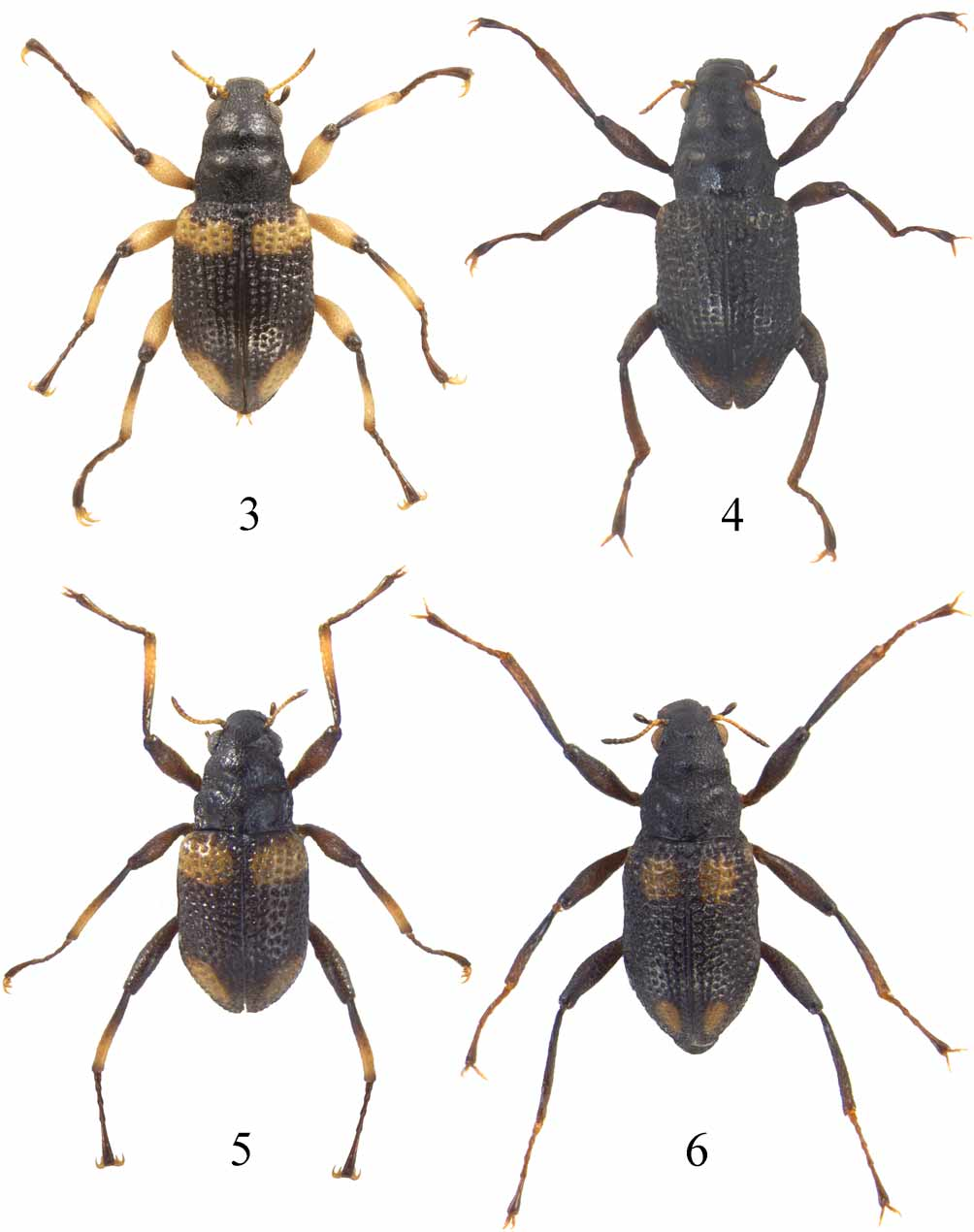
Ancyronyx
Ancyronyx, commonly known as spider water beetles or spider riffle beetles, is a genus of aquatic riffle beetles from North America, South Asia, China, and Southeast Asia. They are small beetles with extremely long legs ending in strong claws. Both the adults and the larvae are found underwater in the shallow riffles of streams and rivers, clinging to rocks or submerged wood. They feed on algae and decaying wood tissue. The genus contains twenty-one species, eleven of which are endemic to the Philippines.
Sydney cockle
species of mollusc
Western meadow vole
species of North American vole
δ15N
In geochemistry, hydrology, palaeoecology, palaeoclimatology, and palaeoceanography, '''δ15N (pronounced "delta fifteen n") or delta-N-15''' is a measure of the ratio of the two stable isotopes of nitrogen, 15N:14N.