Category
page 1Biological nomenclature

binomial nomenclature
system of identifying species of organisms using a two-part name

taxonomy
science of naming, defining and classifying organisms
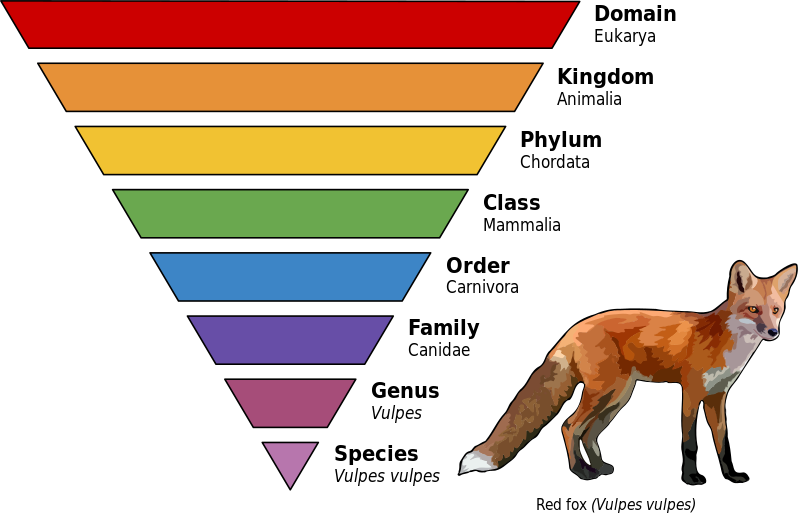
taxonomic rank
in biology, level in a taxonomic hierarchy

incertae sedis
term to indicate an uncertain taxonomic position
common name
name generally used for a taxon, group of taxa or organism(s)
trinomial nomenclature
names for taxa below the rank of species; these names have three parts; the usage is different in zoology and botany
Linnaean taxonomy
rank-based taxonomy, sometimes (wrongly) ascribed to Linnaeus
basionym
In the scientific naming of organisms, a basionym or basyonym is the original name on which a new name is based; the author citation of the new name should include the authors of the basionym in parentheses. The term "basionym" is used in both botany and zoology. In zoology, alternate terms such as original combination or protonym are sometimes used instead. Bacteriology uses a similar term, basonym, spelled without an i.
phylogenetic nomenclature
phylogenetic method in taxonomy
superspecies
REDIRECT Species complex#Species flock
Terminologia Histologica
controlled vocabulary for use in cytology and histology
HUGO Gene Nomenclature Committee
organization
tautonym
A tautonym is a scientific name of a species in which both parts of the name have the same spelling, such as Rattus rattus. The first part of the name is the name of the genus and the second part is referred to as the specific epithet in the International Code of Nomenclature for algae, fungi, and plants and the specific name in the International Code of Zoological Nomenclature.
nomenclature Code
lawbooks of nomenclature, in biology
bacterial taxonomy
Taxonomy of the bacteria
New Biological Nomenclature
new system for naming species
gene nomenclature
scientific naming of genes