Category
page 1Biopiracy

Cannabis
Cannabis () is a genus of flowering plants in the family Cannabaceae that is widely accepted as being indigenous to and originating from the continent of Asia. However, the number of species is disputed, with as many as three species being recognized: Cannabis sativa, C. indica, and C. ruderalis. Alternatively, C. ruderalis may be included within C. sativa, or all three may be treated as subspecies of C. sativa, or C. sativa may be accepted as a single undivided species.

Cannabis sativa
species of plant

Vandana Shiva
Indian philosopher, activist and environmentalist (*1952)

Convention on Biological Diversity
international treaty
.jpg)
Aspalathus linearis
thumb|Flowers
thumb|Plant
Rooibos ( ; , ), or , is a broom-like member of the plant family Fabaceae that grows in South Africa's Fynbos biome. The leaves are used to make a caffeine-free herbal infusion that has been popular in Southern Africa for generations. Since the 2000s, rooibos has gained popularity internationally, with an earthy flavour and aroma that is similar to those of yerba mate or tobacco.
%20en%20floraci%C3%B3n.jpg)
ayahuasca
Ayahuasca is a South American psychoactive decoction prepared from Banisteriopsis caapi vine and a dimethyltryptamine (DMT)-containing plant, used by Indigenous cultures in the Amazon and Orinoco basins as part of traditional medicine and shamanism. The word ayahuasca, originating from Quechuan languages spoken in the Andes, refers both to the B. caapi vine and the psychoactive brew made from it, with its name meaning 'spirit rope' or 'liana of the soul'.

industrial hemp
thumb|A hemp field in Côtes-d'Armor, Brittany, France, which is Europe's largest hemp producer as of 2022

Lepidium meyenii
species of plant
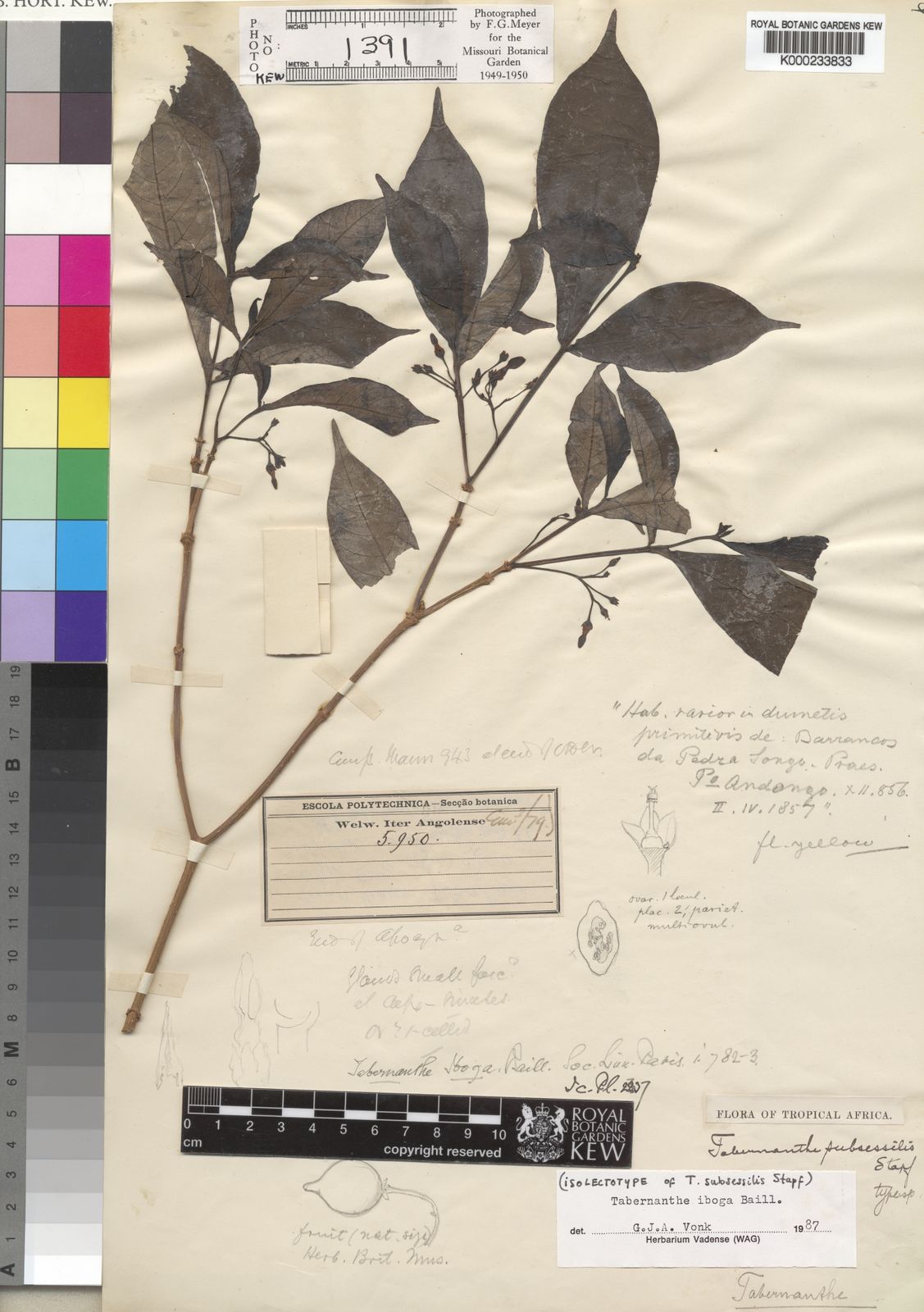
Tabernanthe iboga
species of plant
trade name
name which a business trades under for commercial purposes
Nagoya Protocol
global treaty on biological diversity

biopiracy
Biopiracy is the unauthorized appropriation of knowledge and genetic resources of farming and indigenous communities by individuals or institutions seeking exclusive monopoly control through patents or intellectual property. While bioprospecting is the act of exploring natural resources for undiscovered chemical compounds with medicinal or anti-microbial properties, commercial success from bioprospecting leads to the company's attempt at protecting their intellectual property rights on indigenous medicinal plants, seeds, genetic resources, and traditional medicines.
United Nations Permanent Forum on Indigenous Issues
UN coordinating body

bioprospecting
Bioprospecting (also known as biodiversity prospecting) is the exploration of natural sources for small molecules, macromolecules and biochemical and genetic information that could be developed into commercially valuable products for the agricultural, aquaculture, bioremediation, cosmetics, nanotechnology, or pharmaceutical industries. In the pharmaceutical industry, for example, almost one third of all small-molecule drugs approved by the U.S. Food and Drug Administration (FDA) between 1981 and 2014 were either natural products or compounds derived from natural products.
Biodiversity Beyond National Jurisdiction Treaty
treaty protecting biodiversity by establishing large-scale marine protected areas and regulating marine research for scientific and commercial development
Lacandon Jungle
geographic area and rainforest in Mexico
heirloom plant
cultivar grown during earlier periods of human history
Navdanya
India-based non-governmental organization