Category
page 3Biotechnology
male egg
egg containing genetic material from a male
protein expression (biotechnology)
process of generating some quantity of a specific protein using living organisms
isoschizomer
Isoschizomers are pairs of restriction enzymes specific to the same recognition sequence. The term is derived .
Antisense therapy
form of treatment for genetic disorders and other illnesses
homing endonuclease
type of enzyme
Microphysiometry
Microphysiometry is the in vitro micro-measurement of the functions and activities of life or of living matter (as organs, tissues, or cells) and of the physical and chemical phenomena involved on a very small micrometer (μm) scale. The term microphysiometry emerged in the scientific literature at the end of the 1980s.
agricultural biotechnology
use of living organisms, cells or cell constituents for the purpose of developing agricultural products or improving livestock or crop plants
nuclear transfer
form of cloning
ALC-0159
ALC-0159 is a PEG/lipid conjugate (i.e. PEGylated lipid), specifically, it is the N,N-dimyristylamide of 2-hydroxyacetic acid, O-pegylated to a PEG chain mass of about 2 kilodaltons (corresponding to about 45-46 ethylene oxide units per molecule of N,N-dimyristyl hydroxyacetamide). It is a non-ionic surfactant by its nature. It has been deployed in the Pfizer-BioNTech SARS-CoV-2 mRNA vaccine (0.05 mg per dose) that contains the active ingredient tozinameran.
heterologous expression
the expression of a gene or part of a gene in a host organism that does not naturally have the gene or gene fragment in question
history of biotechnology
aspect of history
Biostimulation
Biostimulation involves the modification of the environment to stimulate existing bacteria capable of bioremediation. This can be done by addition of various forms of rate limiting nutrients and electron acceptors, such as phosphorus, nitrogen, oxygen, or carbon (e.g. in the form of molasses). Alternatively, remediation of halogenated contaminants in anaerobic environments may be stimulated by adding electron donors (organic substrates), thus allowing indigenous microorganisms to use the halogenated contaminants as electron acceptors. EPA Anaerobic Bioremediation Technologies Additives are usu
Brain–brain interface
direct communication pathway between the brain of one animal and the brain of another animal
substantial equivalence
food safety testing method
DNA field-effect transistor
transistor which uses the field-effect due to the partial charges of DNA
High Resolution Melt
in molecular biology
Biohydrometallurgy
Biohydrometallurgy is a technique in the world of metallurgy that utilizes biological agents (bacteria) to recover metals. It is a subset or specialized form of hydrometallurgy, which refers to the use of aqueous solutions for metal extraction through a series of chemical reactions. Bioleaching is closely related to biohydrometallurgy. It focuses on extraction or liberation of metals from their ores through the use of living organisms.
Algae bioreactor
device used for cultivating micro or macro algae
Eradication of suffering
biotechnological elimination of involuntary suffering
talimogene laherparepvec
modified herpes virus used for treatment of melanoma
prime editing
Experimental genome editing technique
bioprocess engineering
manufacturing of biotechnological processes
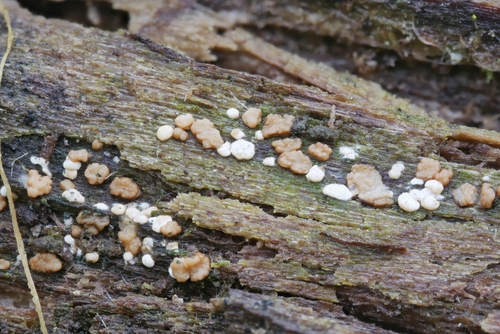
Trichoderma hamatum
species of fungus
bioproducts
Bioproducts (or bio-based products) are materials, chemicals, and energy derived from biological material.
Stable isotope labeling by amino acids in cell culture
Laboratory technique for quantitative proteomics
Human Genome Project–Write
project to synthesize the human genome

Cunninghamella elegans
species of fungus
biotechnology risk
form of existential risk that could come from biological sources, such as genetically engineered biological agents
microbial electrosynthesis
Circular bacterial chromosome
type of chromosome
Trichoderma stromaticum
species of fungus
Trichoderma asperellum
species of fungus
psychotechnology
Phycotechnology refers to the technological applications of algae, both microalgae and macroalgae.
Microbial electrolysis cell
type of bioelectrochemical system
bioprocess
A bioprocess is a specific process that uses complete living cells or their components (e.g., bacteria, enzymes, chloroplasts) to obtain desired products.
Agroinfiltration
thumb
Photobiotin
Photobiotin is a derivative of biotin used as a biochemical tool. It is composed of a biotin group, a linker group, and a photoactivatable aryl azide group.
fertility fraud
fraud in fertility medicine
RNA therapeutics
class of medications
Animal Efficacy Rule
Electrohydrogenesis
Electrohydrogenesis or biocatalyzed electrolysis is the name given to a process for generating hydrogen gas from organic matter being decomposed by bacteria. This process uses a modified fuel cell to contain the organic matter and water. A small amount, 0.2–0.8 V of electricity is used, the original article reports an overall energy efficiency of 288% can be achieved (this is computed relative to the amount of electricity used, waste heat lowers the overall efficiency). This work was reported by Cheng and Logan.
Microbial biodegradation
flap endonuclease
protein family
minigene
A minigene is a minimal gene fragment that includes an exon and the control regions necessary for the gene to express itself in the same way as a wild type gene fragment. This is a minigene in its most basic sense. More complex minigenes can be constructed containing multiple exons and intron(s). Minigenes provide a valuable tool for researchers evaluating splicing patterns both in vivo and in vitro biochemically assessed experiments. Specifically, minigenes are used as splice reporter vectors (also called exon-trapping vectors) and act as a probe to determine which factors are important in sp
Knockout moss
Genetically modified moss plant
ABI Solid Sequencing
Polly and Molly
cloned sheep
Fermentek
Fermentek Ltd. is a biotechnological company in the Atarot industrial zone of Jerusalem, Israel. It specializes in the research, development and manufacture of biologically active, natural products isolated from microorganisms as well as from other natural sources such as plants and algae.