Category
page 21Bird genera
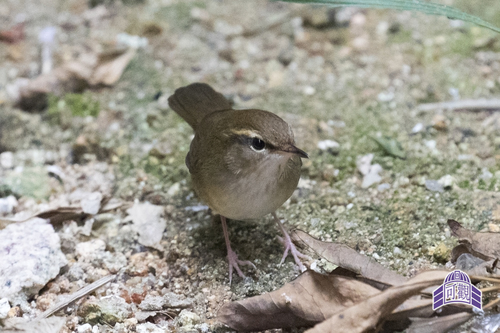
Hemitesia
Hemitesia is a genus of Old World warblers in the family Cettiidae, formerly classified in the family Sylviidae. The genus was erected by James Chapin in 1948.
Palaelodus
Palaelodus is an extinct genus of bird of the Palaelodidae family, distantly related to flamingos. They were slender birds with long, thin legs and a long neck resembling their modern relatives, but likely lived very different livestyles. They had straight, conical beaks not suited for filter feeding and legs showing some similarities to grebes. Their precise lifestyle is disputed, with researchers in the past suggesting they may have been divers, while more recent research suggests they may have used their stiff toes as paddles for swimming while feeding on insect larvae and snails. This beha
Palaeospheniscus
Palaeospheniscus is an extinct genus of penguins belonging to the subfamily Palaeospheniscinae. These penguins are apparently not closely related to the modern genus Spheniscus.
Pogonornis
Pogonornis is a genus of African barbets from the family Lybiidae (formerly included in the Capitonidae and sometimes in the Ramphastidae). This genus ranges across sub-Saharan Africa.
Eoalulavis
Eoalulavis (from the Ancient Greek: Éōs, "dawn"; alula, "bastard wing"; avis, "bird") is a monotypic genus of enantiornithean bird that lived during the Barremian, in the Lower Cretaceous around 125 million years ago. The only known species is Eoalulavis hoyasi.
Apteribis
Apteribis is an extinct genus of flightless birds in the ibis subfamily that was endemic to the Hawaiian Islands in the Pacific Ocean.
Amirafra
Amirafra is a genus of larks in the family Alaudidae. It contains three species that were formerly placed in the genus Mirafra. These larks are found in sub-Sahara Africa.
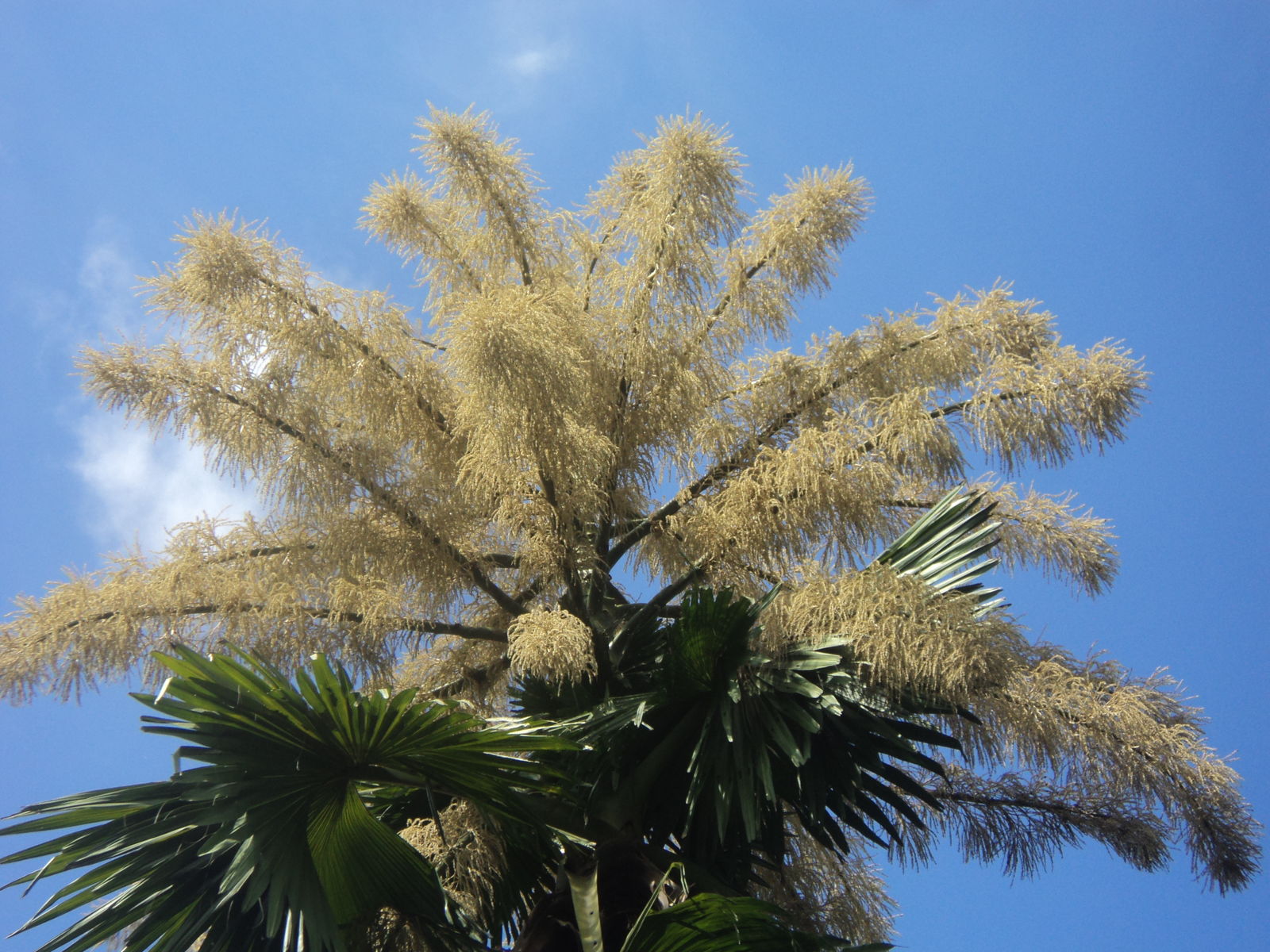
Corypha
genus of birds
Neuquenornis
Neuquenornis volans is a species of enantiornithean birds which lived during the late Cretaceous period in today's Patagonia, Argentina. It is the only known species of the genus Neuquenornis. Its fossils were found in the Santonian Bajo de la Carpa Formation, dating from about 85-83 million years ago. This was a sizeable bird for its time, with a tarsometatarsus 46.8mm long. Informal estimates suggest that it measured nearly 30 cm (12 in) in length excluding the tail.
Platycichla
Platycichla is a small disputed genus of tropical South American thrushes. It contains just two species:
Gargantuavis
Gargantuavis (meaning 'gargantuan bird') is an extinct genus of large, primitive bird containing the single species Gargantuavis philoinos. It is the only member of the monotypic family Gargantuaviidae. Its fossils were discovered in several formations dating to 73.5 and 71.5 million years ago in what is now northern Spain, Southern France, and Romania. Gargantuavis is the largest known bird of the Mesozoic, a size ranging between the cassowary and the ostrich, and a mass of like modern ostriches, exemplifying the extinction of non-avian dinosaurs was not a necessary condition for the emergenc

Rhynochetos
Rhynochetos is a genus of ground-dwelling birds in the monotypic family Rhynochetidae. It contains two species, both endemic to New Caledonia, one of which is extinct.
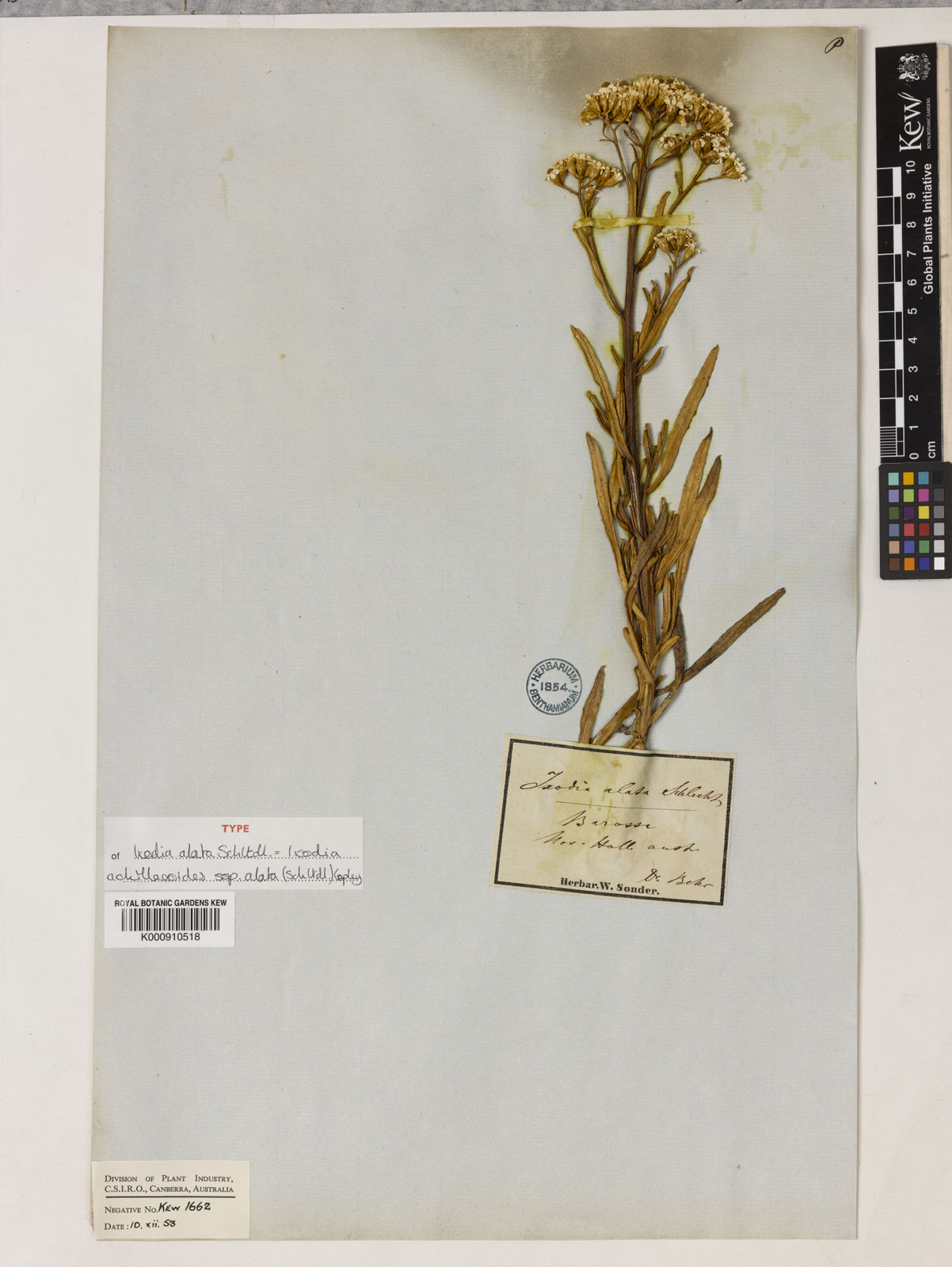
Ixodia
genus of songbird
Concornis lacustris
Concornis is a genus of enantiornithean birds which lived during the early Cretaceous period, in the late Barremian age about 125 million years ago. Its remains are known from the Calizas de La Huérgina Formation at Las Hoyas, Cuenca province, Spain. The single known species, Concornis lacustris, was described from the remains of one fairly complete individual skeleton.
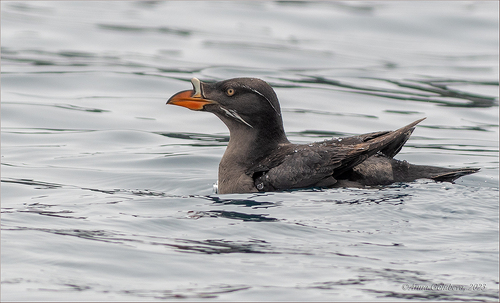
Cerorhinca
Cerorhinca is a genus of auk containing the rhinoceros auklet and several fossil species.
Cossyphicula
Cossyphicula is a genus of passerine birds belonging to the Old World flycatcher family Muscicapidae that are found in Sub-Saharan Africa.
Canadaga
Canadaga (meaning "Canadian bird") is a flightless bird genus from the Late Cretaceous. The single known species is Canadaga arctica. It lived in the shallow seas around what today is Bylot and Devon Islands in Nunavut, Canada. Its fossils were found in rocks dated to the Campanian to mid-Maastrichtian age, about 67 million years ago. It was found in the Kanguk Formation

Territornis
thumb|Kimberly honeyeater (Territornis fordiana)
thumb|Streak-breasted honeyeater (Territornis reticulata) museum skin
Territornis is a genus of bird in the family Meliphagidae.
It contains the following species:
White-lined honeyeater (Territornis albilineata)
Kimberley honeyeater (Territornis fordiana)
Streak-breasted honeyeater (Territornis reticulata)
Menelikornis
Menelikornis is a genus of African birds in the family Musophagidae.
Neophilydor
Neophilydor is a genus of foliage-gleaners, birds in the ovenbird family Furnariidae. The two species in the genus are found in parts of Middle and South America.
Shenqiornis mengi
Shenqiornis is a genus of enantiornithean dinosaurs. It was found in the Qiaotou Member of the Huajiying Formation of Hebei Province, China, and is therefore of uncertain age. The Qiaotou Member may correlate with the more well-known Early Cretaceous Yixian Formation, and so probably is dated to the Aptian, around 122 million years ago.
Noguerornis
Noguerornis is a genus of enantiornithine bird possibly related to Iberomesornis. It lived during the Early Cretaceous (early Barremian age) about 130 mya and is known from fossils found in the La Pedrera de Rúbies Formation at El Montsec, Spain.
Yandangornis
Yandangornis is a genus of theropods (possibly avialans) from the Late Cretaceous Tangshang Formation of China. It lived 81.5 million years ago in what is now China. The type species, Y. longicaudus, was formally described by Cai and Zhou in 1999.
Agricola
genus of birds
Dessonornis
Dessonornis is a genus of birds in the Old World flycatcher family Muscicapidae that are found in Sub-Saharan Africa.
Tyranniscus
Tyranniscus is a genus of small passerine birds in the tyrant flycatcher family Tyrannidae. The genus contains three species.
Diglossopis
Diglossopis was a genus of blue flowerpiercers in the family Thraupidae. They are now usually placed in the genus Diglossa. They were formerly classified in the bunting and American sparrow family Emberizidae, more recent studies have shown it to belong in the Thraupidae. They are restricted to highland forest and woodland from Venezuela and Colombia, through Ecuador and Peru, to Bolivia.
Paraptenodytes
Paraptenodytes is an extinct genus of penguins which contains two or three species sized between a Magellanic penguin and an emperor penguin (Aptenodytes forsteri). They are known from fossil bones ranging from a partial skeleton and some additional material in the case of P. antarcticus, the type specimen for the genus, and a single humerus in the case of P. brodkorbi. The latter species is therefore often considered invalid; a recent study considers it indeed valid, but distinct enough not to belong into Paraptenodytes. The fossils were found in the Santa Cruz and Chubut Provinces of Patagon
Acrochordopus
Acrochordopus is a genus of small passerine birds in the tyrant flycatcher family Tyrannidae. The genus contains two species.
Janavis
thumb|Speculative life restoration of Janavis on a beach
Janavis (from the Roman god Janus and the Latin avis for bird) is an extinct toothed bird belonging to the Ichthyornithes from the Late Cretaceous of Belgium. The genus has one named species, Janavis finalidens (from Latin finalis, meaning ending or final, and dens, for tooth) that was discovered in the 1990s, reported in 2002, and described in 2022. Recovered almost simultaneously from the same area and age as Asteriornis maastrichtensis, then the oldest known modern bird, it provides information on the evolution and divergence of basal
Apatornis
Apatornis is a genus of ornithuran dinosaurs endemic to North America during the late Cretaceous. It currently contains a single species, Apatornis celer, which lived around the Santonian-Campanian boundary, dated to about 83.5 million years ago. The remains of this species were found in the Smoky Hill Chalk of the Niobrara Formation in Kansas, United States. It is known from a single fossil specimen: a synsacrum, the fused series of vertebrae over the hips.
Otis
genus of birds
Thambetochen
Thambetochen is an extinct genus of moa-nalo duck. It contains two species, the Maui Nui moa-nalo (T. chauliodous) and the smaller O'ahu moa-nalo (T. xanion).
thumb|upright|left|Restoration of T. xanion
thumb|upright|left|Restoration of T. chauliodous and Ptaiochen pau
The former was found on Maui and Molokai on Hawaii, the latter was found on Oahu. These birds were large, flightless ducks, with robust legs but small wings, which had evolved in isolation, on islands without terrestrial mammals. Their beaks had tooth-like lamellae and their diet was plants which they digested throug
Cratonavis
Cratonavis (meaning "Craton bird") is an extinct genus of pygostylian avialian from the Early Cretaceous Jiufotang Formation of Liaoning Province, China. The genus contains a single species, C. zhui, known from a complete skeleton.
Jianchangornis
Jianchangornis a genus of basal ornithuromorph dinosaurs. Fossils were recovered from the Jiufotang Formation at Liaoning, China.

Pachyglossa
genus of birds
Fukuipteryx
Fukuipteryx is an extinct genus of basal avialan dinosaurs found in Early Cretaceous deposits from Japan's Kitadani Formation. It contains one species, Fukuipteryx prima.
Emblema
genus of birds
Phoeniconaias
Phoeniconaias is a genus of birds in the flamingo family Phoenicopteridae. The genus contains one extant species, the lesser flamingo (Phoeniconaias minor), occurring in sub-Saharan Africa and western India, and an extinct species, Phoeniconaias proeses, from the Pliocene of Australia, which is thought to have been even smaller.
Trachylaemus
Trachylaemus is a genus of birds in the African barbet family (Lybiidae). The genus is closely related to the genus Trachyphonus.
Yixianornis
Yixianornis (meaning "Yixian Formation bird") is a bird genus from the early Cretaceous period. Its remains have been found in the Jiufotang Formation at Chaoyang (People's Republic of China) dated to the early Aptian age, around 120 million years ago. Only one species, Yixianornis grabaui, is known at present. The specific name, grabaui, is named after American paleontologist Amadeus William Grabau, who surveyed China in the early 20th century.
Daptrius
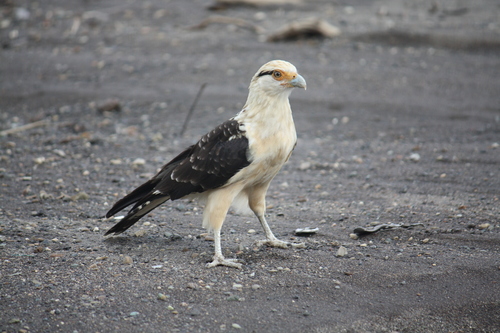
Daptrius is a genus of birds of prey in the family Falconidae. All members are endemic to South America, excepted the yellow-headed caracara also found in Costa Rica and Panama. The genus includes species previously placed in the genera Milvago and Phalcoboenus.
Pseudocrypturus cercanaxius
Pseudocrypturus is a genus of extinct paleognathous bird. Three species are known and the type species is Pseudocrypturus cercanaxius. It is a relative of such modern birds as ostriches. It lived in the early Eocene.
The holotype fossil is in the collection of the Smithsonian's National Museum of Natural History. It has catalog number USNM 336103. It was collected from the Fossil Butte Member, Green River Formation, Lincoln County, Wyoming.
Dyaphorophyia
Dyaphorophyia is a genus of birds in the wattle-eye family Platysteiridae. These insect-eating birds are found in tropical Africa.
Liaoxiornis
Liaoxiornis is a dubious genus of enantiornithean bird. The only named species is Liaoxiornis delicatus, described by Hou and Chen in 1999. Because the species was named for a hatchling specimen, it cannot be matched with adult specimens, and so it is impossible to determine which, if any, birds from the same rocks represent adults of this species. Luis Chiappe and colleagues therefore regarded it as a nomen vanum ("empty name") or at least a nomen dubium, and recommended that use of the name be abandoned.
thumb|left|Fossil of Liaoxiornis delicatus, at Museo di Storia Naturale di Venezia, Veni
Tychaedon
Tychaedon is a genus of passerine birds in the Old World flycatcher family Muscicapidae that are found in Sub-Saharan Africa. It contains species that were formerly placed in the genus Cercotrichas.
Tunchiornis
Tunchiornis is a genus of bird in the family Vireonidae.
Barawertornis tedfordi
Barawertornis is an extinct genus of cassowary-sized dromornithid known from Oligocene and Miocene deposits in Queensland and South Australia. Only a single species, B. tedfordi, is placed in this genus. It shows adaptations towards a cursorial lifestyle. Like other dromornithids, Barawertornis was probably a folivorous and frugivorous browser.
Sarcoramphus
Sarcoramphus is a genus of New World vulture that contains a single extant species, the king vulture (Sarcoramphus papa).
Sulcavis
Sulcavis is a genus of enantiornithean birds. One species is named, Sulcavis geeorum. The fossil was found in Early Cretaceous (121-125 million years ago) rocks in Liaoning Province, China.
Parapengornis
Parapengornis is an extinct genus of enantiornithean bird from the Lower Cretaceous of what is now China. The holotype specimen was discovered in the Jiufotang Formation near Lingyuan, western Liaoning province, and was catalogued as IVPP V18687. The nearly complete, articulated specimen is preserved on a slab and has impressions of pennaceous feathers. Only parts of the sternum, the left hand, and right foot are missing. In 2015, it became the basis of the new genus and species Parapengornis eurycaudatus, named by the Chinese palaeontologists Han Hu, Jingmai K. O'Connor, and Zhonghe Zhou. The
Torotix
Torotix is a Late Cretaceous genus of aquatic birds. They lived along the shores of the Western Interior Seaway, but it is not clear whether they were seabirds or freshwater birds, as the genus is only known from a humerus. Consequently, the genus contains only one known species, Torotix clemensi. T. clemensi is represented by a single fossil specimen, a partial humerus (upper arm bone) recovered from the Lance formation of Wyoming. Its deposits are dated to the very end of the Cretaceous period, 66 million years ago.
Zhongjianornis
Zhongjianornis is a genus of beaked, pigeon-sized birds from the early Cretaceous period of China. It is known from one fossil found at Jianchang, Liaoning Province, in rocks of the Jiufotang Formation, representing the type species Zhongjianornis yangi.
Microtarsus
Microtarsus is a genus of passerine birds in the bulbul family, Pycnonotidae, that are found in South and Southeast Asia.
Martinavis
Martinavis is a genus of enantiornithine birds which existed in what is now southern France, North America and Salta Province, Argentina during the late Cretaceous period. It was named by Cyril A. Walker, Eric Buffetaut and Gareth J. Dyke in 2007, and the type species is Martinavis cruzyensis.
Archaeorhynchus spathula
Archaeorhynchus (meaning "ancient snout") is a genus of beaked avialans from the early Cretaceous period. A fossil of its only known species, Archaeorhynchus spathula, was first reported in 2005 by Zhou & Zhang to have been found in Yixian Formation rocks at Yixian, Liaoning province, China, showing a well-preserved and essentially complete skeleton. Two more complete specimens were found in Lower Cretaceous deposits of Jianchang, Liaoning, northeastern China, preserving new anatomical information. These deposits are 120 million years old, whereas the original specimen was 125 million years ol
Halimornis
Halimornis was an enantiornithean bird. It lived during the Late Cretaceous about 80 mya and is known from fossils found in the Mooreville Chalk Formation in Greene County, Alabama. It is known from a single fossil individual, including preserved vertebrae, leg bones and part of the humerus (upper arm bone).
Vescornis
Vescornis is a genus of enantiornithine bird. One species is named, V. hebeiensis. The holotype fossil is in the collection of the Nanjing Institute of Geology and Paleontology, Chinese Academy of Sciences. Its catalog number is CAGS 130722. The fossil was found in Early Cretaceous rocks first attributed to the Yixian Formation, Senjitu, Fengning County, Hebei Province, China. However, later study of area geology showed that these rocks actually belong to the Huajiying Formation.
Parabohaiornis
Parabohaiornis is an extinct genus of bohaiornithid enantiornithean dinosaur known from the Early Cretaceous of Liaoning Province, northeastern China. It contains a single species, Parabohaiornis martini.
Kompsornis
Kompsornis (meaning "elegant bird") is an extinct genus of avialan dinosaurs that lived during the Early Cretaceous period of China. The type and only known species is Kompsornis longicaudus; the specific name means "long-tailed". It is known from only a single fossil specimen from the Jiufotang Formation. Kompsornis was closely related to the well-known Jeholornis, another long-tailed avialan from China, but differs from it in features of its skeleton, particularly the fusion and growth rate of its bones. Like other jeholornithiforms, Kompsornis was a long-tailed avialan with long wings and p