Category
page 22Bird genera
Asiahesperornis bazhanovi
Asiahesperornis is a prehistoric foot-propelled diving toothed flightless bird genus from the Late Cretaceous. The single known species is Asiahesperornis bazhanovi. It lived in what today is Kazakhstan, at its time the shores of the shallow Turgai Sea.
Neogaeornis wetzeli
Neogaeornis is a controversial prehistoric genus of diving bird. The single known species, Neogaeornis wetzeli, was described from fossils found in the Campanian to Maastrichtian Quiriquina Formation of Chile. It lived about 70-67 million years ago. It remains known from the single tarsometatarsus described in 1929 by Lambrecht, and today housed in the Paläontologisches Institut und Museum in Kiel, Germany.
Yumenornis
Yumenornis is an extinct genus of basal ornithuromorph dinosaurs known from the Early Cretaceous Xiagou Formation of Changma Basin, Gansu Province of northwestern China. Yumenornis was first named by Ya-Ming Wang, Jingmai O'Connor, Da-Qing Li and Hai-Lu You in 2013 and the type species is Yumenornis huangi.
Schizooura lii
Schizooura is a genus under the classification of basal ornithuromorph dinosaurs, which are dinosaurs that are relatives of modern birds. This feathery creature was from the Early Cretaceous period (125.5 million years ago) in modern-day western Liaoning, China The Schizooura was a ground forager, meaning it collected whatever it could find from the floor. The bird evolved differently compared to other modern birds, as its beak is toothless. The remains were discovered in Jiufotang Formation deposits. Any information about the bird is relatively unknown, as only one fossil was ever discovered.
Coragyps
Coragyps is a genus of New World vulture that contains the black vulture (Coragyps atratus) and two extinct relatives.
Enaliornis
Enaliornis is a genus of hesperornithine which lived during the late Albian to the early Cenomanian, making them the oldest known hesperornithines. Fossils have been found near Cambridge, England. Due to its lack of certain hesperornithid apomorphies, they were much more "conventional" birds and were initially held to be Gaviiformes (loons/divers).
Limenavis
Limenavis is a genus of ornithuran dinosaurs from the Late Cretaceous. It lived about 70 million years ago, around the Campanian-Maastrichtian boundary. Known from several broken bones, the remains of the only known species Limenavis patagonica were found in rocks of the "lower member" of the Allen Formation at Salitral Moreno, 20 km south of General Roca, Río Negro (Argentina). It is one of the closest relatives, in the fossil record, of the modern birds.
Fumicollis
Fumicollis is a genus of prehistoric flightless birds from the Late Cretaceous (Coniacian-Santonian) Niobrara Chalk of Kansas.
Tytthostonyx
Tytthostonyx is a genus of prehistoric seabird. Found in the much-debated Hornerstown Formation which straddles the Cretaceous–Paleogene boundary 66 million years ago, this animal was apparently closely related to the ancestor of some modern birds, such as Procellariiformes and/or "Pelecaniformes". A single species is placed herein, Tytthostonyx glauconiticus.
Largirostrornis
Largirostrornis is a genus of enantiornithean bird. One species has been named, Largirostornis sexdentoris. It lived during the Early Cretaceous and is known from fossils found in the Jiufotang Formation in Liaoning province, People's Republic of China. Some researchers believe this species to be a junior synonym of the similar Cathayornis yandica.
Eogranivora
Eogranivora is a bird genus, belonging to the Ornithuromorpha, that lived in the area of present-day China during the Early Cretaceous. Its type species is Eogranivora edentulata.
Tingmiatornis
Tingmiatornis (meaning "bird that flies") is a genus of flighted and possibly diving ornithuran dinosaur from the High Arctic of Canada. The genus contains a single species, T. arctica, described in 2016, which lived during the Turonian epoch of the Cretaceous.
Limnofregata
Limnofregata ("Freshwater frigatebird") is an extinct genus of primitive frigatebird. The two known species were described after fossils from the Early Eocene Green River Formation (c. 49 million years ago) of Wyoming. A number of good complete and partial skeletons, some with feather impressions, are known of the type species, Limnofregata azygosternon, and L. hasegawai is known from two skulls and most of one torso.
Eocathayornis
Eocathayornis is a genus of enantiornithean birds that was probably more basal or "primitive" than related genera Sinornis and Cathayornis. These birds lived during the Early Cretaceous in today's People's Republic of China.
Gettyia
Gettyia is an extinct genus of avisaurid enantiornithean bird from the Late Cretaceous of North America.
Jinguofortis
Jinguofortis is a genus of primitive avialan belonging to the clade Pygostylia that lived during the Valanginian stage of the Early Cretaceous. It was found in the Dabeigou Formation in northeastern China, and isotope dating from the samples overlying the bird-bearing horizon is 127 million years ago.
Zhouornis
upright|thumb|left|Referred specimen
Lectavis
Lectavis is a genus of enantiornithine avialan. Their fossil bones have been recovered from the Late Cretaceous (Maastrichtian, c. 70.6 – 66 mya) Lecho Formation at estancia El Brete, Argentina. The genus contains a single species, Lectavis bretincola.
Longusunguis
Longusunguis is an extinct genus of bohaiornithid enantiornithean dinosaur known from the Early Cretaceous of Liaoning Province, northeastern China. It contains a single species, Longusunguis kurochkini.
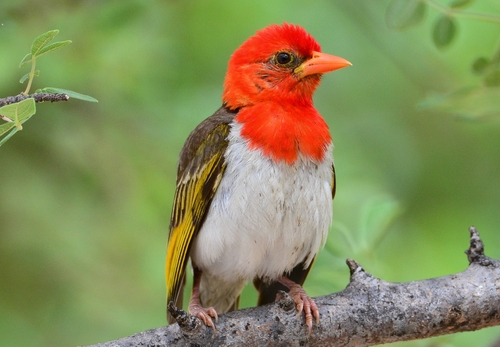
Anaplectes
Anaplectes is a genus of African birds in the weaver family Ploceidae.
Xinghaiornis
Xinghaiornis is an extinct genus of toothless basal ornithothoracine dinosaur known from the Early Cretaceous Yixian Formation (Aptian stage) of western Liaoning Province, northeastern China. Xinghaiornis was first named by Xuri Wang, Luis M. Chiappe, Fangfang Teng and Qiang Ji in 2013 and the type species is Xinghaiornis lini. Xinghaiornis was prepared by Maureen Walsh at the Dalian Museum of Prehistory, Dalian, China.
Laornis edvardsianus
__NOTOC__
Elsornis
Elsornis is a genus of enantiornithean bird. Only one species has been named, Elsornis keni. It lived during the Late Cretaceous. It is known from a partially articulated fossil skeleton found in the Gobi Desert in Mongolia.
Iteravis
Iteravis () is an extinct genus of ornithuromorph bird known from the Early Cretaceous Jiufotang Formation of what is today the Liaoning Province of China. The genus contains a single species, Iteravis huchzermeyeri, named in honor of the archosaur palaeontologist Dr. Fritz Huchzermeyer, who died shortly before Iteravis was described. The relationships between Iteravis and species of Gansus have been debated, with some researchers arguing for a synonymy between the former and G. zheni, and others recovering a closer relationship between the two genera within the family Gansuidae.
Omnivoropteryx
Omnivoropteryx (meaning "omnivorous wing") is a genus of primitive flying avialan from the early Cretaceous Upper Jiufotang Formation of China. The authors who described Omnivoropteryx, Stephen Czerkas and Qiang Ji, stated that their specimen closely resembles Sapeornis, but the pubis was longer and, since no skull was known for Sapeornis, they did not consider the two names synonyms. The later discovery of Sapeornis skulls shows that they were indeed similar to Omnivoropteryx. This may make Omnivoropteryx a junior synonym of Sapeornis, and the name may be abandoned.
Ilerdopteryx viai
Ilerdopteryx is an extinct genus of birds, perhaps an enantiornithine, from the Lower Cretaceous La Pedrera de Rúbies Formation lithographic limestone of Spain. The type species, I. viai, is known only from a collection of isolated contour feathers.
Piscivoravis
Piscivoravis is an extinct genus of fish-eating ornithuromorph dinosaurs known from the Early Cretaceous Jiufotang Formation (Aptian age) of western Liaoning Province, northeastern China. Piscivoravis was first named by Shuang Zhou, Zhonghe Zhou and Jingmai O'Connor in 2013 and the type species is Piscivoravis lii. Phylogenetic analysis places Piscivoravis in a more derived position than Archaeorhynchus, in a polytomy with Jianchangornis, Patagopteryx, and the clade including all more derived ornithuromorphs.
Jiuquanornis
Jiuquanornis is an extinct genus of basal ornithuromorph dinosaur known from the Early Cretaceous Xiagou Formation of Changma Basin, Gansu Province of northwestern China. Jiuquanornis was first named by Ya-Ming Wang, Jingmai K. O'Connor, Da-Qing Li and Hai-Lu You in 2013 and the type species is Jiuquanornis niui.
Longchengornis
Longchengornis is a genus of enantiornithean birds which lived during the early Cretaceous Period, about 120 mya, and is known from a fossil found in the Jiufotang Formation in Liaoning province, People's Republic of China. It contains the single species L. sanyanensis, though some researchers believe this to be a synonym of the similar species Cathayornis yandica.
Megapaloelodus
Megapaloelodus is an extinct genus of stem flamingo of the family Palaelodidae. Megapaloelodus is primarily known from Miocene America, from South Dakota and Oregon in the north to Argentina in the south, but the species Megapaloelodus goliath was found in Europe. Additionally, one unnamed species was discovered in Miocene sediments from Namibia. Due to a lack of skull material, little can be said about the ecology of Megapaloelodus. Species of this genus are typically larger than those of Palaelodus and appear to have inhabited similar brackish lake environments. Additionally, they may have b
Pasquiaornis
Pasquiaornis is a prehistoric seabird genus of the Hesperornithes. It lived in the Late Cretaceous, during the late Cenomanian between 95 and 93 million years ago in North America. Two species, P. hardiei and P. tankei, were described in 1997 by Tim Tokaryk, Stephen Cumbaa and John Storer.
Nesotrochis
Nesotrochis is a genus of extinct flightless birds that were endemic to the islands of the Greater Antilles in the Caribbean. They have often been called cave rails, though they are no longer considered true rails, but an independent lineage of gruiform birds.
Analisoma
Analisoma is a genus of bird in the family Campephagidae recognized in some taxonomies. Many taxonomists consider this genus conspecific with the genus Edolisoma.
It contains the following species:
New Caledonian cuckooshrike (Analisoma analis)
White-winged cuckooshrike (Analisoma ostenta)
Blackish cuckooshrike (Analisoma coerulescens)
Intiornis
Intiornis (meaning "Inti bird", the binominal naming means "Unexpected Sun bird") is an extinct genus of avisaurid enantiornithean birds which existed in what is now North-West Argentina during the late Cretaceous period (Campanian age).
Qianshanornis
Qianshanornis rapax is an extinct predatory bird from the Middle Paleocene of China. Q. rapax is very similar to the Eocene cariamiform Strigogyps, but it differs in being smaller, and in having a hypertrophied, hyperextensible second toe, forming a claw analogous to that of dromeosaurid dinosaurs. This toe is thought to allowed the bird to better pin down captured prey. Although very little wing-material is known, the condylar processes suggest it was capable of flight, and probably was a flier superior to either Strigogyps or modern seriemas.
Iaceornis
Iaceornis is a genus of marine ornithuran dinosaurs closely related to modern birds. It was endemic to North America during the Late Cretaceous, living about 83.5 million years ago. It is known from a single fossil specimen found in Gove County, Kansas, and consisting of a partial skeleton lacking a skull.
Chaoyangia
Chaoyangia is an extinct genus of euornithean birds, containing the single species Chaoyangia beishanensis. This species is known from a single fossil specimen consisting of a partial skeleton including vertebra, ribs, hips, and upper legs. The specimen (museum catalog number IVPP V9934) was discovered in the Jiufotang Formation near the city of Chaoyang in Liaoning province, China. This rock formation has been dated to the Aptian age of the Early Cretaceous period, 120 million years ago.
Zhyraornis
Zhyraornis is a genus of prehistoric bird from the late Cretaceous period (middle Turonian, 92 mya). Its fossils have been found in Bissekty Formation deposits near Dzharakuduk in the Kyzyl Kum, Uzbekistan. Two species have been assigned to this genus: Zhyraornis kashkarovi and Zhyraornis logunovi. Both are known only from partial pelvic bones (synsacra).
Songlingornis
Songlingornis is an extinct genus of ornithuromorph dinosaurs from the Early Cretaceous. Its fossils have been found in the Jiufotang Formation of Liaoning (PRC). The age of these rocks is somewhat disputed, but probably around the early Aptian, 125-120 million years ago. Only one species, Songlingornis linghensis, is known at present.
Chupkaornis
Chupkaornis (meaning "eastern bird") is a genus of prehistoric flightless birds from the Late Cretaceous (Coniacian-Santonian) Kashima Formation of Hokkaido, Japan. The type species is Chupkaornis keraorum.
Changmaornis
Changmaornis is an extinct genus of basal ornithuromorph dinosaur known from the Early Cretaceous Xiagou Formation of Changma Basin, Gansu Province of northwestern China. Changmaornis was first named by Ya-Ming Wang, Jingmai K. O'Connor, Da-Qing Li and Hai-Lu You in 2013 and the type species is Changmaornis houi.
Jibeinia
Jibeinia is a genus of enantiornithean bird. Only one species has been named, Jibeinia luanhera. It is known from one holotype fossil found in the Hebei province, People's Republic of China. This fossil is now lost. The holotype was, however, described and figured in detail by Hou (1997).
Qinornis
Qinornis is a genus of extinct ornithuran from the early-mid-Paleocene epoch (late Danian age), about 61 million years ago. It is known from a single fossil specimen consisting of a partial hind limb and foot, which was found in Fangou Formation deposits in Luonan County, China.
Paracrax
Paracrax ("near curassow") is a genus of extinct North American flightless birds, possibly related to modern seriemas and the extinct terror birds. Part of Bathornithidae (though some analysis recover it as closer to the living seriemas instead, or possibly entirely out of Cariamiformes), it is a specialised member of this group, being cursorial carnivores much like their South American cousins, some species attaining massive sizes.
Proardea
Proardea is an extinct genus of heron, containing two species, Proardea amissa ("lost proto-heron") and Proardea? deschutteri from the Borgloon Formation of Belgium. It stood about 70 cm (2 ft 4 in) tall and was very similar to a modern heron in shape. The species is known from rather fragmentary fossils in the area of Quercy, France; dated remains are from Pech Desse, a Late Oligocene locality, but the original fossil, a single right tarsometatarsus (MNHN QU-15720), isn't precisely dated and may have come from deposits as early as Late Eocene in age.