Category
page 3Bird genera

Pernis
genus of birds
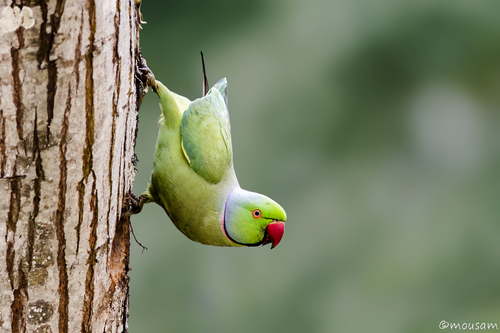
Psittacula
Psittacula, also known as Afro-Asian ring-necked parrots, is a genus of parrots from Africa and Southeast Asia. It is a widespread group with a clear concentration of species in south Asia, but also with representatives in Africa and the islands of the Indian Ocean. This is the only genus of parrot which has the majority of its species in continental Asia. Of all the extant species only Psittacula calthropae, Psittacula caniceps and Psittacula echo do not have a representative subspecies in any part of mainland continental Asia. The rose-ringed parakeet, Psittacula krameri, is one of the most

Hieraaetus
The genus Hieraaetus, sometimes known as small eagles or hawk-eagles, denotes a group of smallish eagles usually placed in the accipitrid subfamilies Buteoninae or Aquilinae.
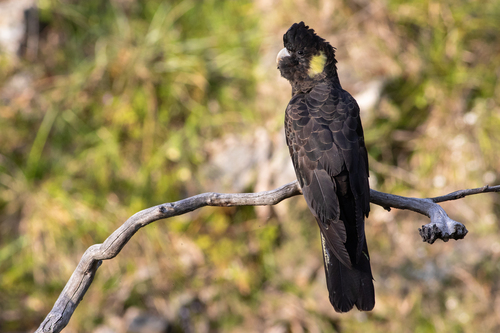
Calyptorhynchus
Described by French naturalist Anselme Gaëtan Desmarest in 1826, the genus Calyptorhynchus has two species of cockatoos. They are all mostly black in colour, and the taxa may be differentiated partly by size and partly by small areas of red, grey, and yellow plumage, especially in the tail feathers. Studies based on the mitochondrial DNA 12S gene fragment suggested that other sexually dichromatic species, the gang-gang cockatoo and the cockatiel may be the closest living relatives of Calyptorhynchus. However, subsequent studies, including more genes confirm the morphological taxonomy with the

Quelea
Quelea () is a genus of small passerine birds that belongs to the weaver family Ploceidae, confined to Africa. These are small-sized, sparrow- or finch-like gregarious birds, with bills adapted to eating seeds. Queleas may be nomadic over vast ranges; the red-billed quelea is said to be the most numerous wild bird species in the world.

Paradisaea
The genus Paradisaea consists of six species of birds-of-paradise (family Paradisaeidae). The genus is found on the island of New Guinea as well as the nearby islands groups of the Aru Islands, D'Entrecasteaux Islands and Raja Ampat Islands. The species inhabit a range of forest types from sea level to mid-montane forests. Several species have highly restricted distributions, and all species have disjunct distributions. A 2009 study examining the mitochondrial DNA of the family found that the Paradisaea birds-of-paradise were in a clade with the genus Cicinnurus. It showed that the blue bird-o
.jpg)
Poecile
Poecile is a genus of birds in the tit family Paridae. It contains 15 species, which are scattered across North America, Europe and Asia; the North American species are the chickadees. In the past, most authorities retained Poecile as a subgenus within the genus Parus, but treatment as a distinct genus, initiated by the American Ornithologists Union, is now widely accepted. This is supported by mtDNA cytochrome b sequence analysis.

Perisoreus
The genus Perisoreus is a very small genus of jays from the Boreal regions of North America and Eurasia from Scandinavia to the Asian seaboard. An isolated species also occurs in north-western Sichuan of China. They belong to the Passerine order of birds in the family Corvidae. Species of Perisoreus jays are most closely related to the genus Cyanopica.

Nycticorax
Nycticorax is a genus of night herons. The name Nycticorax means "night raven" and derives from the Ancient Greek νύκτος, nuktos "night" and κοραξ, korax, "raven". It refers to the largely nocturnal feeding habits of this group of birds, and the croaking crow-like call of the best known species, the black-crowned night heron.

Microhierax
The typical falconets, Microhierax, are a bird of prey genus in the family Falconidae. They are found in southeast Asia and the smallest members of Falconiformes, averaging about in length and in weight. The smallest members of the genus are the relatively widespread black-thighed falconet, and the white-fronted falconet on the island of Borneo.

Tockus
Tockus is a genus of birds in the hornbill family, Bucerotidae, that are native to Africa.

Gracula
Gracula is a genus of mynas, tropical members of the starling family of birds found in southern Asia and introduced to Florida in the United States.
.jpg)
Riparia
Riparia is a genus of passerine birds in the swallow family Hirundinidae.

Crax
Crax is a genus of curassows in the order Galliformes, a clade of large, heavy-bodied, ground-feeding birds. They are known from tropical South America with one species, the great curassow, ranging northwards through Central America as far as Mexico. The curassows in this genus are noted for their sexual dimorphism; males are more boldly coloured than females and have facial ornamentation such as knobs and wattles. They are also characterised by curly crests and contrastingly-coloured crissa (the area around the cloaca). Crax curassows probably originated as a distinct lineage during the Late

Arborophila
Arborophila is a bird genus in the family Phasianidae. The genus has the second most members within the Galliformes after Pternistis, although Arborophila species vary very little in bodily proportions with different species varying only in colouration/patterning and overall size. These are fairly small, often brightly marked partridges found in forest of eastern and southern Asia. Some species in this genus have small ranges, and are threatened by habitat loss and hunting.

Molothrus
Cowbirds are birds belonging to the genus Molothrus in the family Icteridae. They are of New World origin, but some species not native to North America are invasive there, and are obligate brood parasites, laying their eggs in the nests of other species.
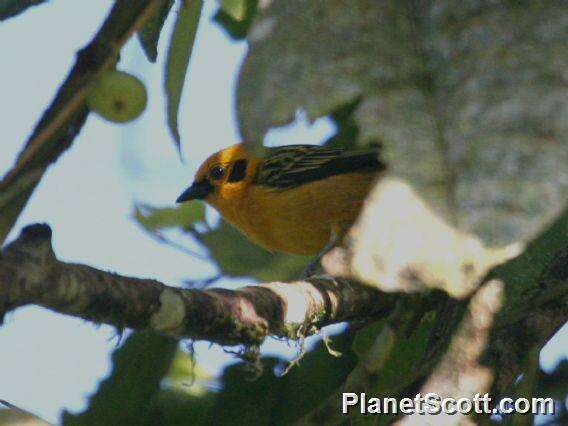
Tangara
genus of birds

Ficedula
The '''Ficedula flycatchers' are a genus of Old World flycatchers. The genus is the largest in the family, containing around thirty species. They have sometimes been included in the genus Muscicapa''. The genus is found in Europe, Asia and Africa. Several species are highly migratory, whereas other species are sedentary.

Elanus
.jpg)
Cisticola
Cisticola is a genus of small insectivorous birds formerly classified in the Old World warbler family Sylviidae, but now usually considered to be in the separate family Cisticolidae, along with other tropical and southern warbler genera. The name is used as both the scientific and vernacular names; it can be pronounced either kis-ti-cola (classical Latin) or sis-tic-ola (ecclesiastical Latin). Genetic data suggests the family is quite closely related to the swallows and martins, the bulbuls, and the white-eyes. The genus contains over 50 species, of which only two are not found in Africa, one
.JPG)
Todus
Todus is a genus of birds found in the Caribbean. It is the only genus within the todies family Todidae. The five species are small birds of the forests of the Greater Antilles: Puerto Rico, Jamaica, and Cuba, with adjacent islands, have one species each, and Hispaniola has two, the broad-billed tody in the lowlands (including Gonâve Island) and the narrow-billed tody in the highlands.

Dryocopus
Dryocopus is a genus of large powerful woodpeckers, typically 35–45 cm in length. It has representatives in North and South America, Europe, and Asia; some South American species are endangered. It was believed to be closely related to the American genus Campephilus, but it is part of a different lineage of woodpeckers altogether (Benz et al., 2006)

Chrysococcyx
Chrysococcyx is a genus of cuckoos in the family Cuculidae.
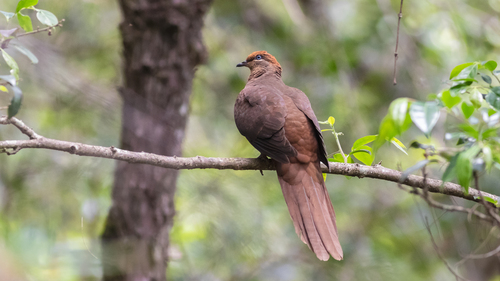
Macropygia
Macropygia is a genus of bird in the pigeon and dove family Columbidae. The genus is one of three genera known as cuckoo-doves. They are long tailed, range between 27 and 45 cm in length and have brown plumage. The genus now ranges from India and China through Indonesia and the Philippines to Vanuatu and Australia, though they originated from North and South America.

Coracias
Coracias is a genus of the rollers, an Old World family of birds related to the kingfishers and bee-eaters. They share the colourful appearance of those groups, blues and browns predominating. The two outer front toes are connected, but not the inner one.

Aethia
Aethia is a genus of four small (85–300g) auklets endemic to the North Pacific Ocean, Bering Sea and Sea of Okhotsk and among some of North America's most abundant seabirds. The relationships between the four true auklets remains unclear. Auklets are threatened by invasive species such as Norway rats (Rattus norvegicus) because of their high degree of coloniality and crevice-nesting.

Tinamus
Tinamus is a genus of birds in the tinamou family Tinamidae. This genus comprises some of the larger members of this South American family.

Geronticus
__NOTOC__
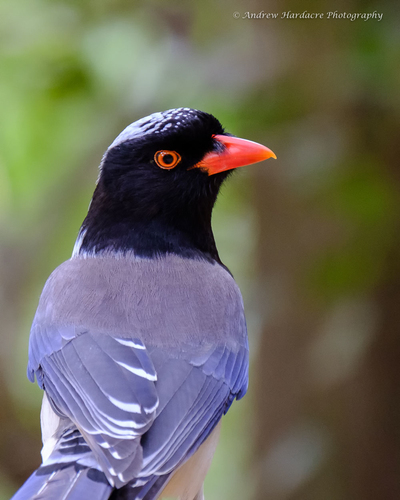
Urocissa
Urocissa is a genus of birds in the Corvidae, a family that contains the crows, jays, and magpies.

Tachybaptus
Tachybaptus is a genus of small birds of the grebe family. The genus name means "quick diving": it is from Ancient Greek takhys "quick" and bapto "I dip". It has representatives over much of the world, including the tropics.

Spilornis
Spilornis is a genus of bird of prey in the family Accipitridae. As adults all have dark crowns, and bright yellow eyes and cere. These medium-sized raptors are found in forests of southern Asia and are known as serpent-eagles, an English name shared with two African species from the genera Dryotriorchis and Eutriorchis.
.jpg)
Estrilda
Estrilda is a genus of estrildid finch in the family Estrildidae.

Titanis
Titanis (meaning "Titan" for the Titans of Greek mythology) is a genus of phorusrhacid ("terror birds", a group originating in South America), an extinct family of large, predatory birds, in the order Cariamiformes that inhabited the United States from the early Pliocene to early Pleistocene. The first fossils were unearthed by amateur archaeologists Benjamin Waller and Robert Allen from the Santa Fe River in Florida and were named Titanis walleri by ornithologist Pierce Brodkorb in 1963, the species name honoring Waller. The holotype material is fragmentary, consisting of only an incomplete r

Muscicapa
Muscicapa is a genus of passerine birds belonging to the Old World flycatcher family Muscicapidae, and therein to the typical flycatchers of subfamily Muscicapinae. They are widespread across Europe, Africa and Asia with most species occurring in forest and woodland habitats. Several species are migratory, moving south from Europe and northern Asia for the winter.

Anthracoceros
Anthracoceros is a genus of birds in the family Bucerotidae.
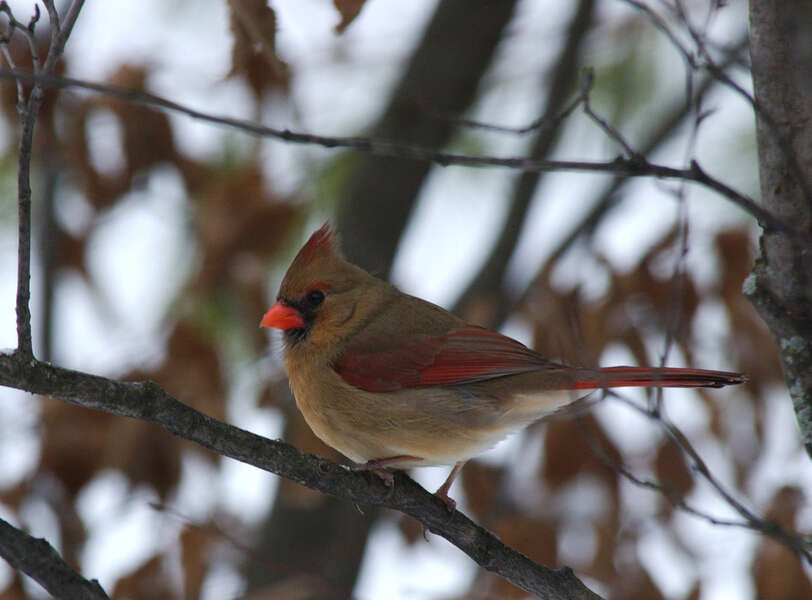
Cardinalis
Cardinalis is a genus of birds in the family Cardinalidae. There are three species ranging across North America to northern South America.
.jpg)
Galerida
Galerida is a genus of birds in the family Alaudidae. The current scientific name is derived from Latin. Galerida was the name for a lark with a crest, from galerum, "cap". The name Galerida is synonymous with the earlier genus names Calendula, Heliocorys and Ptilocorys.
%20-%20Plate%2040%2C%201905%20(14745658961).jpg)
Ploceus
Ploceus is a genus of birds in the weaver family, Ploceidae. They are native to the Indomalayan and Afrotropical realms.

Euphonia
Euphonias are members of the genus Euphonia, a group of Neotropical birds in the finch family. They and the chlorophonias comprise the subfamily Euphoniinae.

Tympanuchus
Tympanuchus is a small genus of birds in the grouse family. They are commonly referred to as prairie-chickens.

Pharomachrus
Pharomachrus is a genus of birds in the family Trogonidae.

Thalasseus
Thalasseus, the crested terns, is a genus of eight species of medium-large to large terns in the family Laridae.
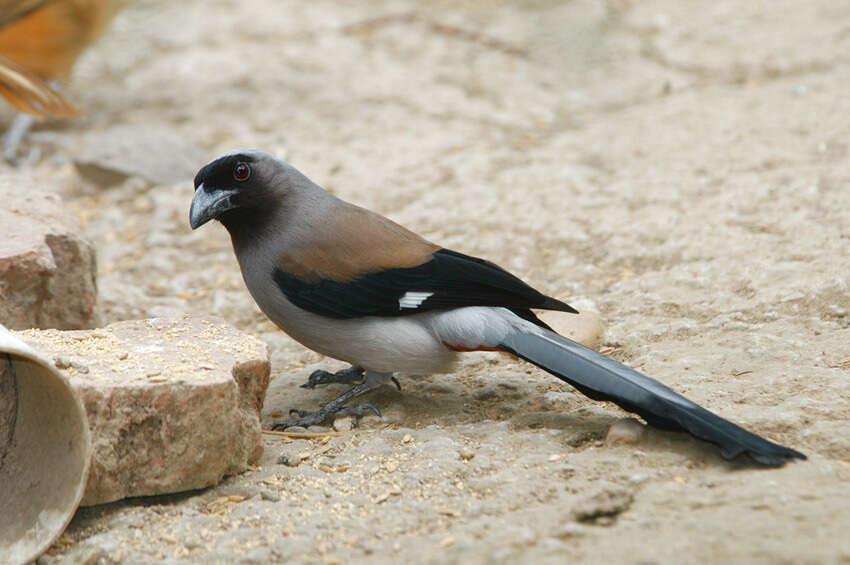
Dendrocitta
Dendrocitta is a genus of long-tailed passerine birds in the crow and jay family, Corvidae. They are resident in tropical South and Southeast Asia. The generic name is derived from the Greek words dendron, meaning "tree," and kitta, meaning "magpie".
Cathartes
The genus Cathartes includes medium-sized to large carrion-feeding birds in the New World vulture (Cathartidae) family. The three extant species currently classified in this genus occur widely in the Americas. There is one extinct species known from the Quaternary of Cuba.

Cepphus
Cepphus is a genus of seabirds in the auk family also referred to as guillemots by association with the related genus Uria, or tysties, from the Old Norse name for C. grylle.
Chrysolophus
Chrysolophus is a genus of the pheasant family of birds. The genus name is from Ancient Greek khrusolophos, "with golden crest".

Aechmophorus
Aechmophorus is a genus of birds in the grebe family.
Nothoprocta
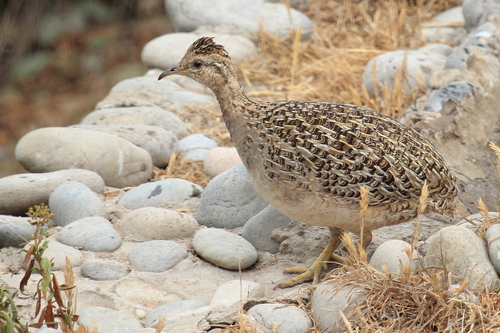
Nothoprocta is a genus of birds belonging to the tinamou family Tinamidae. They inhabit scrubland, grassland and open woodland in western South America, particularly in the Andes. They are poor fliers and spend most of their time on the ground. Their diet includes seeds and insects. They nest on the ground, laying large glossy eggs. The eggs are covered with feathers when a potential predator is nearby.

Aphelocoma
The passerine birds of the genus Aphelocoma include the scrub jays and their relatives. They are New World jays found in Mexico, western Central America and the western United States, with an outlying population in Florida. This genus belongs to the group of New World (or "blue") jays—possibly a distinct subfamily–which is not closely related to other jays, magpies or treepies. Within this group, according to a 2023 molecular analysis, Aphelocoma is the sister group to a clade consisting of Cyanocitta and Gymnorhinus. They live in open pine-oak forests, chaparral, and mixed evergreen forests.

Cyanoramphus
Cyanoramphus is a genus of parakeets native to New Zealand and islands of the southern Pacific Ocean. The New Zealand species are locally called kākāriki. They are small to medium-sized parakeets with long tails and predominantly green plumage. Most species are forest dwellers, although several of the subantarctic species live in open grassland. The genus formerly had a widely disjunct distribution; while most of the genus ranged from New Caledonia to Macquarie Island, two species were found in the Society Islands, away from the rest.

Polyboroides
Polyboroides is a genus of bird of prey in the family Accipitridae. This genus has two recognized species found in Sub-Saharan Africa and Madagascar. The two species are allopatric and restricted to the Afrotropical realm. They are generally known as harrier-hawks.

Crex
REDIRECT Corn crake

Pachyptila
Pachyptila is a genus of seabirds in the family Procellariidae and the order Procellariiformes. The members of this genus and the blue petrel form a sub-group called prions. They range throughout the southern hemisphere, often in the much cooler higher latitudes. Three species, the broad-billed prion (Pachyptila vittata), the Antarctic prion (Pachyptila desolata) and the fairy prion (Pachyptila turtur), range into the subtropics.

Amadina
Amadina is a genus of estrildid finches that are found in Africa.

Cyanolyca
Cyanolyca is a genus of small jays found in humid highland forests in southern Mexico, Central America and the Andes in South America. All are largely blue and have a black mask. They also possess black bills and legs and are skulking birds. They frequently join mixed-species flocks of birds.
Manucode
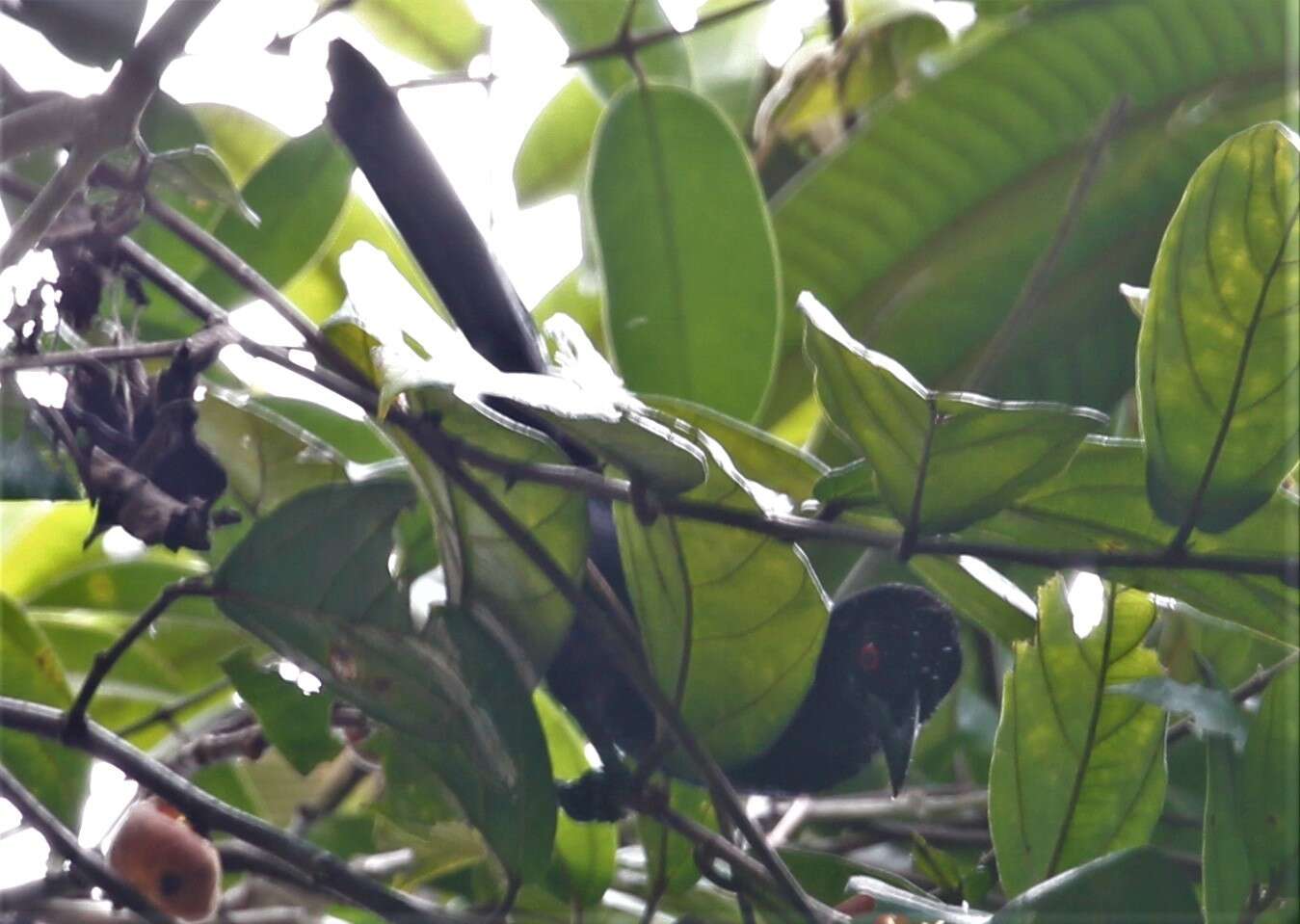
Manucodes are birds-of-paradise in the genus Manucodia that are medium-sized with black-glossed purple and green plumages.

Columbina
genus of birds

Cissa
genus of birds
Centrocercus
Sage-grouse are grouse belonging to the bird genus Centrocercus. The genus includes two species: the Gunnison grouse (Centrocercus minimus) and the greater sage-grouse (Centrocercus urophasianus). These birds are distributed throughout large portions of the north-central and Western United States, as well as the Canadian provinces of Alberta and Saskatchewan. The International Union for Conservation of Nature classified the
C. minimus species as endangered in 2020 and C. urophasianus as near threatened in 2016.

Glareola
Glareola is a genus of birds in the family Glareolidae. The pratincoles are a group of birds consisting of the eight species.