Category
page 1Birds

bird
Birds are a group of warm-blooded theropod dinosaurs constituting the class Aves, characterised by feathers, toothless beaked jaws, the laying of hard-shelled eggs, a high metabolic rate, a four-chambered heart, and a strong yet lightweight skeleton. Birds live worldwide and range in size from the bee hummingbird to the common ostrich. There are over 11,000 living species and they are split into 44 orders. More than half are passerine or "perching" birds. Birds have wings whose development varies according to species; the only known groups without wings are the extinct moa and elephant birds.

bird migration
seasonal movement of birds
%20departs%20London%20Heathrow%2015Aug2008%20arp.jpg)
wingspan
thumb|The distance A to B is the wingspan of this Boeing 777-200ER
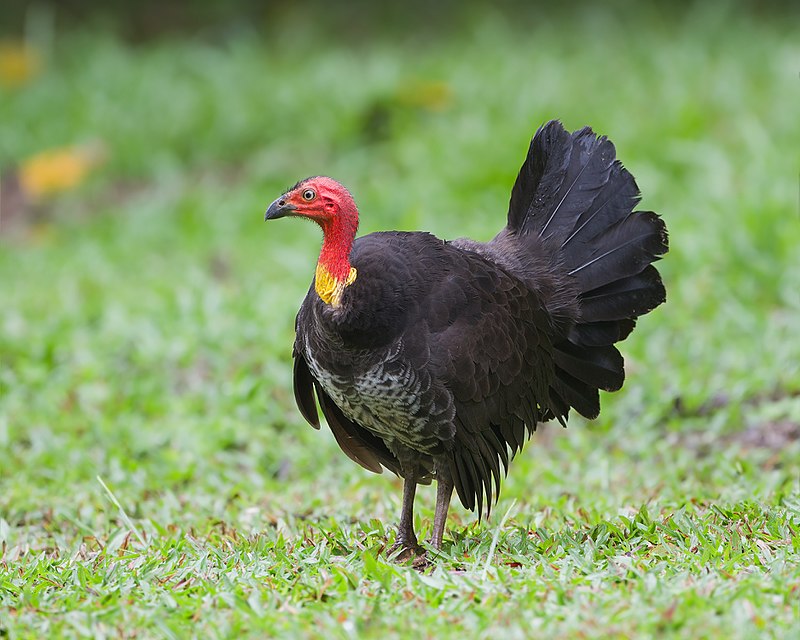
Galloanserae
flock
group of birds conducting flocking behavior in the midst of flight, or while foraging or roosting
Portal:Birds
Wikimedia portal
flight feather
long, stiff feather on the wing or tail of a bird that aids in the generation of lift and thrust

birdcage
thumb|Two children with parrot cage (painting by Georg Friedrich Kersting, c. 1835)
thumb|British birdcage, c. 1750, mahogany and brass, overall: Metropolitan Museum of Art (New York City)
clutch
grouping of eggs in a nest
Toxic birds
birds that are poisonous to touch and eat
mixed-species foraging flock
swarming behaviour of birds when foraging

rookery
thumb|The Rooks Have Returned|The Rooks Have Come Back Again, [[Alexei Savrasov, 1871, canvas, oil, The Tretyakov Gallery, Moscow]]
thumb|Colonies of Indian yellow-nosed albatross|Indian yellow-nosed albatrosses on [[Amsterdam Island]]
thumb|Fur seals in a rookery in the [[Pribilof Islands in the 1950s.]]
A rookery is a colony of breeding rooks, and more broadly a colony of several types of breeding animals, generally gregarious birds.
fecal sac
mucous membrane produced by bird nestlings
hoarding
animal behavior; storage of food in hidden locations
Climate change and birds
helpers at the nest
social structure in which juveniles and sexually mature adolescents remain with their parents and help them raise subsequent broods instead of dispersing and reproducing themselves
Sort sol
natural phenomenon
Laornis edvardsianus
__NOTOC__