Category
page 1Blattodea families

Termitidae
Termitidae is the largest family of termites consisting of 2,125 described species of which are commonly known as the higher termites. They are evolutionarily the most specialised termite group, with their highly compartmentalized hindgut lacking the flagellated protozoans common to "lower termites", which are instead replaced by bacteria and archaea. Whereas lower termites are restricted mostly to woody tissue, higher termites have diverse diets consisting of wood, grass, leaf litter, fungi, lichen, faeces, humus and soil.Breznak JA, Brune A. 1994. Role of microorganisms in the digestion of l
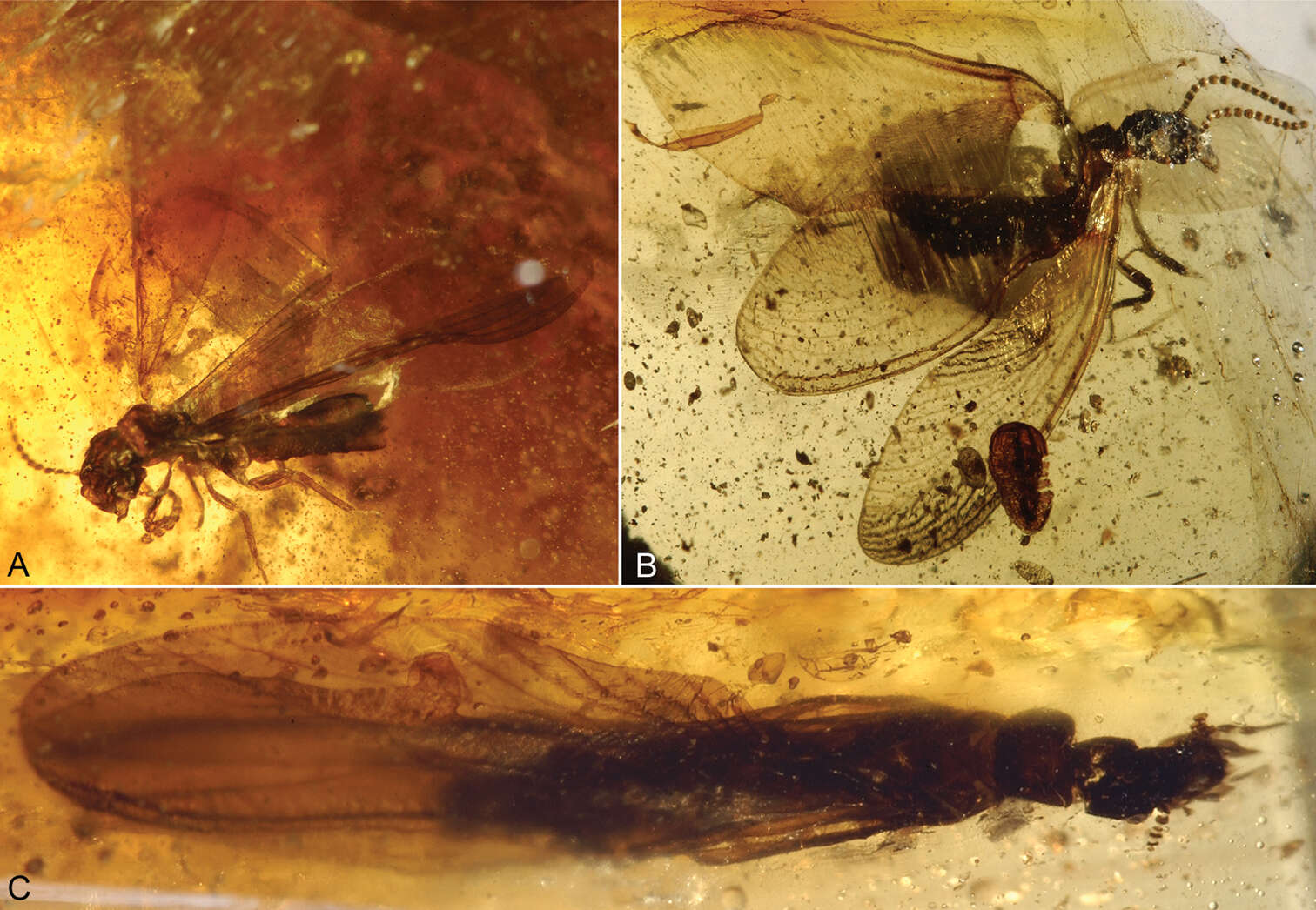
Rhinotermitidae
Rhinotermitidae sensu novo are a family of Neoisopteran termites formerly represented by taxa known as Subterranean termites (Heterotermitidae, Psammotermitidae, etc...) but is now only represented by genera within the historical subfamily Rhinotermitinae. The soldiers of Rhinotermitidae notably possess a labral brush, a highly modified projection of the labrum which channels the fontanellar fluid onto a hairy tip, smearing the fluid onto threats. The Rhinotermitidae have a wide distribution, being found from the Neotropics to the Indomalayan, Afrotropical, Australasian, and Palearctic (Sino-J
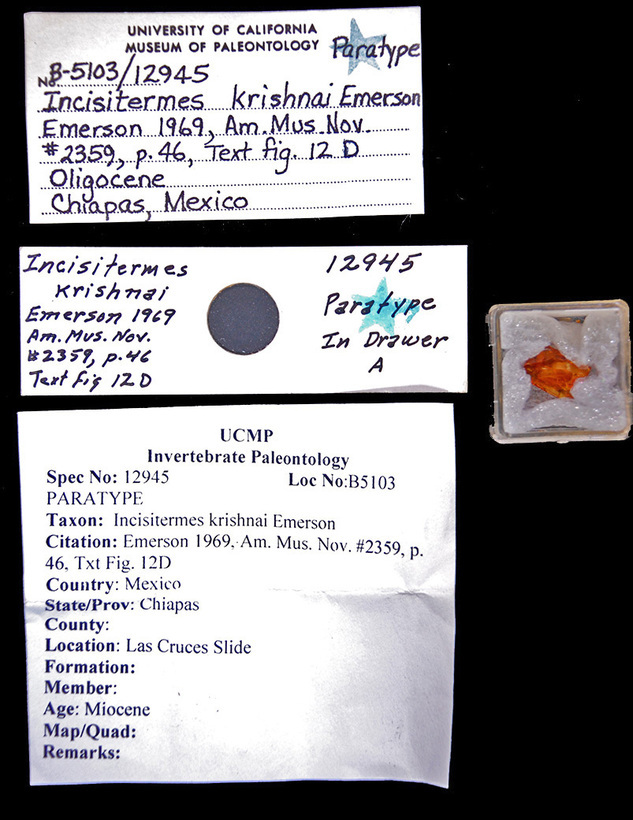
Kalotermitidae
Kalotermitidae (drywood termites), are a basal family with a roughly cosmopolitan circumtropical distribution. With 21 genera and 419 species, it is the second most diverse termite family after the Termitidae. The majority of members are functionally specialists of sound wood - though not necessarily dry wood. Hence, while not all Kalotermitidae taxa are commonly referred to as drywood termites, the name is commonly used to refer to the family itself. The family contains notable pest taxa such as Cryptotermes brevis and Incisitermes minor.
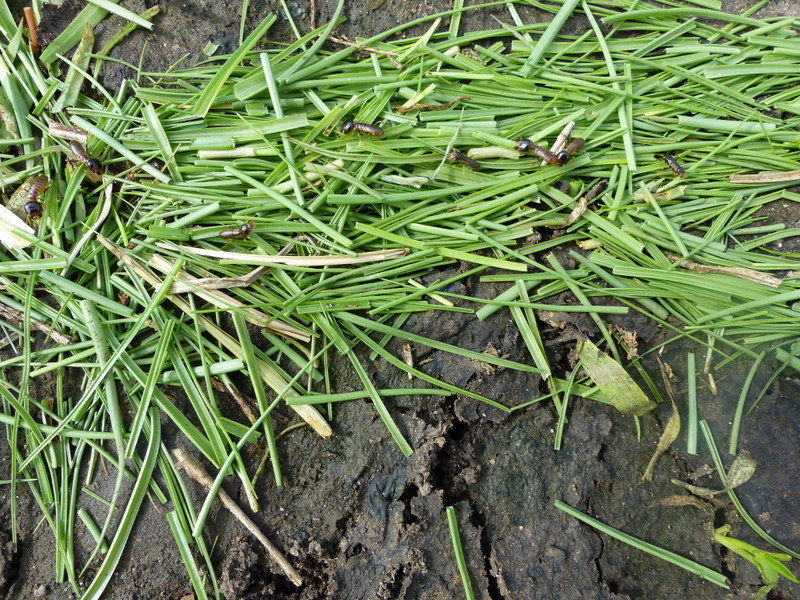
Hodotermitidae
The Hodotermitidae (from Greek ὁδός (hodós), travelling; Latin termes, woodworm) are a basal Old World family of termites known as the harvester termites. They are distinguished by the serrated inner edge of their mandibles, and their functional compound eyes which are present in all castes. They forage for grass at night and during daylight hours, and the pigmented workers are often observed outside the nest. Their range includes the deserts and savannas of Africa, the Middle East, and Southwest Asia. Their English name refers to their habit of collecting grass, which is not unique to the fam

Mastotermitidae
Mastotermitidae is a family of termites with one sole living species, Mastotermes darwiniensis which is found only in northern Australia. The remaining genera of this family are only known from the fossil record.
Serritermitidae
Serritermitidae is a family of termites belonging to the infraorder Isoptera in the order Blattodea. The family includes only a few species, which live in South America.

Archotermopsidae
Archotermopsidae is a family of termites in the order Blattodea, known as dampwood termites, formerly included within the family Termopsidae. They constitute a small and rather primitive family with two extant genera and 5 living species. They may rarely infest structures but do not usually do so, nor do they cause extensive damage to buildings or other man-made structures unless said structure has been sufficiently damaged such as by water. As their name implies, they eat wood that is not dried out, perhaps even rotting, and are consequently of little use to humans.
Stylotermitidae
Stylotermitidae is a family of termites in the order Blattodea. There are two extinct and one extant genera in Stylotermitidae, with more than 50 described species.