Encyclopedia of Life · EOL (see source)
Hodotermitidae
Sign in to saveAlso known as Harvester termites
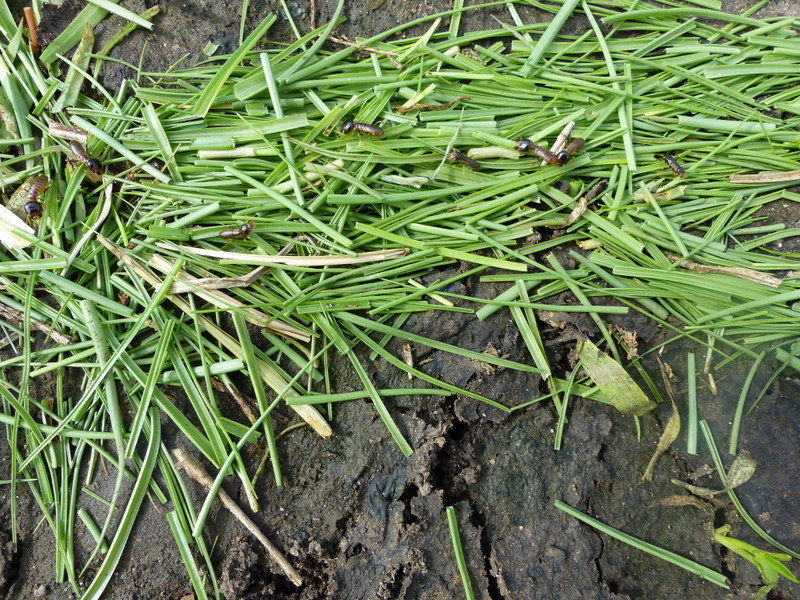
The Hodotermitidae (from Greek ὁδός (hodós), travelling; Latin termes, woodworm) are a basal Old World family of termites known as the harvester termites. They are distinguished by the serrated inner edge of their mandibles, and their functional compound eyes which are present in all castes. They forage for grass at night and during daylight hours, and the pigmented workers are often observed outside the nest. Their range includes the deserts and savannas of Africa, the Middle East, and Southwest Asia. Their English name refers to their habit of collecting grass, which is not unique to the fam
Species
FAMILY
- KingdomAnimalia
- PhylumArthropoda
- ClassInsecta
- OrderBlattodea
- FamilyHodotermitidae
草白蟻科在等翅目中,属于比较原始的一个类群,在某些方面比澳白蚁科表现的更原始。本科的一些属,其有翅成虫左上颚有3个缘齿,而澳白蚁科只有两个。但总体来看,澳白蚁科仍是等翅目中最原始的类群。
via GBIF
Museum specimens
- Specimen records
- 3
- Family
- Hodotermitidae
- Collections
- LACM
- Recorded in
- United States
Wikidata facts
Show 3 more facts
- Commons category
- Hodotermitidae
- taxon rank
- family
- taxon name
- Hodotermitidae
Sources (1)
via Wikidata · CC0
~5 min read
Encyclopedic overview
8 sectionsContents
- General
- Nests
- Reproduction
- Diet and feeding
- Predators
- Economic impact
- References
- External links
The Hodotermitidae (from Greek ὁδός (hodós), travelling; Latin termes, woodworm) are a basal Old World family of termites known as the harvester termites. They are distinguished by the serrated inner edge of their mandibles, and their functional compound eyes which are present in all castes. They forage for grass at night and during daylight hours, and the pigmented workers are often observed outside the nest. Their range includes the deserts and savannas of Africa, the Middle East, and Southwest Asia. Their English name refers to their habit of collecting grass, which is not unique to the family however.
==General== The family consists of three extant genera and some 18 or 19 species. Anacanthotermes is found in deserts and semideserts of North Africa, the Middle East, and Southwest Asia, including Baluchistan and southern India. Hodotermes has a vast range from Palaearctic North Africa, through the East African savannas to the karroid regions of southern Africa. Microhodotermes is a genus of desert specialists in the Namib, Kalahari, and Karoo, where their ranges overlap with Hodotermes.
Excerpted from Wikipedia’s “Hodotermitidae” article, available under the CC BY-SA 4.0 licence.