Category
page 1Blind royalty and nobility
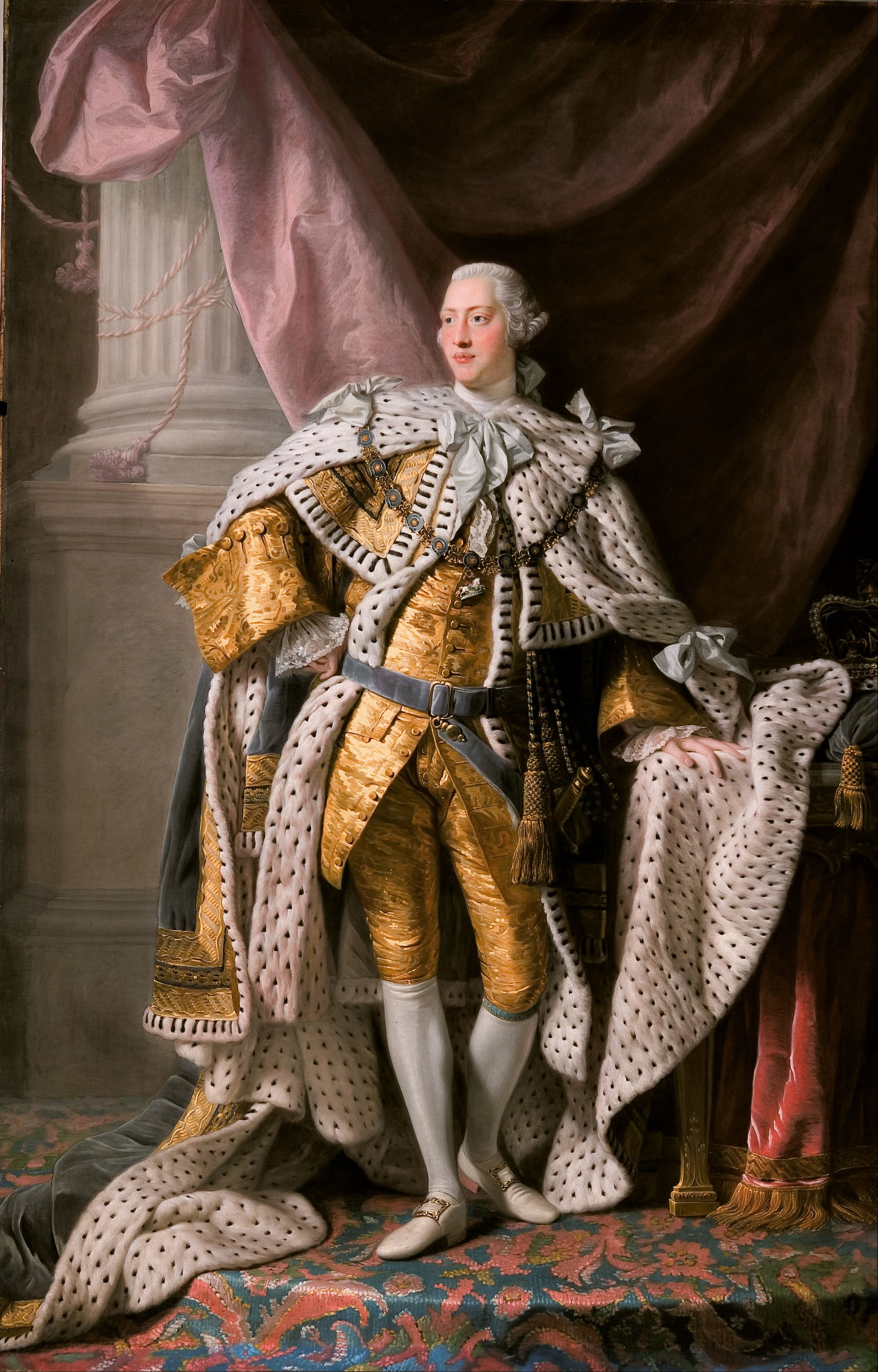
George III
George III was King of Great Britain and Ireland from 25 October 1760 until his death in 1820. The Acts of Union 1800 unified Great Britain and Ireland into the United Kingdom of Great Britain and Ireland, with George as its king. He was concurrently duke and prince-elector of Hanover in the Holy Roman Empire before becoming King of Hanover on 12 October 1814. He was the first monarch of the House of Hanover who was born in Great Britain, spoke English as his first language, and never visited Hanover.

George IV of the United Kingdom
King of the United Kingdom and Hanover from 1820 to 1830 (1762-1830)

Oedipus
Oedipus (, ; , ) was a mythical Greek king of Thebes. A tragic hero in Greek mythology, Oedipus unwittingly fulfilled a prophecy that he would end up killing his father and marrying his mother, thereby bringing disaster to his city and family.

John of Bohemia
king of Bohemia

Baldwin IV of Jerusalem
King of Jerusalem (1161-1185) (r. 1174-1185)

Philippikos Bardanes
Philippicus (; ), born Bardanes (; ) was Byzantine emperor from 711 to 713. He took power in a coup against the unpopular emperor Justinian II, and was deposed in a similarly violent manner nineteen months later. During his brief reign, Philippicus supported monothelitism in Byzantine theological disputes, and saw conflict with the First Bulgarian Empire and the Umayyad Caliphate.

Jan Žižka
Czech Hussite military leader (circa 1360 - 1424)

Alexios V Doukas
Byzantine emperor

Vasily II of Moscow
Grand Prince of Moscow (1415-1462)

Enrico Dandolo
Doge of Venice (1107-1205)

Béla II of Hungary
Hungarian king (1108-1141)

Shah Alam II
16th Mughal Emperor from 1760 to 1806

Donald III of Scotland
King of Scots (1033-1099)

Anchises
thumbnail|Aphrodite reveals baby Aeneas to Anchises (1st century AD).

Louis the Blind
Holy Roman Emperor from 901 to 905

Georg V of Hanover
King of Hanover (1819–1878)

Hermann of Reichenau
German 11th-century Benedictine monk

Magnus IV of Norway
Norwegian monarch

Stefan Uroš III
King of Serbia from 1322 to 1331

Simeon Bekbulatovich
Tatar Khan, Grand Prince of Rus

Dhṛtarāṣṭra
Dhritarashtra () was a ruler of the ancient Kuru kingdom, featured as a central character in the Hindu epic Mahabharata. He is also attested in the Yajurveda, where he is acknowledged as the son of King Vichitravirya.
Zaman Shah Durrani
Emir of Afghanistan1793 to 1801

Princess Sophia of the United Kingdom
British princess; daughter of King George III and Queen Charlotte (1777-1848)
Princess Christina of the Netherlands
Dutch princess (1947-2019)
Infanta Margarita, Duchess of Soria
Spanish Royal
Zbigniew of Poland
Polish sovereign

Amanirenas
Amanirenas (also spelled Amanirena), was queen regnant of the Kingdom of Kush from mid to late 1st century BCE. She is known for invading Roman occupied Egypt and successfully negotiating with Roman emperor Augustus the end of Roman retaliation, thus retaining Kushite independence.
Shahrukh Afshar
The fourth and last Afsharid king (1748–1796)
Boleslaus III, Duke of Bohemia
Duke of Bohemia
Jaromír
Duke of Bohemia
David Blunkett
British politician (born 1947)
Ana de Mendoza, Princess of Eboli
Spanish Princess (1540-1592)

Vazul
Vazul, or Vászoly, (before 997–1031 or 1032) was a member of the House of Árpád, a grandson of Taksony, Grand Prince of the Hungarians. The only other certain information about his life is that he was kept in captivity and blinded in the fortress of Nyitra (Nitra, Slovakia) in the last years of the reign of his cousin, King Stephen I of Hungary. Modern historians, including György Györffy, do not exclude that he had earlier been Duke of Nyitra. He is the forefather of nearly all Kings of Hungary who reigned after 1046.
Álmos, Duke of Nitra
Duke of Hungary, Croatia and Nyitra (c.1070–1127)
Marie Anne de Vichy-Chamrond, marquise du Deffand
French salon-holder
Henry IV, Count of Luxembourg
Count of Luxembourg and Count of Namur (1113-1196)
Alfonso Fróilaz
king of Galicia from 925 to 926 CE
Danylo Apostol
Hetman of the Ukrainian Cossacks
Henry, 3rd Earl of Lancaster
English noble
Mohammad Ghaznavi
Ruler of the Ghaznavid Empire in the 11th century
Stefan Branković
Despot of Serbia
Liu Penzi
Puppet emperor placed on the Han dynasty throne (25-27 AD) by the Red Eyebrows (Chimei) rebels
Bogdan III the One-Eyed
Voivode of Moldavia
Margaret of Castello
Italian saint
Tiran of Armenia
king of Armenia
Iliaș I of Moldavia
Prince of Moldavia

Alexander Frederick, Landgrave of Hesse
Prussian Prince (1863–1945)
Theodosius III of Abkhazia
King of Abkhazia
Ashot III Bagratuni
Armenian noble
Lord Charles Wellesley
British politician (1808-1858)
Empress Wang
early 1st century AD Chinese noblewoman and empress during Xin dynasty
Dobroslav II
Ruler of Duklja
Bagrat V of Imereti
King of Imereti
Kunala
Kunala (IAST: ) (263 BC – ?) was the Crown Prince and second son of 3rd Mauryan Emperor Ashoka and Devi and the presumptive heir to Ashoka, thus the heir to the Mauryan Empire which once ruled almost all of the Indian subcontinent. After the departure of Mahendra, Ashoka's eldest son, he was supposed to be the heir to the empire, but was blinded by his step-mother, Tishyaraksha, at a young age in jealousy. While he was not able to take the throne, his son, Samprati, became his heir.

Simon I Gurieli
prince (duke) of Guria
Mstislav the Eyeless
Russian prince
Guðrøðr Rǫgnvaldsson
King of the Isles
Malkhaz Gurieli
Hasan Ali Mirza Shudja al-Sultana
prince of Qajah
Soltan Mohammad Mirza
third known son of Safavid Shah Abbas the Great