Category
page 1Books of Samuel locations

Bethlehem
Bethlehem () is a city in the West Bank, Palestine, located about south of Jerusalem, and the capital of the Bethlehem Governorate. It had a population of people, as of . The city's economy is strongly linked to tourism, especially during the Christmas period, when Christians embark on a pilgrimage to the Church of the Nativity, which is revered as the location of the birth of Jesus.

Hebron

Ashdod
Ashdod (, ; , , or ; Philistine: , romanized: *ʾašdūd) is the sixth-largest city in Israel. Located in the country's Southern District, it lies on the Mediterranean coast south of Tel Aviv and north of Ashkelon. Ashdod's port is the largest in Israel, handling 60% of the country's imported goods.

Beersheba
Beersheba ( ), officially '''Be'er-Sheva''' ( ), is the largest city in the Negev desert of southern Israel. Often referred to as the "Capital of the Negev", it is the centre of the fourth-most populous metropolitan area in Israel, the eighth-most populous Israeli city with a population of , and the second-largest city in the area (after Jerusalem), with a total area of .

Temple Mount
religious hilltop in the Old City of Jerusalem

Mount Zion
hill in Jerusalem

City of David
archaeological site in Palestine

Edom
Edom (; ; ; ; Ancient Egyptian: jdwmꜥ) was an ancient kingdom that stretched across areas in the south of present-day Jordan, Palestine and Israel. Edom and the Edomites appear in several written sources relating to the late Bronze Age and to the Iron Age in the Levant, including the list of the Egyptian pharaoh Seti I from c. 1215 BC as well as in the chronicle of a campaign by Ramesses III (r. 1186–1155 BC), and the Hebrew Bible.

Moab
Moab () was an ancient Levantine kingdom whose territory is today located in southern Jordan. The land is mountainous and lies alongside much of the eastern shore of the Dead Sea. The existence of the Kingdom of Moab is attested to by numerous archaeological findings, most notably the Mesha Stele, which describes the Moabite victory over an unnamed son of King Omri of Israel, an episode also noted in 2 Kings 3. The Moabite capital was Dibon. According to the Hebrew Bible, Moab was often in conflict with its Israelite neighbours to the west.

Beit Shemesh
city in Israel

Beit She'an
Ancient city and modern regional center in the Northern District of Israel

Bethel
thumb|The ruins of Beitin, the site of ancient Bethel, during the 19th century

Mount Gerizim
mountain in Judea and Samaria Area, Palestine
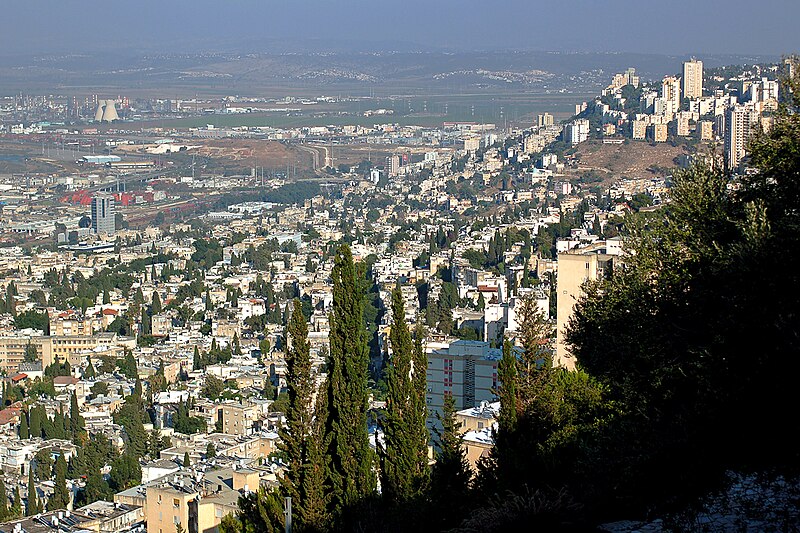
Jezreel Valley
valley in Israel

Arabah
thumb|upright=1.25|Date palm plantation in the Israeli Arava
thumb|Southern tip of the Arava with King Hussein International Airport, [[Aqaba and the Gulf of Aqaba seen from Israel]]

Zion
thumb|Zion (1903), Ephraim Moses Lilien
Kidron Valley
valley on the eastern side of The Old City of Jerusalem
Mount Gilboa
mountain range in northern Israel

Ekron
Gath
ancient city and archaeological site mentioned in the Bible and in Akkadian sources

Philistia
Philistia refers to the territory inhabited by the Philistines in Canaan, where they maintained a pentapolis comprising the cities of Gaza, Ashkelon, Ashdod, Ekron, and Gath. For a time, Philistia also included Jaffa, which may have briefly changed hands with Israel before it was ultimately lost to the Neo-Assyrian Empire during Sennacherib's Levantine campaign.
Gihon Spring
main source of water for the Pool of Siloam in the City of David

Abu Ghosh
local council in Israel

Gibeah
thumb|Royal Palace, Tell el-Ful|Tell el-Ful in northern Jerusalem is usually identified with Gibeah of BenjaminGibeah (; Gīḇəʿā; Gīḇəʿaṯ) is the name of three places mentioned in the Hebrew Bible, in the tribes of Benjamin, Judah, and Ephraim respectively.

Gilgal
thumb|Gilgal near the Israeli settlements in the west bank|Israeli settlement of [[Yafit]]
Gibeon
ancient city north of Jerusalem mentioned in the Bible
Desert of Paran
location mentioned in the Hebrew Bible
Tel Jezreel
achaeological site in Israel

Kiriath-Jearim
thumb|Kiryat Ye'arim, 2022|alt=Kiryat Ye'arim, 2022|border|300x300px
Valley of Elah
valley in Israel
Mizpah in Benjamin
city of the tribe of Benjamin referred to in the Hebrew Bible
Ayalon Valley
valley in Israel
Ziklag
Ziklag () is the biblical name of a town in the Negev region in the southwest of what was the Kingdom of Judah. It was a provincial town in the Philistine kingdom of Gath when Achish was king. Its exact location has not been identified with any certainty.
%2C%20p.%20549%20in%20Thomson%2C%201859.jpg)
Anathoth
255px|right
Anathoth is the name of one of the Levitical cities given to "the children of Aaron" in the tribe of Benjamin (; ). Residents were called Antothites or Anetothites.

Geshur
thumb|250px|Location of biblical Geshur (top right area, east of the Sea of Galilee)
.JPG)
Azekah
Azekah (, ʿazēqā) was an ancient town in the Shephela ("lowlands of Judea") guarding the upper reaches of the Valley of Elah, about 26 km (16 mi) northwest of Hebron.

Gilo
thumb|View of Gilo

Adullam
thumb|right|''Khirbet 'Eîd el Mieh'', stone water trough (at the lower site)
Adullam (, ) is an ancient ruin once numbered among the thirty-six cities of Canaan whose kings "Joshua and the children of Israel smote" (Joshua 12:7–24). After that, it fell as an inheritance to the tribe of Judah and was included in the northern division of the Shephelah "lowland" cities of the land of Judah (Joshua 15:35). Adullam is mentioned multiple times in the Hebrew Bible, including events featuring David who took refuge at Adullam, escaping King Saul. At this time Adullam was close to the land of the Philis

Nob
place in the vicinity of Jerusalem

Mahanaim
thumb|Territory of Gad on an 1852 map: Mahanaim can be seen in the northeast corner of the pink-shaded area of Gad
Mahanaim ( Maḥănayīm, "camps") is a place mentioned a number of times by the Bible said to be near Jabbok, in the same general area as Jabesh-gilead, beyond the Jordan River. Although two possible sites have been identified, the precise location of Mahanaim is uncertain. Tell edh-Dhahab el-Gharbi, the western one of the twin Tulul adh-Dhahab tells, is one proposed identification.

Shunem
thumb|Amarna letter mentioning Shunem|right
Shunem or Shunaam ( Šūnēm; in LXX ) was a small village mentioned in the Bible in the possession of the Tribe of Issachar. It was located near the Jezreel Valley, north of Mount Gilboa ().
Khirbet Qeiyafa
Archaeological site
Tomb of Samuel
ancient site in Judea, Palestine
Endor
human settlement

Jabesh-Gilead
Jabesh-Gilead ( Yāḇēš Gilʿāḏ), sometimes shortened to Jabesh, was an ancient Israelite town in Gilead, in northwest Jordan. Jabesh is mentioned several times in the Hebrew Bible primarily in connection with King Saul's battles against the Ammonites and Philistines.
.png)
Ascalon
Ascalon or Ashkelon was an ancient Near East port city on the Mediterranean coast of the southern Levant of high historical and archaeological significance. Its remains are located in the archaeological site of Tel Ashkelon, within the city limits of the modern Israeli city of Ashkelon. Traces of settlement exist from the 3rd millennium BCE, with evidence of city fortifications emerging in the Middle Bronze Age. During the Late Bronze Age, it was integrated into the Egyptian Empire, before becoming one of the five cities of the Philistine pentapolis following the migration of the Sea Peoples.
Zeboim
location mentioned in the Hebrew Bible
Valley of Rephaim
valley

Abel-beth-maachah
thumb|250px|Tel Abel Beth Maacah, picture taken from the road in 1945
Ramathaim-Zophim
Ramathaim-Zophim (), also called Ramah () and Ramatha in the Douay–Rheims Bible translation (Ramathaimsophim in the Vulgate), is a city from the Hebrew Bible, the home town and resting place of prophet Samuel. The name of the town means "the heights of the views."
Jattir
Jattir (Hebrew יַתִּר, pronounced Yattir; Arabic: 'Attir عتّير) is a town in Judea mentioned several times in the Hebrew Bible. It was known as Iethira during the 4th century CE, when it was a Christian town. It is identified with Khirbet Attir, a depopulated Palestinian village and archeological site in the southern Hebron Hills, located in modern-day Israel.
Keilah
Keilah () was a city in the lowlands of the Kingdom of Judah. It is now a ruin known as Khirbet Qeyla near the modern village of Qila, Hebron, east of Bayt Jibrin and about west of Kharas.
Eshtemoa
thumb|Eshtemoa synagogue, an ancient Jewish synagogue found a as-Samu' and dated to the 4th–5th century CE
Abel-meholah
thumb|Jordan Valley around Wadi al-Malih. Abel-meholah is believed to have been located in that area
Abel-meholah (, Avel Mehola) was an ancient city frequently mentioned in the Hebrew Bible (Old Testament of Christianity). It is best known for being the birthplace and residence of the prophet Elisha. It is traditionally located near the Jordan River, south of Beit-She'an.
Shur
location in the Hebrew Bible
Zobah
Zobah or Aram-Zobah () was an early Aramean state and former vassal kingdom of Israel mentioned in the Hebrew Bible that extended northeast of David's realm according to the Hebrew Bible.
Tob
Tob was the name of a place in Transjordan, mentioned in the Hebrew Bible.
Beeroth
town near Jerusalem named in the Bible

En-rogel
Ephrath
thumb | right
Ephrath, Ephrathah and Ephratah are variant spellings of the same Hebrew name () mentioned in the Bible.
Ephrath usually refers to the ancient name for Bethlehem in Judah.
It originally referred to the region around Bethlehem and was later identified with the town itself. (Genesis 35:19, Micah 5:2). A person from Ephrath is called an Ephrathite (as a geographic tribal designation; 1 Sam 17:12; Ruth 1:2).