Category
page 1Breathing abnormalities
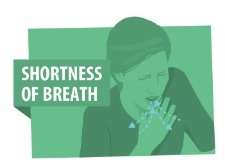
dyspnea
feelings associated with impaired breathing
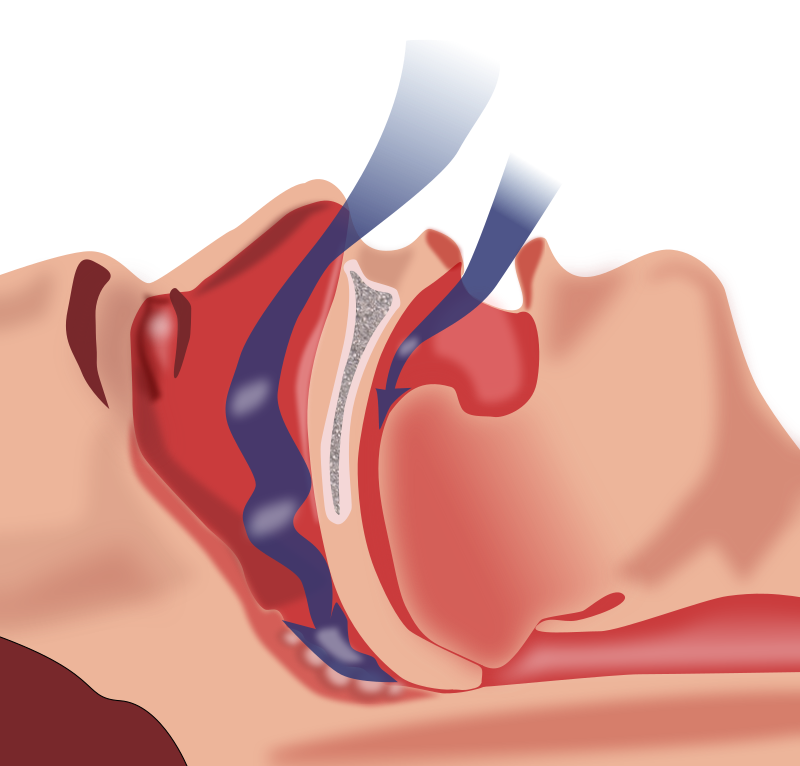
sleep apnea
sleep disorder characterized by repeated cessation and commencing of breathing that disrupts sleep
apnea
Apnea (also spelled apnoea in British English) is the temporary cessation of breathing, which may be voluntary or involuntary. During apnea, there is no movement of the muscles of inhalation, and the volume of the lungs initially remains unchanged. Depending on how blocked the airways are (patency), there may or may not be a flow of gas between the lungs and the environment. If there is sufficient flow, gas exchange within the lungs and cellular respiration would not be severely affected. Voluntarily doing this is called "'''holding one's breath'''".
Apnea may first be diagnosed in childhood,
hyperventilation
Hyperventilation is irregular breathing that occurs when the rate or tidal volume of breathing eliminates more carbon dioxide than the body can produce. This leads to hypocapnia, a reduced concentration of carbon dioxide dissolved in the blood. The body normally attempts to compensate for this homeostatically, but if this fails or is overridden, the blood pH will rise, leading to respiratory alkalosis. This increases the affinity of oxygen to hemoglobin and makes it harder for oxygen to be released into body tissues from the blood. The symptoms of respiratory alkalosis include dizziness, tingl

tachypnea
Tachypnea, also spelt tachypnoea, is a respiratory rate greater than normal, resulting in abnormally rapid and shallow breathing.
Kussmaul breathing
hyperventilation associated with metabolic acidosis
hypoventilation
Hypoventilation (also known as respiratory depression) occurs when ventilation is inadequate (hypo meaning "below") to perform needed respiratory gas exchange. By definition it causes an increased concentration of carbon dioxide (hypercapnia) and respiratory acidosis. Hypoventilation is not synonymous with respiratory arrest, in which breathing ceases entirely and death occurs within minutes due to hypoxia and leads rapidly into complete anoxia, although both are medical emergencies. Hypoventilation can be considered a precursor to hypoxia, and its lethality is attributed to hypoxia with carbo
Cheyne–Stokes respiration
symptom
orthopnea
Orthopnea or orthopnoea is shortness of breath (dyspnea) that occurs when lying flat, causing the person to have to sleep propped up in bed or sitting in a chair. It is commonly seen as a late manifestation of heart failure, resulting from fluid redistribution into the central circulation, causing an increase in pulmonary capillary pressure and causing difficulty in breathing. It is also seen in cases of abdominal obesity or pulmonary disease. Orthopnea is the opposite of platypnea, shortness of breath that worsens when sitting or standing upright.
congenital central hypoventilation syndrome
Human disease
agonal respiration
abnormal pattern of breathing (not related to death rattle)
bradypnea
Bradypnea is abnormally slow breathing. It is the opposite of tachypnea.
hypopnea
Hypopnea is overly shallow breathing or an abnormally low respiratory rate. Hypopnea is typically defined by a decreased amount of air movement into the lungs and can cause hypoxemia (low levels of oxygen in the blood.) It commonly is due to partial obstruction of the upper airway, but can also have neurological origins in central sleep apnea. (Or if a person has sleep apnea caused by both causes, it is variously referred to by a number of names, such as mixed sleep apnea or complex sleep apnea.)
mouth breathing
breathing method in humans
breath holding spell
involuntary or voluntary pause in breathing
hyperpnea
Hyperpnea, or hyperpnoea (forced respiration), is increased volume of air taken during breathing. It can occur with or without an increase in respiration rate. It is characterized by deep breathing. It may be physiologic—as when required by oxygen to meet metabolic demand of body tissues (for example, during or after heavy exercise, or when the body lacks oxygen at high altitude or as a result of anemia, or any other condition requiring more respiration)—or it may be pathologic, as when sepsis is severe or during pulmonary edema. Hyperpnea is further characterized by the required use of muscle
.jpg)
platypnea
thumb | right | alt=shortness of breath | shortness of breath
Platypnea or platypnoea is shortness of breath (dyspnea) that is relieved when lying down, and worsens when sitting or standing upright. It is the opposite of orthopnea. The condition was first described in 1949 and named in 1969.
upper airway resistance syndrome
sleep disorder
shallow breathing
the drawing of minimal breath into the lungs, usually by drawing air into the chest area using the intercostal muscles rather than throughout the lungs via the diaphragm; can result in or be symptomatic of rapid breathing and hypoventilation
Trepopnea
Trepopnea is dyspnea (shortness of breath) that is sensed while lying on one side but not on the other (lateral recumbent position). It results from disease of one lung, one major bronchus, or chronic congestive heart failure that affects only a side of breathing. Patients with trepopnea in most lung diseases prefer to lie and sleep on the opposite side of the diseased lung, as the gravitation increases perfusion of the lower lung. Increased perfusion in diseased lung would increase shunting and hypoxemia, resulting in worsening shortness of breath when lying on the affected lung. To maximize
Brachycephalic syndrome
Condition affecting short-nosed dogs and cats
apnea of prematurity
human disease
Getting the wind knocked out of you
thumb|upright|Approximate location of the solar plexus
Getting the wind knocked out of you is an idiom that refers to the difficulty of breathing and temporary paralysis of the diaphragm caused by phrenospasm, the reflexive diaphragmatic spasm that occurs when sudden force is applied to the upper central region of the abdomen and the solar plexus. This often happens in contact sports, from a forceful blow to the abdomen, or by falling on the back.
ataxic respiration
Abnormal pattern of breathing
labored breathing
abnormal respiration characterized by evidence of increased effort to breathe