Category
page 1Buddhas

The Buddha
Indian philosopher and the founder of Buddhism (623 or 563 BCE – 543 or 483 BCE)

Padmasambhava
thumb|Rewalsar Lake#Colossus of Padmasambhava|Colossus of Padmasambhava, 123 ft. (37.5 m) high, in mist overlooking [[Rewalsar Lake, Himachal Pradesh, India]]

Panchen Lama
priest in Tibetan Buddhism
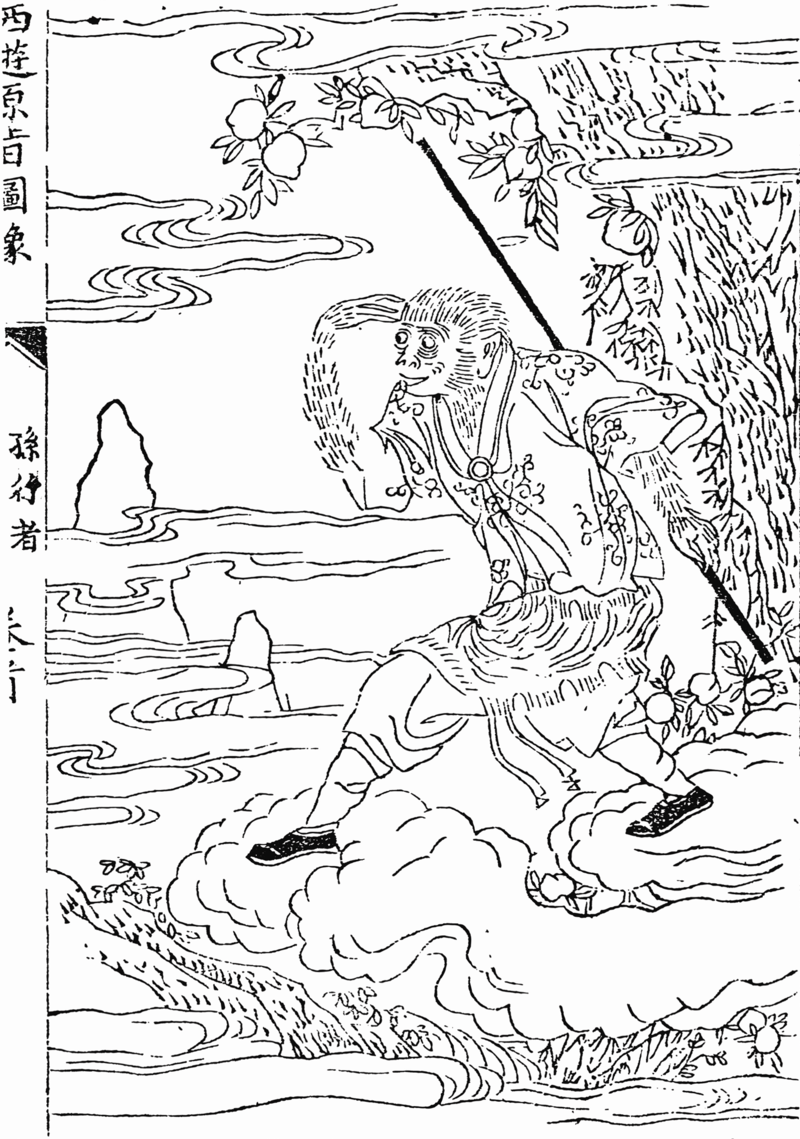
Sun Wukong
mythical character from Journey to the West

Nichiren
was a Japanese Buddhist monk and philosopher of the Kamakura period. His teachings form the basis of Nichiren Buddhism, a unique branch of Japanese Mahayana Buddhism based on the Lotus Sutra.

Vairocana
Vairocana ("The Sun", "Solar" or "Shining" in Sanskrit), also known as Mahāvairocana (Great Sun), is a major Buddha from Mahayana and Vajrayana Buddhism. He is often compared to the Sun, because both bestow their light impartially upon all beings. However, unlike the Sun, whose light can be blocked, and which disappears at night, Vairocana's light is omnipresent, impossible to block, and shines eternally. Hence, he is called the "Great Sun". In East Asian Buddhism, Vairocana is called () or ().

Budai
Budai is a nickname given to the historical Chinese monk Qieci () in the Later Liang Dynasty, who is often identified with and venerated as the future Buddha Maitreya in Chan Buddhism and Buddhist scripture. With the spread of Chan Buddhism, he also came to be venerated in Vietnam, Korea, and Japan.
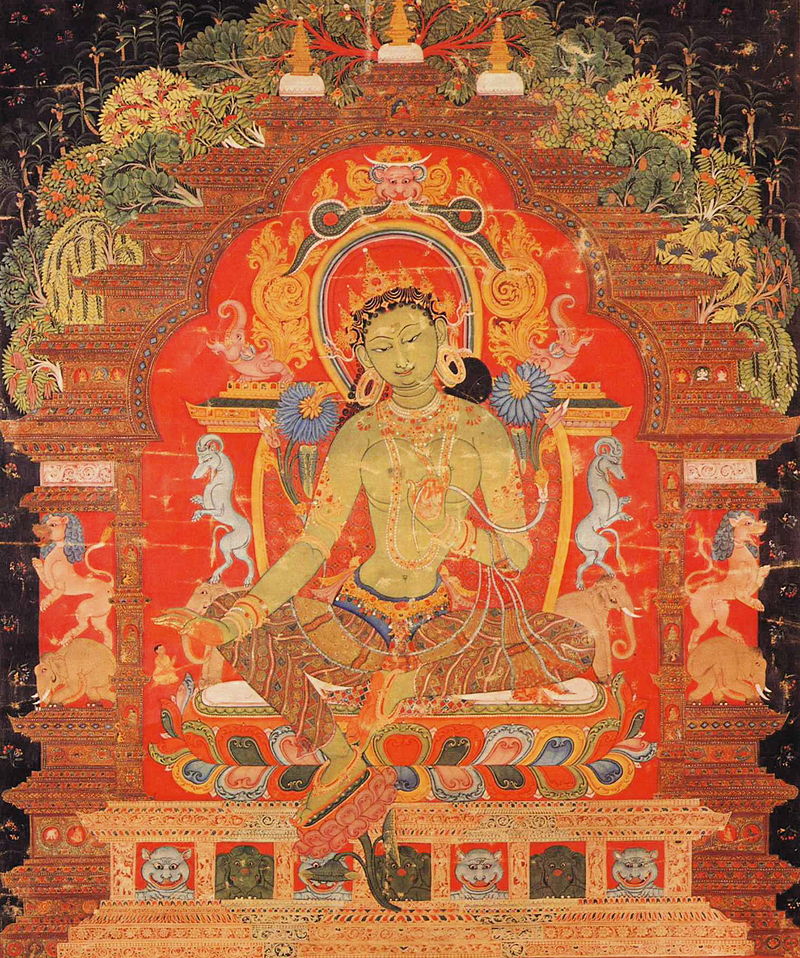
Tārā
female Bodhisattva

Tathāgata
thumb|397x397px|Tathagata, Gautama Buddha|Shakyamuni Buddha in a [[thangka painting showing the avadana legend scenes]]
Tathāgata (), translated into Chinese as Rulai () and English as Thus Come One, is a Pali and Sanskrit word used in ancient India for a person who has attained the highest religious goal. Gautama Buddha, the founder of Buddhism, used it when referring to himself or other past Buddhas in the Pāli Canon. Likewise, in the Mahayana corpus, it is an epithet of Shakyamuni Buddha and the other celestial buddhas. The term is often thought to mean either "one who has thus gone" (tathā

Akshobhya
alt=Akshobhya|thumb|Akshobhya
thumb|Renge-in Tanjō-ji
thumb|Statue of Akṣobhya in Huayan Temple (Datong)| Huayan Temple in [[Shanxi, China, one out of a set depicting the Five Tathāgatas]]
Five Tathagatas
emanations/representations of the five qualities of the Adi-Buddha: Vairocana, Amoghasiddhi, Amitābha, Ratnasambhava, Akshobhya
Amoghasiddhi
Amoghasiddhi (Devanagari: अमोघसिद्धि) is one of the Five Wisdom Buddhas of the Mahayana and Vajrayana tradition of Buddhism. He is associated with the accomplishment of the Buddhist path and of the destruction of the poison of envy. His name means Unfailing Accomplishment. His consort is Tara, meaning Liberator and his mounts are garudas. He belongs to the family of karma whose family symbol is the double vajra.
Bhaiṣajyaguru Buddha
Bhaiṣajyaguru (, , , , , ), or Bhaishajyaguru, formally Bhaiṣajya-guru-vaiḍūrya-prabha-rāja ("Medicine Master and King of Lapis Lazuli Light"; , , , ), is the Buddha of healing and medicine in Mahāyāna Buddhism. Commonly referred to as the "Medicine Buddha", he is described as a doctor who cures suffering (Pali/Sanskrit: dukkha/duḥkha) using the medicine of his teachings.

Ratnasambhava
Ratnasambhava (, lit. "Jewel-Born") is one of the Five Dhyani Buddhas (or "Five Meditation Buddhas") of Mahayana and Vajrayana or Tantric Buddhism. Ratnasambhava's mandalas and mantras focus on developing equanimity and equality and, in Vajrayana Buddhist thought is associated with the attempt to destroy greed and pride. His consort is Mamaki and his mount is a horse or a pair of lions.
.jpg)
Dīpankara Buddha
Dipankara (Pali: Dīpaṅkara; Sanskrit: ', "Lamp bearer") or Dipankara Buddha''' is one of the Buddhas of the past. He is said to have lived on Earth four asankheyyas and one hundred thousand kalpas ago. According to Buddhists, Dipankara was a previous Buddha who attained Enlightenment eons prior to Gautama Buddha, the historical Buddha.

Ādibuddha
thumb|upright=1.2|Vajradhara, the main Ādibuddha, depicted in the Sarma (New Translation) schools of Tibetan Buddhism

Trikaya
The Trikāya (, lit. "three bodies"; , Jyutping: saam1 san1, ) is a fundamental Buddhist doctrine that explains the multidimensional nature of Buddhahood. As such, the Trikāya is the basic theory that grounds the Mahayana buddhology, that is, the theology of Buddhahood.
.jpeg)
buddhahood
thumb|The Buddha|Buddha Śākyamuni, in Greco-Buddhist style, –2nd century CE, [[Gandhara]]
thumb|A painting of the Adi-Buddha|primordial Buddha, Vajradhāra, of [[Tibetan Buddhism]]

Vajradhara
thumb|right|18th-century Chinese statue of Vajradhara made with wood and lacquer
Yeshe Tsogyel
Semi-mythical female deity in Tibetan Buddhism

ushnisha
The ushnisha (, Pali: uṇhīsa) is a protuberance on top of the head of a Buddha. In Buddhist literature, it is sometimes said to represent the "crown" of a Buddha, a symbol of Enlightenment and status the King of the Dharma.

Vajrayogini
right|thumb|280px|Painting of Vajrayoginī in the form of Nāropa's Ḍākinī

Prabhutaratna
thumb|Prabhūtaratna and Shakyamuni in the jeweled stupa; stele, dated 518 CE, Northern Wei. [[Guimet Museum]]
Prabhūtaratna (Skt: प्रभूतरत्न; Traditional Chinese: 多寶如来 or 多寶佛; Simplified Chinese: 多宝如来 or 多宝佛; pinyin: Duōbǎo Rúlái or Duōbǎo Fó; Japanese romaji: Tahō Nyorai or Tahō Butsu), translated as Abundant Treasures or Many Treasures, is the Buddha who appears and verifies Shakyamuni's teachings in the Lotus Sutra and the Samantabhadra Meditation Sutra.
pratyekabuddhayāna
Pratyekabuddhayāna (Sanskrit: प्रत्येकबुद्धयान; ) is a Buddhist term for the mode or vehicle of enlightenment of a pratyekabuddha or paccekabuddha (Sanskrit and Pali respectively), a term which literally means "solitary buddha" or "a buddha on their own" (prati- each, eka-one). The pratyekabuddha is an individual who independently achieves liberation without the aid of teachers or guides and who does not teach others. Pratyekabuddhas may give moral teachings but do not bring others to enlightenment. They leave no sangha (i.e. community) as a legacy to carry on the Dhamma (e.g. Buddha's teachin
miracles of Gautama Buddha
Supernatural feats and abilities attributed to Gautama Buddha by the Buddhist scriptures
urna
thumb|The urna on the Amitābha [[Great Buddha of Kamakura.]]
Medhaṅkara
second of the 27 buddhas
Thirteen Buddhas
Japanese grouping of Buddhist deities
Kaundinya Buddha
fifth of 28 Buddhas
Padumuttara Buddha
thirteenth of twenty-eight Buddhas
Nairatmya
right|thumb|180px|Nairatmya, Central Tibet, sixteenth century. Gilt [[copper inset with turquoise, painted with red pigment, H9.25 in. (23.5 cm). Los Angeles County Museum of Art, From the Nasli and Alice Heeramaneck Collection, purchase, M.70.1.4. Nairatmya represented as a seated yogini, her face ablaze with all-seeing wisdom.]]
Samantabhadrī
thumb|265px|Samantabhadri in union with Samantabhadra
Sumedha Buddha
Fourteenth of twenty-seven Buddhas
Phussa Buddha
According to Theravada Buddhism's Pali canon's Buddhavamsa and its commentary, Phussa is the twenty-first of twenty-seven Buddhas who preceded the historical Gotama Buddha. He was also the second Buddha of the Maṇḍa kalpa.
Taṇhaṅkara
Taṇhaṅkara or Taṇhaṅkara Buddha is the first of the twenty-seven Buddhas who preceded the historical Gotama Buddha and the earliest known Buddha. He was also the first Buddha of the Sāramaṇḍa kalpa.
Saraṇaṅkara Buddha
Saraṇaṅkara is the third of the twenty-seven buddhas who preceded the historical Gotama Buddha in some traditions. He was also the third Buddha of the Sāramaṇḍa kalpa and the predecessor of Dīpaṃkara Buddha.
Eternal Buddha
according to the Lotus Sutra, Gautama Buddha as a transcendent entity who has in fact attained enlightenment eons ago
Prajñāpāramitā Devī
Buddhist goddess that symbolizes and embodies Prajñāpāramitā, the perfection of transcendent wisdom
Lokesvararaja
'''' was the 54th Buddha in the history of existence, according to the Larger Sutra of Immeasurable Life,'' long before Shakyamuni Buddha came and established what we know as Buddhism. He is known for teaching the Dharma to King Dharmakara, who was so impressed that he became a monk, and later achieved Enlightenment himself as Amitabha Buddha.
Maṅgala Buddha
sixth of 28 Buddhas before Siddhartha Gautama
Tissa Buddha
twentieth of twenty-eight buddhas