Category
page 1Calamoideae
%20(5661614812).jpg)
rattan
thumbnail|Calamus thwaitesii in southwestern [[India]]
thumb|Juvenile Calamus oblongus subsp. mollis in a forest [[understory in the Philippines]]

Calamoideae
Calamoideae is a subfamily of flowering plant in the palm family found throughout Central America, South America, Africa, India, China, Southeast Asia and Australia. It is represented by 21 genera - containing nearly a quarter of all species in the palm family - including the largest genus, Calamus, the type genus of the group. Only four are found in the New World while the rest are Old World denizens, usually found in equatorial swampland or along tropical coastlines.

Daemonorops
thumb|Calamus draco, syn. Daemonorops draco

Eugeissona
Eugeissona is a clustering genus of flowering plant in the palm family native to Borneo, Thailand and Malaysia. The six monoecious species provide a wide range of local uses and are commonly called bertam or wild Bornean sago. The genus is the sole representative of the Eugeissoninae having very few obvious relatives; the hermaphrodite and staminate flowers are also found in Metroxylon, however the other specialized characteristics are unique suggesting an early split and differentiation from other members of the Calameae. Fossilized pollen belonging to these plants has been recovered in the l

Myrialepis paradoxa
Myrialepis is a monotypic genus of flowering plant in the palm family. The single species, Myrialepis paradoxa, is native to Southeast Asia. The genus name is a combination of the Greek words meaning "innumerable" and "scale", a description of the fruit, and the epithet is Latin for "paradox".
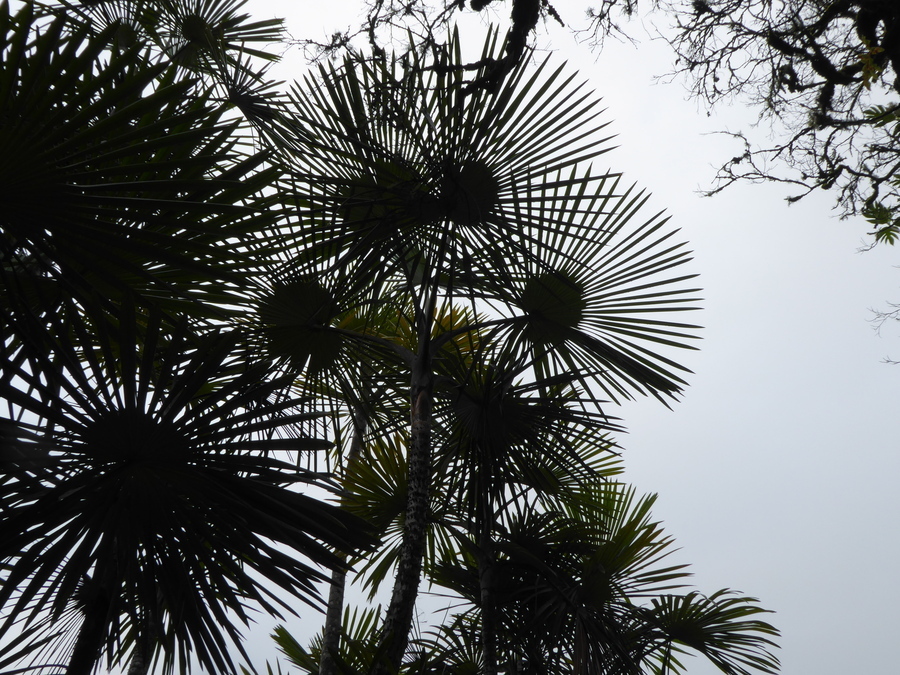
Mauritiella
Mauritiella is a dioecious genus of flowering plant in the palm family found in South America where it is commonly called buriti. It is named after the similar and closely related genus Mauritia.
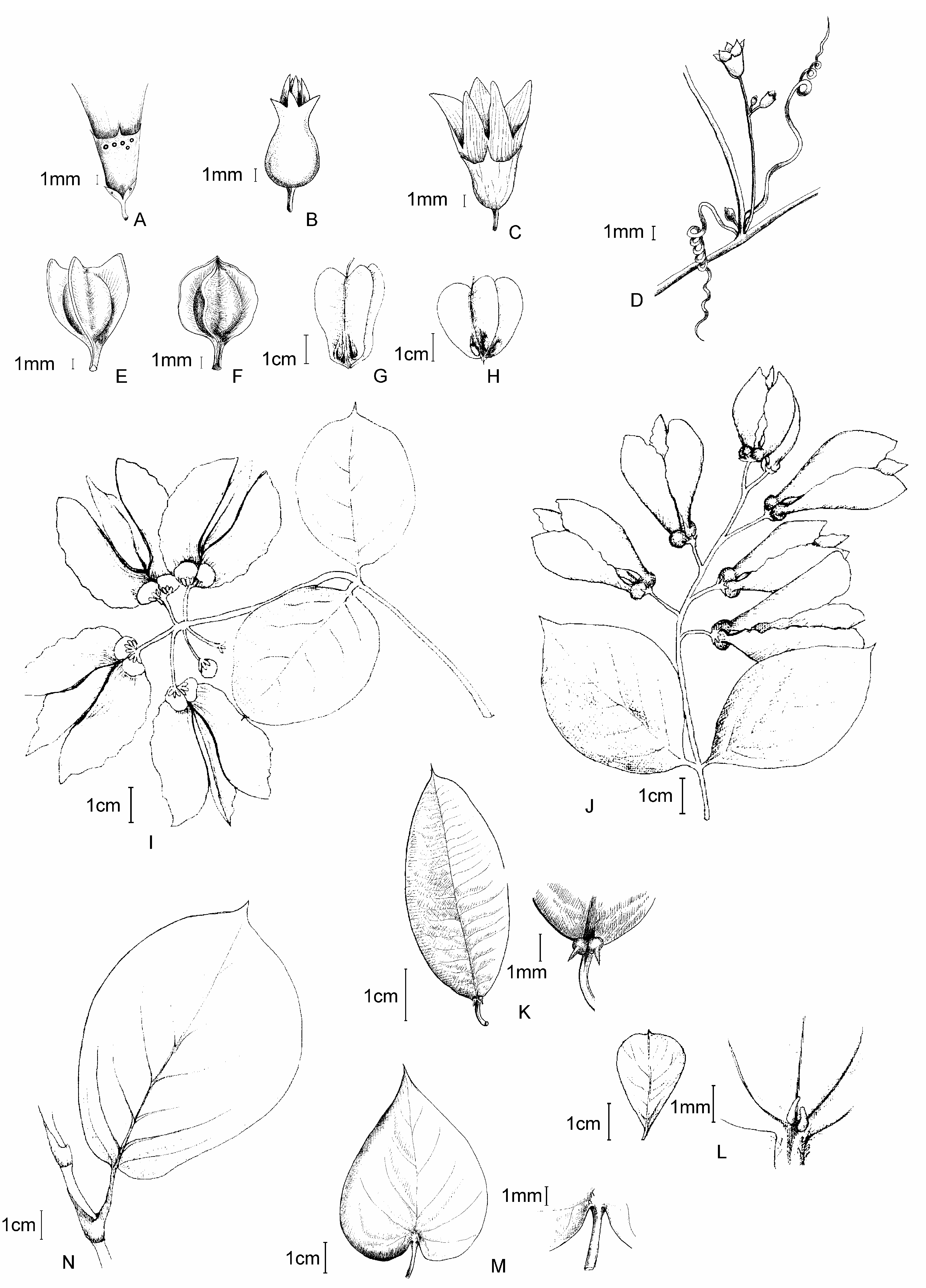
Pigafetta
Pigafetta is a genus of two palm species in the family Arecaceae.
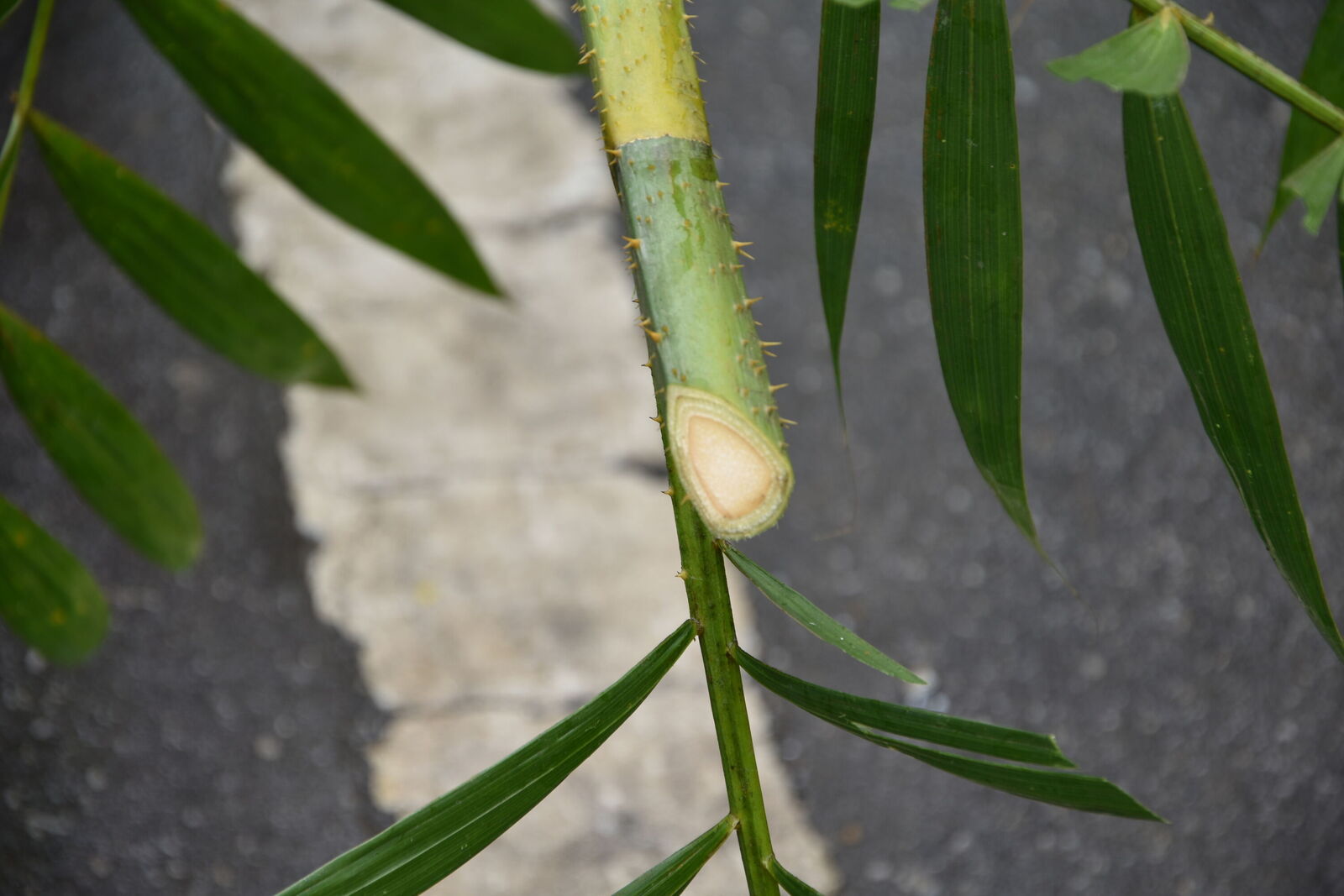
Plectocomiopsis
Plectocomiopsis is a dioecious genus of flowering plant in the palm family found in Indochina, Malaysia, Borneo and Sumatra. Hapaxanthic and armed with spines, they are a climbing rattan, closely related to the Myrialepis palms. The name is Greek for "similar to Plectocomia", another close relative.
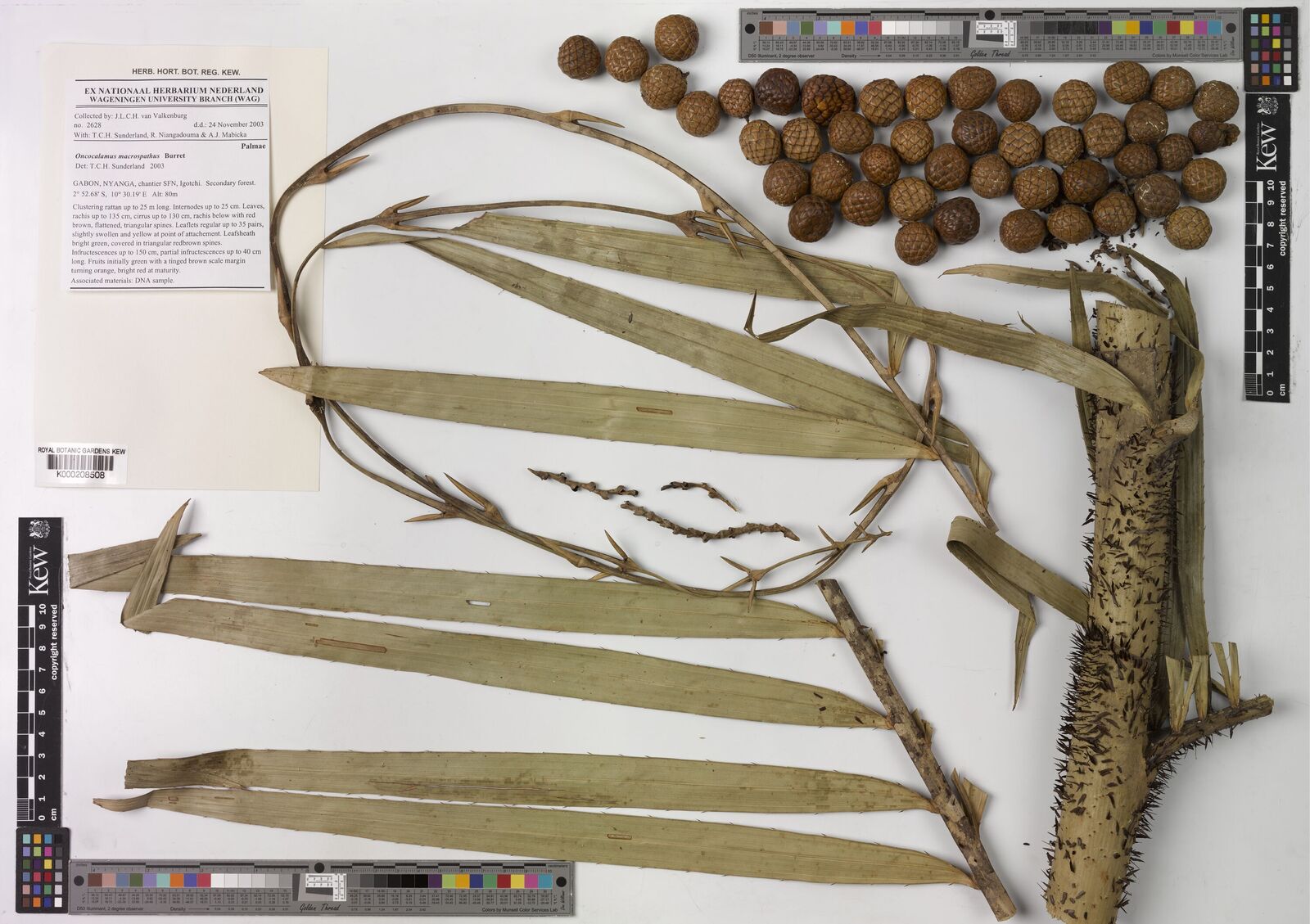
Oncocalamus
Oncocalamus is a monoecious genus of flowering plants in the palm family found in western Africa. The genus is the lone member of the Oncocalaminae; once placed with the vegetatively similar Eremospatha and Laccosperma in the Ancistrophyllinae, it is now isolated based on their unusual flowers and arrangement. Such a placement argues for a long and complex evolutionary process in the Calamoideae with heavy extinction rates. The Greek genus name combines "horn" and "capsule".
.jpg)
Ceratolobus
thumb|Calamus glaucescens, formerly Ceratolobus glaucescens
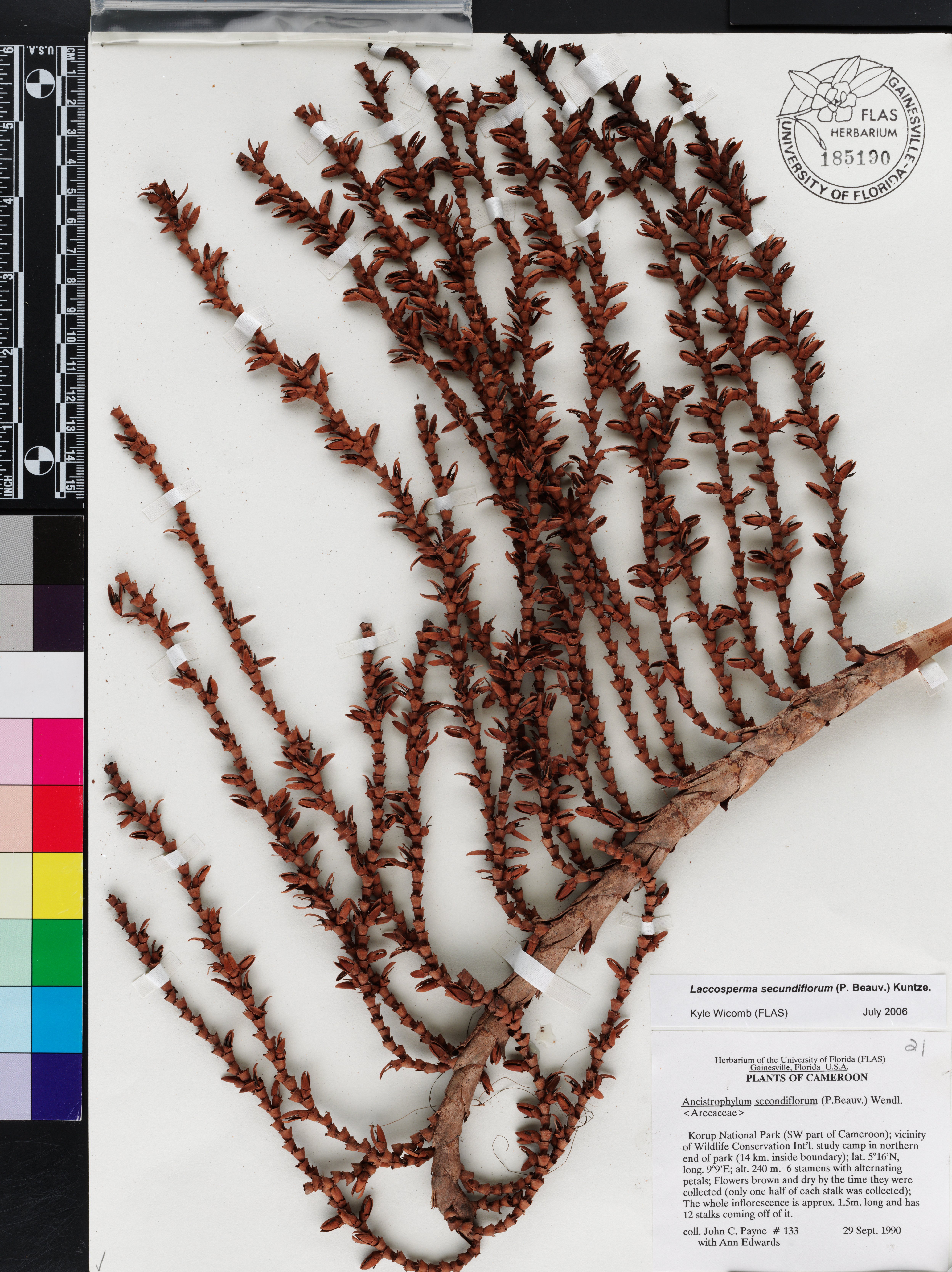
Laccosperma secundiflorum
species of plant

Mauritiella aculeata
species of plant
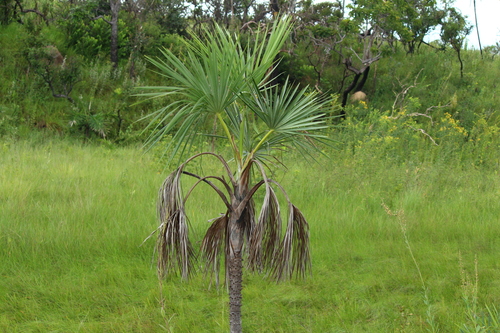
Mauritiella armata
species of plant

Eleiodoxa
Eleiodoxa is a monotypic genus of flowering plant in the palm family found in Southeast Asia. The only species, Eleiodoxa conferta, is a dioecious, swamp-dwelling plant, commonly called by Malay as asam kelubi or asam paya. While five species names have been published, the other four are usually recognized as synonyms of the lectotype E. conferta. The genus is named from two Greek words meaning "water" and "glory" and the species name is Latin for "congested", an allusion to the flower spike.