Category
page 1Cantonese words and phrases
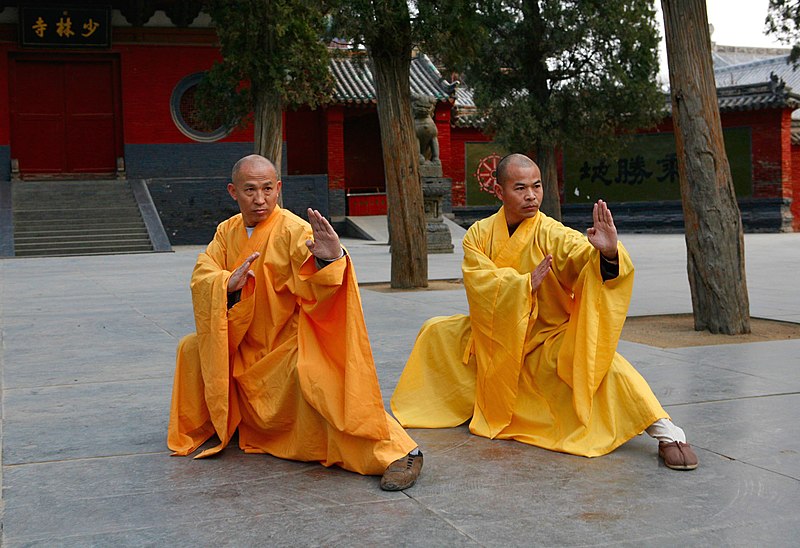
kung fu
Chinese martial art

wok
300px|thumb|right|upright=1.33|A wok being used for stir frying

wonton
A wonton () is a type of Chinese dumpling commonly found across regional styles of Chinese cuisine. It is also spelled wantan or wuntun, a transliteration from Cantonese (), and wenden from Shanghainese (). Even though there are many different styles of wonton served throughout China, Cantonese wontons are the most popular in the West due to the predominance of Cantonese restaurants overseas.
dim sum
style of Chinese cuisine of bite-sized portions served in small steamer baskets or plates
chow mein
fried noodles
chop suey
dish in overseas Chinese cuisine
char siu
popular style of Cantonese barbecued pork
cha siu bao
Cantonese barbecue-pork-filled bun
tong sui
sweet, warm soup or custard served as a dessert at the end of a meal in Cantonese cuisine
har gow
traditional Cantonese dumpling
Sic bo
Casino game
cha chaan teng
type of Cantonese restaurant
Lo mai gai
Cantonese leaf-wrapped dim sum
lo mein
Cantonese noodle dish
yum cha
Cantonese tradition of brunch involving Chinese tea and dim sum

Gweilo
Gweilo or '''''' (, pronounced ) is a common Cantonese slang term for white people. The term can be literally translated as "ghoul man" or "devil man" and has a history of racially deprecatory and pejorative use, though its modern usage is often in a general and non-derogatory context. The appropriateness of the term and whether it constitutes as an offensive ethnic slur are disputed among both Cantonese speakers and Westerners.
Pai gow
popular Chinese domino game, using tiles traditionally made of ox bone or ebony, in Northern Song dynasty, China (1120)
jau gok
Cantonese style dumplings
lou mei
food
Tai-pan
senior business executive or entrepreneur operating in China or Hong Kong
mo lei tau
type of slapstick humour associated with Hong Kong popular culture
siu mei
generic name in Cantonese cuisine given to meats roasted on spits over an open fire or a huge wood burning rotisserie oven
add oil
Hong Kong English expression
Tong
Chinese immigrant organization
Poon choi
Cantonese meal served in a communal bowl
Amah
servant girl

stilt houses in Hong Kong
kind of stilt house in Tai O, Lantau Island, Hong Kong built on water or on small beaches
Kau cim
Chinese fortune telling practice
Kai-to
thumb|A kai-to sailing between Ma Liu Shui and [[Tap Mun, Hong Kong]]
thumb|A smaller kai-to carrying passengers to the outlying islands off the Sai Kung Peninsula in [[Hong Kong]]
thumb|Passengers boarding a larger kai-to heading to Peng Chau at the [[Discovery Bay Kai-to pier in Nim Shue Wan.]]
The kai-to, sometimes kaito or kaido () is a type of small, motorised ferry that operates in Hong Kong. They are usually used to serve remote coastal settlements in the territory's outlying islands.
dai pai dong
Hong Kong open air food stall
Steamed minced pork
Chinese pork dish
mui tsai
young Chinese domestic worker girls/women
Bat lau dung laai
1988 radio announcement about Vietnamese boat people in Hong Kong
tong lau
type of East Asian tenement
Punti
Punti () is a Cantonese endonym referring to the native Cantonese people of Guangdong and Guangxi.