Category
page 1Cenomanian first appearances

snake
Snakes are elongated limbless reptiles of the suborder Serpentes. Cladistically squamates, snakes are ectothermic, amniote vertebrates covered in overlapping scales much like other members of the group. Many species of snakes have skulls with several more joints than their lizard ancestors and relatives, enabling them to swallow prey much larger than their heads (cranial kinesis). To accommodate their narrow bodies, snakes' paired organs (such as kidneys) appear one in front of the other instead of side by side, and most only have one functional lung. Some species retain a pelvic girdle with a
Phasmatodea
thumb|upright|Phasmid in marginal forest on a pitcher plant in the [[Philippines]]
The Phasmatodea (also known as Phasmida or Phasmatoptera) are an order of insects whose members are variously known as stick insects, stick bugs, walkingsticks, stick animals, or bug sticks. They are also occasionally referred to as '''Devil's darning needles, although this name is shared by both dragonflies and crane flies. They can be generally referred to as phasmatodeans, phasmids, or ghost insects, with phasmids in the family Phylliidae called leaf insects, leaf-bugs, walking leaves, or bug leaves'. The ord

Emydidae
Emydidae (Latin (freshwater tortoise) + Ancient Greek (, "appearance, resemblance")) is a family of testudines (turtles) that includes close to 50 species in 10 genera. Members of this family are commonly called terrapins, pond turtles, or marsh turtles. Several species of Asian box turtles were formerly classified in the family; however, revised taxonomy has separated them to a different family (Geoemydidae). As currently defined, the Emydidae are entirely a Western Hemisphere family, with the exception of two species of pond turtle.
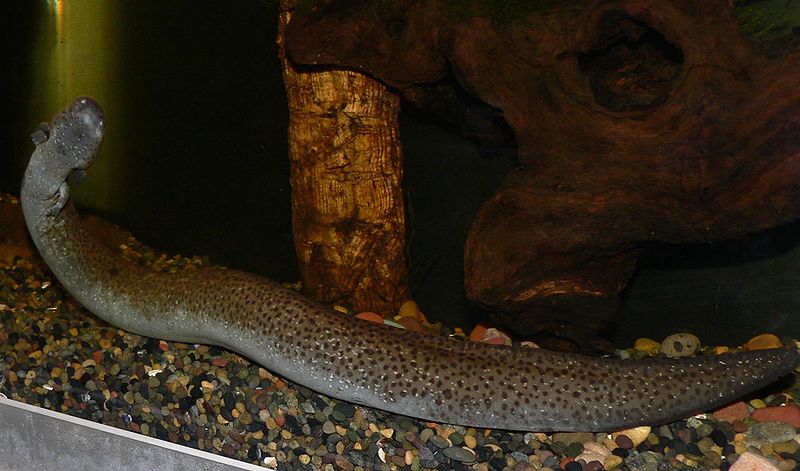
Sirenidae
Sirenidae, the sirens, are a family of neotenic aquatic salamanders. Family members have very small fore limbs, and lack hind limbs altogether. In one species, the skeleton in their fore limbs is made of only cartilage. In contrast to most other salamanders, they have external gills bunched together on the neck in both larval and adult states. Sirens are found only in the Southeastern United States and northern Mexico.
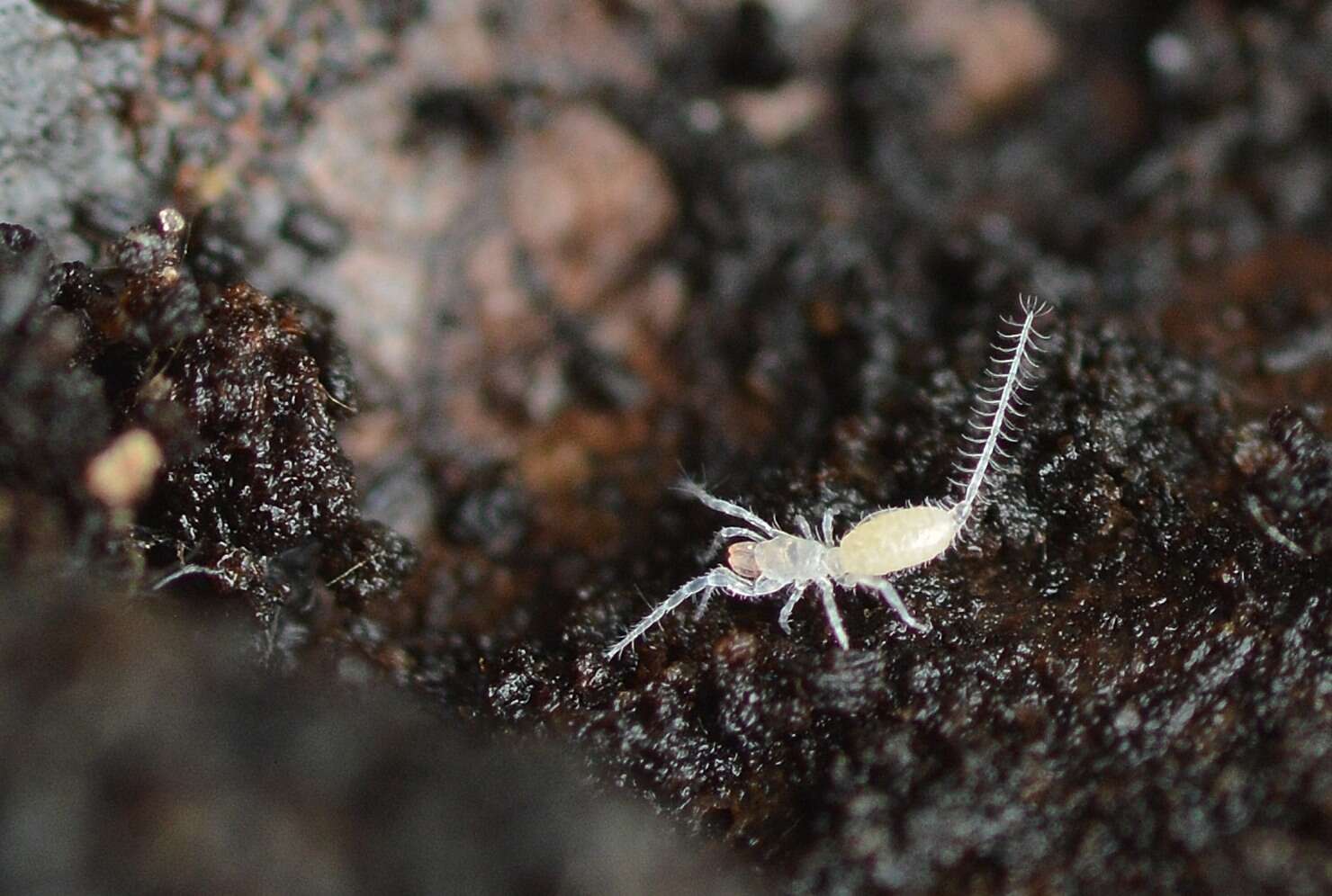
Palpigradi
Palpigradi is an order of very small arachnids commonly known as microwhip scorpion or palpigrades.
Alethinophidia
Common names: advanced snakes.
The Alethinophidia are an infraorder of snakes that includes all snakes other than blind snakes and thread snakes. Snakes have long been grouped into families within Alethinophidia based on their morphology, especially that of their teeth. More modern phylogenetic hypotheses using genetic data support the recognition of 19 extant families (see below), although the taxonomy of alethinophidian snakes has long been debated, and ultimately the decision whether to assign a particular clade to a particular Linnaean rank (such as a superfamily, family, or subfamily) is

Buthidae
The Buthidae are the largest family of scorpions, containing about 100 genera and 1300 species as of 2025. A few very large genera (Ananteris, Centruroides, Compsobuthus, or Tityus) are known, but a high number of species-poor or monotypic ones also exist. New taxa are being described at a rate of several new species per year. They have a cosmopolitan distribution throughout tropical and subtropical environments worldwide. Together with four other families, the Buthidae make up the superfamily Buthoidea. The family was established by Carl Ludwig Koch in 1837.

Majoidea
Majoidea is a is a superfamily of crab which contains spider crabs, along with the decorator crabs.

Aigialosauridae
Aigialosauridae (from Greek, aigialos, meaning "seashore", and sauros, "lizard") is a family of Late Cretaceous semiaquatic pythonomorph lizards closely related to the mosasaurs. Regarded by some paleontologists as a distinct monophyletic group and by others as an adaptive grade within the basal mosasauroids, recent molecular and morphological data suggests that they are the oldest known members of the lineage leading to the mosasaurs.

Madtsoiidae
Madtsoiidae is an extinct family of mostly Gondwanan snakes with a fossil record extending from early Cenomanian (Upper Cretaceous) to late Pleistocene strata located in South America, Africa, India, Australia and Southern Europe. Madtsoiidae include very primitive snakes, which like extant boas and pythons would likely dispatch their prey by constriction. Genera include some of the longest snakes known such as Vasuki, measuring at least long, and the Australian Wonambi and Yurlunggur. As a grouping of basal forms the composition and even the validity of Madtsoiidae is in a state of flux as ne
Mosasauroidea
Mosasauroidea is a superfamily of extinct marine reptiles that existed during the Late Cretaceous. Basal members of this group consist of small semiaquatic forms with terrestrial limbs ("plesiopedal"), while later members include larger fully aquatic paddle-limbed ("hydropedal") forms commonly known as mosasaurs. These were traditionally grouped within their own separate families, the Aigialosauridae and Mosasauridae respectively. However, phylogenetic studies have since found plesiopedal mosasauroids to be a non-monophyletic group, with some taxa nestled within the mosasaurids. Daniel Madzia

Stomatosuchidae
Stomatosuchidae is an extinct family of neosuchian crocodylomorphs. It is defined as the most inclusive clade containing Stomatosuchus inermis but not Notosuchus terrestris, Simosuchus clarki, Araripesuchus gomesii, Baurusuchus pachecoi, Peirosaurus torminni, or Crocodylus niloticus. Two genera are known to belong to Stomatosuchidae: Stomatosuchus, the type genus, and Laganosuchus. Fossils have been found from Egypt, Morocco, and Niger. Both lived during the Cenomanian stage of the Late Cretaceous. The skulls of stomatosuchids are said to be platyrostral because they have unusually flattened,

Mahajangasuchidae
Mahajangasuchidae is an extinct family of notosuchian crocodyliforms. It currently contains two genera, Mahajangasuchus and Kaprosuchus, both of which lived during the Late Cretaceous in Gondwana. It is defined as the most inclusive clade containing Mahajangasuchus insignis but not Notosuchus terrestris, Simosuchus clarki, Araripesuchus gomesii, Baurusuchus pachecoi, Peirosaurus torminni, Goniopholis crassidens,
Pholidosaurus schaumbergensis, or Crocodylus niloticus. Phylogenetically, Mahajangasuchidae is placed just outside pholidosaurids and more derived neosuchians.
Armaniinae
Armaniinae is subfamily of extinct ant-like hymenopterans known from a series of Cretaceous fossils found in Asia and Africa. It is usually treated as one of the stem-group subfamilies in family Formicidae, although some myrmecologists treat it as a distinct family. A 2007 study analysing petiole and antenna morphology led to the proposal that at least some of the armaniid genera be placed in Sphecomyrminae, although others are unconvinced by the arguments and retain Armaniinae. The subfamily contains seven genera with fourteen described species.
Gebrayelichthyidae
Gebrayelichthyidae is a family of extinct pycnodontid fish, with a superficially shrimpfish-like appearance that lived during the lower Cenomanian.

Coccodontidae
Coccodontidae is a family of extinct pycnodontid fish that lived during the lower Cenomanian. The various genera had massive, curved spines.
Gebrayelichthys
Gebrayelichthys is a genus of pycnodontiform fish of the family Gebrayelichthyidae. It comprises two species, Gebrayelichthys uyenoi and Gebrayelichthys verticalis. Their extremely deep body shape is unique among known fishes, only comparable to some Paleogene tetraodontiformes, and suggests an ostraciiform locomotion.