Category
page 1Centipede families
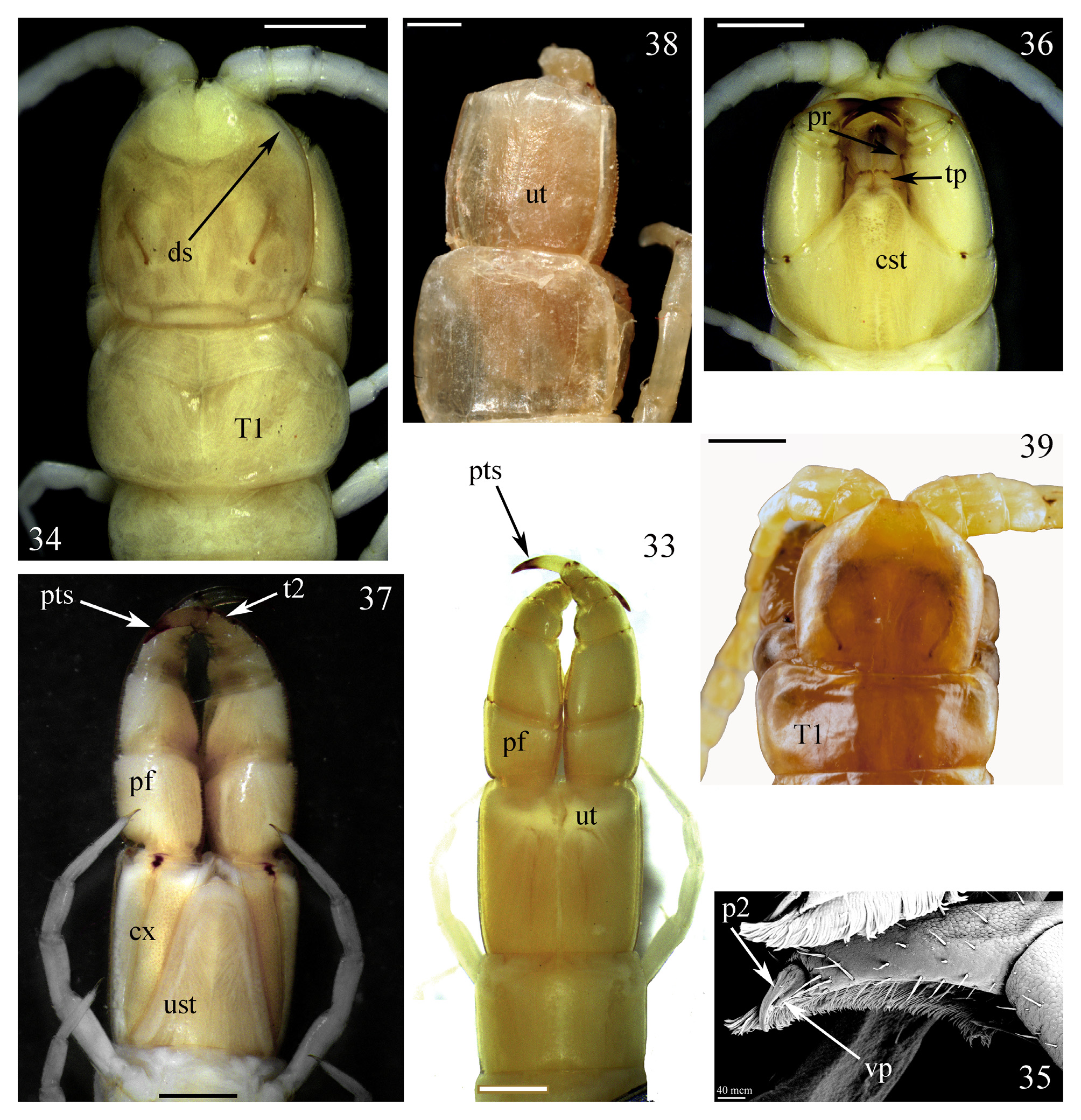
Scolopendridae
Scolopendridae (or, in older documents, Scolopendridæ), from Ancient Greek σκόλοψ (skólops), meaning "thorn", and ἔντερον (énteron), meaning "earthworm", is a family of large centipedes (class Chilopoda).

Scutigeridae
thumb|Scutigera coleoptrata

Lithobiidae
Lithobiidae (from Ancient Greek λίθος (líthos), meaning "stone", and βίος (bíos), meaning "life") is a family of centipedes in the order Lithobiomorpha, containing the following genera:
.jpg)
Geophilidae
thumb|Geophilus sp. mother and brood.
Cryptopidae
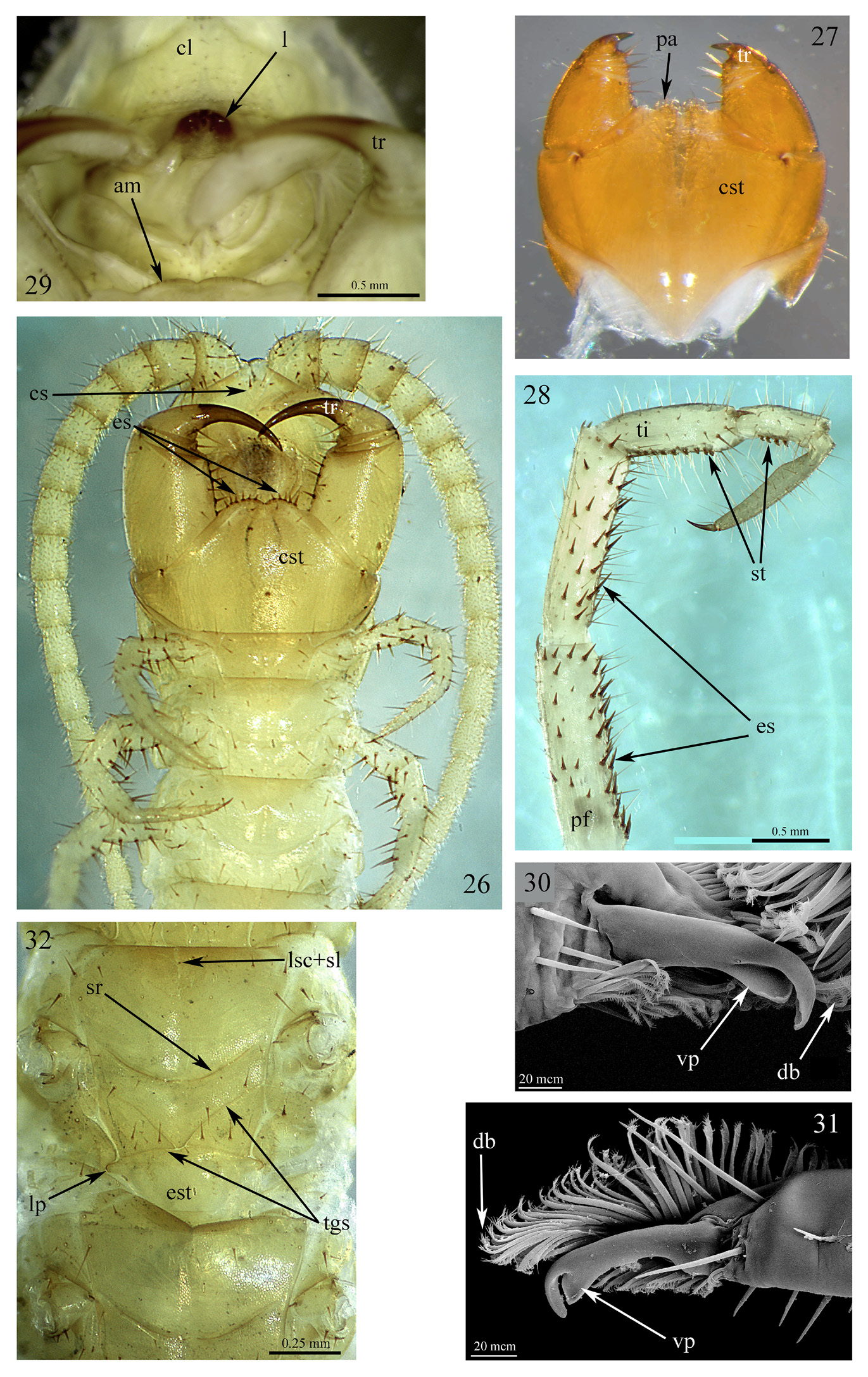
The Cryptopidae are a family of scolopendromorph centipedes. Cryptopids are blind (lacking ocelli) and possess 21 pairs of legs. The genus Cryptops is the numerically largest in the family, comprising over 150 species worldwide.

Ballophilidae
Ballophilidae is a monophyletic group of centipedes belonging to the order Geophilomorpha and superfamily Himantarioidea. Authorities now dismiss Ballophilidae as a family and consider this clade to be a possible subfamily (Ballophilinae) within the family Schendylidae. This clade includes about 40 species in 12 genera. Centipedes in this clade are found in most tropical regions.
Scolopocryptopidae
Scolopocryptopidae is a family of blind centipedes in the order Scolopendromorpha. The number of leg-bearing segments is fixed at 23 for species in this family, which distinguishes the species in this family from all other centipede species. This family includes more than 90 species.
Henicopidae
Henicopidae is a family of stone centipedes in the order Lithobiomorpha. There are about 19 genera and at least 120 described species recognised in the family Henicopidae.

Mecistocephalidae
Mecistocephalidae is a monophyletic family of centipedes in the order Geophilomorpha. This family is the only family in the monotypic suborder Placodesmata. Most species in this family live in tropical or subtropical regions, but some occur in temperate regions. This family is the third most diverse in the order Geophiliomorpha (after Geophilidae and Schendylidae), with about 170 species, including about 130 species in the genus Mecistocephalus.
Dignathodontidae
Dignathodontidae is a monophyletic clade of soil centipedes in the family Geophilidae found in the Mediterranean region, extending to Macaronesia, Caucasus, and western and central Europe. The clade is characterized by a gradually anteriorly tapered body, a short head with non-attenuated antennae, and a poorly sclerotized labrum with tubercles. The number of legs in this clade varies within as well as among species and ranges from 43 pairs (in Henia brevis) to 153 pairs of legs (in Henia devia). Species in this clade tend to have more leg-bearing segments and greater intraspecific variability
Gonibregmatidae
Gonibregmatidae is a family of soil centipedes belonging to the superfamily Geophiloidea. In 2014, a phylogenetic analysis based on morphological and molecular data found this family to be paraphyletic with respect to the families Neogeophilidae and Eriphantidae, which authorities now deem to be junior synonyms for Gonibregmatidae. This family now includes more than 20 species in at least 10 genera.
Schendylidae
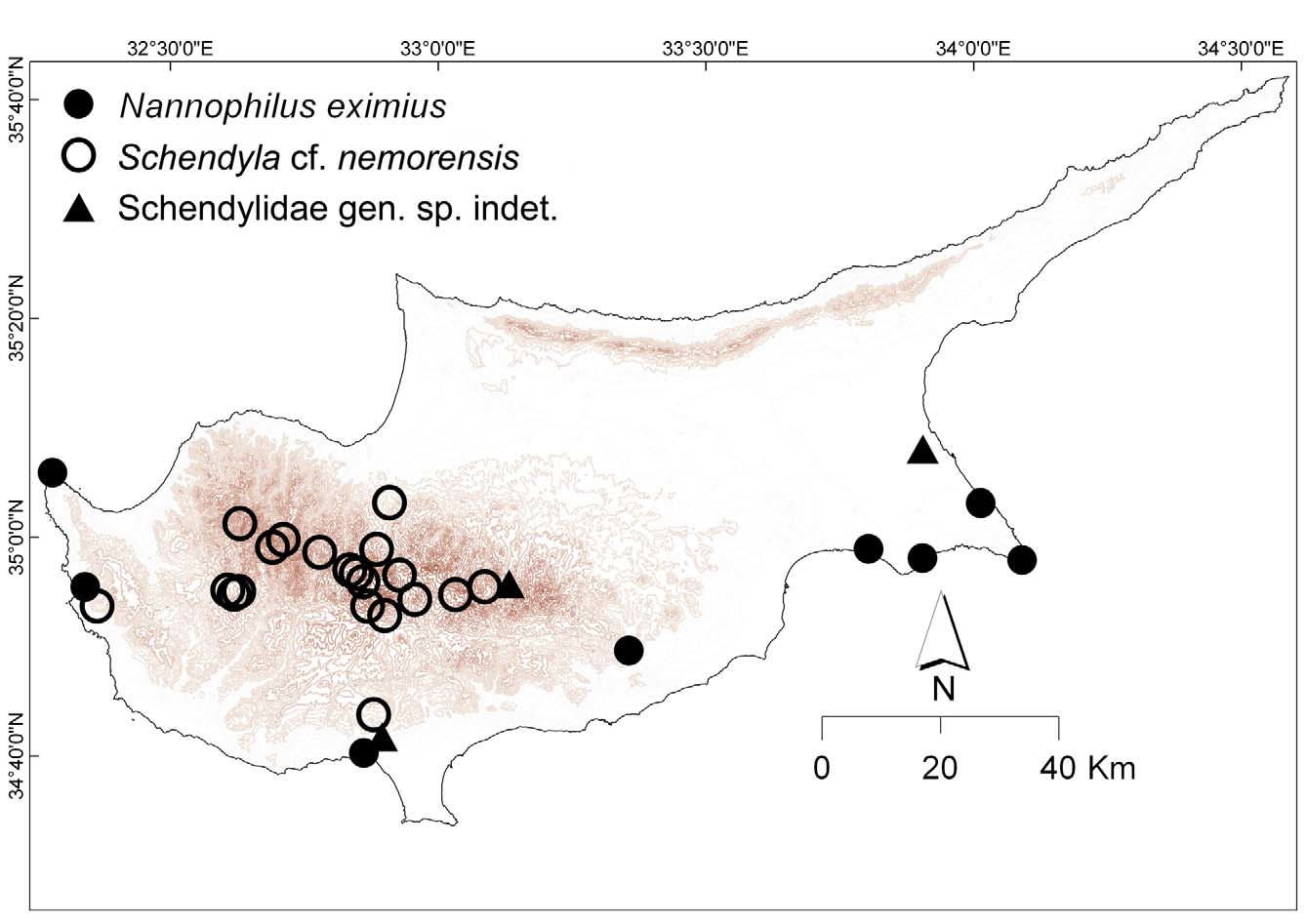
Schendylidae is a family of soil centipedes in the superfamily Himantarioidea and the order Geophilomorpha.

Himantariidae
Himantariidae is a monophyletic family of centipedes in the order Geophilomorpha and superfamily Himantarioidea, found almost exclusively in the Northern Hemisphere. Centipedes in this family feature a short head with a concave labral margin bearing a row of denticles, a single dentate lamella and some pectinate lamellae on each mandible, second maxillae with strongly tapering telopodites and slightly spatulate claws, and a stout forcipular segment with short forcipules and a wide tergite; the ultimate legs usually have no pretarsus, and the female gonopods are distinct and biarticulate.
Oryidae
Oryidae is a monophyletic family of soil centipedes belonging to the superfamily Himantarioidea.
Scutigerinidae
Scutigerinidae is a family of centipedes restricted to southern Africa, Madagascar and Melanesia, containing a single genus, Scutigerina.
Linotaeniidae
Linotaeniidae is a monophyletic clade of soil centipedes in the family Geophilidae found mostly in the temperate regions of the Holarctic as well as the south Andes. Species in the clade Linotaeniidae are characterized by a body that usually tapers toward the anterior tip; mandibles with a single pectinate lamella; second maxillae with coxo-sternite usually undivided and claws without projections; forcipular segment short, with tergite remarkably wide, forcipules evidently tapering; coxal organs opening through distinct pores on the ventral surface of the coxo-pleura. The number of legs in thi
Plutoniumidae
Plutoniumidae is a family of centipedes belonging to the order Scolopendromorpha. Centipedes in this family are blind and have 21 pairs of legs.