Category
page 1Cephalopod families

Octopodidae
The Octopodidae are a family containing the majority of known octopus species (about 175 species).

Ommastrephidae
Ommastrephidae is a family of squid containing three subfamilies, 11 genera, and over 20 species. They are widely distributed globally and are extensively fished for food. One species, Todarodes pacificus, comprised around half of the world's cephalopod catch annually.

Loliginidae
Loliginidae, commonly known as pencil squids, is an aquatic family of squid classified in the order Myopsida.
Sepiolidae
Sepiolidae is a family of bobtail squid encompassing 22 genera in three or four subfamilies. A gladius is absent in subfamily Heteroteuthidinae, and in subfamily Sepiolinae it is reduced, or absent like in genus Euprymna. A third subfamily is Rossiinae, and the genus Choneteuthis is considered to be incertae sedis. Though 79 species have been recognized in the family Sepiolidae, the validity of a few of them has been questioned.
Enoploteuthidae
Enoploteuthidae is a family of squid comprising approximately 40 species in four genera. Most species have a mantle length ranging from . Hooks are present on all arms and tentacles. The family is best known for the large array of photophores throughout the body.

Vampyroteuthidae
Vampyroteuthidae is a family of vampyromorph cephalopods containing the extant vampire squid, Vampyroteuthis infernalis, and the extinct genera Necroteuthis, Provampyroteuthis and Vampyronassa.
Cirroteuthidae
Cirroteuthidae is a family of pelagic cirrate octopuses comprising at least five species in three genera.

Gonatidae
The Gonatidae, also known as armhook squid, are a family of moderately sized squid. The family contains about 19 species in three genera, widely distributed and plentiful in cold boreal waters of the Pacific Ocean. At least one species is known from Antarctic waters, and two from the North Atlantic. The genus Eogonatus was created for the species known as Eogonatus tinro because it did not have hooks on the tentacular club and it has 5 rows of teeth on the radula. Molecular studies in allozymes and mitochondrial DNA have indicated that this species nests within the genus Gonatus, although othe
Sepiadariidae
Sepiadariidae is a family of coleoid cephalopods in the order Sepiolida.
Octopoteuthidae
The Octopoteuthidae are a family of squid comprising two genera. The family is characterized by tentacles which cease to grow after the paralarval stage which leads to the adult having eight arms; thus, members of this family are commonly named as octopus squids.
Neoteuthidae
The Neoteuthidae are a family of squid comprising four monotypic genera. They are thought to be the closest relatives to the famous giant squid (Architeuthis dux).
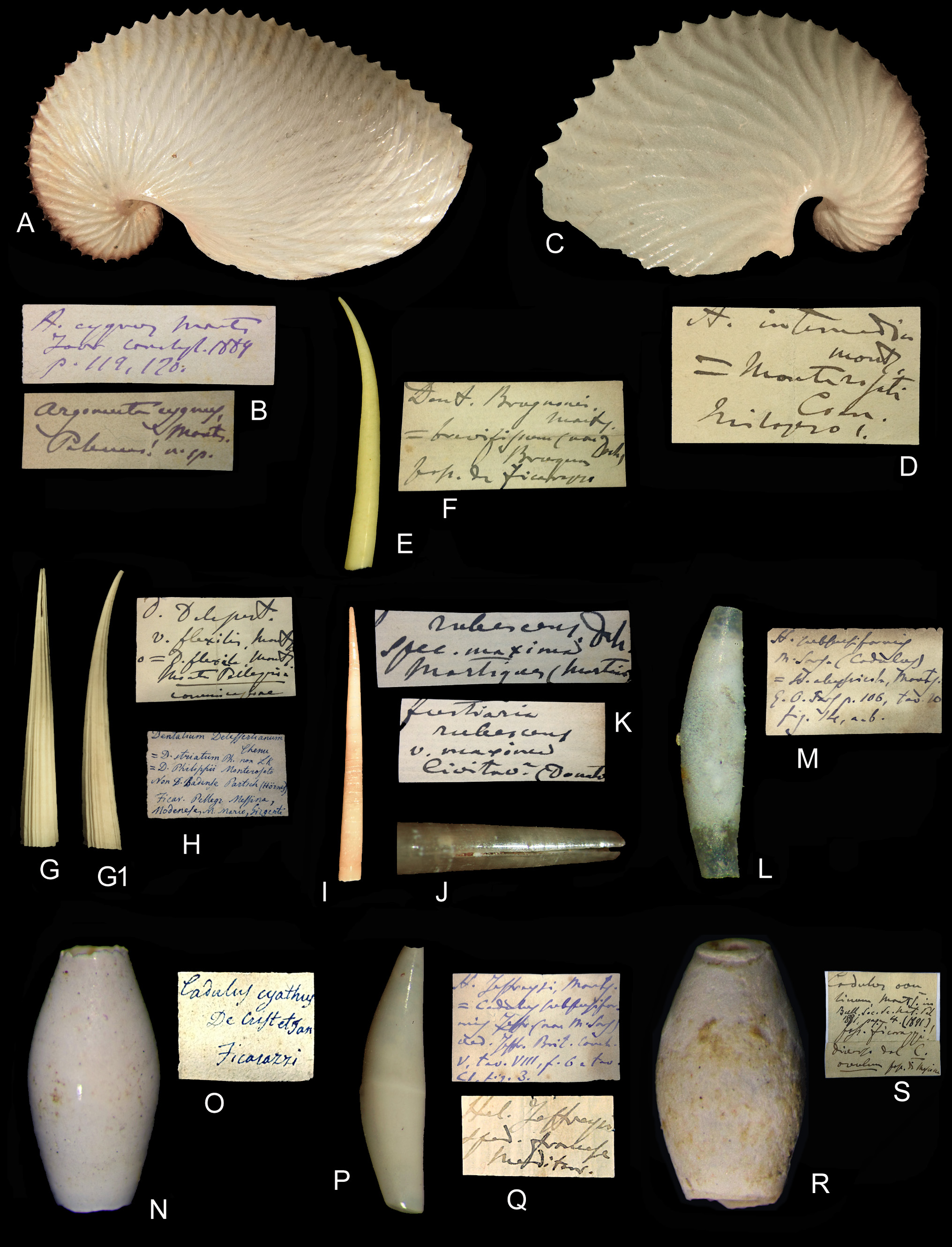
Argonautidae
The Argonautidae are a family of pelagic cephalopods that inhabit tropical and temperate oceans of the world. The family encompasses the modern paper nautiluses of the genus Argonauta along with several extinct genera of shelled octopods. Though argonauts are derived from benthic octopuses, they have evolved to depart the sea floor and live their life-cycle in the open seas.
Lycoteuthidae
The Lycoteuthidae are a family of squid comprising three known genera. They are small muscular squid, characterised by a lack of hooks and by photophores present on the viscera, eyeballs and tentacles. They inhabit tropical and subtropical seas where the diel migrants stay down in the mesopelagic zone during the day and migrate to the surface to feed at night. Some species show strong sexual dimorphism.
Idiosepiidae
Idiosepiidae, also known as the pygmy squids, is a family of squids in the superorder Decapodiformes. They are the smallest known squids.
Histioteuthidae
Histioteuthidae is a family of Oegopsid squid. The family was previously considered to be monotypic but the World Register of Marine Species assigns two genera to this family.

Chiroteuthidae
The Chiroteuthidae are a family of deep-sea squid, generally small to medium in size, rather soft and gelatinous, and slow moving. They are found in most temperate and tropical oceans, but are known primarily from the North Atlantic, North Pacific, and Indo-Pacific. The family is represented by approximately 12 species and four subspecies in four genera, two of which are monotypic. They are sometimes known collectively as whip-lash squid, but this common name is also applied to the Mastigoteuthidae, which are sometimes treated as a subfamily (Mastigoteuthinae) of Chiroteuthidae.
Enteroctopodidae
Enteroctopodidae is a small family of octopuses. This family was formerly considered a subfamily of the family Octopodidae sensu lato but this family has now been divided into a number of separate families with Enteroctopodidae as one of them.
Cycloteuthidae
The Cycloteuthidae are a family in the order Oegopsida, comprising two genera. While physically dissimilar, molecular evidence supports the relatedness of the genera. The family is found primarily in mesopelagic tropical to subtropical waters. Cycloteuthidae are characterised by a triangular funnel locking apparatus.
Megaleledonidae
Megaleledonidae is a family of octopuses in the superfamily Octopodoidea. It was formerly placed in the family Octopodidae sensu lato as the subfamily Megaleledoninae but more recent studies have raised this taxon as a valid family. Megaleledonidae contains about 43 species in 12 genera.
Brachioteuthidae
Brachioteuthidae is a family of squid containing two genera and around seven species. They are muscular, but rather thin squids with a ML up to ~20 cm. The tentacle club is unique in this family in that the dactylus is normal (usually 3-4 sucker series), while the manus is greatly expanded with numerous small suckers on stalks. Many species show very little differentiation between the carpus, manus, and the dactylus.
Grimpoteuthidae
Grimpoteuthidae are a family of bentho-pelagic octopuses, comprising three currently accepted genera. They have extensive arm webbing and relatively large fins allowing for powerful fin swimming.