Category
page 1Ceramic art

pottery
thumb|300x300px|Hand building a jar
Pottery is the process and the products of forming vessels and other objects with clay and other raw materials, which are fired at high temperatures to give them a hard and durable form. The place where a potter makes such wares is also called a pottery (plural potteries). The definition of pottery, used by the ASTM International, is "all fired ceramic wares that contain clay when formed, except technical, structural, and refractory products". End applications include tableware, decorative ware, sanitary ware, and in technology and industry such as electrica

tile
Tiles are usually thin, square or rectangular coverings manufactured from hard-wearing material such as ceramic, stone, metal, baked clay, or even glass. They are generally fixed in place in an array to cover roofs, floors, walls, edges, or other objects such as tabletops. Alternatively, tile can sometimes refer to similar units made from lightweight materials such as perlite, wood, and mineral wool, typically used for wall and ceiling applications. In another sense, a tile is a construction tile or similar object, such as rectangular counters used in playing games (see tile-based game). The w
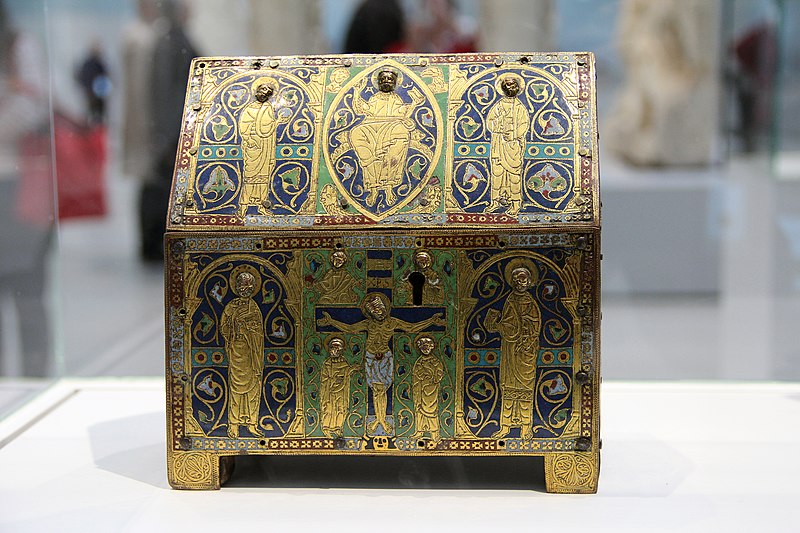
vitreous enamel
material made by fusing powdered glass to a substrate by firing

kintsugi
thumb|Repair work (right) on Mishima ware -type tea bowl with kintsugi gold lacquer, 16th century
thumb|Small repair (top) on Nabeshima ware dish with [[hollyhock design, over-glaze enamel, 18th century, Edo period]]
raku ware
type of Japanese pottery traditionally used in tea ceremonies
ceramic art
art objects made from clay and other raw materials by the process of pottery

zellij
thumb|A wall covered in zellīj at the Ben Youssef Madrasa in Marrakesh
Zellij (), also spelled zillij or zellige, is a style of mosaic tilework made from individually hand-chiseled tile pieces. The pieces were typically of different colours and fitted together to form various patterns on the basis of tessellations, most notably elaborate Islamic geometric motifs such as radiating star patterns composed of various polygons. This form of Islamic art is one of the main characteristics of architecture in the western Islamic world. It is found in the architecture of Morocco, the architecture of Alg
Kosiv painted ceramics
Traditional national Hutsul handicrafts, one of the varieties of Ukrainian ceramics

albarello
thumb|Blue and white albarello adorned with the traditional colors of Chinese Porcelain and decorated with designs derived from Kufic script, a style of Arabic script. Manufactured in Tuscany, Italy in the second half of the 15th century.
An albarello (a name of Italian descent, plural: albarelli) is also known as a "maiolica drug jar" because of the type of tin glaze used, known as Maiolica (also known as majolica). This cylindrical storage unit is used for a plethora of purposes, most commonly for drug storage in pharmacies as a medicinal jar. The jar was also used for other purposes such as
Bartmann jug
stoneware jug with bearded man on the neck of it
transfer printing
method of decorating ceramics by transferring an engraved printed design
Filimonovo toys
Ceramic Russian folk art toys
Ōtsuka Museum of Art
museum in Naruto, Tokushima Prefecture, Japan
Maya ceramics
ancient art pieces
Caltagirone ceramics
ceramics style made in Italy
Mīnākārī
thumb|An example of Meenakari from Iran.
ash glaze
ceramic glazes which were formulated from wood-ash
Victoria MacKenzie-Childs
American ceramic artist (born 1948)