Category
page 1Cereeae

Espostoa
Espostoa is a genus of columnar cacti, comprising 16 species known from the Andes of southern Ecuador and Peru. It usually lives at an altitude of between 800m and 2500m. Its fruit is edible, sweet, and juicy. The genus is named after Nicolas E. Esposto, a renowned botanist from Lima.
thumb|Espostoa melanostele subsp. nana

Arrojadoa
Arrojadoa is a genus of cacti, comprising 9 species. It is named after the Brazilian botanist Miguel Arrojado Lisboa (1872–1932) who was superintendent of the Brazilian Railways at the time that Britton and Rose described the genus in 1920. The genus occurs only in northern Brazil and is found at rocky places, under shrubs, which support their frail stalk. They are subtropical plants, with very little frost tolerance.

Oreocereus
Oreocereus is a genus of cacti (family Cactaceae), known only from high altitudes of the Andes.
Its name means "mountain cereus", formed from the Greek prefix ' (, mountain) and the Neo-Latin ', meaning wax or torch.

Browningia
Browningia is a genus of cacti, comprising 11 accepted and 3 unresolved species. It is named for Webster E Browning (1869-1942), director of the Instituto Inglés, Santiago, Chile.
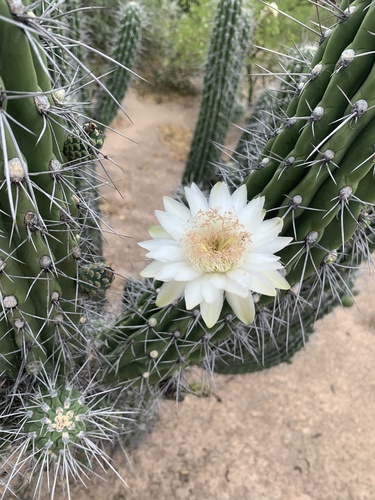
Stetsonia coryne
species of plant
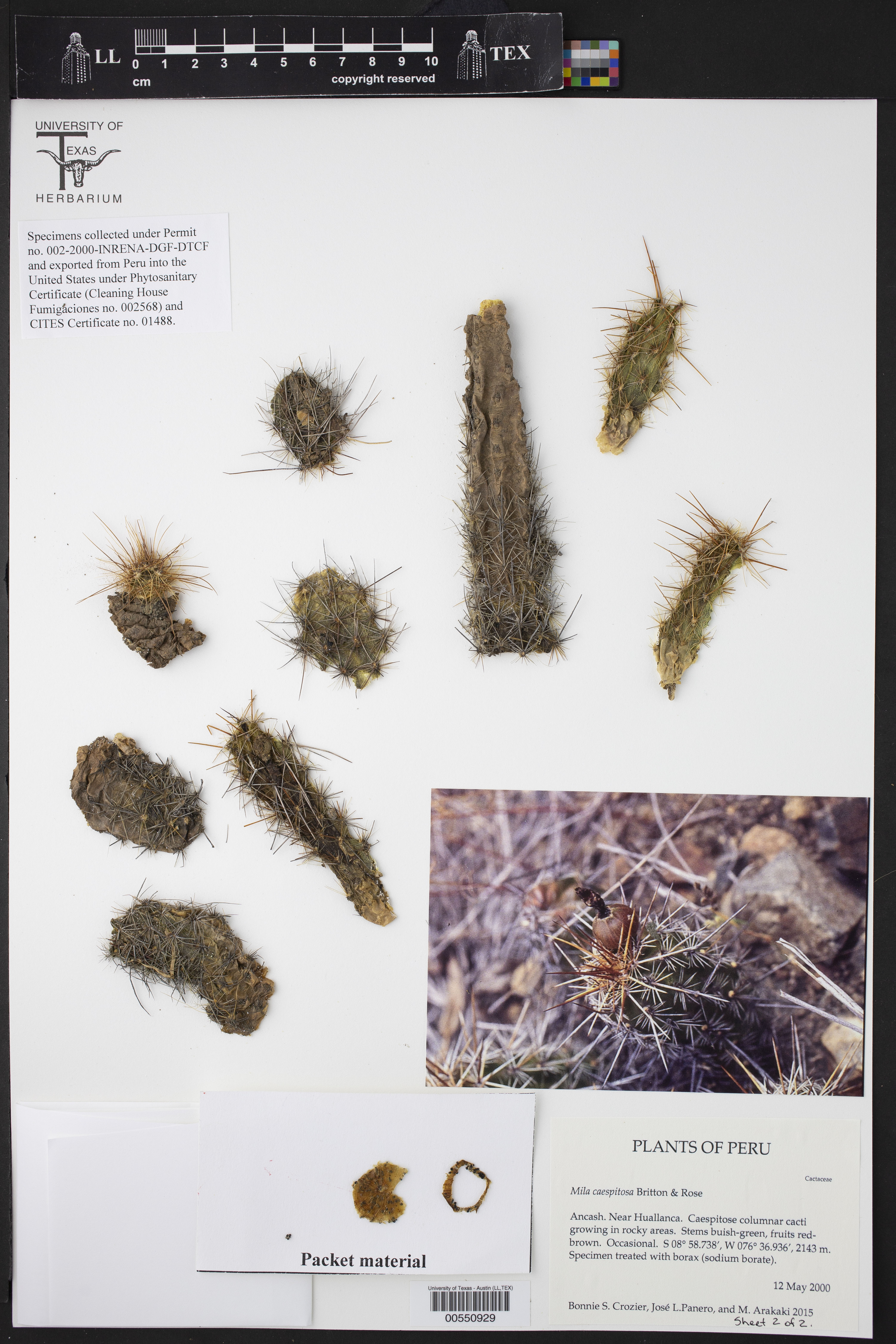
Mila caespitosa
species of plant

Brachycereus nesioticus
species of plant, the Lava cactus
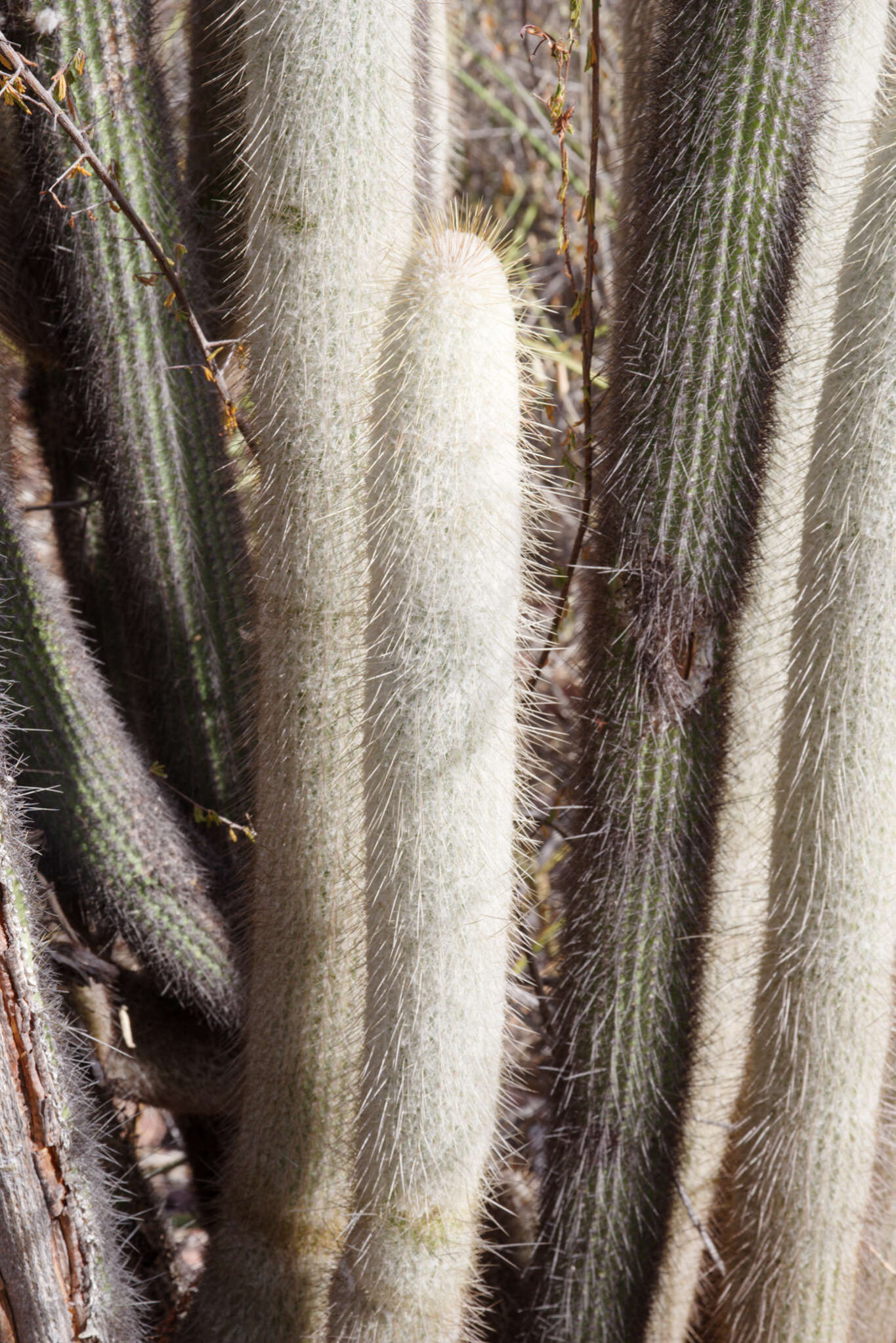
Espostoopsis dybowskii
species of plant

Trichocereeae
Trichocereinae is a subtribe of cactus that are particular to South America. There are 28 recognized genera in this subtribe.

Cipocereus
Cipocereus is a genus of cacti from Brazil. These species were previously included in the genera Pilosocereus and Cereus.

Coleocephalocereus
Coleocephalocereus is a genus of erect and semi-erect columnar cacti from Brazil. These species develop a cephalium with wool and bristles. They are common to the inselbergs of the Brazilian Atlantic rainforest, and can comprise a dominant portion of the flora in these isolated, dome-shaped rocky outcrops.

Brasilicereus
Brasilicereus is a genus of cacti known only from east Brazil and comprising three species.
==Description==
The species of the genus Brasilicereus grow as shrubs with upright, sometimes crooked, rarely branching shoots that reach heights of 1 to 4 meters. The slender shoots can be up to 2.5 centimeters in diameter. They have 3 to 5 flat or narrow ribs. The needle-like, brittle spines are whitish to grayish-brown and arise from areoles covered with gray or white wool. There are 1 to 4 central spines up to 4 centimeters long and 10 to 18 marginal spines 0.5 to 1.5 centimeters long. The flowers,
Cereeae
Cereeae is a tribe of cacti belonging to the subfamily Cactoideae containing about 50 genera, divided in 2023 among six subtribes.

Pygmaeocereus
Pygmaeocereus is a genus of small cacti (family Cactaceae). The genus is endemic to Peru.

Espostoa lanata
species of plant
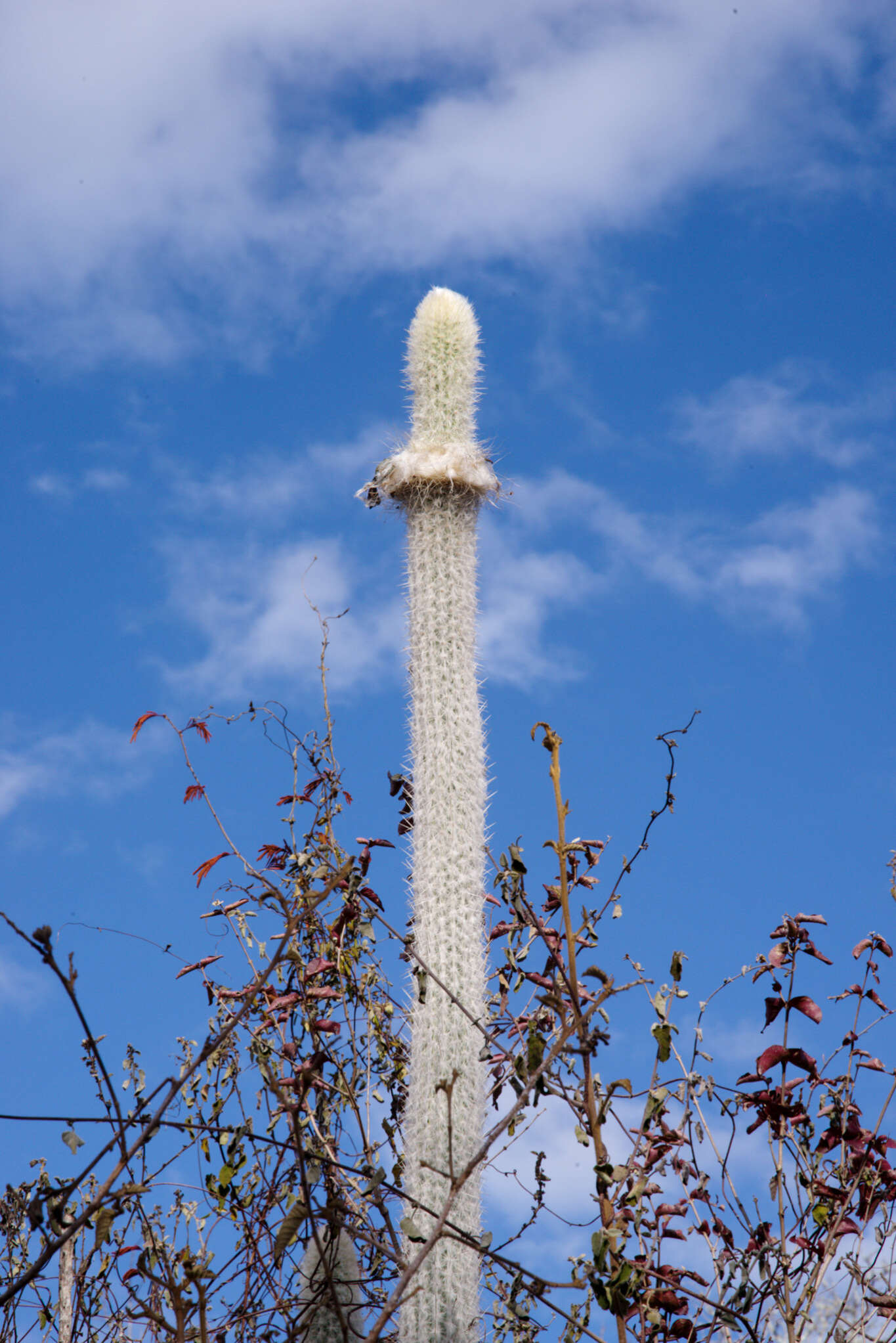
Stephanocereus
Stephanocereus is genus of cactus from Brazil, related to Arrojadoa. This genus is monotypic with the sole species Stephanocereus leucostele.
Denmoza
Denmoza is a monotypic genus of cactus with the sole species Denmoza rhodacantha, synonym Echinopsis rhodacantha, native to northwest Argentina.

Oreocereus celsianus
species of plant
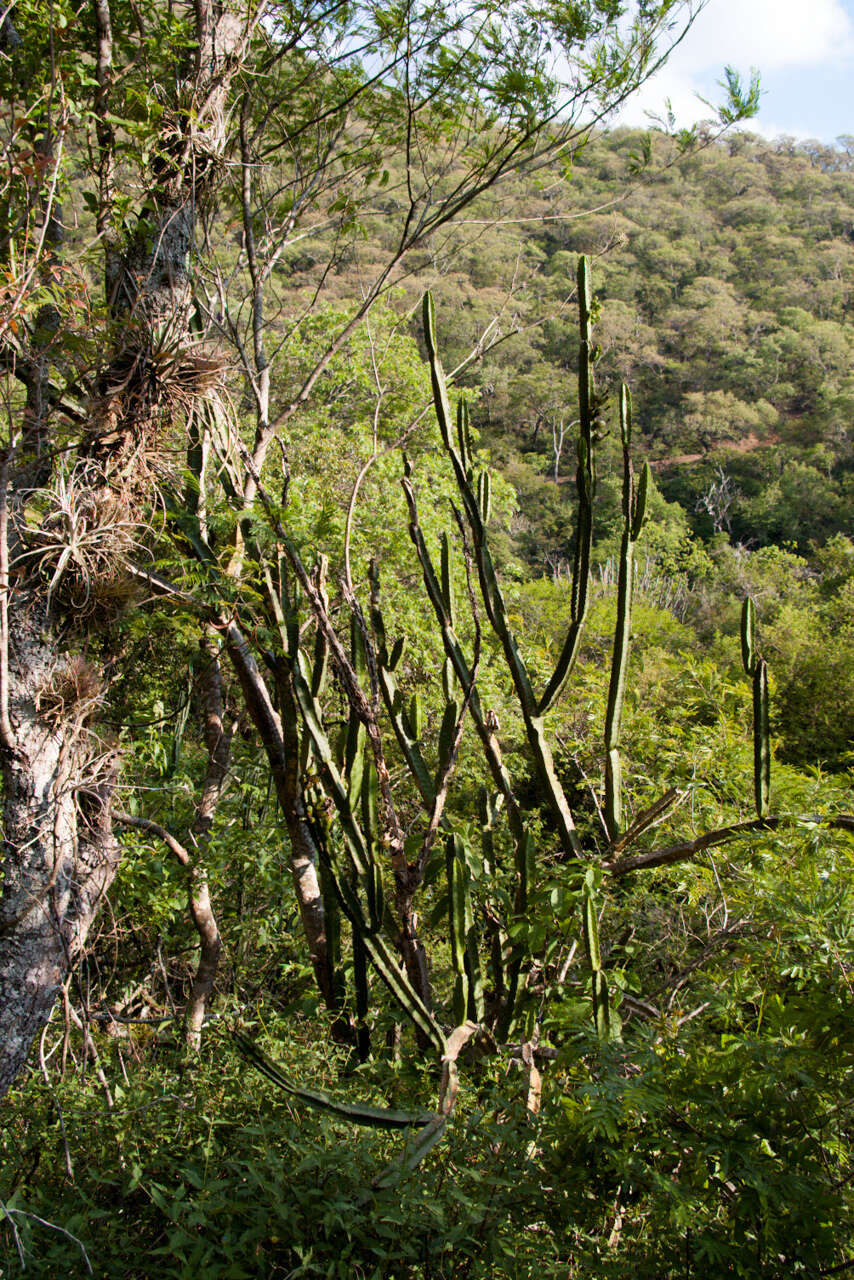
Samaipaticereus corroanus
species of plant
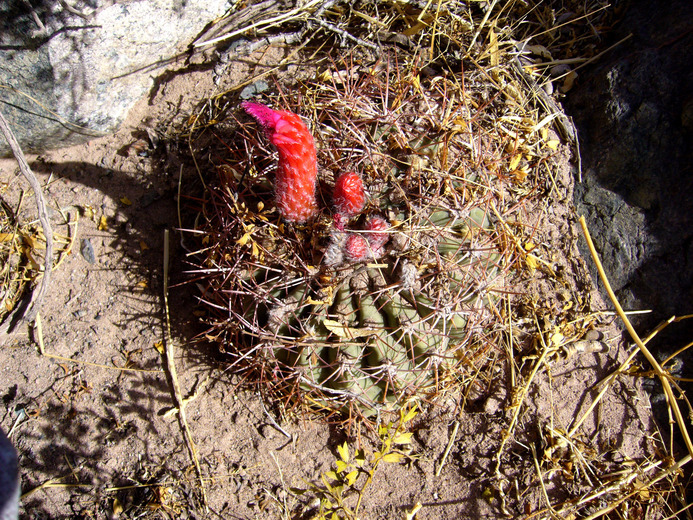
Denmoza rhodacantha
species of plant

Setiechinopsis mirabilis
Setiechinopsis is a monotypic genus of cacti. Its only species, Setiechinopsis mirabilis, is native to Argentina.

Cipocereus bradei
species of plant

Aylostera albopectinata
species of cactus
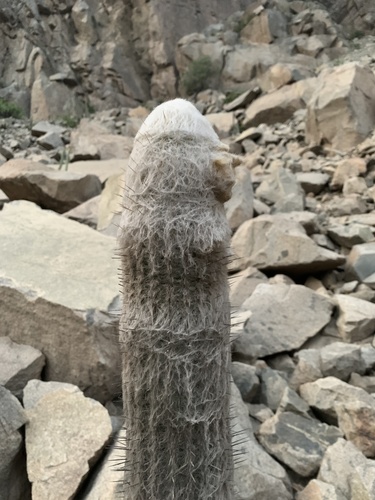
Espostoa melanostele
species of plant
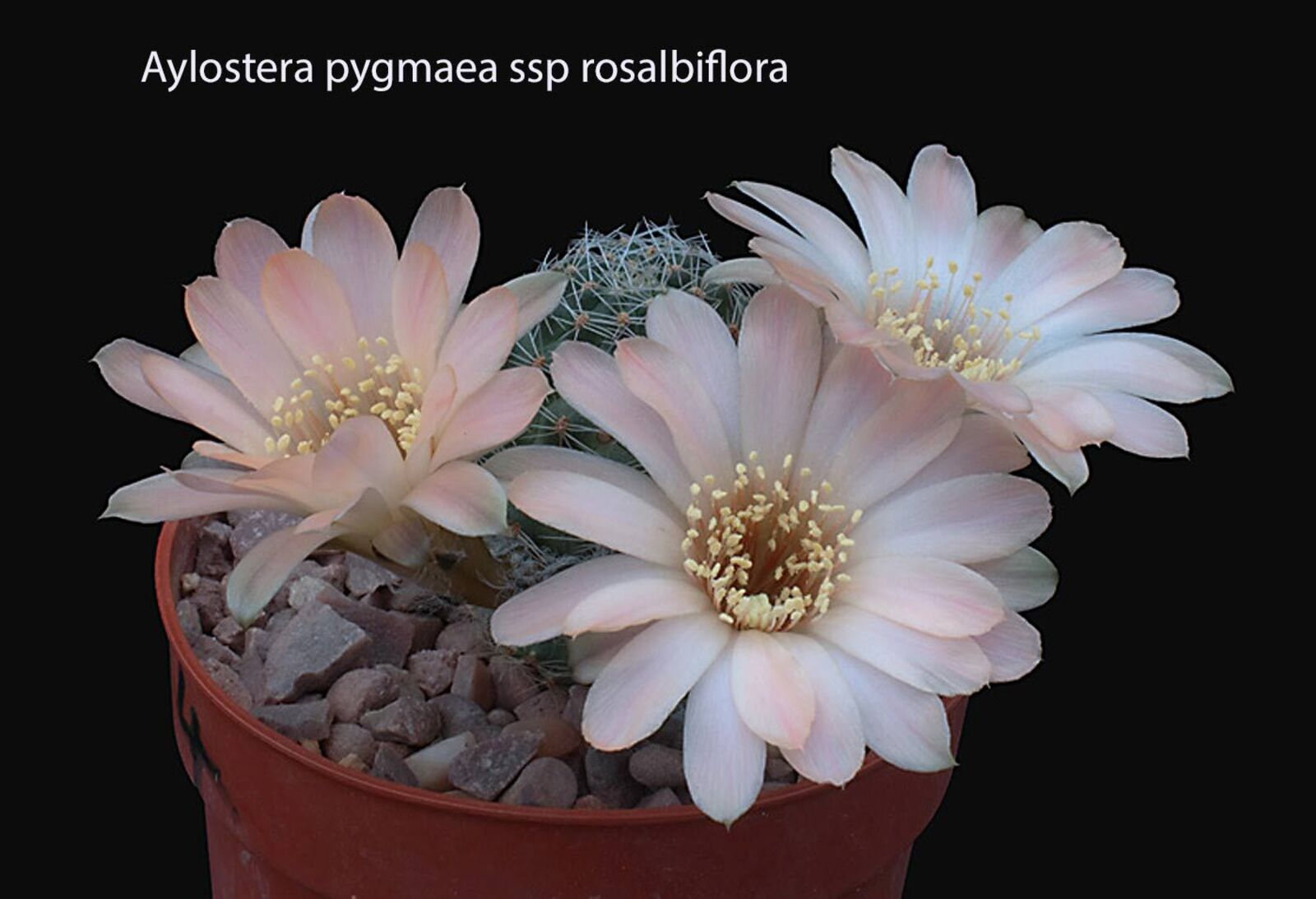
Aylostera pygmaea
species of plant
Lasiocereus
Lasiocereus is a genus of flowering plant in the family Cactaceae, native to Peru. The genus was established by Friedrich Ritter in 1966. It was formerly placed in subtribe Rebutiinae, but a 2023 molecular phylogenetic study suggested that it probably belonged to the subtribe Trichocereinae.
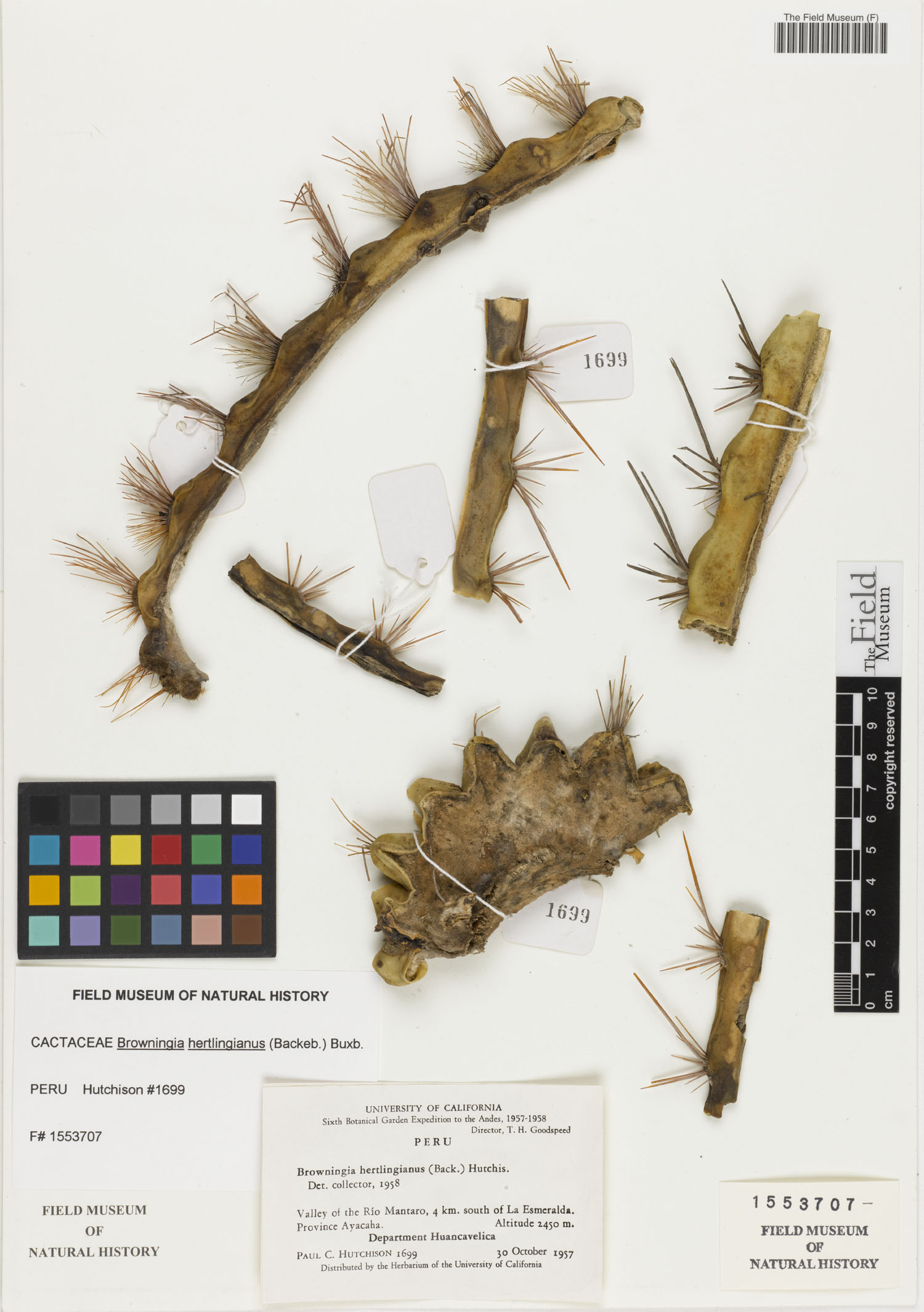
Browningia hertlingiana
species of plant
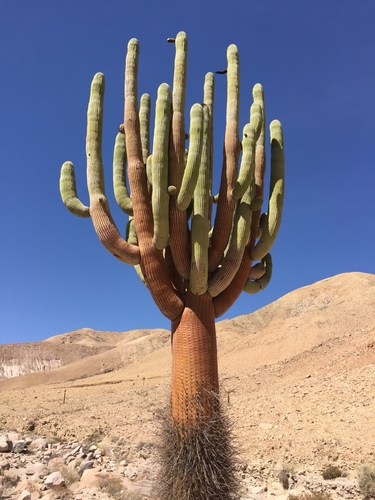
Browningia candelaris
species of plant
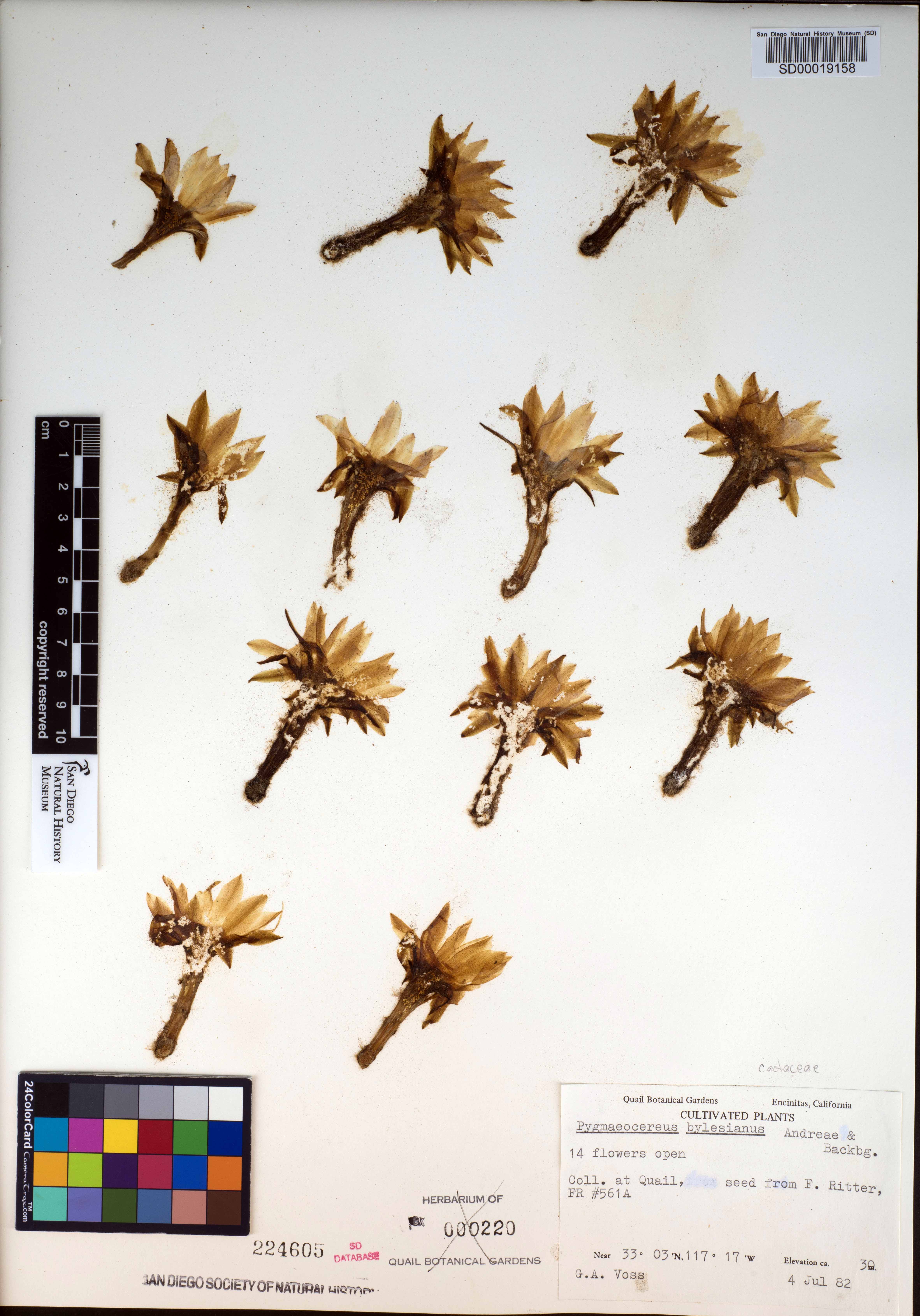
Pygmaeocereus bylesianus
species of plant
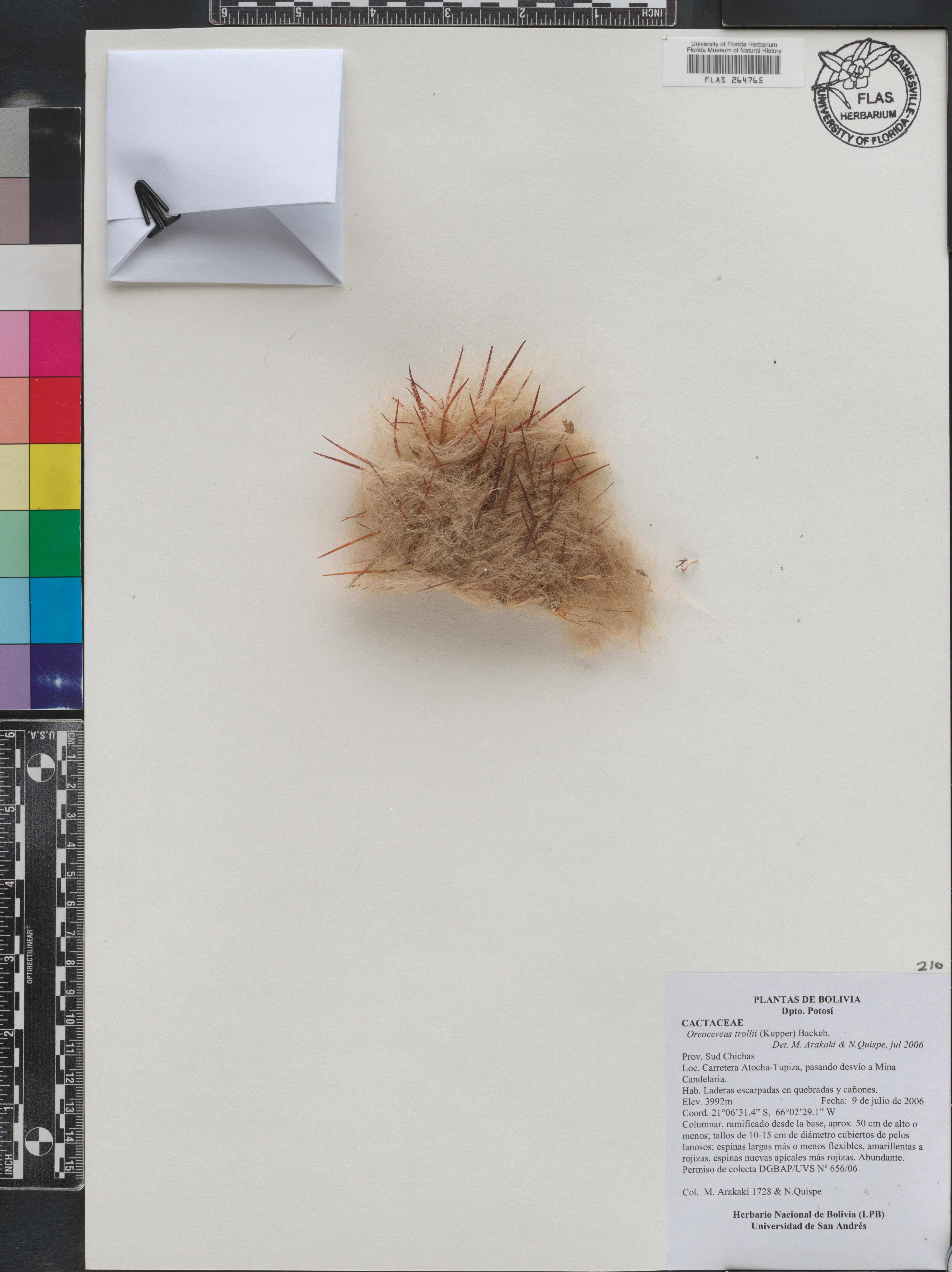
Oreocereus trollii
species of plant
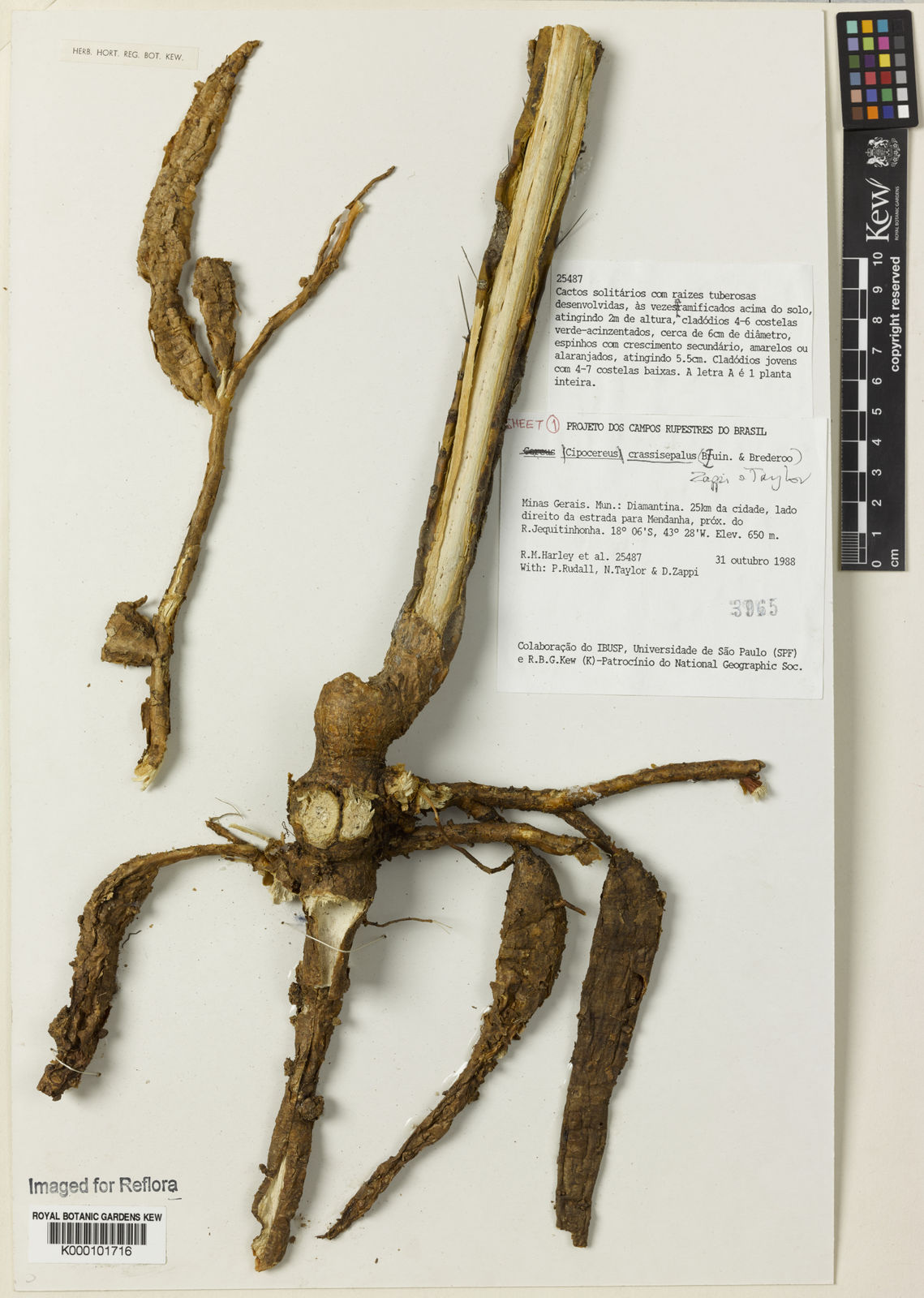
Cipocereus crassisepalus
species of plant

Arrojadoa dinae
species of plant

Coleocephalocereus goebelianus
species of plant
Pierrebraunia
Pierrebraunia is a genus of flowering plant in the cactus family Cactaceae. Its only species is Pierrebraunia bahiensis, endemic to Brazil. Its natural habitat is rocky areas.

Espostoa frutescens
species of plant
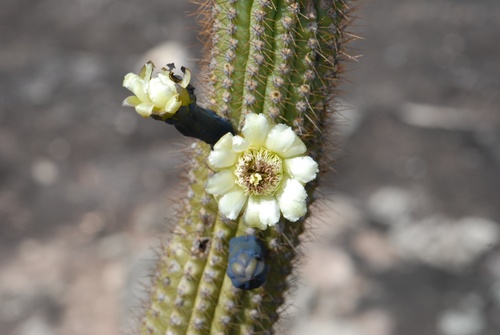
Cipocereus minensis
species of plant
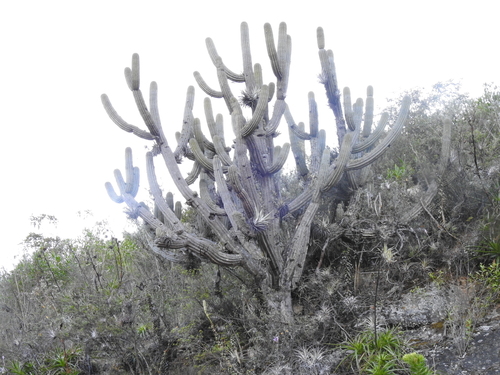
Browningia chlorocarpa
species of plant
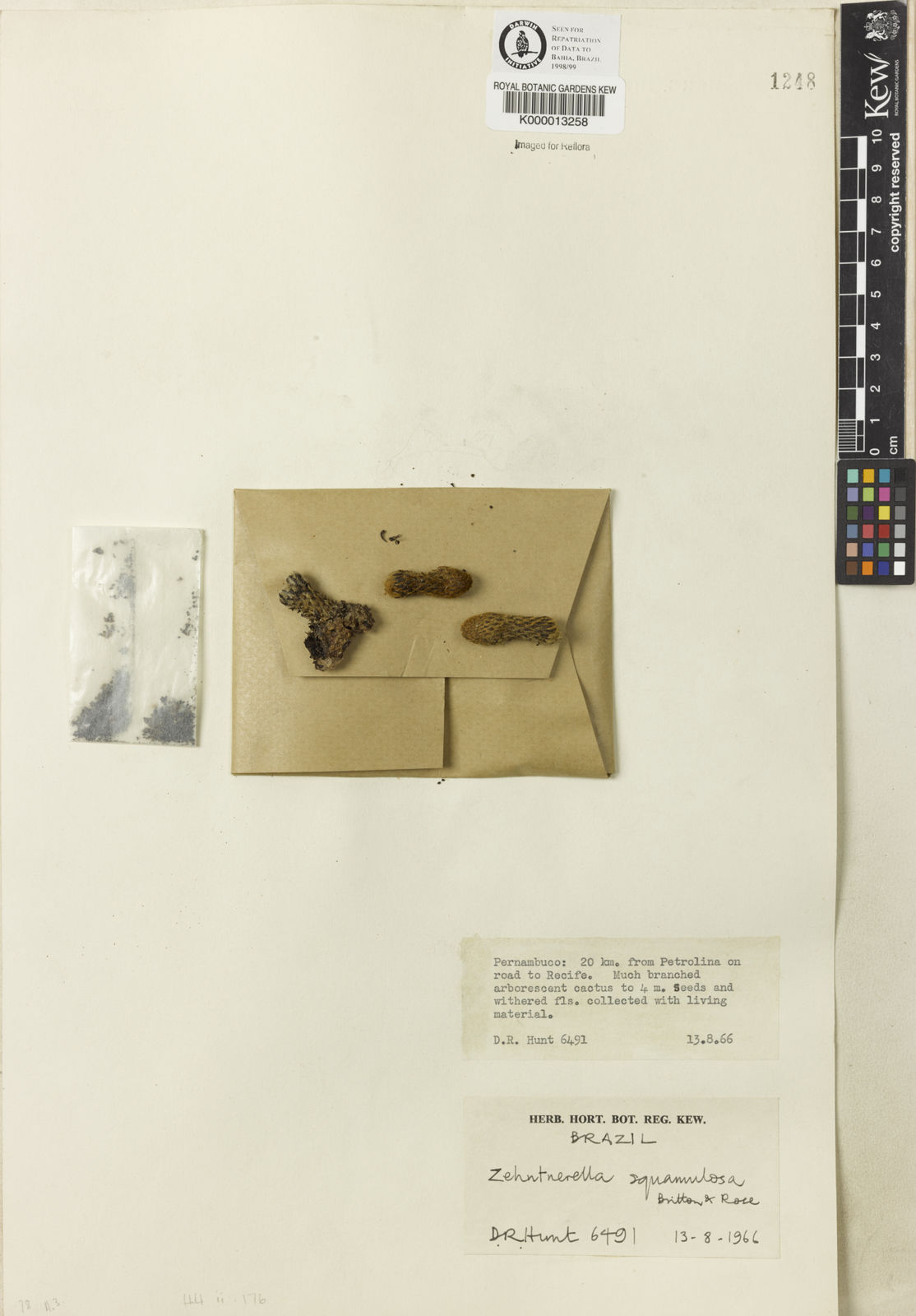
Facheiroa squamosa
species of plant
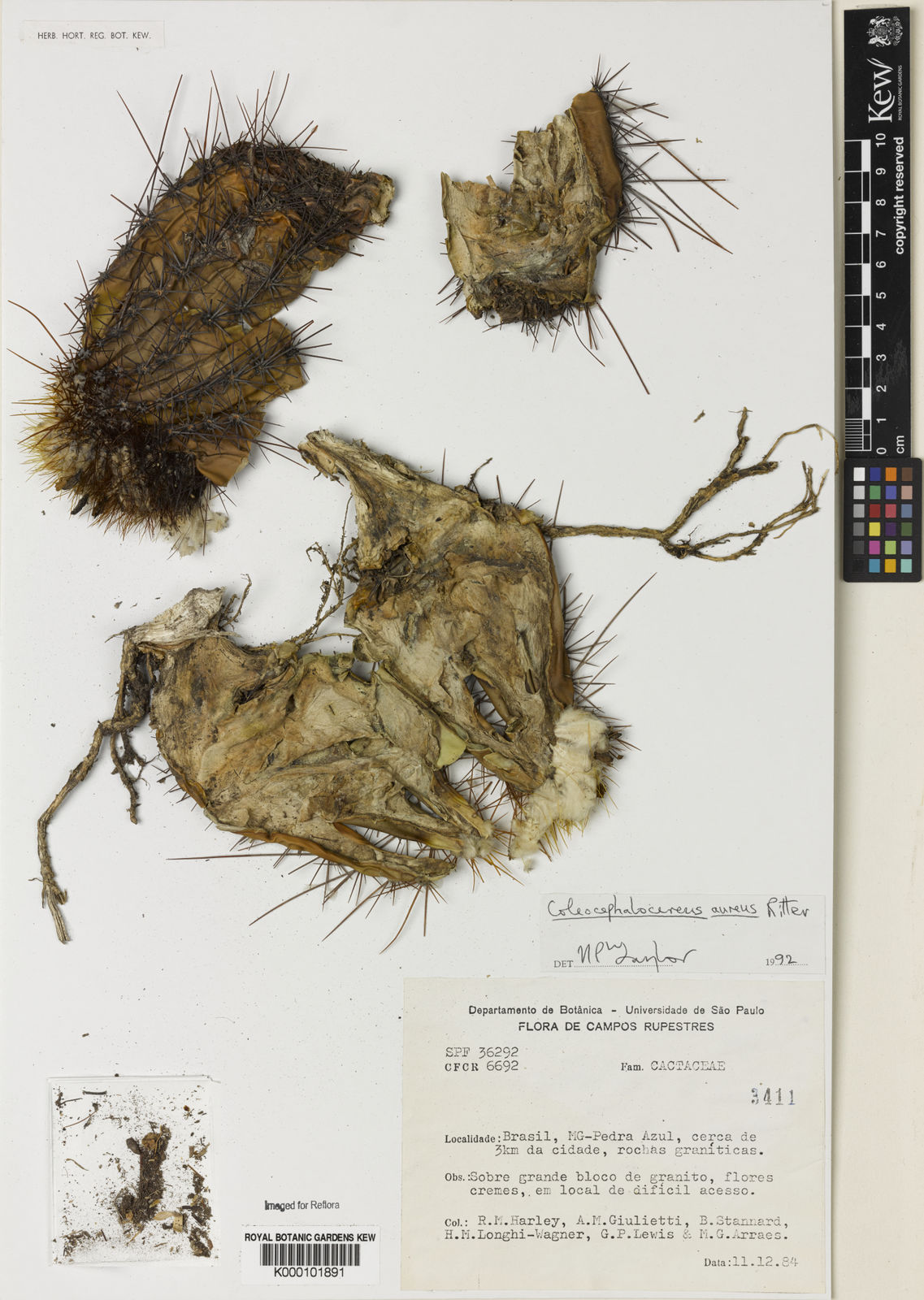
Coleocephalocereus aureus
species of plant
Browningia amstutziae
species of plant
Browningia altissima
species of plant
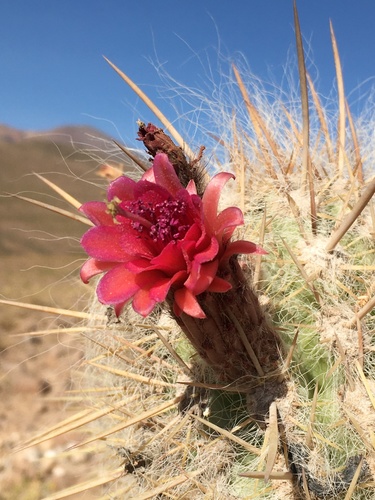
Oreocereus leucotrichus
species of plant

Oreocereus doelzianus
species of plant
Pygmaeocereus bieblii
species of plant
Leocereus
Leocereus is a genus of cactus, containing a single species, Leocereus bahiensis, which was described by Nathaniel Lord Britton and Joseph Nelson Rose in 1926.
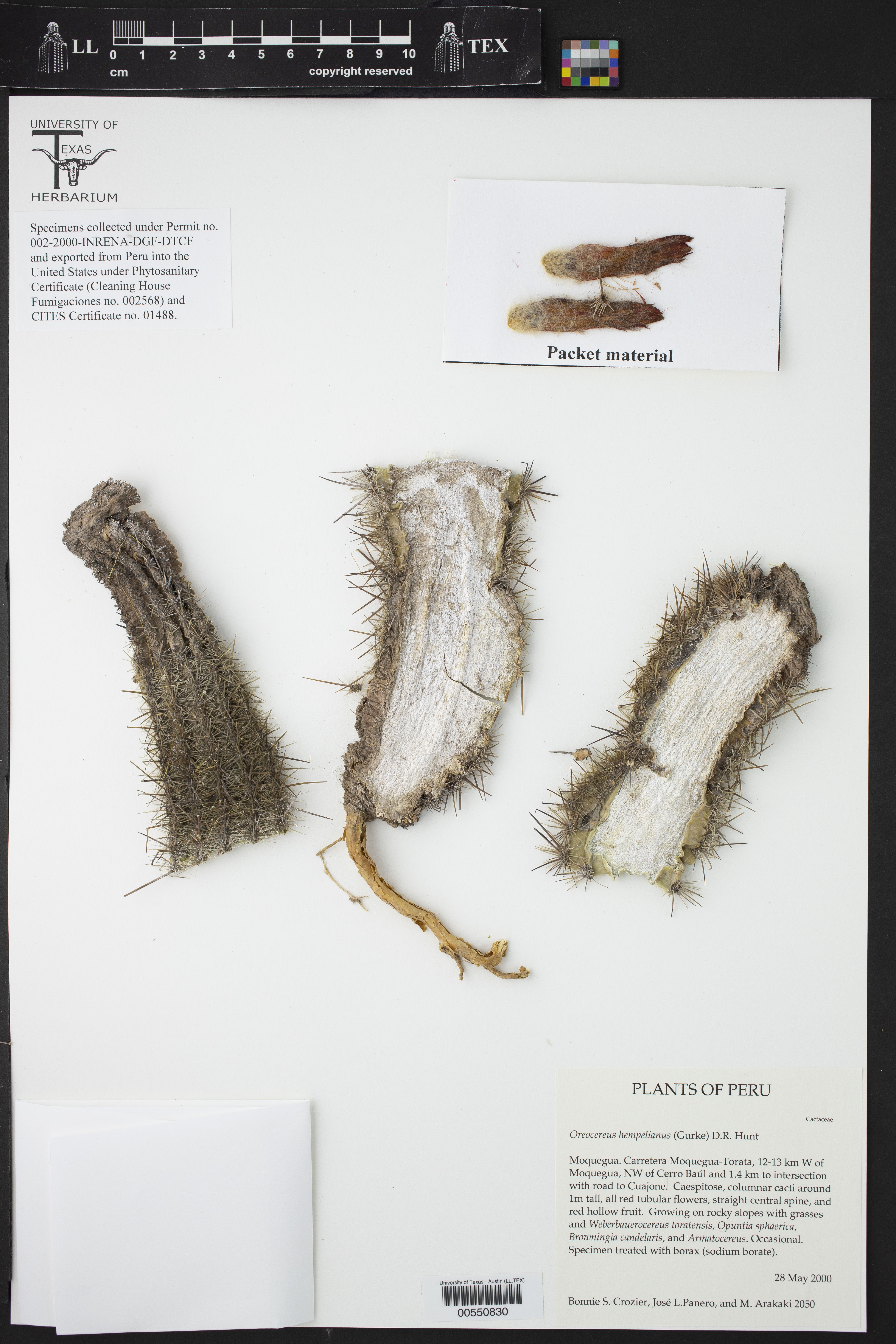
Oreocereus hempelianus
species of plant
Oreocereus pseudofossulatus
species of plant
Samaipaticereus
Samaipaticereus is a genus of cactus containing two species. It is known only from East Andean Bolivia and Peru.
Espostoopsis
Espostoopsis is a monotypic genus of cactus containing the single species Espostoopsis dybowskii. The generic name is formed from Greek opsis meaning "view", referring to its resemblance to the genus Espostoa, with which it is often confused. The plant is only known from northern Bahia, Brazil.
Pierrebraunia bahiensis
species of plant
Yungasocereus
Yungasocereus is a monotypic genus of cactus containing one species, Yungasocereus inquisivensis.
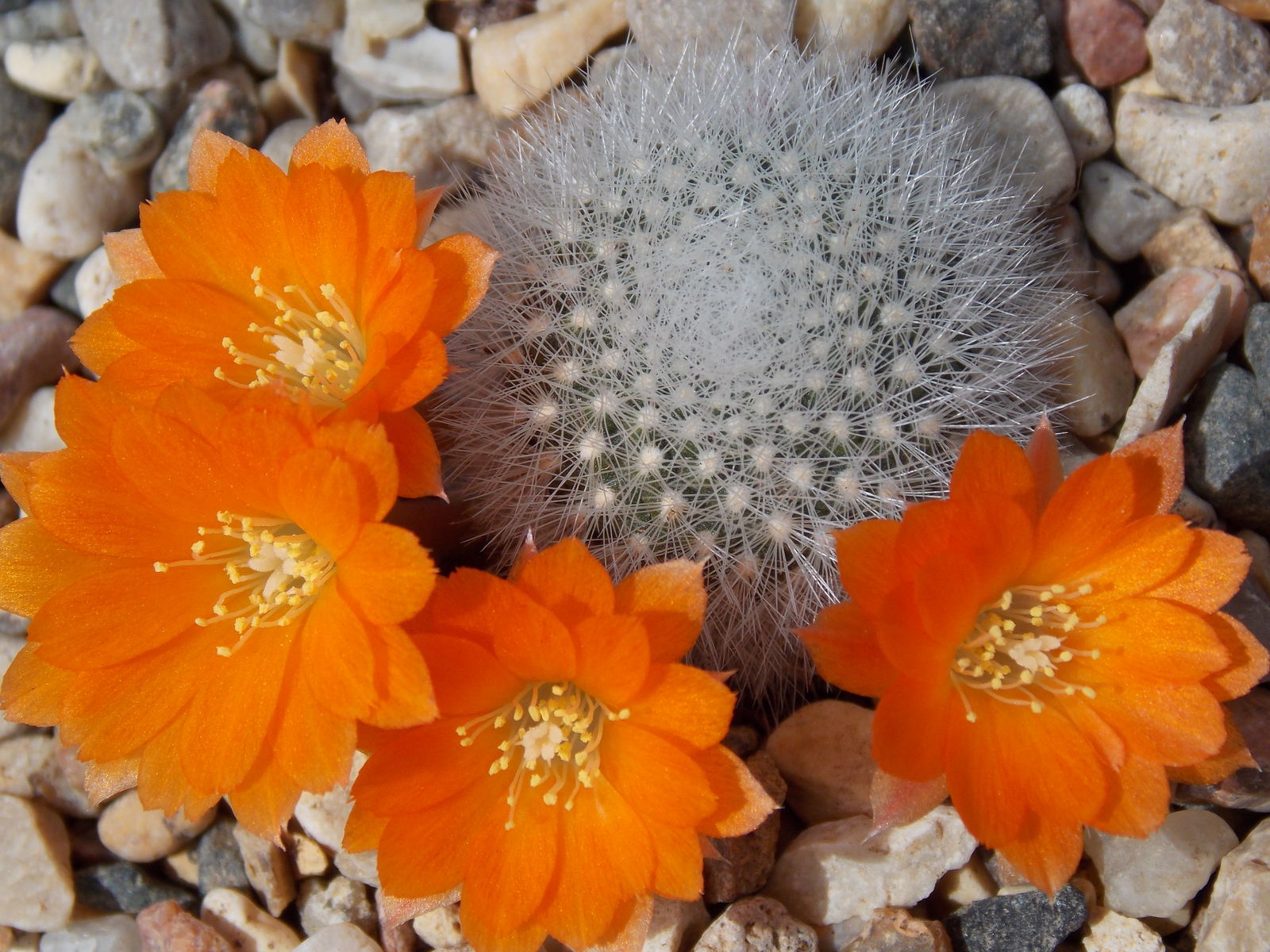
Aylostera
Aylostera, is a genus of cactus, native to central Bolivia and north western Argentina. Aylostera was formerly sunk into a broadly circumscribed genus Rebutia, but molecular phylogenetic studies from 2007 onwards showed that when defined in this way, Rebutia was not monophyletic, leading to the resurrection of Aylostera. A 2023 classification of the tribe Cereeae placed it as the only genus in the subtribe Aylosterinae. It was formerly placed in the subtribe Rebutiinae.
×Haagespostoa
nothogenus of plants
Rauhocereus
Rauhocereus is a monotypic genus of cacti (family Cactaceae). Its only species is Rauhocereus riosaniensis, which has nocturnal flowers. It is known from northern Peru (Rio Santa, Rio Zana, Chamaya and Jaén).
Aylostera muscula
species of plant

Aylostera deminuta
species of cactus
Brachycereus
REDIRECT Lava cactus
Aylostera einsteinii
species of plant