Category
page 1Chasicoan

Toxodon
Toxodon (from Ancient Greek τόξον (tóxon), meaning "bow", and ὀδούς (odoús), meaning "tooth", in reference to the curvature of the teeth) is an extinct genus of large ungulate native to South America from the Pliocene to the end of the Late Pleistocene. Toxodon is a member of Notoungulata, an order of extinct South American native ungulates distinct from the two living ungulate orders that had been indigenous to the continent for over 60 million years since the early Cenozoic, prior to the arrival of living ungulates into South America around 2.5 million years ago during the Great American Int
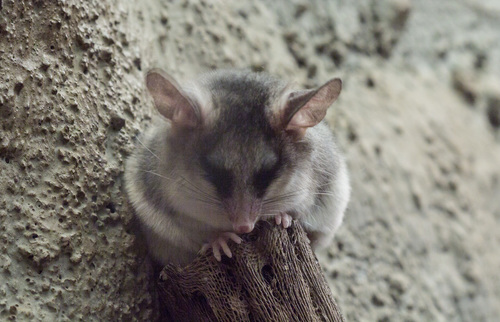
Thylamys
Thylamys is a genus of opossums in the family Didelphidae. The premaxillae are rounded rather than pointed. The females lack a pouch. The females' nipples are arranged in two symmetrical rows on the abdomen. All species but T. macrurus store fat in their tails, although this is not necessarily true for all species in the genus. Fossils belonging to the genus date back to the Miocene, with the oldest specimens being found in the Cerro Azul Formation of Argentina and the Honda Group of Colombia. Genetic studies indicate that the genus may have originated around 14 million years ago.

Purussaurus
Purussaurus is a genus of extinct giant caimans that lived in the Americas during the Miocene epoch, from the Friasian to the Huayquerian in the SALMA classification. It is known from skull material found in the Brazilian and Peruvian Amazon, Argentina, Colombian Villavieja Formation, Panamanian Culebra Formation, Urumaco, and Socorro Formations of northern Venezuela.

Pelagornis
Pelagornis is an extinct genus of prehistoric pseudotooth birds, a group of extinct seabirds. Species span from the Oligocene to the Early Pleistocene. Members of Pelagornis represent among the largest pseudotooth birds, with one species, P. sandersi, having the widest wingspan of any bird known.

Gryposuchus
Gryposuchus (meaning "hooked crocodile") is an extinct genus of gavialid crocodilian. Fossils have been found from Argentina, Colombia, Venezuela, Brazil and the Peruvian Amazon. The genus existed during the Miocene epoch (Colhuehuapian to Huayquerian). One recently described species, G. croizati, grew to an estimated length of . Gryposuchus is the type genus of the subfamily Gryposuchinae, although a 2018 study indicates that Gryposuchinae and Gryposuchus might be paraphyletic and rather an evolutionary grade towards the gharial.

Hapalops
thumb|left|Life restoration of Hapalops longiceps and Propalaehoplophorus australis
thumb|left|Skeleton

Psilopterus
Psilopterus (Greek for "bare wing") is an extinct genus of phorusrhacid ("terror bird") from the Middle Oligocene to possibly the Late Pleistocene of Argentina and Uruguay. Compared to other phorusrhacids, members of the genus are both relatively gracile and diminutive, and include the smallest known species of terror bird: with the head raised P. bachmanni was in height and weighed about , while the largest members of the genus were only about . The birds resemble the modern cariama (Cariama cristata), except with a heavier build and considerably smaller wings. Fossil finds in Uruguay indicat

Adinotherium
Adinotherium (meaning "not terrible beast") is an extinct genus of toxodontid, large bodied hoofed ungulates which inhabited South America during the Middle to Late Miocene, from 17.5 to 6.8 Ma and existed for approximately , Santacrucian to Huayquerian in the South American land mammal ages (SALMA). Fossils of Adinotherium have been found in the Santa Cruz and Ituzaingó Formations of Argentina and the Chucal and Río Frías Formations of Chile.

Protypotherium
Protypotherium is an extinct genus of notoungulate mammals native to South America during the Oligocene and Miocene epochs. A number of closely related animals date back further, to the Eocene. Fossils of Protypotherium have been found in the Deseadan Fray Bentos Formation of Uruguay, Muyu Huasi and Nazareno Formations of Bolivia, Cura-Mallín and Río Frías Formations of Chile, and Santa Cruz, Salicas, Ituzaingó, Aisol, Cerro Azul, Cerro Bandera, Cerro Boleadoras, Chichinales, Sarmiento and Collón Curá Formations of Argentina.

Mourasuchus
Mourasuchus is an extinct genus of giant, aberrant caiman from the Miocene of South America. Its skull has been described as duck-like, being broad, flat, and very elongate, superficially resembling Stomatosuchus from the Late Cretaceous.
Telicomys
Telicomys is an extinct genus of rodent from the Solimões Formation, Brazil, South America.

Diadiaphorus
Diadiaphorus is an extinct genus of litoptern mammal from the Miocene of Argentina (Ituzaingó, Pinturas, Chiquimil and Santa Cruz Formations) and Bolivia (Nazareno Formation), South America.

Lycopsis
Lycopsis is an extinct genus of South American metatherian that lived during the Miocene in Argentina and Colombia.
Trigodon gaudryi
Trigodon is an extinct genus of the family Toxodontidae, a large-bodied notoungulate which inhabited South America during the Late Miocene to Early Pliocene (Mayoan to Montehermosan in the SALMA classification), living from 11.61 to 4.0 Ma which existed for approximately . The type species is T. gaudryi. It bore a superficial resemblance to a rhinoceros, in that it had a horn on its forehead, and was one of a few horned notoungulates, including Adinotherium and Leontinia.
Neotamandua
Neotamandua is an extinct genus of anteaters that lived in the Miocene to Pliocene in South America.
Ikanogavialis
Ikanogavialis is an extinct genus of gavialid crocodilian. Fossils have been found in the Urumaco Formation in Urumaco, Venezuela and the Solimões Formation of Brazil. The strata from which remains are found are late Miocene in age, rather than Pliocene as was once thought. A possible member of this genus survived into the Late Holocene on Muyua or Woodlark Island in Papua New Guinea.
Xenastrapotherium
alt=Reconstruction of the astrapothere Xenastrapotherium christi. Artwork created with graphite and colored pencils. Author: Edwin Chávez "Disfrasaurio".|thumb|Paleoart of Xenastrapotherium christi. Artwork by Edwin Chávez "Disfrasaurio".
Xenastrapotherium is an extinct genus of astrapothere, a type of hoofed herbivorous mammal, native to South America, which lived in the Middle to Late Miocene period, typically during the Laventan stage. It is a member of the family Astrapotheriidae in the subfamily Uruguaytheriinae, large astrapotheres, equipped with a trunk-like nose and protruding teeth, s
Surameryx
Surameryx is an extinct genus of herbivorous artiodactyls originally described as belonging to the extinct family Palaeomerycidae. A single species, S. acrensis, was described from the Late Miocene (between the Mayoan and Huayquerian SALMA, between 11.6 and 5.3 million years ago) of the Madre de Dios Formation, South America. It was originally interpreted as one of the few northern mammals that entered South America before the Pliocene. However, both its identification as a member of the family Palaeomerycidae and claims about its Miocene age were subsequently challenged.
Neoepiblemidae
The Neoepiblemidae are an extinct family of hystricognath rodents from South America. The genera Dabbenea and Perumys are now included in Phoberomys. The delineation between Neoepiblemidae and Dinomyidae has historically been unclear, with some genera (such as Phoberomys and Eusigmomys) having varying taxonomic placement. A 2017 study found Phoberomys to be part of the group, while Eusigmomys was found to be part of the Dinomyidae.
Acrecebus fraileyi
Acrecebus is a prehistoric cebid monkey from the Late Miocene Solimões Formation of Acre State, Brazil and Bolivia. The only species known is A. fraileyi. This genus is closely related to the genus Cebus.
Hoffstetterius
Hoffstetterius is an extinct genus of toxodontid notoungulate mammal, belonging to the subfamily Toxodontinae whose remains were discovered in the Middle to Late Miocene (Mayoan to Montehermosan) Mauri Formation in the La Paz Department in Bolivia. The only described species is the type Hoffstetterius imperator.
Chasicotherium rothi
Chasicotherium is an extinct genus of a large notoungulate mammal known originally from a partial skull and mandible discovered in the Arroyo Chasicó Formation, in the stream of Party of Villarino, Buenos Aires, Argentina. The sediments in which the animal was discovered dates to 10 to 9 million years (Chasicoan). It is known only from the type species, C. rothi. Its weight was approximately , being the largest and most recent member of the family Homalodotheriidae. It was a large herbivore of the Miocene Pampas, closely related to Homalodotherium, which also shares the reduced dental formula
Globidentosuchus
Globidentosuchus is an extinct genus of basal caimanine crocodylian known from the late Middle to Late Miocene of the Middle and the Upper Members of the Urumaco Formation at Urumaco, Venezuela. Its skull was very short and robust, with large units of spherical teeth used to break the shells of molluscs as part of its durophagus diet. It is thought to be one of the most basal Caimanines, even sharing some traits with alligatorids.
Pebas Formation
geological formation in Colombia
Solimoea acrensis
Solimoea acrensis is a prehistoric ateline monkey from the Late Miocene Solimões Formation of Brazil. It is the only known species of the genus Solimoea.
Piscobalaena
Piscobalaena is an extinct genus of cetaceans, which lived from the Middle to Late Miocene epochs (about 11.6 to 5.3 million years ago) in Peru and Florida. Its fossils have been found in the Pisco Formation of Peru and the Bone Valley Formation of Florida. At least some individuals of this diminutive whale were preyed on by the shark O. megalodon.
Charactosuchus
Charactosuchus is an extinct genus of crocodilian. It was assigned to the family Crocodylidae in 1988. Specimens have been found in Colombia, Brazil, Jamaica, and possibly Florida and South Carolina. It was gharial-like in appearance with its long narrow snout but bore no relation to them, being more closely related to modern crocodiles than to gharials.
Ribodon
Ribodon is an extinct genus of manatee that lived around South America (Ituzaingó Formation, then described as Entrerriana Formation, Argentina, Solimões Formation, Brazil and Urumaco Formation, Urumaco, Venezuela) during the Tortonian (Mayoan to Huayquerian in the South American land mammal ages). The type species is R. limbatus.
Urumaco Formation
geological formation in Venezuela, where some unusually large fossils have been found