Category
page 1Chinese gods

Qu Yuan
Chinese poet and politician (c.340–278 BC)

Zhuge Liang
Chinese statesman and military strategist (181–234)

Guan Yu
Chinese general serving warlord Liu Bei (160-220)
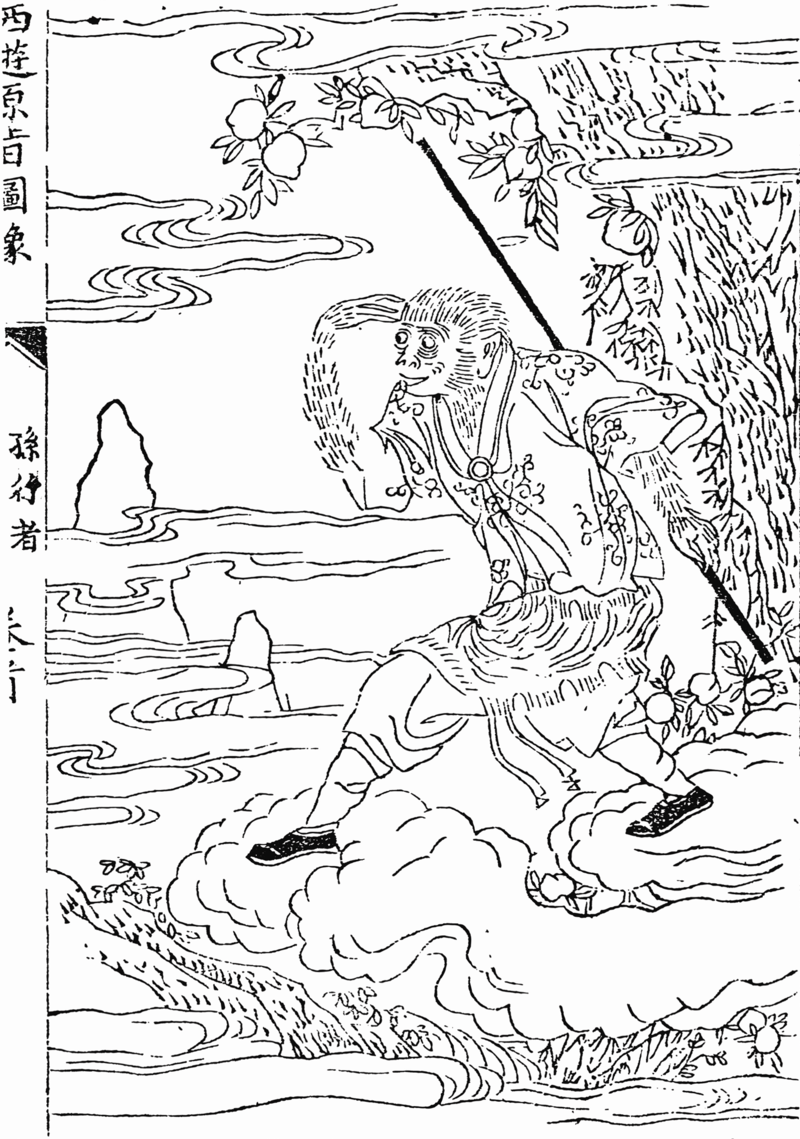
Sun Wukong
mythical character from Journey to the West

Fuxi
Fuxi or Fu Hsi is a culture hero in Chinese mythology, credited along with his sister and wife Nüwa with creating humanity and the invention of music, hunting, fishing, domestication, and cooking, as well as the Cangjie system of writing Chinese characters around 2900 BC or 2000BC. He is also said to be the originator of bagua (the eight trigrams) after observing that there were eight fundamental building blocks in nature: heaven, earth, water, fire, thunder, wind, mountain, and lake. These eight are all made of different combinations of yin and yang, which are what came to be called bagua.

Jade Emperor
the highest god of many Taoist sects, overseeing the universe through administration of a celestial bureaucracy mirroring ancient and medieval China's

Pangu
Pangu or Pan Gu

Emperor Taizu of Song
founding emperor of the Song Dynasty (reigned 960-976)

Shennong
thumb|upright|Shennong Yan Emperor () is well known as the first Emperor of Ancient China, who not only invented the farming tools for his people, but also herbs for treating his people's illnesses. Depicted in a mural painting from the Han dynasty.

Budai
Budai is a nickname given to the historical Chinese monk Qieci () in the Later Liang Dynasty, who is often identified with and venerated as the future Buddha Maitreya in Chan Buddhism and Buddhist scripture. With the spread of Chan Buddhism, he also came to be venerated in Vietnam, Korea, and Japan.
King Zhou of Shang
last king of Chinese Shang dynasty (r. 1075 BBCE-1046 BCE)
White Tiger
one of the Four Symbols of Chinese mythology; represents the west and the autumn season
Azure Dragon
Symbol of Chinese mythology
Zhang Fei
Chinese military general (died 221)
Yue Fei
Song dynasty general, killed by royal decree from the Emperor Gaozong of Song (1103–1142)
Hou Yi
Chinese mythological archer
dragon king
general concept of a king of dragons as appearing in Chinese, Japanese, Hindu and Buddhistic mythology and folklore
Four Heavenly Kings
Buddhist gods
Ziying
third and last ruler of the Qin dynasty during 207 BC

Zhao Yun
Chinese military general (died 229)
Sun Bin
Chinese general, military strategist and writer (died 316 BC)
Wei Zheng
Tang Dynasty chancellor (580-643)

Gonggong
Gonggong () is a Chinese water god who is depicted in Chinese mythology and folktales as having a copper human head with an iron forehead, red hair, and the body of a serpent, or sometimes the head and torso are human, with the tail of a serpent. He is destructive and is blamed for various cosmic catastrophes. In all accounts, Gonggong ends up being killed or sent into exile, usually after losing a struggle with another major deity such as the fire god Zhurong.
%2C%20version%201.svg)
Shangdi
200px|thumb|right|alt=The Western Zhou version of the character "Tian". J. C. Didier identified the squared shape to be the same square found at the very central core of Shangdi, thus illustrating a strong connection (and identification) between the two deities|The Western Zhou version of the character "Tian". J. C. Didier identified the squared shape to be the same square found at the very central core of Shangdi, thus illustrating a strong connection (and identification) between the two deities.
thumb|upright=1.3|Annual Sacrifice to Heaven ( jìtiān) in honour of the Highest Deity the Heavenl

Nezha
Nezha (, Nézhā) or sometimes Nezha the Crown Prince (, ), is a protection deity in Taoism, Buddhism, Confucianism, and Chinese folk religion. His official Taoist name is "Marshal of the Central Altar" (). He was then given the title "Third Lotus Prince" () after he became a deity.

Zhurong
thumb|260px|Zhurong riding two dragons, depicted in the Classic of Mountains and Seas, 1597 edition

Cai Shen
alt=Caishen Statue at Gardens by the Bay|thumb|Caishen statue at Singapore's Gardens by the Bay to welcome [[Lunar New Year 2024.]]
Three Pure Ones
the three highest gods in the Taoist pantheon, regarded as pure manifestation of the Tao and the origin of all sentient beings
Wu Zixu
Chinese Wu kingdom general and politician (died 484 BC)
Fusu
Fusu (died August or September 210BC) was the eldest son and heir apparent of Qin Shi Huang, the First Emperor of the Qin dynasty.
Chiyou
Chiyou () is a mythological being that appears in Chinese mythology. He was a tribal leader of the Nine Li tribe () in ancient China. He is best known as a king who lost against the future Yellow Emperor during the Three Sovereigns and Five Emperors era in Chinese mythology. According to the Song dynasty history book Lushi, Chiyou's surname was Jiang (), and he was a descendant of the Flame Emperor.
Bai Qi
Chinese Qin state military general ( c. 332 BC – 257 BC)
Yŏn Kaesomun
Goguryeo military dictator (603–666)
Lu Ban
5th-century BC Chinese engineer and inventor
kitchen god
the most important of a plethora of Chinese domestic gods that protect the hearth and family
Zhong Kui
deity in Chinese mythology
Ma Chao
Chinese military general and warlord (176–222)
Xuan Wu
Taoist water deity, tutelary deity of Ming Empire
Yanluo Wang
Chinese deity of death

Tian
Tian () is one of the oldest Chinese terms for heaven and is a central concept in Chinese mythology, philosophy, and cosmology. During the Shang dynasty (17th–11th century BCE), the highest deity was referred to as Shangdi or Di (, "Lord"). In the subsequent Zhou dynasty, Tian became synonymous with this figure. Prior to the 20th century, the worship of Tian was considered an orthodox cosmic principle in China.
Nio
two wrathful and muscular guardians of the Buddha standing at the entrance of Buddhist temples in East Asian Buddhism
Li Mu
Chinese general for the State of Zhao
Old Man of the South Pole
Taoist deification of Canopus, the brightest star of the constellation Carina; symbolizes happiness and longevity
Hou Ji
ancestor of the Chinese Zhou dynasty
Ma Dai
3rd century State of Shu Han general
Elder Zhang Guo
Chinese mythological figure
Wisdom King
type of Buddhist deity
Tu Er Shen
Chinese deity of homosexual love and sex
Iron-Crutch Li
Taoist mythological figure

Tudigong
A Tudigong () is a kind of Chinese tutelary deity of a specific location. There are several Tudigongs corresponding to different geographical locations and sometimes multiple ones will be venerated together in certain regions.
Sanxing
the gods of the three stars in Chinese religion
Guo Ziyi
general during the Tang Dynasty (697-781)
Emperor Yi of Chu
king of Chinese state of Chu from 208 to 206 BC
Daode Tianzun
deification of Laozi in the Taoist pantheon
Guan Ping
Chinese general serving warlord Liu Bei (died 220)
Li Shiji
Chinese Tang dynasty general (594-669)
City God
tutelary deities of cities, towns, and villages in Chinese folk religion
Yuanshi Tianzun
Taoist deity
Erlang Shen
Chinese deity associated with flood control
Baosheng Dadi
deified Song dynasty doctor in southeast China folk religion