Category
page 1Chinese teas

green tea
unoxidized tea

white tea
one of several styles of tea which generally feature young or minimally processed leaves of the Camellia sinensis plant

kombucha

yellow tea
partially oxidized tea
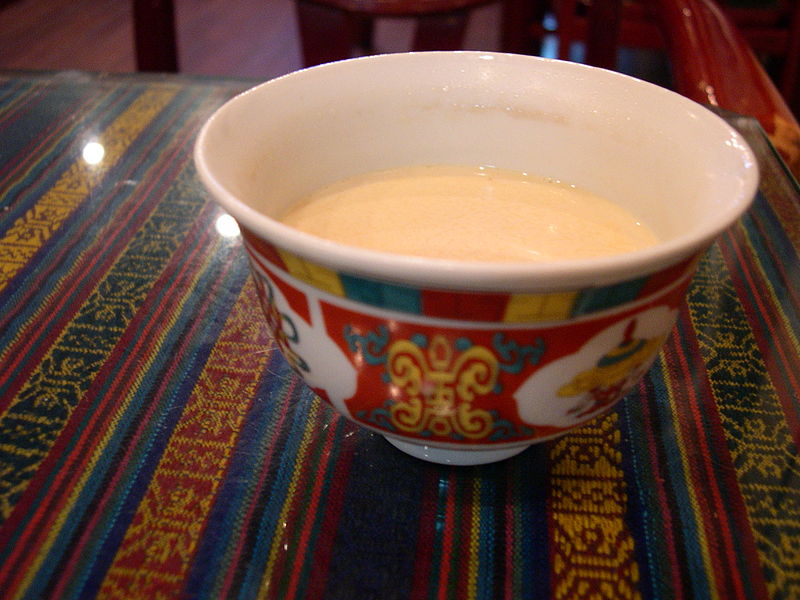
butter tea
South Asian drink mainly consisting of butter churned with tea
pu'er
variety of fermented tea produced in the Yunnan province of China
jasmine tea
tea scented with jasmine blossoms customary to China
barley tea
infusion made from roasted barley grains
Lapsang souchong
Chinese black tea that is smoke-dried
Longjing tea
pan-roasted green tea from the area of Longjing Village in Hangzhou, China

Gynostemma pentaphyllum
species of plant
gunpowder tea
variety of green tea
ginger tea
hot water infused ginger roots
chrysanthemum tea
beverage made by infusing dried flowers of chrysanthemum
Da Hong Pao
Most famous oolong of the Wuyi Rock Teas
Baihao Yinzhen
the highest grade of white tea produced in Fujian Province in China
Keemun
Keemun () is a famous Chinese black tea. First produced in the late 19th century, it quickly became popular in the West and is still used for a number of classic blends (such as Earl Grey tea). It is a light tea with characteristic stone fruit and slightly smoky notes in the aroma and a gentle, malty, non-astringent taste reminiscent of unsweetened cocoa. Keemun is said to have floral aromas and wooden notes.

Dianhong
thumb|Fengqing Dianhong Museum
Dianhong tea (; pronounced ) is a type of relatively high-end, gourmet Chinese red tea sometimes used in various tea blends and grown in Yunnan Province, China. The main difference between Dianhong and other Chinese red teas is the amount of fine leaf buds, or "golden tips," present in the dried tea. Dianhong tea produces a brew that is brassy golden orange in colour with a sweet, gentle aroma and no astringency. Cheaper varieties of Dianhong produce a darker brownish brew that can be very bitter.

Biluochun
Biluochun or Bi Luo Chun (; pronounced ) is a famous green tea originally grown in the Dongting mountain region near Lake Tai in Suzhou, Jiangsu, China. Also known as Pi Lo Chun, it is renowned for its delicate appearance, fruity taste, floral aroma, showy white hairs and early cropping.
Bai Mudan tea
Chinese White tea

kuding
thumb|Twisted kuding leaves ready for brewing (Ilex kaushue)
thumb|Kuding Ilex kaushue, "" ()
thumb|Kuding Ligustrum robustum, "" ()Kuding (; pronounced ) is a particularly bitter-tasting Chinese infusion, which due to their similarities in appearance is derived from several plant species. The two most common plants used to make kuding are the wax tree species Ligustrum robustum and the holly species Ilex kaushue (synonym: Ilex kudingcha), the former being more commonly grown in Sichuan and Japan while the latter is most commonly grown and used in the rest of China and Vietnam. Tea produced fr
Chun Mee tea
popular Chinese green tea
Huangshan Maofeng
one of the most famous green teas in China
lotus tea
beverage made by infusing leaves, flowers, roots of lotus
Junshan Yinzhen
famous yellow tea from Junshan Island, China
Wong Lo Kat
Cantonese herbal tea
Anji bai cha
Rare, large-leafed green tea
kelp tea
East Asian tea made from seaweed
Lu'an Melon Seed tea
One of China's most famous green tea
Yingdehong tea
black tea
24 flavors
Cantonese herbal tea
Taiping houkui
green tea
Huoshan Huangya tea
yellow tea from Anhui province
Rougui tea
variety of the tea plant from Wuyi Moutains