Category
page 1Chordate classes
%20and%20Polycarpa%20aurata%20(Sea%20quirt).jpg)
Ascidiacea
Ascidiacea, commonly known as the ascidians or sea squirts, is a paraphyletic class in the subphylum Tunicata of sac-like marine invertebrate filter feeders. Ascidians are characterized by a tough outer test or "tunic" made of the polysaccharide cellulose.

Appendicularia
Larvaceans, copelates or appendicularians, class Appendicularia, are solitary, free-swimming tunicates found throughout the world's oceans. While larvaceans are filter feeders like most other tunicates, they keep their tadpole-like shape as adults, with the notochord running through the tail. They can be found in the pelagic zone, specifically in the photic zone, or sometimes deeper. They are transparent planktonic animals, usually ranging from to in body length including the tail, although giant larvaceans can reach up to in length.
Thaliacea
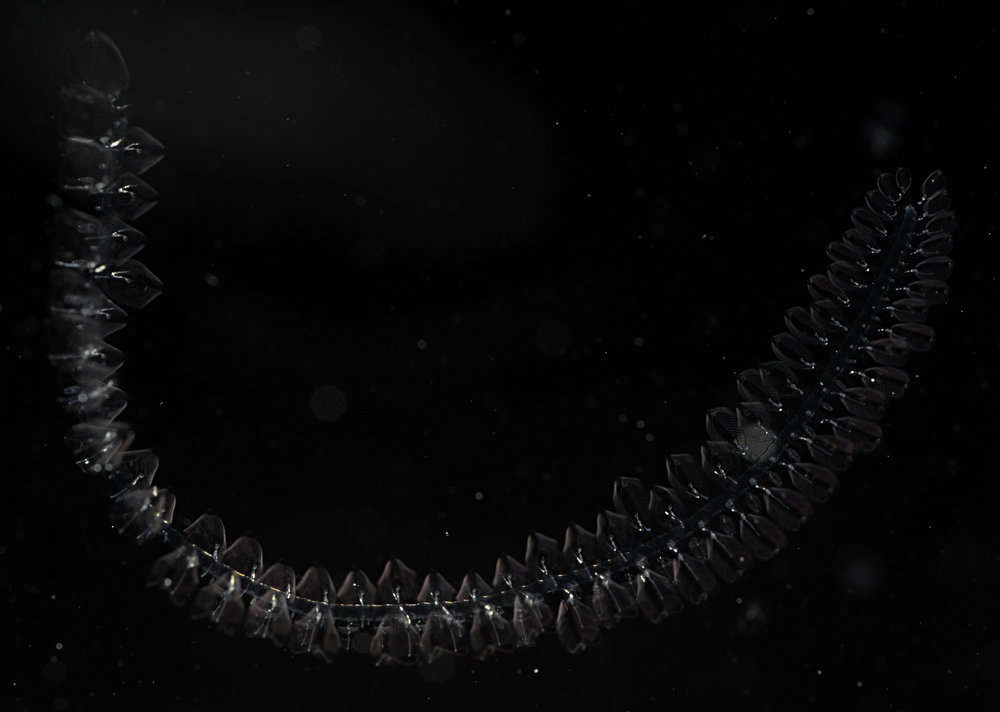
Thaliacea is a class of marine chordates within the subphylum Tunicata, comprising the salps, pyrosomes and doliolids. Unlike their benthic relatives the ascidians, from which they are believed to have emerged, thaliaceans are free-floating (pelagic) for their entire lifespan. The group includes species with complex life cycles, with both solitary and colonial forms. Because of their pelagic and gelatinous nature they are extremely rare in the fossil record, with the first unambiguous thaliacean fossil only being reported in 2026 from the mid-Cambrian Huayuan biota.
Sorberacea
REDIRECT Aspiraculata