Category
page 1Chordopoxvirinae
smallpox
Smallpox was an infectious disease caused by Variola virus (often called Smallpox virus), which belongs to the genus Orthopoxvirus. The last naturally occurring case was diagnosed in October 1977, and the World Health Organization (WHO) certified the global eradication of the disease in 1980, making smallpox the only human disease to have been eradicated.

Orthopoxvirus monkeypox
species of the genus Orthopoxvirus
.png)
cowpox
Cowpox is an infectious disease caused by Cowpox virus (CPXV). It presents with large blisters in the skin, a fever and swollen glands, historically typically following contact with an infected cow, though in the last several decades more often (though overall rarely) from infected cats. The hands and face are most frequently affected and the spots are generally very painful.
lumpy skin disease
bovine disease
contagious pustular dermatitis
skin disease and general infection in sheep, goats, chamois, reindeer and muskrats

vaccinia virus
The vaccinia virus (VACV or VV) is a large, complex, enveloped virus belonging to the poxvirus family. It has a linear, double-stranded DNA genome approximately 190 kbp in length, which encodes approximately 250 genes. The dimensions of the virion are roughly 360 × 270 × 250 nm, with a mass of approximately 5–10 fg. The vaccinia virus is the source of the modern smallpox vaccine, which the World Health Organization (WHO) used to eradicate smallpox in a global vaccination campaign in 1958–1977. Although smallpox no longer exists in the wild, vaccinia virus is still studied widely by scient

Fowlpox virus
Fowlpox is the worldwide disease of poultry caused by viruses of the family Poxviridae and the genus Avipoxvirus. The viruses causing fowlpox are distinct from one another but antigenically similar, possible hosts including chickens, turkeys, quail, canaries, pigeons, and many other species of birds. There are two forms of the disease. The first (dry form) is spread by biting insects (especially mosquitoes) and wound contamination, and causes lesions on the comb, wattles, and beak. Birds affected by this form usually recover within a few weeks. The second (wet form) is contracted by inhalation

Orthopoxvirus
Orthopoxvirus is a genus of viruses in the family Poxviridae and subfamily Chordopoxvirinae. Vertebrates, including mammals and reptiles, and arthropods serve as natural hosts. There are 12 known species in this genus. Diseases associated with this genus include smallpox, cowpox, horsepox, camelpox, and mpox. The most widely known member of the genus is Variola virus, which causes smallpox. It was eradicated globally by 1977, through the use of Vaccinia virus as a vaccine. The most recently described species is the Borealpox virus, first isolated in 2015.

Sheeppox virus
Sheeppox (or sheep pox, known as in Latin, in French, in German) is a highly contagious disease of sheep caused by a poxvirus different from the benign orf (or contagious ecthyma). This virus is in the family Poxviridae and genus Capripoxvirus. Sheeppox virus (SPV) is the most severe of all the animal pox diseases and can result in some of the most significant economic consequences due to poor wool and leather quality.
Parapoxvirus
Parapoxvirus is a genus of viruses, in the family Poxviridae, in the subfamily Chordopoxvirinae. Like all members of the family Poxviridae, they are oval, relatively large, double-stranded DNA viruses. Parapoxviruses have a unique spiral coat that distinguishes them from other poxviruses. Parapoxviruses infect vertebrates, including a wide selection of mammals, and humans.
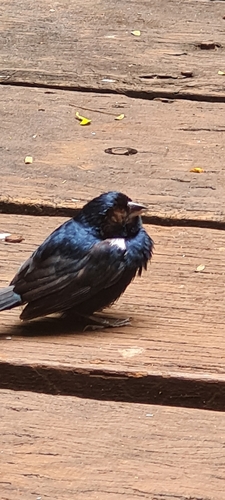
Canarypox virus
thumb|Canary bird (Serinus canaria) with its typical yellow colouration.
Molluscum contagiosum virus
species of virus
Avipoxvirus
Avipoxvirus (avian pox) is a genus of viruses within the family Poxviridae. Poxviridae is the family of viruses which cause the afflicted organism to have poxes as a symptom. Poxviruses have generally large genomes, and other such examples include smallpox and monkeypox. Members of the genus Avipoxvirus infect specifically birds. Avipoxviruses are unable to complete their replication cycle in non-avian species. Although it is comparably slow-spreading, Avipoxvirus is known to cause symptoms like pustules lining the skin and diphtheria-like symptoms. These diphtheria-like symptoms might include

Myxoma virus
species of virus

Ectromelia virus
species of virus
Chordopoxvirinae
Chordopoxvirinae is a subfamily of viruses in the family Poxviridae. Vertebrates and arthropods serve as natural hosts. The subfamily contains 18 genera. Diseases associated with this subfamily include smallpox.
Molluscipoxvirus
REDIRECT Molluscum contagiosum virus