Category
page 1Christian hagiography

hagiography
thumb|Page from by Sulpicius Severus

Golden Legend
collection of hagiographies compiled by Jacobus de Voragine c.1264

Longinus
thumb|Illustration from the Rabbula Gospels, AD 586: Longinus is labelled "".
Longinus (Greek: Λογγίνος) is the name of a Roman soldier who supposedly pierced the side of Jesus with a lance, who in apostolic and some modern Christian traditions is described as a convert to Christianity. His name first appeared in the apocryphal Gospel of Nicodemus. The lance is called in Catholic Christianity the "Holy Lance" (lancea) and the story is related in the Gospel of John during the Crucifixion. This act is said to have created the last of the Five Holy Wounds of Christ.

Philomena
thumb|Saint Philomena with attributes: palm branch, whip, anchor and arrows. Plaster cast by Johann Dominik Mahlknecht in the Museum Gherdëina in [[Urtijëi, Italy]]
Philomena ( ), also known as Saint Philomena (; ) or Philomena of Rome ( 10 January 291 10 August 304) was a Greek virgin martyr whose remains were discovered on 24–25 May 1802, in the Catacomb of Priscilla. Three tiles enclosing the tomb bore an inscription, (i.e. "Peace be unto you, Philomena"), that was taken to indicate that her name (in the Latin of the inscription) was Filumena (), the English form of which is Philomena. Phil

synaxarion
thumb|250px|A Haysmavurk (Synaxarion) in Armenian language|Armenian restored and kept in [[Matenadaran]]
Acta Sanctorum
encyclopedic text in 68 folio volumes of documents examining the lives of Christian saints
Thaddeus of Edessa
Christian saint and one of the seventy disciples of Jesus
Saint Telemachus
Roman saint and martyr
Sequence of Saint Eulalia
earliest Old French poem
.jpg)
Patericon
thumb|The Kievan Cave Patericon (Russia, 1758).
Patericon or paterikon (), a short form for πατερικόν βιβλίον ("father's book", usually Lives of the Fathers in English), and sometimes also known as gerontikon (), is a genre of Byzantine literature of religious character, which were collections of sayings of saints, martyrs and hierarchs, and tales about them. These texts also have their roots in early monasticism.
Menologion of Basil II
Byzantine illuminated manuscript
Acts of the Martyrs
accounts of the suffering and death of Christian martyrs collected and used in early Christian liturgies
Agape, Chionia, and Irene
Christian martyr saints of Thessalonica

Lausiac History
5th-century Christian texts
Martyrdom of the Holy Queen Shushanik
Pontius of Carthage
3rd century Carthaginian Latin author and Christian saint
Ephigenia of Ethiopia
Christian folk saint virgin from "Asiatic Ethiopia"
Bibliotheca Hagiographica Latina
catalogue of Latin hagiographic materials

Annolied
thumb|Anno II. (right) installs Erpho (left) as first abbot of Michaelsberg Abbey, Siegburg|Siegburg Abbey (from a 12th century manuscript).
Doctrine of Addai
Syriac Christian apocrypha
Life of St Ansgar
9th-century Latin-language Christian book by Rimbert
Leoluca
Leoluca, also known as Leone Luca, Leo Luke of Corleone, or Luke of Sicily ( – ) was the abbot and wonderworker of the monastery of Mount Mula in Calabria, and a founder of Italo-Greek monasticism in southern Italy. He is venerated as a saint in the Roman Catholic and Eastern Orthodox churches.

Martyrs Mirror
1660 book of Christian martyrs
Bibliotheca Hagiographica Orientalis
catalogue of oriental hagiographic materials
Adamo Abate
abbot
Bibliotheca Hagiographica Graeca
catalogue of Greek hagiographic materials
Beunans Meriasek
Cornish manuscript
Miracle of the roses
miracle in which roses manifest an activity of God or of a saint, attributed to Elizabeth of Hungary (1207–1231), Elizabeth of Portugal (1271–1336), etc.
Onuphrius
Onouphrios is a transliteration of the Greek Ονούφριος, originally from an Egyptian name, Christian name borne by Orthodox and Catholic Saints and notable people and may refer to:

Codex Climaci Rescriptus
handwritten copy of the Bible in Greek
legendary material in Christian hagiography
collection of biographies of saints or other holy figures
The Tale of Peter and Fevronia
Russian tale literature
Vita sancti Wilfrithi
8th-century Latin biography of Wilfrid
Simon Abeles
Jewish youth in Prague whose father was accused of murdering him “out of hatred for the Christian faith”
Acts of Thaddeus
Greek document written between 544 and 944 CE; purports to describe correspondence between King Abgar V of Edessa and Jesus, which results in Judas Thaddeus going to Edessa
Vita Annonis Minor
German mediaeval manuscript
Kasper Drużbicki
Polish mystic
Life of Despot Stefan Lazarević
old Serbian ruler biography
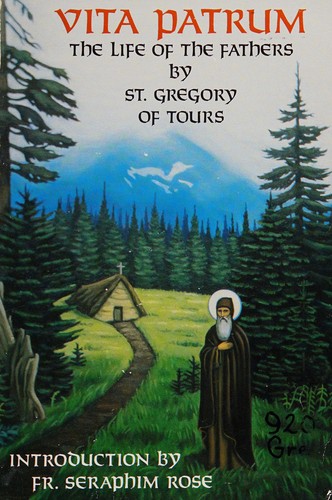
Vitae Patrum
any collection of desert father stories
Dulcitius
10th-century drama by Hrotsvitha
Stephaton
thumb|Stephaton, to the right of Jesus, in the earliest crucifixion in an illuminated manuscript, from the Syriac [[Rabbula Gospels, 586. Unlike Longinus, he is not named here]]
thumb|James Tissot's depiction. Here, the hyssop stick is used as a kind of straw, and "Stephaton" squeezes the sponge. (, [[gouache over graphite on grey wove paper)]]
Stephaton, or Steven, is the name given in medieval Christian traditions to the Roman soldier or bystander, unnamed in the Bible, who offered Jesus a sponge soaked in vinegar wine at the Crucifixion. In later depictions of the Crucifixion, Stephaton is

Spiritual Meadow
7th-century book by John Moschus

Wetzer-Welte Kirchenlexikon
encyclopedic work of Catholic biography, history, and theology
Gesta Dagoberti
latin biography of Dagobert I, king of the Franks