Category
page 1Christian iconography

icon
thumb|upright=1.25|The Ladder of Divine Ascent (icon)|Ladder of Divine Ascent depicts monks ascending to [[Jesus in heaven in the top right. 12th century, Saint Catherine's Monastery.]]
.jpg)
tarot deck
thumb|Trumps of the Tarot de Marseilles, a standard 18th-century playing card pack, later also used for divination
thumb|A Tarot reading|3-card tarot spread used for divination. The deck is the Smith-Waite Centennial Tarot Deck (a faithful reproduction of the original [[Rider-Waite-Smith deck from 1909).]]

stations of the Cross
series of artistic representations, depicting Christ carrying the Cross to his crucifixion

Lamb of God
title for Jesus

Four Evangelists
authors of the four canonical gospels of the New Testament (Matthew, Mark, Luke, and John)

Massacre of the Innocents
narrative from the Gospel of Matthew

Codex Gigas
manuscript compendium from the 13th century

crucifix
thumb|Crucifixion of Jesus at the winged triptych at the Church of the Teutonic Order, Vienna|Church of the Teutonic Order in Vienna, Austria. Woodcarvings by an anonymous master; polychromy by [[Jan van Wavere, Mechelen, signed 1520. This altarpiece was originally made for St. Mary's Church, Gdańsk, and came to Vienna in 1864.]]

early Christian art
art produced by Christians before Byzantine times

Golden Legend
collection of hagiographies compiled by Jacobus de Voragine c.1264
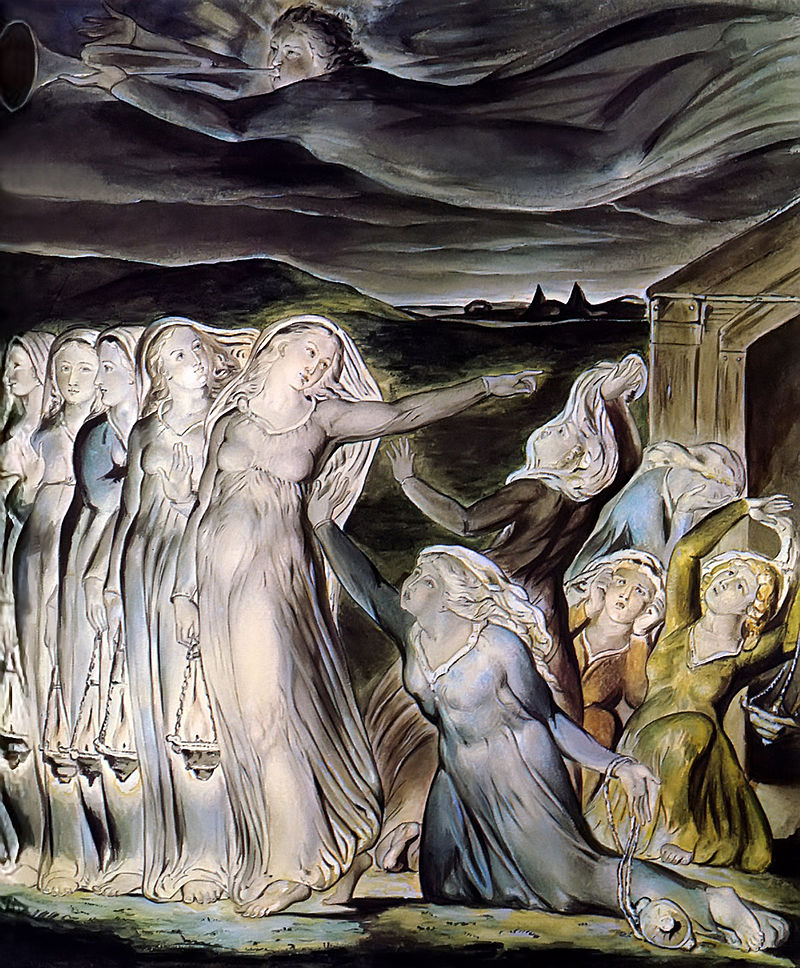
Parable of the Ten Virgins
parable taught by Jesus of Nazareth according to the Christian Gospel of Matthew
halo
religious symbol representing a ring of light
orb
globular object sometimes topped with a cross; Christian symbol of authority

labarum
thumb|The Labarum of Constantine I, reconstructed from the depiction on a follis minted . The three dots represent "medallions" which are said to have shown portraits of Constantine and his sons.
The labarum ( or λάβουρον) was a vexillum (military standard) that displayed the "Chi-Rho" symbol ☧, a christogram formed from the first two Greek letters of the word "Christ" (, or Χριστός) – Chi (χ) and Rho (ρ). It was first used by the Roman emperor Constantine the Great.

aureola
thumb|17th century Central Tibetan [[thanka of Guhyasamaja Akshobhyavajra, Rubin Museum of Art]]
thumb|upright|Images of Mary, mother of Jesus, are often surrounded by an aureole, as in this image of [[Our Lady of Guadalupe.]]
thumb|right|Resurrection of Christ, fresco in [[Chora Church, Istanbul]]
Cross of St. Peter
inverted Latin cross traditionally used as a Christian symbol
Christian symbolism
use of symbols, such as the ichthys by Christianity
Nine Worthies
medieval concept of a group of nine historical, scriptural, and legendary personages who personify the ideals of chivalry
typology
in theology, an approach to establishing relationships between the Old Testament and the New Testament of the Bible
Thirty pieces of silver
a price received for a betrayal (as Judas Iscariot received for betraying Jesus)
Nursing Madonna
artistic theme in which the Virgin Mary breastfeeds the infant Jesus

tetramorph
thumb|300px|A composition of the Four Living Creatures into one tetramorph. Matthew the man, Mark the lion, Luke the ox, and John the eagle.
A tetramorph is a symbolic arrangement of four differing elements, or the combination of four disparate elements in one unit. The term is derived from the Greek tetra, meaning four, and morph, shape.
tree of Jesse
artistic theme, depiction of the ancestors of Christ
Jacob wrestling with the angel
episode from Genesis

Christogram
thumb|Chrismon
thumb| Chi-Rho symbol with [[Alpha and Omega on a 4th-century sarcophagus (Vatican Museums)]]

orans
thumb|An early Christian painting of Noah praying in the gesture of orant
right|thumb|Fresco in the Catacomb of Priscilla showing a Christian woman wearing a headcovering and praying in the orant posture
thumb|Christian man praying in the gesture of orant, Catacombs of Rome#Catacombs of Domitilla|Catacombs of Domitilla, [[Rome]]
Orans, a loanword from Medieval Latin orans () translated as "one who is praying or pleading", also orant or orante, as well as lifting up holy hands, is a posture or bodily attitude of prayer, usually standing, with the elbows close to the sides of the body and with t

Maestà
thumb|300px|Cimabue's Maestà , Basilica of St. Francis in Assisi.
thumb|right|300px|The central panel of Duccio's Maestà with Twenty Angels and Nineteen Saints (1308–1311), Museo dell'Opera del Duomo, [[Siena.]]
Maestà , the Italian word for 'majesty', designates a classification of images of the enthroned Madonna with the child Jesus, the designation generally implying accompaniment by angels, saints, or both. The Maestà is an extension of the "Seat of Wisdom" theme of the seated "Mary Theotokos", "Mary Mother of God", which is a counterpart to the earlier icon of Christ in Majesty, the enthr
Mérode Altarpiece
15th-century painting by the workshop of Robert Campin

Wilgefortis
Wilgefortis () is a female folk saint whose legend arose in the 14th century, and whose distinguishing feature is a large beard. According to the legend of her life, set in Portugal and Galicia, she was a teenage noblewoman who had been promised in marriage by her father to a Moorish king. To thwart the unwanted wedding, she had taken a vow of virginity, and prayed that she would be made repulsive. In answer to her prayers she sprouted a beard, which ended the engagement. In anger, Wilgefortis' father had her crucified.
Denial of Peter
episode from the Passion of Christ
Veil of Veronica
sweat cloth relic of St. Veronica

acheiropoieta
thumb|An 18th-century painting of God the Father painting the image of [[Our Lady of Guadalupe, an unusual Marian image]]
' are Christian icons that are said to have come into existence miraculously, not created by a human. They are also called icons made without hands'. Invariably, these are images of Jesus or Mary, usually the Virgin and Child. In Eastern Orthodoxy, the most notable examples are the Mandylion, also known as the Image of Edessa, and the Hodegetria.
Epitaphios
iconographic cloth depicting the dead body of Christ
saint symbolism
attributes, symbols, and iconography of Christian saints
Sarcophagus of Junius Bassus
early Christian Sarcophagus used by Junius Bassus
donor portrait
portrait in a larger work showing the person who commissioned and paid for the image
Holy Kinship
artistic theme, depicting the extended family of Jesus descended from his maternal grandmother Saint Anne, including John the Evangelist, James the Greater, James the Less, Simon and Jude

cephalophore
thumb|Relics of Saint Justus, Antwerp
Denis of Paris|upright|thumb
A cephalophore (from the Greek for 'head-carrier') is a saint who is generally depicted carrying their severed head. In Christian art, this was usually meant to signify that the subject in question had been martyred by beheading. Depicting the requisite halo in this circumstance offers a unique challenge for the artist: some put the halo where the head used to be, and others have the saint carrying the halo along with the head. Associated legends often tell of the saint standing and carrying their head after the beheading.
cadaver tomb
effigy tombs or slabs depicting decomposition
crux gemmata
form of cross typical of Early Christian and Early Medieval art
Judith and Holofernes
biblical episode and artistic theme

Hellmouth
thumb|Miniature from the Hours of Catherine of Cleves, Morgan Library & Museum, MS M.945, f. 107r
A Hellmouth, or the jaws of Hell, is the entrance to Hell envisaged as the gaping mouth of a huge monster, an image that first appeared in Anglo-Saxon art, and then spread all over Europe. It remained very common in depictions of the Last Judgment and Harrowing of Hell until the end of the Middle Ages, and was still sometimes used during the Renaissance and after. It enjoyed something of a revival in polemical popular prints after the Protestant Reformation, when figures from the opposite side wou
Mass of Saint Gregory
artistic theme in Christian iconography
padma
religious symbol

riza
thumb|Icon of [[Our Lady of Kazan covered with a gilded silver riza.]]
thumb|Riza removed from its icon.
Saint George and the Dragon
medieval legend
Ruthwell Cross
Christian cross in Dumfries and Galloway, Scotland, UK
Ecclesia and Synagoga
pair of the personifications of the Christian and Jewish religion
Hand of God
Jewish and Christian motif signifying divine intervention

Hetoimasia
thumb|250px|The empty throne with cushion, crux gemmata and cloth, flanked by Saints Peter and Paul. [[Arian Baptistery, Ravenna, early 6th century.]]
Saint James the Moor-slayer
representation of the apostle James as a legendary figure who helps Christians conquer the Muslim Moors
Heavenly host
Army of angels mentioned in the Bible
The Three Living and the Three Dead
European legend of the inevitability of death
Ancient of Days
name for God in the Book of Daniel

Pseudo-Kufic
Pseudo-Kufic, or Kufesque, also sometimes pseudo-Arabic, is a style of decoration used during the Middle Ages and the Renaissance, consisting of imitations of the Arabic script, especially Kufic, made in a non-Arabic context: "Imitations of Arabic in European art are often described as pseudo-Kufic, borrowing the term for an Arabic script that emphasizes straight and angular strokes, and is most commonly used in Islamic architectural decoration". Pseudo-Kufic appears especially often in Renaissance art in depictions of people from the Holy Land, particularly the Virgin Mary. It is an example o

Saint Joseph's dreams
four biblical episodes from the life of Saint Joseph

Dogmatic Sarcophagus
Christian sarcophagus dating to 320–350, in the Vatican Museums; discovered in the 19th century during rebuilding of the Basilica di San Paolo fuori le Mura in Rome; makes clear references to the dogmas of the First Council of Nicaea (325)

Throne of Mercy
representation of the Holy Trinity in which God the Father is holding the crucifix and the Holy Ghost is represented as dove

Evangelist portrait
symbols of the four evangelists
Dmytro Blazheyovskyi
Ukrainian church historian (1910–2011)