Category
page 1Christian monarchs

Charles Martel
Frankish military and political leader (c. 688–741)

Skanderbeg
Gjergj Kastrioti (also known as Skanderbeg; – 17 January 1468) was an Albanian nobleman and military leader who led the League of Lezhë in the Ottoman-Albanian Wars until his death. Skanderbeg is considered to be a major figure of medieval Albanian history and today is the national hero of Albania.
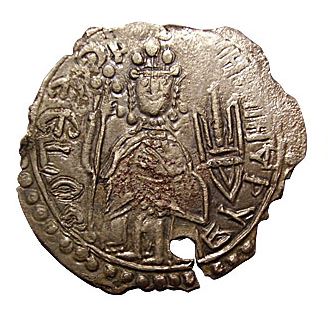
Vladimir the Great
Grand Prince of Kiev

Cnut the Great
Cnut ( ; ; – 12 November 1035), also known as Canute and with the epithet the Great, was King of England from 1016, King of Denmark from 1018, and King of Norway from 1028 until his death in 1035. The three kingdoms united under Cnut's rule are referred to together as the North Sea Empire by historians.

Theodosius II
Byzantine Emperor (401–450)

Mieszko I
Duke of Poland

Yaroslav the Wise
Grand Prince of Kiev from 1019 to 1054

Bolesław I the Brave
first King of Poland (967–1025)

Henry II, Holy Roman Emperor
Holy Roman Emperor from 1014 to 1024

Harald III of Norway
King of Norway from 1046 to 1066

Edmund II of England
King of the English, Wessex dynasty

Nikephoros I
Byzantine emperor

Harold Harefoot
King of England from 1035 to 1040
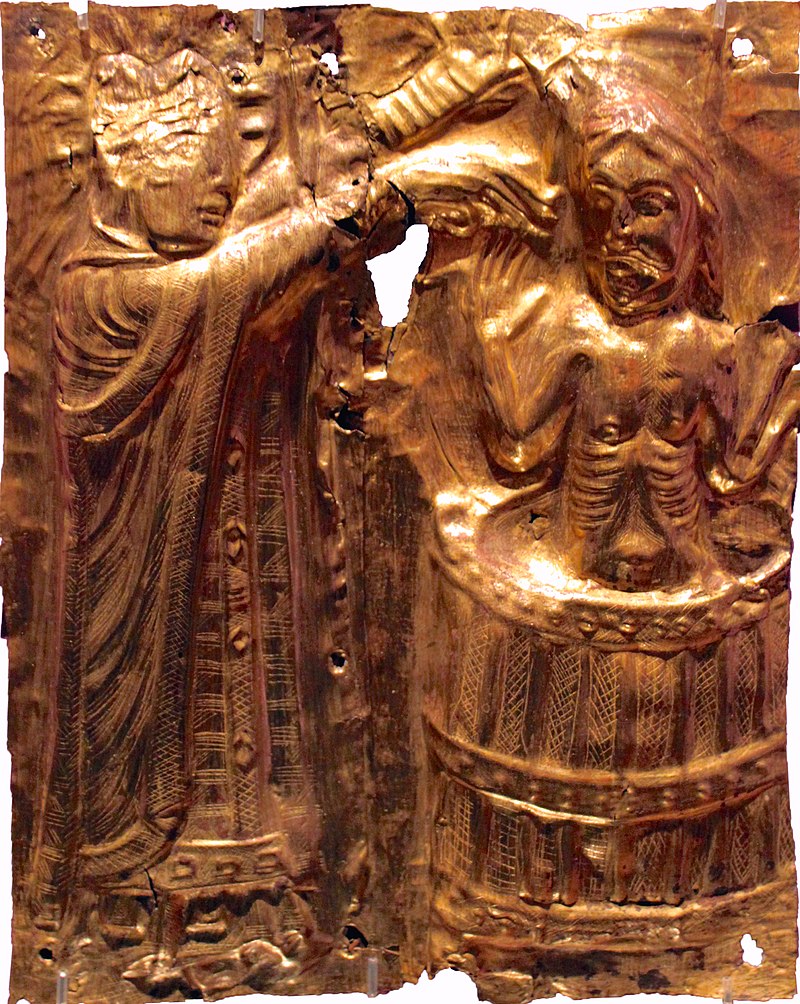
Harald Bluetooth
King of Denmark and Norway

Harthacanute
Harthacnut (c. 1018 – 8 June 1042) was King of Denmark from 1035, and King of England from 1040 until his death in 1042. He was the last monarch of the North Sea Empire, an empire consisting of England and Denmark, and was also the last monarch of the House of Knýtlinga.

Güyük Khan
Third Great Khan of the Mongol Empire

Pelagius
first king of Asturias

Saint Wenceslaus I, Duke of Bohemia
duke and saint

Berengar I of Italy
Holy Roman Emperor from 915 to 924
Ataulf
Athaulf (also Athavulf, Atawulf, or Ataulf and Adolf, Latinized as Ataulphus) ( 37015 August 415) was king of the Visigoths from 411 to 415. During his reign, he transformed the Visigothic state from a tribal kingdom to a major political power of late antiquity.

Stefan Dušan
emperor of Serbia 1331–1355
Mieszko II
king of Poland (990-1034)

Casimir I the Restorer
Polish king (1016-1058)

Olof Skötkonung
King of Sweden from c.995 to 1022

Tomislav of Croatia
King of Croatia

Kubrat
Kubrat (; ) was the ruler of the Onogur–Bulgars, credited with establishing the confederation of Old Great Bulgaria in 632. His name derived from the Turkic words qobrat — "to gather", or qurt, i.e. "wolf".

Yaropolk I of Kiev
Prince of Kiev

Berengar II of Italy
King of Italy from 950 to 961

Reccared I
Visigothic King

Ezana of Axum
4th-century ruler of the Kingdom of Aksum
Tervel of Bulgaria
Bulgarian ruler
.jpg)
Huneric
thumb|Coin of Huneric
Huneric, Hunneric or Honeric (died December 23, 484 AD) was King of the North African Vandal Kingdom (477–484 AD) and the oldest son of Gaiseric. He abandoned the imperial politics of his father and concentrated mainly on internal affairs. He was married to Eudocia, daughter of western Roman Emperor Valentinian III (419–455 AD) and Licinia Eudoxia. The couple had one child, a son named Hilderic.

Anund Jacob
King of Sweden from 1022 until 1050 (1008-1050)

Peter I of Bulgaria
Bulgarian ruler

Hilderic
thumb|A coin struck in Hilderic's name (Hildirix) and bearing his effigy.
Hilderic (Latin: Flavius Hildericus) (460s – 533) was the penultimate king of the Vandals and Alans in North Africa in Late Antiquity (523–530). Although dead by the time the Vandal Kingdom was overthrown in 534, he nevertheless played a key role in that event.
Stefan Dragutin
King of Serbia from 1276 to 1282 and King of Syrmia from 1282 to 1316
Boleslaus I, Duke of Bohemia
Duke of Bohemia from 935 to 972

Stefan the First-Crowned
King of Serbia

Bořivoj I
Duke of Bohemia (9th century)
Bezprym
Bezprym (Old [ˈbɛspʂɨm]; 986–1032) was the duke of Poland from 1031 until his death. He was the eldest son of the Polish king Bolesław the Brave, but was deprived of the succession by his father, who around 1001 sent him to Italy in order to become a monk at one of Saint Romuald's hermitages in Ravenna.
Vratislaus I, Duke of Bohemia
Duke of Bohemia

Boleslaus II, Duke of Bohemia
Duke of Bohemia from 972 to 999
Mauregatus of Asturias
Mauregatus the Usurper () was the king of Asturias from 783 to 788 or 789. He was an illegitimate son of Alfonso I, supposedly by a Moorish serf. He usurped the throne on the death of Silo, the husband of his half sister Adosinda, earning himself the nickname of the Usurper. The nobility had elected Alfonso II at Adosinda's insistence, but Mauregatus assembled a large army of supporters and forced Alfonso into exile in Álava.

Stenkil
thumb|Windows created by Stenkil's dynasty in Vreta Abbey.
Stenkil (Old Norse: Steinkell; died 1066) was a King of Sweden who ruled c. 1060 until 1066. He succeeded Emund the Old and became the first king from the House of Stenkil. He is praised as a devout Christian, but with an accommodating stance towards the old Pagan religion. His brief reign saw an armed conflict with Norway.
Boleslaus III, Duke of Bohemia
Duke of Bohemia
Spytihněv I, Duke of Bohemia
Duke of Bohemia
Oldřich, Duke of Bohemia
Duke of Bohemia
Anund Gårdske
11th century Swedish king
Stefan Vojislav
prince of the Serbs (ὁ τῶν Σέρβων ἄρχων)
Afonso I of Kongo
Ruler of the Kingdom of Kongo from 1509 to 1542/43
Jaromír
Duke of Bohemia
Vladivoj, Duke of Bohemia
Duke of Bohemia from 1002 to 1003
Svein Knutsson
Son of Cnut the Great, ruled as King of Norway
Mihailo I of Duklja
First Serbian king who ruled over Duklja, Travunija, Zahumlje and Raška from c. 1050 to 1081. In the beginning, he ruled as knez but became king after 1077 after he was confirmed by Pope Gregory VII.

Rechiar
Rechiar or Flavius Rechiarius (after 415 – December 456) was the third Suevic king of Gallaecia, from 448 until his death, and also the first one to be born in Gallaecia. He was one of the most innovative and belligerent of the Suevi monarchs. Hydatius, the contemporary bishop and chronicler from Galicia who is the sole contemporary source for biographical details of Rechiar, established his reputation as that of a barbarian with little sense of Roman law, culture, or custom; accusations already discredited, but very common at that time. He was the first Germanic king who professed Nicen
Pōmare III
King of Tahiti (1820–1827)
Mutimir of Serbia
Prince of the Serbs
Sæberht of Essex
King of Essex
Borna of Croatia
Duke of Croatia
Svetoslav of Croatia
king of Croatia