Category
page 1Christian terminology

New Testament
second division of the Christian biblical canon

Protestantism
thumb|The door to All Saints' Church, Wittenberg|All Saints' Church in [[Wittenberg, where Martin Luther posted his Ninety-five Theses in 1517 detailing his concerns with what he saw as the Catholic Church's abuse and corruption. The Ninety-five Theses gave rise to Christian Protestantism as one of the world's primary religions, making Wittenberg the "cradle of Protestantism".]]

Holy Roman Empire
multi-ethnic complex of territories in Western and Central Europe (800/962–1806)

Old Testament
first division of the Christian biblical canon

church building
building for Christian worship
%20-%20Gospel%20of%20Matthew's%20title%2C%20euangelion%20kata%20Maththaion.jpg)
Gospel
thumb|Fragment of a flyleaf with the title of the Gospel of Matthew, (). From [[Papyrus 4 (), it is the earliest manuscript title for Matthew and one of the earliest manuscript titles for any gospel.]]
.jpg)
baptism
thumb|Baptism by immersion in the Jordan River.

Holy Trinity
thumb|A compact diagram of the Trinity, known as the "Shield of the Trinity", consisting of [[God the Father, God the Son (Jesus), and God the Holy Spirit (the Shield is generally not intended to be a schematic diagram of the structure of God, but it presents a series of statements about the relationship between the persons of the Trinity)]]

bishop
A bishop is an ordained member of the clergy who is entrusted with a position of authority and oversight in a religious institution. In Christianity, bishops are normally responsible for the governance and administration of dioceses. The role or office of the bishop is called episcopacy or the episcopate. Organisationally, several Christian denominations utilise ecclesiastical structures that call for the position of bishops, while other denominations have dispensed with this office, seeing it as a symbol of power. Bishops have also exercised political authority within their dioceses.

Pentecost
Pentecost (also called Whit Sunday, Whitsunday or Whitsun) is a Christian holiday that takes place on the 49th day (50th day when inclusive counting is used) after Easter. It commemorates the descent of the Holy Spirit upon the Apostles of Jesus, Mary, and other followers of the Christ, while they were in Jerusalem celebrating the Feast of Weeks, as described in the Acts of the Apostles (Acts 2:1–31). Pentecost marks the "Birthday of the Church".

cross
thumb|A Greece|Greek cross (all arms of equal length) above a [[saltire, a cross whose limbs are slanted]]

Good Friday
Good Friday, also known as Holy Friday, Great Friday, Great and Holy Friday, or Friday of the Passion of the Lord, is a solemn Christian holy day commemorating the crucifixion of Jesus and his death at Calvary (Golgotha). It is observed during Holy Week as part of the Paschal Triduum.

Christian Church
ecclesiological term

cathedral
%20b%20016.jpg)
paganism

Christian
A Christian () is a person who follows or adheres to Christianity, a monotheistic Abrahamic religion based on the life and teachings of Jesus Christ. Christians form the largest religious community in the world. The words Christ and Christian derive from the Koine Greek title (), a translation of the Biblical Hebrew term mashiach () (usually rendered as messiah in English). While there are diverse interpretations of Christianity which sometimes conflict, they are united in believing that Jesus has a unique significance. The term Christian used as an adjective is descriptive of anything associa

Lutheranism
thumb|Lutheran priest elevation (liturgy)|elevating the host during the Mass at [[Alsike Church, Sweden]]

communion
The Eucharist ( ; from , ), also called Holy Communion, the Blessed Sacrament or the '''Lord's Supper''', is a Christian rite, considered a sacrament in most churches and an ordinance in others. Christians believe that the rite was instituted by Jesus Christ at the Last Supper, the night before his crucifixion, giving his disciples bread and wine. Passages in the New Testament state that he commanded them to "do this in memory of me" while referring to the bread as "my body" and the cup of wine as "the blood of my covenant, which is poured out for many". According to the synoptic Gospels, this
.jpg)
rosary
thumb|La Visione di San Domenico (The Vision of Saint Dominic), Bernardo Cavallino, 1640

hymn
thumb|'s Man Singing Hymn (1884)
A hymn is a type of song, and partially synonymous with devotional song, specifically written for the purpose of adoration or prayer, and typically addressed to a deity or deities, or to a prominent figure or personification. The word hymn derives from Greek (hymnos), which means "a song of praise". A writer of hymns is known as a hymnist. The singing or composition of hymns is called hymnody. Collections of hymns are known as hymnals or hymn books. Hymns may or may not include instrumental accompaniment. Polyhymnia is the Greek goddess of hymns.

Anno Domini
Western calendar era

dogma
Dogma, in its broadest sense, is any belief held definitively and without the possibility of reform. It may be in the form of an official system of principles or doctrines of a religion, such as Judaism, Roman Catholicism, Protestantism, or Islam, the positions of a philosopher or philosophical school, such as Stoicism, and political belief systems such as fascism, socialism, progressivism, liberalism, and conservatism.

Epiphany (holiday)
Epiphany, also known as Theophany in Eastern Christian tradition, is a Christian feast day commemorating the visit of the Magi, the baptism of Jesus, and the wedding at Cana.
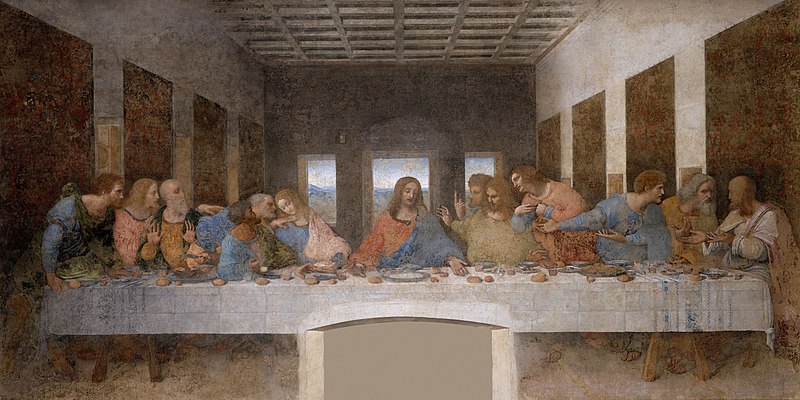
apostle
primary disciples of Jesus in the New Testament

Lent
Lent (, 'Fortieth') is the solemn Christian religious observance in the liturgical year in preparation for Easter. It echoes the 40 days Jesus spent fasting in the desert and enduring temptation by Satan, according to the Gospels of Matthew, Mark and Luke, before beginning his public ministry. Lent is usually observed in the Catholic, Lutheran, Moravian, Anglican, United Protestant and Orthodox Christian traditions, among others. A number of Anabaptist, Baptist, Methodist, Reformed (including certain Continental Reformed, Presbyterian and Congregationalist churches), and nondenominational Chri

Baptists
Baptists are a Protestant tradition of Christianity distinguished by baptizing only believers (believer's baptism) and doing so by total immersion. Modern Baptist churches generally subscribe to the doctrines of soul competency (the responsibility and accountability of every person before God), sola fide (justification by faith alone), sola scriptura (the Bible as the sole infallible authority) and congregationalist ecclesiastical polity. Baptists generally recognize at least two sacraments or ordinances: Baptism and the Lord's Supper.

East-West Schism
division of Christianity into two large parts in 1054

Reconquista
thumb|250px|Detail of the Cantigas de Santa Maria|Cantiga #63 (13th century), which deals with a late 10th-century battle in San Esteban de Gormaz involving the troops of Count García and [[Almanzor]]
The Reconquista (Spanish and Portuguese for ) or the fall of al-Andalus was a series of military campaigns by northern Iberian Christian polities against Muslim-ruled al-Andalus, which had previously been part of the Visigothic Kingdom before the Muslim Conquest of 711. The Reconquista concluded in 1492 with the capture of Granada by the Catholic Monarchs of Spain, thereby ending the presence of

icon
thumb|upright=1.25|The Ladder of Divine Ascent (icon)|Ladder of Divine Ascent depicts monks ascending to [[Jesus in heaven in the top right. 12th century, Saint Catherine's Monastery.]]

purgatory
thumb|upright=0.9|right|Image of a fiery purgatory by Ludovico Carracci. Top: Christ directing, with Mary and interceding saints. Middle: Angel showing a soul the intercessors. Bottom: souls being purged with various attitudes.

sacrament
thumb|upright=1.2|Seven Sacraments Altarpiece|The Seven Sacraments, an [[altarpiece by Rogier van der Weyden]]

Arianism
Arianism () is a Christological doctrine that rejects the traditional notion of the Trinity, teaching that Jesus was created by God and is therefore distinct from God. It is named after its proponent Arius (250 or 256 – 336 AD) and is regarded as heretical by most modern mainstream branches of Christianity. Arianism is held by a minority of modern denominations, although some of these groups espouse related doctrines such as Socinianism, and others avoid the term "Arian" because of its historically negative connotations. Modern denominations sometimes associated with the teaching include Jehov

Apostles' Creed
early statement of Christian belief

scholasticism
upright=1.2|right|thumb|14th-century image of a university lecture
Last Supper
episode in the Christian gospels

Counter-Reformation
The Counter-Reformation (), also sometimes called the Catholic Revival, was the period of Catholic resurgence that was initiated in response to, and as an alternative to or from similar insights as, the Protestant Reformations at the time. It was a comprehensive effort arising from the decrees of the Council of Trent.

basilica
thumb|Digital reconstruction of the 2nd century BC Basilica Sempronia, in the [[Forum Romanum]]
thumb|19th century reconstruction of the 2nd century AD Basilica Ulpia, part of the [[Trajan's Forum, Rome]]
thumb|Ruins of Yererouk basilica 4th–5th century AD
thumb|Ruins of the late 5th century AD basilica at Mushabbak, Syria
thumb|Reconstruction of the basilica at Fano from a description by its architect [[Vitruvius|alt=]]

parish
thumb|St Margarete Parish Church, Berndorf, Lower Austria
A parish is a territorial entity in many Christian denominations, constituting a division within a diocese. A parish is under the pastoral care and clerical jurisdiction of a priest, often termed a parish priest, who might be assisted by one or more curates, and who operates from a parish church. In England, a parish historically often covered the same geographical area as a manor. Its association with the parish church remains paramount.

diocese
thumb|right|upright=1.25|Like other dioceses, the Diocese of Rome has a [[cathedra, the official seat of the Bishop of Rome.]]

missionary
thumb|right|upright=1.35|Catholic Church|Catholic missionaries in [[Papua New Guinea]]
A missionary is a member of a religious group who is sent into an area in order to promote its faith or provide services to people, such as education, literacy, social justice, health care, and economic development.

Church Fathers
group of ancient and influential Christian theologians and writers

Annunciation
thumb|upright=1.6|Annunciation (Leonardo da Vinci)|Annunciation (), [[Uffizi, is thought to be Leonardo da Vinci's earliest complete work.]]
The Annunciation (; ; also referred to as the Annunciation to the Blessed Virgin Mary, the Annunciation of Our Lady, or the Annunciation of the Lord; ) is, according to the Gospel of Luke, the announcement made by the archangel Gabriel to Mary that she would conceive and bear a son through a virgin birth and become the mother of Jesus Christ, the Messiah and Son of God, marking the Incarnation.
thumb|Annunciation by Armenian illuminated manuscripts|Armen

Lucifer
thumb|The Fallen Angel (painting)|The Fallen Angel (1847) by [[Alexandre Cabanel|250x250px]]
Lucifer is believed to be a fallen angel and the Devil in Christian theology. Lucifer is associated with the sin of pride and believed to have attempted an usurpation of God, whereafter being banished to Earth.
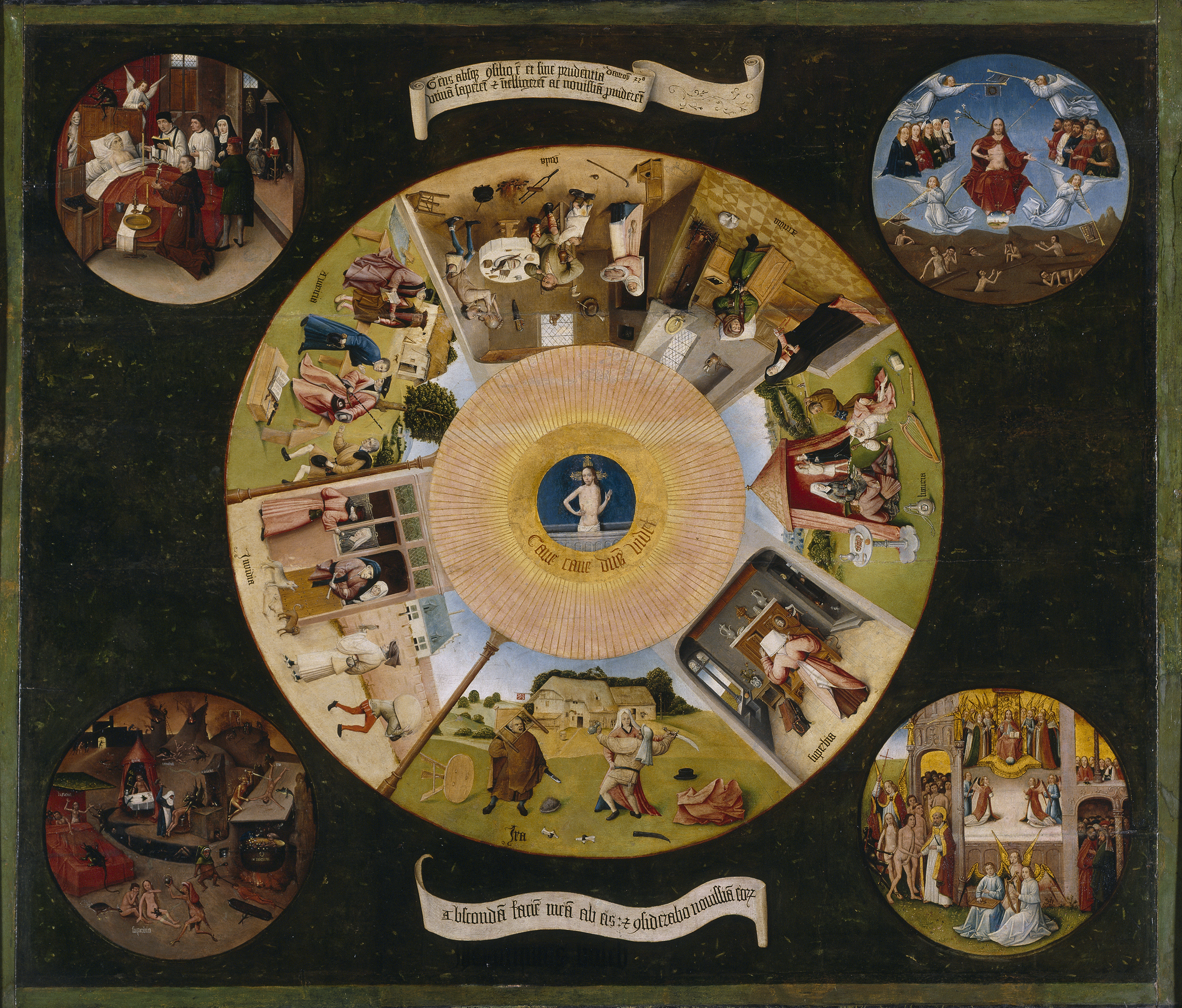
Seven deadly sins
The seven deadly sins function as a grouping of major vices within the teachings of Christianity. They are not explicitly listed in the Bible but developed within early Christian theological tradition, drawing on various biblical passages. In the standard list, the seven deadly sins according to the Catholic Church are pride, envy, wrath, gluttony, lust, sloth, and greed.

Copts
Copts (; ) are a Christian ethnoreligious group native to Egypt who have inhabited the area of modern Egypt since antiquity. They are, like the broader Egyptian population, descended from the ancient Egyptians. Copts predominantly follow the Coptic Orthodox Church, the Alexandrian Greek Orthodox Church and the Coptic Catholic Church. They are the largest Christian population in Egypt and the Middle East, as well as in Sudan and Libya. Copts account for roughly 5 to 15 percent of the population of Egypt.
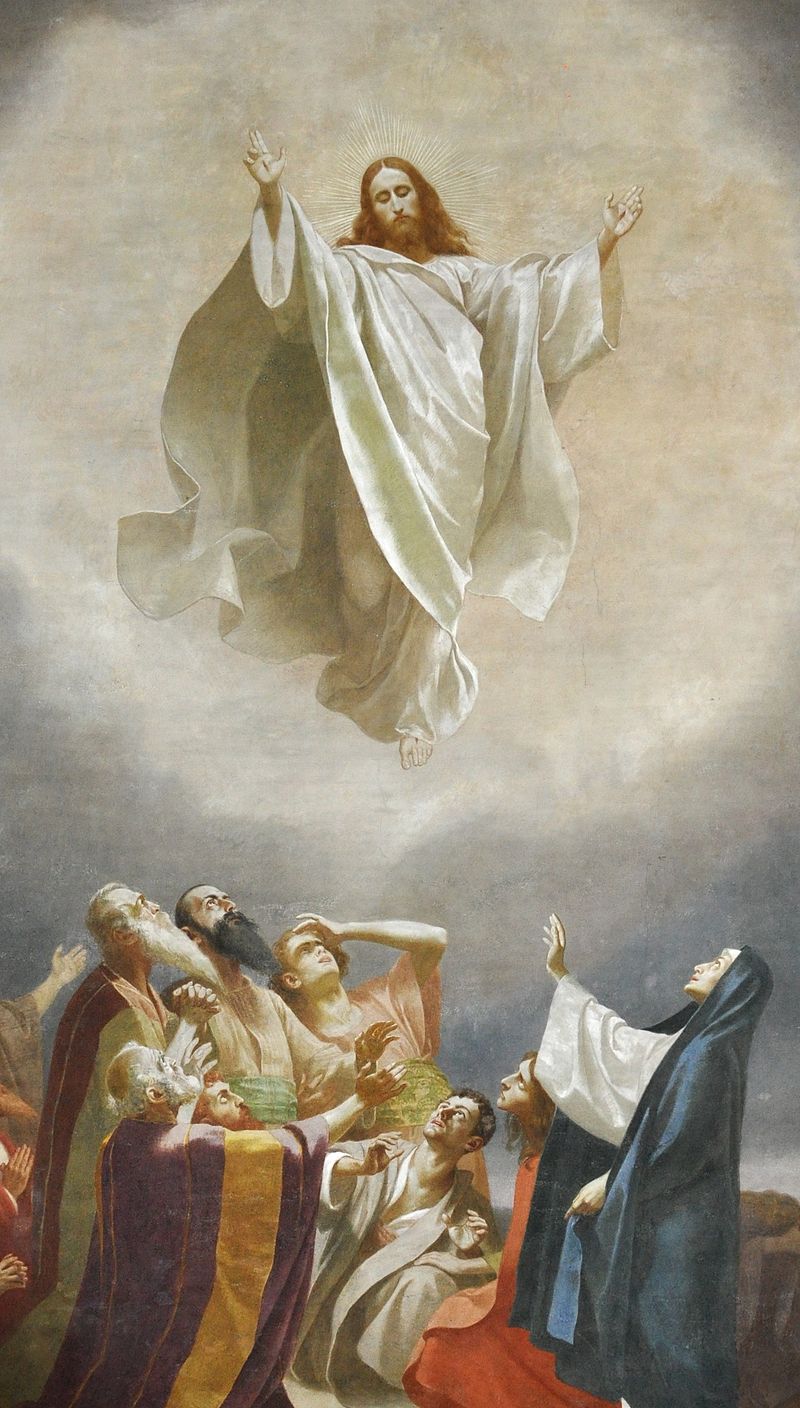
Feast of the Ascension
Christian religious holiday

Seventh-day Adventist Church
Protestant Christian denomination

deacon
thumb|upright|Saint Stephen, one of the first seven deacons in the Christian Church, holding a [[Gospel Book in a 1601 painting by Giacomo Cavedone.]]
A deacon is a member of the diaconate, an office in Christian churches that is generally associated with service of some kind, but which varies among theological and denominational traditions.

original sin
Christian belief in the state of sin in which humanity has existed since the fall of man

Anabaptism
Anabaptism (from Neo-Latin , from the Greek : 're-' and 'baptism'; , earlier also ) is a Christian movement which traces its origins to the Radical Reformation in the 16th century. Anabaptists believe that baptism is valid only when candidates freely confess their faith in Christ and request to be baptized. This stance, commonly referred to as believer's baptism, is opposed to the baptism of infants, who are not able to make a conscious decision to be baptized.

Pentecostalism
Pentecostalism, also known as mainline or classical Pentecostalism, is a movement within the evangelical wing of Protestant Christianity that emphasizes direct personal experience of God through baptism with the Holy Spirit. The term Pentecostal is derived from Pentecost, an event that commemorates the descent of the Holy Spirit upon the Apostles and other followers of Jesus Christ while they were in Jerusalem celebrating the Feast of Weeks, as described in the Acts of the Apostles (Acts 2:1–31).

indulgence
thumb|Inscription on the Archbasilica of St. John Lateran in [[Rome: (English: "Perpetual everyday plenary indulgence on every occasion for the living and the dead")]]
thumb|Apostolic Benediction and Plenary Indulgence Parchment, featuring picture of Pope Pius XII
.jpg)
Methodism
Methodism, also called the Methodist movement, is a Protestant Christian tradition whose origins, and practice derive from the life and teachings of John Wesley. George Whitefield and John's brother Charles Wesley were also significant early leaders in the movement. They were named Methodists for "the methodical way in which they carried out their Christian faith". Methodism originated as a revival movement within Anglicanism with roots in the Church of England in the 18th century and became a separate denomination after Wesley's death. The movement spread throughout the British Empire, the Un

ecumenism
thumb|Ecumenism symbol from a plaque in St. Anne's Church, Augsburg, Germany. It shows Christianity as a boat at sea with the cross serving as the mast.

Antichrist
thumb|The Devil in Christianity|Devil whispers to the Antichrist; detail from Sermons and Deeds of the Antichrist, [[Luca Signorelli, 1501, Orvieto Cathedral.]]
In Christian eschatology, Antichrist, or in broader eschatology, Anti-Messiah, refers to a kind of entity prophesied by the Bible to oppose Jesus Christ and falsely substitute himself as a savior in Christ's place before the Second Coming. The term Antichrist (including one plural form) is found four times in the New Testament, solely in the First and Second Epistle of John. Antichrist is announced as one "who denies the Father and the

Puritans
The Puritans were English Protestants in the 16th and 17th centuries who sought to rid the Church of England of what they considered to be Roman Catholic practices, maintaining that the Church of England had not been fully reformed and should become more Protestant. Puritanism played a significant role in English and early American history, especially in the Protectorate in Great Britain, and the earlier European settlement of New England.

confession
acknowledgment of one's sins

Holy Grail
cup, dish or stone with miraculous powers, important motif in Arthurian literature

catechism
right|thumb|Codex Manesse, fol. 292v, "The Schoolmaster of Esslingen" (Der Schulmeister von Eßlingen)

Presbyterianism
thumb|Sanctuary of the Fourth Presbyterian Church (Chicago)
thumb|First Presbyterian Church (Pittsburgh)
thumb|The burning bush, a common symbol used by Presbyterian churches, used by the [[Presbyterian Church in Ireland. The Latin inscription underneath translates as "burning but flourishing". Alternative versions of the motto are also used, such as "Nec Tamen Consumebatur" (yet not consumed).|248x248px]]